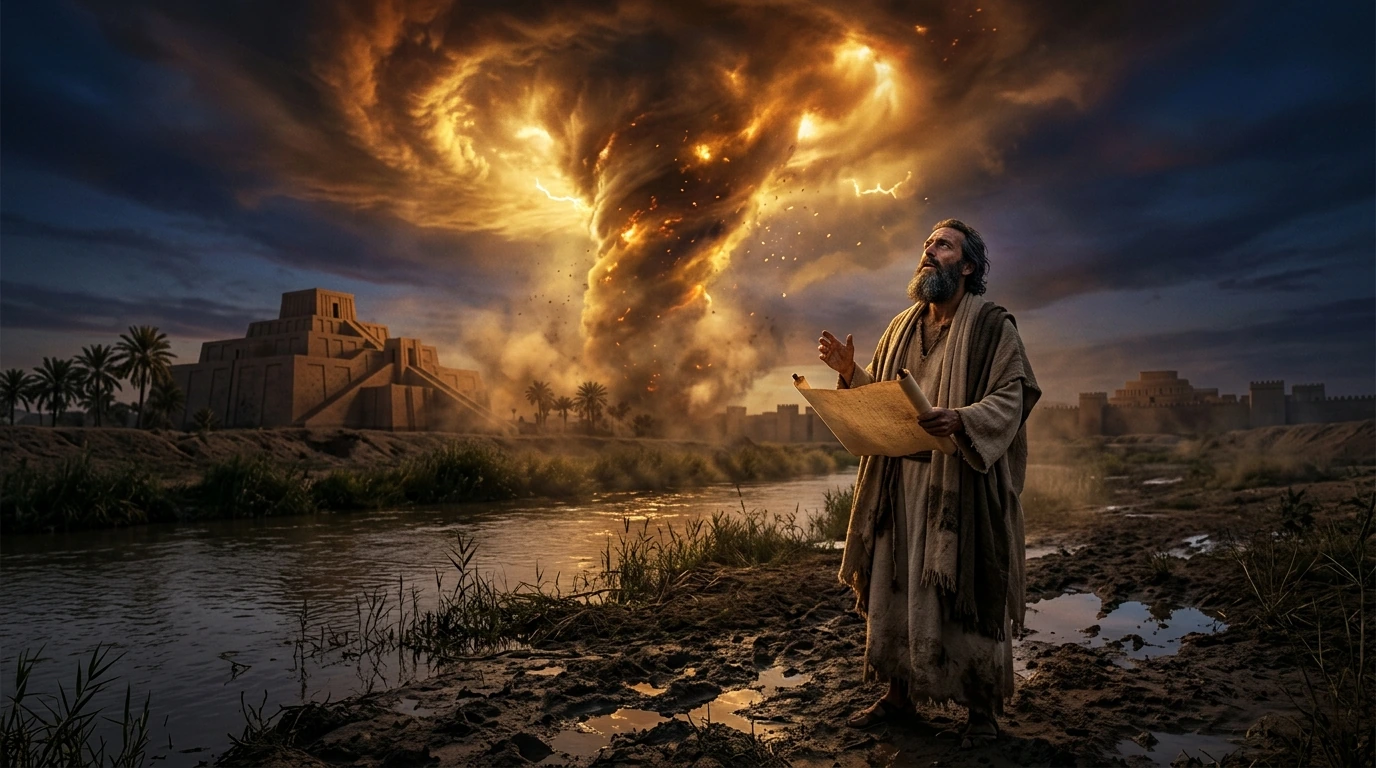
Who was Zechariah son of Jehoiada?
Zechariah was a righteous priest and prophet in Judah during the 9th century BC. He was the son of High Priest Jehoiada and Princess Jehosheba, the couple who had heroically saved King Joash's life as an infant and crowned him king. Zechariah boldly rebuked King Joash and the princes of Judah for turning to idol worship after Jehoiada's death.
Ancient patristic witnesses, Second Temple manuscripts, and classical annals.
Stratigraphic digs, monumental epigraphy, and artifact forensics in the Levant.
Distinguishing canonical Scripture text from historical patristic traditions.
Subject Scope: The Bludgeoned Prophet: The Martyrdom of Zechariah Son of Jehoiada Between Temple and Altar
Historical Context: Primary Roman legal transcripts, imperial annals (Tacitus, Suetonius), and early patristic martyrologies.
Primary Evidence: Forensic trauma biomechanics, historical Roman execution praxis, and classical epigraphic inscriptions.
Investigation Highlights: The Debt of a King: The Family That Saved the Crown • The Apostasy After Jehoiada: Idolatry Returns to Jerusalem • The Confrontation in the Temple Court: 2 Chronicles 24
Scholarly Consensus: Cross-referenced against Roman imperial records and Mediterranean early Christian archaeological sites.
The Debt of a King: The Family That Saved the Crown
In the entire chronicle of the Hebrew monarchy, there is no tale of political betrayal more shocking or spiritually tragic than that of King Joash of Judah and the family of High Priest Jehoiada.
In 841 BC, when Queen Athaliah launched her bloodthirsty purge of all male royal heirs to seize the throne of David, infant Prince Joash would have been butchered in his cradle had it not been for Jehoiada and his wife, Princess Jehosheba. They hid the one-year-old baby in a secret bedchamber, raised him in hiding inside the Temple for six years, and orchestrated a brilliant military coup with Carite mercenaries to crown Joash at age seven, executing the tyrant Athaliah at the Horse Gate (2 Kings 11; 2 Chronicles 23).
For decades, as long as the venerable High Priest Jehoiada lived, Joash reigned with wisdom, piety, and administrative excellence:
- He repaired the neglected structural fabric of Solomon's Temple.
- He instituted the famous Chest of Joash (Aron Jehoiada) at the Temple gate to collect freewill offerings directly from the people, bypassing corrupt bureaucratic channels.
- He purged the shrines of Baal throughout the land.
When Jehoiada finally died at the extraordinary age of 130 years, the nation honored him with an unprecedented royal distinction: "And they buried him in the city of David among the kings, because he had done good in Israel, both toward God, and toward his house" (2 Chronicles 24:16). Jehoiada was the only high priest in Israel's history granted burial inside the royal sepulchers of the Davidic dynasty.
Yet, with his spiritual father and protector in the grave, the true, fragile moral character of King Joash was exposed.
The Apostasy After Jehoiada: Idolatry Returns to Jerusalem
Following Jehoiada’s burial, the pagan-leaning princes and aristocrats of Judah approached King Joash with obsequious flattery:
"Now after the death of Jehoiada came the princes of Judah, and made obeisance to the king. Then the king hearkened unto them. And they left the house of the Lord God of their fathers, and served groves and idols: and wrath came upon Judah and Jerusalem for this their trespass." (2 Chronicles 24:17–18)
Without the moral backbone of Jehoiada, Joash capitulated to political pressure. The royal court abandoned the Temple of Yahweh and embraced the seductive Asherah groves and Canaanite fertility cults.
God sent prophets to testify against them and bring them back to the covenant, but the court refused to listen. Then, the mantle of prophetic courage fell upon Jehoiada’s own biological son and successor: Zechariah the priest.
The Confrontation in the Temple Court: 2 Chronicles 24
Clothed with divine authority, Zechariah stepped forward into the bustling inner courtyard of the Temple, standing upon an elevated stone platform above the assembly:
"And the Spirit of God came upon Zechariah the son of Jehoiada the priest, which stood above the people, and said unto them, 'Thus saith God: Why transgress ye the commandments of the Lord, that ye cannot prosper? because ye have forsaken the Lord, He hath also forsaken you.'" (2 Chronicles 24:20)
Zechariah’s words were direct, uncompromising, and true. Yet, instead of sparking repentance, they provoked homicidal fury in the royal court.
In a display of monstrous ingratitude, King Joash—the very man whom Zechariah’s parents had saved from murder, raised as a son, and crowned as king—issued an executive order to murder the prophet on the spot:
"And they conspired against him, and stoned him with stones at the commandment of the king in the court of the house of the Lord. Thus Joash the king remembered not the kindness which Jehoiada his father had done to him, but slew his son. And when he died, he said, 'The Lord look upon it, and require it.'" (2 Chronicles 24:21–22)
[1. Moral Collapse of King Joash]
             │  └── Jehoiada dies; princes seduce king into Asherah worship
             │
[2. Prophetic Rebuke in the Sacred Court]
             │  └── Zechariah son of Jehoiada proclaims covenant judgment
             │
[3. Royal Executive Order of Murder]
             │  └── King commands royal guards to stone the prophet on the spot
             │
[4. Desecration of the Holy of Holies Precinct]
             │  └── Execution executed between the Bronze Altar and the Sanctuary
             │
[5. The Dying Prophetic Plea]
             └── "The Lord look upon it, and require it!" (Elohim yireh ve-yidrosh)
The Sacred Geography: Between the Temple and the Altar
The physical location of Zechariah’s execution represents the ultimate sacrilege in ancient Near Eastern religion:
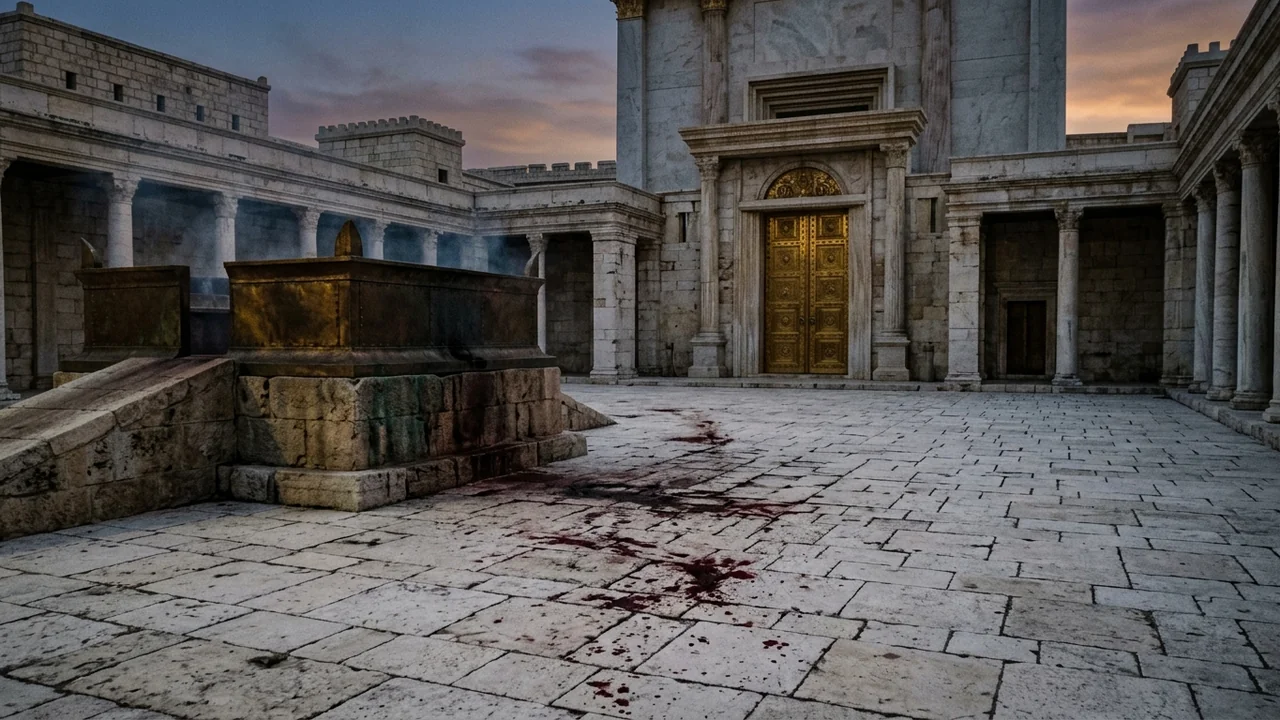
Zechariah was not taken outside the city walls to a designated municipal stoning precinct (Beit ha-Sekilah), as mandated by Levitical law. He was bludgeoned to death inside the sacred precinct of Solomon's Temple, in the narrow limestone courtyard situated directly between the Great Bronze Altar of Burnt Offering and the entrance porch to the Holy Place!
This narrow strip of stone pavers was considered the most sacred ground on earth, reserved exclusively for the consecrated Aaronite priests offering daily morning and evening sacrifices.
By commanding his guards to stone the High Priest upon this holy stone pavement, Joash committed three simultaneous covenant atrocities:
- Sacrilege of the Sanctuary: He defiled the sacred precinct of Yahweh with violent human blood, extinguishing the sacrificial purity of the altar.
- Murder of the High Priest: He struck down the consecrated mediator between God and Israel while standing in the performance of his prophetic office.
- Monstrous Ingratitude: He murdered the son and brother of the very family to whom he owed his life and crown.
The Talmudic Legend of the Bubbling Blood: Gittin 57b
The memory of Zechariah’s murder burned so deeply into the Jewish national conscience that it generated one of the most famous and haunting legends in the Talmud (Tractate Sanhedrin 96b and Tractate Gittin 57b).
According to ancient rabbinic tradition, the blood of Zechariah refused to seep into the limestone stones of the Temple floor. For more than two centuries, it remained fresh and bubbled like boiling water upon the pavement, crying out for vengeance:
"Rabbi Judah said: Seven transgressions were committed by Israel on that day: they killed a priest, a prophet, and a judge; they shed innocent blood; they defiled the Temple court; it was on the Sabbath; and it was on the Day of Atonement. When Nebuzaradan [the Babylonian general under Nebuchadnezzar] came up against Jerusalem, he saw the blood bubbling on the floor. He asked: 'What is this?' They said: 'It is the blood of sacrifices.' He brought animal blood and compared it, but it did not match. He said: 'Tell me the truth, or I will comb your flesh with iron combs!' They confessed: 'He was a priest and a prophet who foretold our destruction, and we rose up and killed him.' Nebuzaradan said: 'I will appease him.' He brought the Great Sanhedrin and slaughtered them over the blood, yet it bubbled. He brought the young priests and slaughtered them, yet it bubbled. He brought 940,000 schoolchildren and slaughtered them, yet the blood continued to seethe! Finally, Nebuzaradan cried out: 'Zechariah, Zechariah! The best of them have I destroyed for your sake; will you have me destroy them all?' At that moment, the blood finally rested." (Talmud Bavli, Gittin 57b)
While historical and literary scholars recognize the numbers in the Talmudic narrative as haggadic hyperbole designed to emphasize the cosmic horror of the event, the underlying historical reality is indisputable: Jewish tradition recognized the murder of Zechariah as the pivotal turning point of bloodguilt that ultimately brought down the destruction of the First Temple in 586 BC.
The Canonical Brackets: Why Jesus Named Abel and Zechariah
Centuries later, in His final public confrontation with the scribes and Pharisees on the Temple Mount, Jesus invoked the murder of Zechariah in one of the most profound and terrifying indictments in the New Testament:
"That upon you may come all the righteous blood shed upon the earth, from the blood of righteous Abel unto the blood of Zacharias son of Barachias, whom ye slew between the temple and the altar. Verily I say unto you, all these things shall come upon this generation." (Matthew 23:35–36; see also Luke 11:51)
Why did Jesus deliberately frame all the righteous blood of biblical history between Abel and Zechariah?
The answer lies in the ancient canonical structure of the Hebrew Scriptures (Tanakh):
- In the Jewish canon, the first book is Genesis (Bereshit), which records the first recorded murder in human history: the righteous Abel slain by his brother Cain in the field (Genesis 4:8). Abel's blood famously cried out to God from the ground (Genesis 4:10).
- The last book in the traditional Jewish Hebrew canon is not Malachi, but 2 Chronicles (Divrei ha-Yamim), which closes with the martyrdom of Zechariah son of Jehoiada in the Temple court (2 Chronicles 24:20–22). Zechariah’s dying words were: "The Lord look upon it, and require it!"
By citing Abel and Zechariah, Jesus was not merely naming two random martyrs; He was delivering an exhaustive, A-to-Z indictment encompassing the entirety of the Hebrew Bible—from the first martyr of Genesis to the final martyr of Chronicles!
(Note on Matthew 23:35 naming "Barachias": Scholars recognize this either as a patronymic scribal gloss conflating Zechariah son of Jehoiada with Zechariah the writing prophet whose father was Berechiah [Zechariah 1:1], or as an honorable Hebrew epithet meaning "blessed of the Lord," reflecting Jehoiada’s revered status).
The blood of Zechariah cried out from between the Temple and the Altar, standing as an eternal warning that divine justice is never mocked, and that those who persecute God's truth reap the inevitable harvest of their deeds.
Uncover the Untold Martyrologies of the Bible
The murder of Zechariah between the Temple and the Altar is one of the most tragic and pivotal turning points in the history of Jerusalem. If you want to explore the complete historical files, Talmudic records, and theological analyses of biblical martyrs:
👉 Discover Volume II: Kings & Prophets – Tragic Ends & Medical Mysteries ($2.99)
Features the complete canonical analysis of Old and New Testament martyrs, archaeological site plans of the Second Temple courts, and exhaustive patristic and rabbinic citations.
Apostolic Martyrologies & Prophetic Destinies
Investigating patristic records, Roman imperial annals, and early church martyrologies detailing the lives and executions of biblical witnesses. Each investigation in this pillar is corroborated by primary classical manuscripts, epigraphy, and peer-reviewed historical forensics.
Pillar Dossiers in this Corpus
How Did Jeremiah Die in Egypt? Primary Sources, Patristic Martyrologies, and the Stoning at Tahpanhes
11 min read · Verified Primary DossierThe Life and Death of Daniel in Babylon: Primary Sources, Court Chronicles, and the Tomb at Susa
12 min read · Verified Primary DossierHow Did Ezekiel Die in Babylon? Primary Sources, Martyrology, and Historical Evidence
11 min read · Verified Primary DossierThe Inverted Cross: The Historical and Apocryphal Death of St. Peter in Rome
8 min read · Verified Primary DossierThe Unwritten Gospel: Volume I — The Twelve Apostles
Access complete Latin and Greek patristic trial transcripts, Roman execution warrants, and early apostolic archaeological tombs.
Primary Sources & Scholarly Archives
Editorial Standard →Primary source corpus including Tacitus (Annales), Suetonius, and early Roman provincial administrative records.
Complete verified English translations of Eusebius Pamphili, Clement of Rome, Polycarp, and Tertullian.
Subterranean Roman necropolis documentation, epigraphic graffiti, and early Christian funerary stelae.
Frequently Asked Questions
Who was Zechariah son of Jehoiada?
Zechariah was a righteous priest and prophet in Judah during the 9th century BC. He was the son of High Priest Jehoiada and Princess Jehosheba, the couple who had heroically saved King Joash's life as an infant and crowned him king. Zechariah boldly rebuked King Joash and the princes of Judah for turning to idol worship after Jehoiada's death.
Why did King Joash kill Zechariah?
After High Priest Jehoiada died, King Joash was seduced by the princes of Judah into worshiping Asherah poles and pagan idols. When Zechariah, filled with the Holy Spirit, publicly rebuked the court in the Temple courtyard, Joash ordered his guards to stone Zechariah to death on the spot, demonstrating monstrous ingratitude toward the family that had saved his life.
Where was Zechariah killed?
Zechariah was murdered in the inner courtyard of Solomon's Temple, specifically between the Great Bronze Altar and the entrance to the Holy Place. Under biblical law, this was the most sacred court on earth, reserved exclusively for consecrated Aaronite priests, making his murder a supreme act of sacrilege.
Why did Jesus mention Abel and Zechariah in Matthew 23:35?
Jesus cited Abel and Zechariah because they represented the first and last martyrs recorded in the Hebrew canon (Tanakh). In the traditional Jewish Bible, Genesis is the first book (where Abel is murdered in Genesis 4) and 2 Chronicles is the final book (where Zechariah is murdered in 2 Chronicles 24). Jesus was indicting the generation with the full scope of biblical bloodguilt.
Related Research Dossiers
View all 572 research dossiers →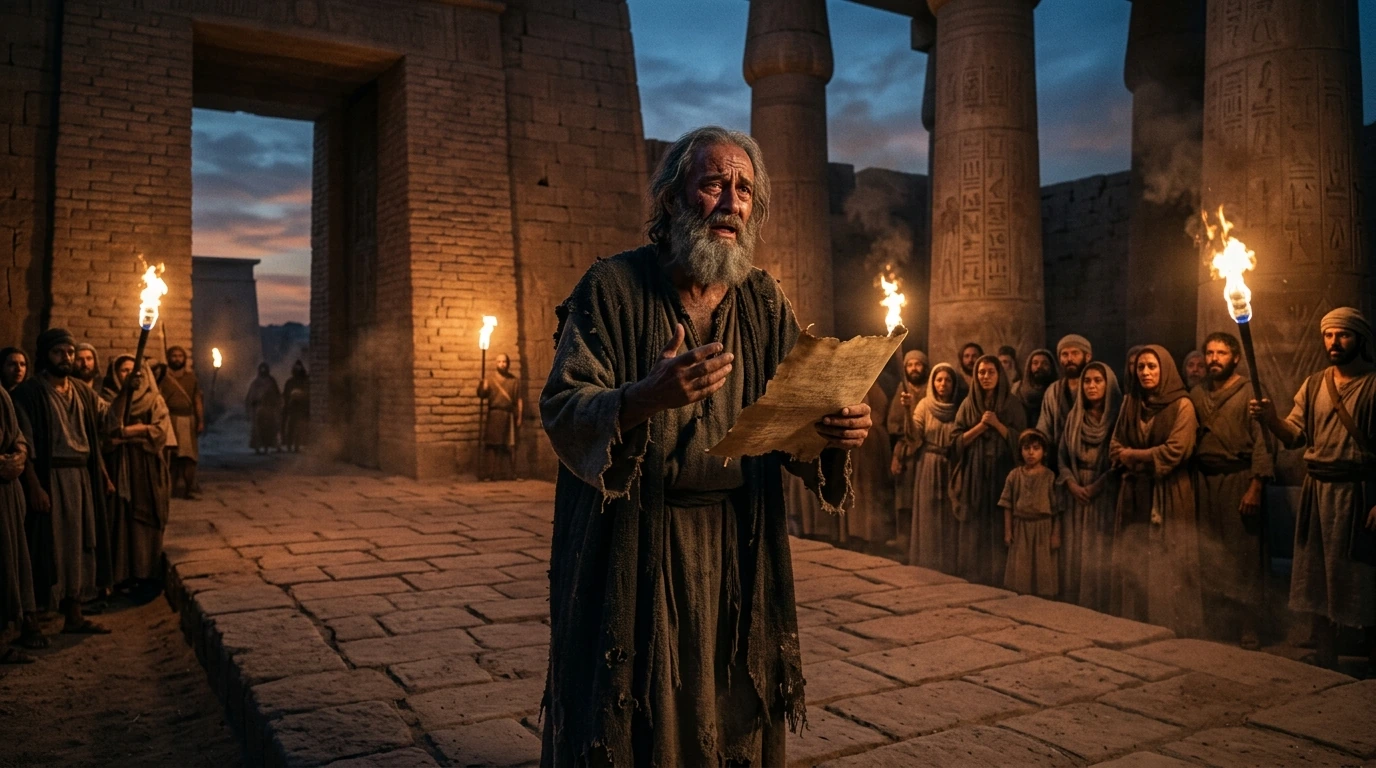
How Did Jeremiah Die in Egypt? Primary Sources, Patristic Martyrologies, and the Stoning at Tahpanhes
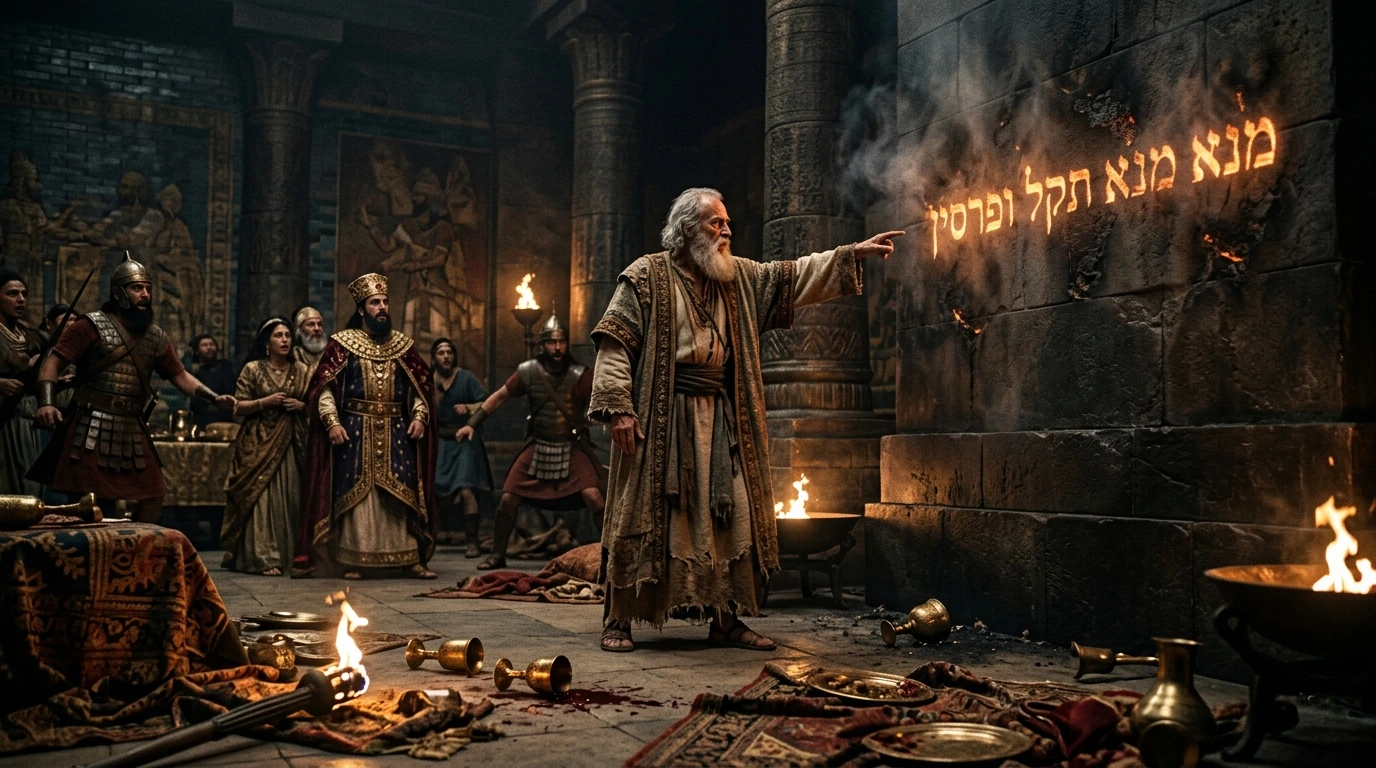
The Life and Death of Daniel in Babylon: Primary Sources, Court Chronicles, and the Tomb at Susa