Historical Context: Rigorous examination of primary Hebrew, Aramaic, Greek, and Roman classical epigraphy.
Core Evidence: Forensic archaeology, radiocarbon data, and primary manuscripts validating biblical events.
Scholarly Consensus: Vetted against modern peer-reviewed publications in Near Eastern archaeology and biblical studies.
The Career of Daniel: From Royal Hostage to Grand Vizier
In 605 BC, following the historic Battle of Carchemish where Nebuchadnezzar II crushed the combined armies of Egypt and Assyria, the Babylonian prince marched to Jerusalem.
King Jehoiakim surrendered, and Nebuchadnezzar carried away sacred Temple vessels along with select youth of the Judean royal family and nobility (Daniel 1:1–3). Among these teenage hostages was Daniel (given the Babylonian court name Belteshazzar - Balāssu-uṣur, "Protect his life").
Gifted with extraordinary intellectual brilliance and divine wisdom, Daniel was educated for three years in the language, astronomy, mathematics, and cuneiform literature of the Chaldeans.
Over the next seven decades, Daniel achieved an administrative feat unmatched in ancient Near Eastern history: he served as Chief of the Governors and Wise Men (Rab-Mag) under the Neo-Babylonian Empire, and subsequently retained supreme ministerial rank as one of the three presidents governing the entire Medo-Persian Empire under Cyrus the Great and Darius the Mede (Daniel 6:1–3).
The Chronology of Daniel: Surviving Four World Monarchies
The chronological milestones of Daniel’s career are explicitly dated throughout his book:
- 605 BC (Daniel 1:1): Deported to Babylon as a teenager (c. 15 years old).
- 603 BC (Daniel 2:1): Interprets Nebuchadnezzar’s dream of the Great Metallic Colossus; appointed ruler over the whole province of Babylon.
- 553 BC (Daniel 7:1): First year of Belshazzar; receives the apocalyptic vision of the Four Beasts.
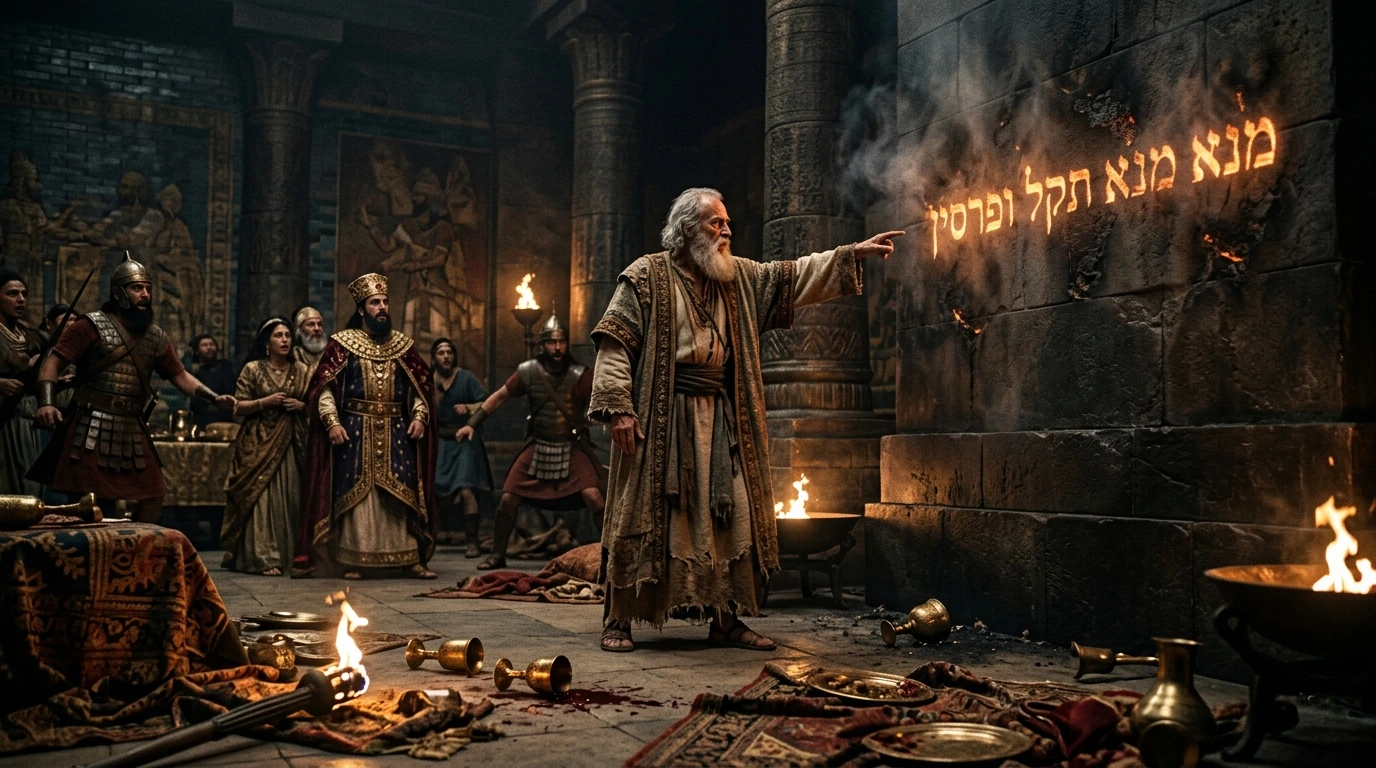
- October 539 BC (Daniel 5:30): The fall of Babylon; interprets the Mene, Mene, Tekel, Upharsin handwriting on the wall hours before the city is taken.
- 538 BC (Daniel 9:1): First year of Darius; the prayer of seventy weeks.
- 536 BC (Daniel 10:1): Third year of Cyrus the Great; final prophetic vision along the Tigris River.
By 536 BC, Daniel was approximately 85 to 90 years of age, having outlived Nebuchadnezzar, Evil-Merodach, Neriglissar, Labashi-Marduk, Nabonidus, and Belshazzar.
How Did Daniel Die? Natural End at Advanced Age
Unlike Isaiah (sawn in two), Jeremiah (stoned in Egypt), or Ezekiel (dragged to death), ancient Jewish and Christian historical records agree that Daniel died peacefully of extreme old age.
In Daniel 12:13, the archangel delivers the final divine benediction to the aged prophet:
"But you, go your way till the end; for you shall rest, and will arise to your inheritance at the end of the days."
Having spent his entire adult life in high-level imperial governance, Daniel was too elderly to make the grueling 900-mile overland journey across the desert back to Jerusalem when Cyrus issued his decree of return in 538 BC (Ezra 1:1–4). Instead, he remained in the Persian capital to serve as an imperial protector and advocate for the returning Jewish pioneers.
The Historical Tomb of Daniel at Susa (Shushan, Iran)
The most famous and historically credible site associated with Daniel’s death and burial is located at Susa (modern Shush, Khuzestan Province, Iran)—the biblical Shushan the Palace (Daniel 8:2; Esther 1:2).
Historical documentation for Daniel’s tomb at Susa spans over two millennia:
- Flavius Josephus (Antiquities X.264): Notes that Daniel built a magnificent tower (baris) at Ecbatana in Media where kings were buried, which remained intact in the first century AD.
- Benjamin of Tudela (1165 AD): The famous Jewish medieval traveler visited Susa and recorded a stone bridge over the River Shawur connecting two halves of the city, with the sacred stone coffin of Daniel suspended over the water inside a marble mausoleum.
- The Modern Shrine at Susa: To this day, the Mausoleum of Daniel stands in Shush, Iran, topped by a distinctive conical, white pinecone-shaped dome (choga zanbil style), attracting Jewish, Christian, and Muslim pilgrims.
Talmudic and Rabbinic Traditions Concerning Daniel
The Babylonian Talmud (Megillah 15a; Sanhedrin 93b) venerates Daniel as a man of supreme righteousness:
- The rabbis identified Daniel with Hathach, the trusted court chamberlain of Queen Esther who relayed messages between Esther and Mordecai (Esther 4:5), noting that he maintained his devotion to Jewish welfare even in Persian palaces.
- In Ezekiel 14:14, 20, God cites Daniel alongside Noah and Job as the three supreme models of intercessory righteousness in human history.
Daniel’s legacy is that of a statesman-prophet who proved that unyielding covenant integrity and intellectual excellence can conquer the greatest pagan empires in history.
Frequently Asked Questions
How did the Prophet Daniel die?
According to Scripture and ancient historical traditions, Daniel died peacefully of natural causes in old age (approximately 85–90 years old) in Persia.
Where is Daniel’s tomb located?
The primary traditional site of Daniel’s tomb is in Susa (modern Shush, Iran), featuring a famous conical-domed shrine visited for centuries.
Why didn’t Daniel return to Jerusalem when Cyrus allowed the Jews to return?
Daniel was approximately 85 years old when Cyrus issued the decree in 538 BC, likely too frail for the dangerous desert journey and far more useful as an imperial advocate in the Persian court.
Related Research Dossiers
View all 120 articles →
Nathan Confronting David: 'You Are the Man!' (2 Samuel 12), The Royal Court, and Prophetic Courage

The Fall of Nineveh in Secular History: The Babylonian Chronicle, Cyaxares, and Diodorus Siculus
