Historical Context: Rigorous examination of primary Hebrew, Aramaic, Greek, and Roman classical epigraphy.
Core Evidence: Forensic archaeology, radiocarbon data, and primary manuscripts validating biblical events.
Scholarly Consensus: Vetted against modern peer-reviewed publications in Near Eastern archaeology and biblical studies.
The Royal Conspiracy: Adultery, Deceit, and Assassination
In late eleventh-century BC Jerusalem, King David stood at the pinnacle of military and political glory: he had conquered the Jebusite stronghold of Zion, unified the twelve tribes, subjugated the Philistines, and brought the Ark of the Covenant into Jerusalem.
Yet during a springtime military campaign against the Ammonites at Rabbah, David lingered in Jerusalem:
- Looking down from his palace roof, he saw Bathsheba, the wife of Uriah the Hittite—one of David’s elite thirty military commanders (Gibborim, 2 Samuel 23:39).
- David committed adultery with her, resulting in pregnancy.
- When Uriah refused to sleep in his own house out of solidarity with his comrades encamped in the open field, David executed a cold-blooded state murder: he dispatched a sealed royal letter to General Joab, ordering him to place Uriah in the forefront of the hottest battle and retreat from him that he might be struck down and die (2 Samuel 11:14–15).
For nearly a year, David lived in spiritual denial, marrying the widowed Bathsheba and believing his royal crime was safely concealed.
The Juridical Parable of the Ewe Lamb
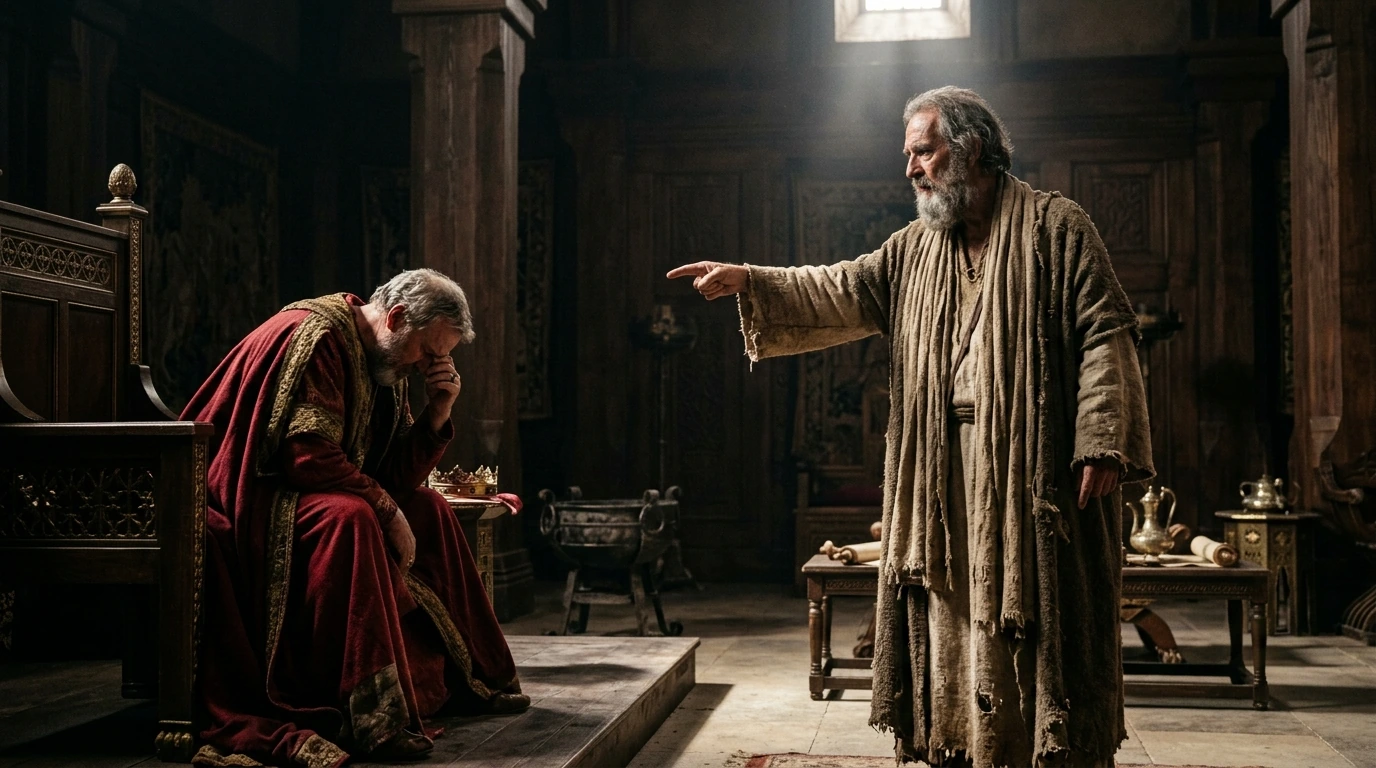
God dispatched the court prophet Nathan into the royal throne room. Nathan did not enter shouting accusations; he employed a brilliant, devastating juridical parable (a legal case presented to the king as supreme judge):
*"There were two men in one city, one rich and the other poor. The rich man had exceedingly many flocks and herds. But the poor man had nothing, except one little ewe lamb which he had bought and nourished...
And a traveler came to the rich man, who refused to take from his own flock... but took the poor man’s lamb and prepared it for the man who had come to him."* (2 Samuel 12:1–4)
David’s sense of royal justice was instantly inflamed:
"As the Lord lives, the man who has done this shall surely die! And he shall restore fourfold for the lamb, because he did this thing and because he had no pity." (2 Samuel 12:5–6)
The Electrifying Indictment: "Attah Ha-Ish!" (You Are the Man!)
With David having pronounced his own legal condemnation under the Law of Moses (Exodus 22:1), Nathan delivered the most electrifying three-word sentence in ancient literature:
"אַתָּה הָאִישׁ!" (Attah ha-Ish! - "You are the man!")
Nathan stripped away royal privilege, exposing David’s actions before the court:
- God had anointed David king over Israel and delivered him from the hand of Saul.
- Yet David had despised the commandment of the Lord, striking down Uriah the Hittite with the sword of the Ammonites and stealing his wife.
- The divine sentence: "The sword shall never depart from your house" (2 Samuel 12:10). The royal family would be shattered by internal incest, fratricide, and Absalom's bloody rebellion.
The Royal Confession and Psalm 51
In ancient Near Eastern monarchies, an absolute king confronted with treasonous accusations by a subject would instantly execute the messenger.
David’s response set him apart from every pagan monarch in human history:
- He made no excuses, offered no rationalizations, and did not silence Nathan.
- Falling to his knees, he uttered the broken confession: "חָטָאתִי לַיהוָה" (Ḥatati l'Yahweh - "I have sinned against the Lord", 2 Samuel 12:13).
Out of this brokenness, David penned Psalm 51—the universal liturgy of repentance: "Have mercy upon me, O God, according to Your lovingkindness... Wash me thoroughly from my iniquity, and cleanse me from my sin. Against You, You only, have I sinned, and done this evil in Your sight."
The Prophetic Role of Nathan in David’s Dynasty
Nathan was not merely a moral critic; he was the primary theological architect of the Davidic Covenant:
- In 2 Samuel 7, Nathan delivered the foundational covenant promise that God would build David an everlasting house, culminating in an eternal kingdom.
- When Bathsheba gave birth to Solomon, God sent Nathan to bestow the child's covenant name: Jedidiah (Yedidyah - "Beloved of Yahweh", 2 Samuel 12:25).
- In 1 Kings 1, Nathan intervened courageously to expose Adonijah’s coup and ensure Solomon was anointed king at the Gihon Spring.
Nathan demonstrated the true biblical calling of a prophet: speaking divine truth to supreme imperial power, proving that the King of Israel was never above the Law of God.
Frequently Asked Questions
Who was the Prophet Nathan?
Nathan was the royal court prophet during the reign of King David who delivered the Davidic Covenant (2 Samuel 7) and boldly confronted David over his sin with Bathsheba (2 Samuel 12).
What was the meaning of the ewe lamb parable?
It was a juridical parable designed to make David condemn his own actions: the rich man represented David taking the poor man’s only lamb (Uriah’s wife Bathsheba).
What psalm did David write after Nathan confronted him?
David wrote Psalm 51, the classic biblical prayer of repentance, asking God for a clean heart and a restored spirit.
Related Research Dossiers
View all 120 articles →
The City of David & Tomb of the House of David: Archaeology, Raymond Weill’s Caves, and Royal Jerusalem

Solomon’s Downfall and the Division of Israel (1 Kings 11): Primary Sources, Foreign Wives, and Ahijah’s Prophecy
