Historical Context: Rigorous examination of primary Hebrew, Aramaic, Greek, and Roman classical epigraphy.
Core Evidence: Forensic archaeology, radiocarbon data, and primary manuscripts validating biblical events.
Scholarly Consensus: Vetted against modern peer-reviewed publications in Near Eastern archaeology and biblical studies.
The Silence of the Hebrew Canon and Extrabiblical Witnesses
The canonical Book of Ezekiel closes abruptly with the vision of the reconstituted Temple and the holy city whose name is Yahweh Shammah ("The Lord is There", Ezekiel 48:35). The biblical narrative provides no obituary for the priest-prophet who was deported to Babylon alongside King Jehoiachin in 597 BC.
However, early Jewish and Christian antiquity preserves explicit, consistent historical memories regarding Ezekiel’s violent demise. The silence of the Old Testament canon regarding prophetic martyrdoms is standard: neither the deaths of Isaiah, Jeremiah, nor Zechariah are narrated in their eponymous books, yet their violent executions were widely known across Jewish historical traditions (Hebrews 11:36–37).
The primary literary witnesses to Ezekiel’s death include:
- The Lives of the Prophets (Vitae Prophetarum): A Jewish-Hellenistic biographical work composed in Judea in the first century AD (attributed historically to Pseudo-Epiphanius).
- The Babylonian Talmud (Sanhedrin and Chagigah): Preserving rabbinic traditions concerning the elders of Tel Abib and the prophetic council.
- Early Christian Patristic Commentary: Works by Justin Martyr, Tertullian, and Isidore of Seville documenting prophetic martyrologies in Mesopotamia.
The Martyrdom Account in the Lives of the Prophets (Pseudo-Epiphanius)
The most detailed ancient account appears in The Lives of the Prophets (Chapter 3):
"Ezekiel: This prophet was of the land of Sarira, of the priests. He died in the land of the Chaldeans during the captivity, having suffered many things at the hands of the ruler of the people of Israel who was there. He was killed by him because he rebuked him for idolatry and lawless deeds. And they tied his feet to wild horses, which dragged him through the rocks and stony places until his body was torn asunder."
Another ancient recension preserved in Syriac and Ethiopic traditions records that Ezekiel was stoned to death or dragged across rocky ground after denouncing an exiled Jewish noble who had introduced Chaldean star worship and occult fertility rituals into the settlement at Tel Abib.
Ezekiel’s unyielding denunciations of exile hypocrisy—such as in Ezekiel 14:1–8 and Ezekiel 33:30–33—created intense domestic hostility. The corrupt exile elites desired a prophet who would promise an immediate return to Jerusalem; Ezekiel’s message of devastating covenant accountability provoked a lethal political backlash.
The Conflict with the Exile Leadership in Tel Abib
The social reality of the Babylonian exile was far more complex than simple slave labor. The Judean deportees were settled in planned agricultural communities along canal networks in southern Mesopotamia. Tel Abib (Til Abubi, "Mound of the Deluge") was a prominent settlement where exiles possessed houses, land, and family structures (Jeremiah 29:5–7).
Ezekiel frequently clashed with the Elders of Israel who came to sit before him (Ezekiel 8:1, 14:1, 20:1). Beneath their outward veneer of piety, these elders harbored secret idolatry:
- They secretly worshiped Babylonian astral deities (Tammuz and Shamash).
- They allied politically with pro-Egyptian factions hoping for a military overthrow of Nebuchadnezzar II.
- They resented Ezekiel’s uncompromising insistence that Jerusalem’s Temple must burn because of Judah’s systemic apostasy.
When Ezekiel’s prophecies of Jerusalem’s total destruction were confirmed in 586 BC, his moral authority became absolute. Corrupt leaders who could not silence him theologically chose political assassination.
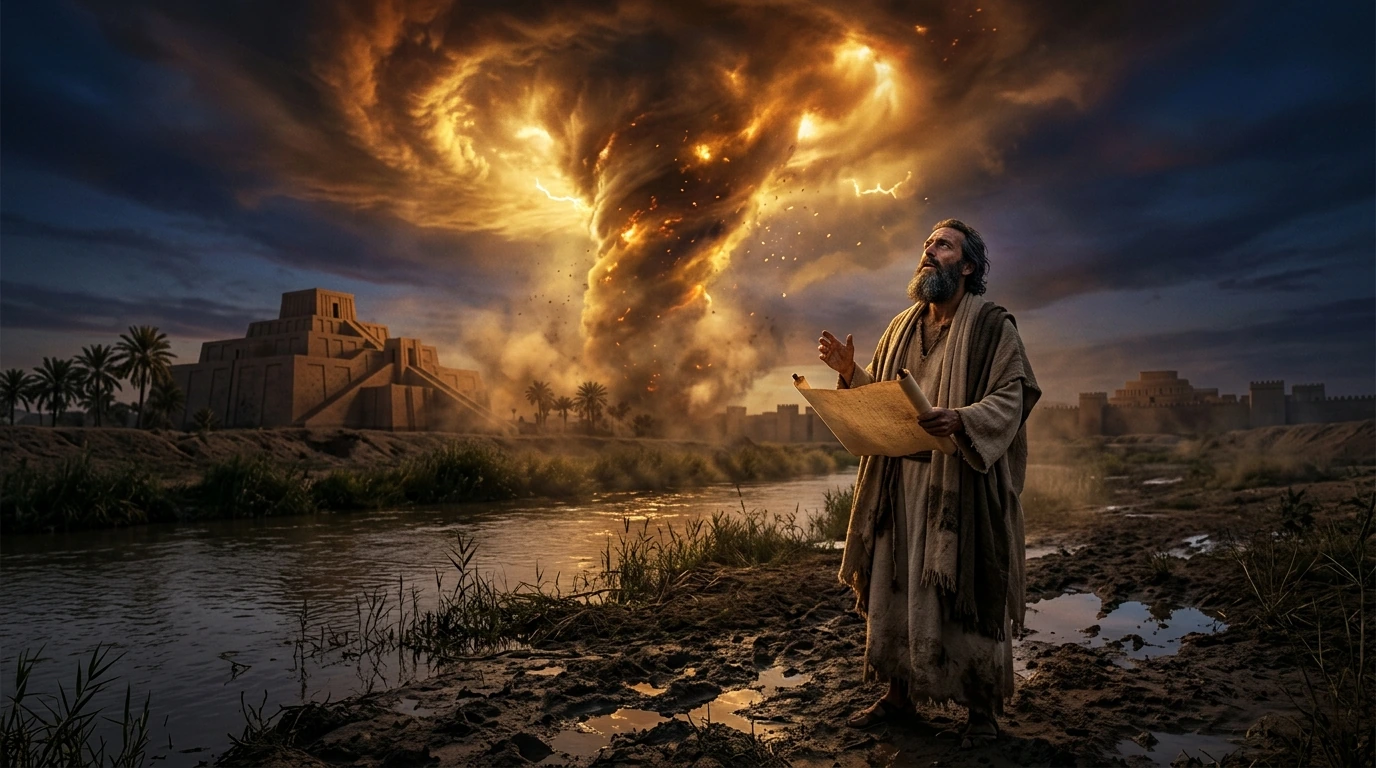
The Chebar River (Naru Kabari) in Babylonian Cuneiform Archaeology
For centuries, 19th-century rationalist critics claimed that the "River Chebar" (Nahar Kevar) was a fictional geographical invention.
However, American excavations at Nippur between 1888 and 1900 by the University of Pennsylvania unearthed the monumental Murashu Archive—thousands of baked clay cuneiform tablets dating from the 5th century BC. Among these economic contracts, archaeologists discovered repeated references to the Nāru Kabari (literally "The Grand Canal").
The Nāru Kabari was a massive navigable irrigation canal running eastward from the Euphrates River north of Babylon, passing through the ancient religious metropolis of Nippur before rejoining the river further south. It was along the banks of this wide, silt-laden artificial river that Ezekiel lived, received his chariot-throne visions (Merkavah), ministered to the exile community, and ultimately laid down his life.
The Traditional Tomb of Ezekiel at Al-Kifl, Iraq
Approximately 30 kilometers south of ancient Babylon, on the eastern bank of the Euphrates, stands the historic town of Al-Kifl, Iraq. For over two millennia, this site has been revered as the Tomb of Ezekiel (Qabr al-Nabi Dhul-Kifl).
Historical evidence surrounding the tomb:
- Benjamin of Tudela (1170 AD): The famous medieval Jewish traveler visited the site and recorded that sixty synagogues surrounded the monumental domed shrine of Ezekiel, housing ancient Torah scrolls dating to the First Temple period.
- Ancient Hebrew Epigraphy: The interior chambers preserve ancient Hebrew inscriptions and floral basalt stonework alongside medieval Islamic arches.
- Continuous Pilgrimage: Both Iraqi Jews and Muslims venerated the tomb for centuries until the mass exodus of Iraqi Jewry in 1950–1951.
The preservation of this singular burial site deep in the heart of Babylonia reinforces the ancient historical memory that Ezekiel never returned to the soil of Judea: he lived, died, and was buried among the exiles by the waters of Babylon.
Deepen Your Study of the Prophetic Martyrs
Explore the ancient historical records, patristic texts, and archaeological confirmations of the prophets:
👉 Discover Volume II: Kings & Prophets
Examine the tragic ends of Israel's monarchs and the heroic martyrologies of the Hebrew prophets.
🎁 Or Unlock The Sacred Keys Trilogy Master Collection ($7.99)
Arm your spirit with daily scriptural authority and ancient warfare protocols.
Frequently Asked Questions
Does the Bible describe how Ezekiel died?
No. The Old Testament canon concludes Ezekiel’s book around 571 BC (his latest dated prophecy in Ezekiel 29:17) without recording his death. His martyrdom is documented in early Jewish and Christian extrabiblical records, specifically the first-century Lives of the Prophets.
Why was Ezekiel killed by his own people?
According to The Lives of the Prophets, Ezekiel was executed by an exiled Jewish ruler or leader in Babylon whom the prophet repeatedly confronted for idolatrous practices, moral corruption, and occult Chaldean divination.
Has archaeology verified the setting of Ezekiel?
Yes. Cuneiform tablets from the Murashu Archive excavated at Nippur confirmed the exact existence and name of the Nāru Kabari ("Grand Canal", the biblical River Chebar), validating the authentic historical setting of Ezekiel's prophetic ministry.
Frequently Asked Questions
Does the Bible describe how Ezekiel died?
No. The biblical text records Ezekiel’s visions and ministry up to 571 BC without narrating his death. Historical details of his martyrdom are preserved in early extrabiblical writings like The Lives of the Prophets and patristic commentaries.
Why was Ezekiel executed?
Early records document that Ezekiel was killed by a corrupt Jewish exile leader in Babylonia after the prophet openly denounced him for practicing pagan Chaldean idolatry and leading the exiles astray.
Where is Ezekiel buried?
According to centuries of unbroken Jewish and Near Eastern tradition, Ezekiel was buried at Al-Kifl in modern-day Iraq, south of Babylon, where an ancient tomb bearing historic Hebrew inscriptions still stands.
Related Research Dossiers
View all 120 articles →
Nathan Confronting David: 'You Are the Man!' (2 Samuel 12), The Royal Court, and Prophetic Courage

The Fall of Nineveh in Secular History: The Babylonian Chronicle, Cyaxares, and Diodorus Siculus
