Historical Context: Rigorous examination of primary Hebrew, Aramaic, Greek, and Roman classical epigraphy.
Core Evidence: Forensic archaeology, radiocarbon data, and primary manuscripts validating biblical events.
Scholarly Consensus: Vetted against modern peer-reviewed publications in Near Eastern archaeology and biblical studies.
The Canonical Abrupt Ending: Forced Exile to Egypt
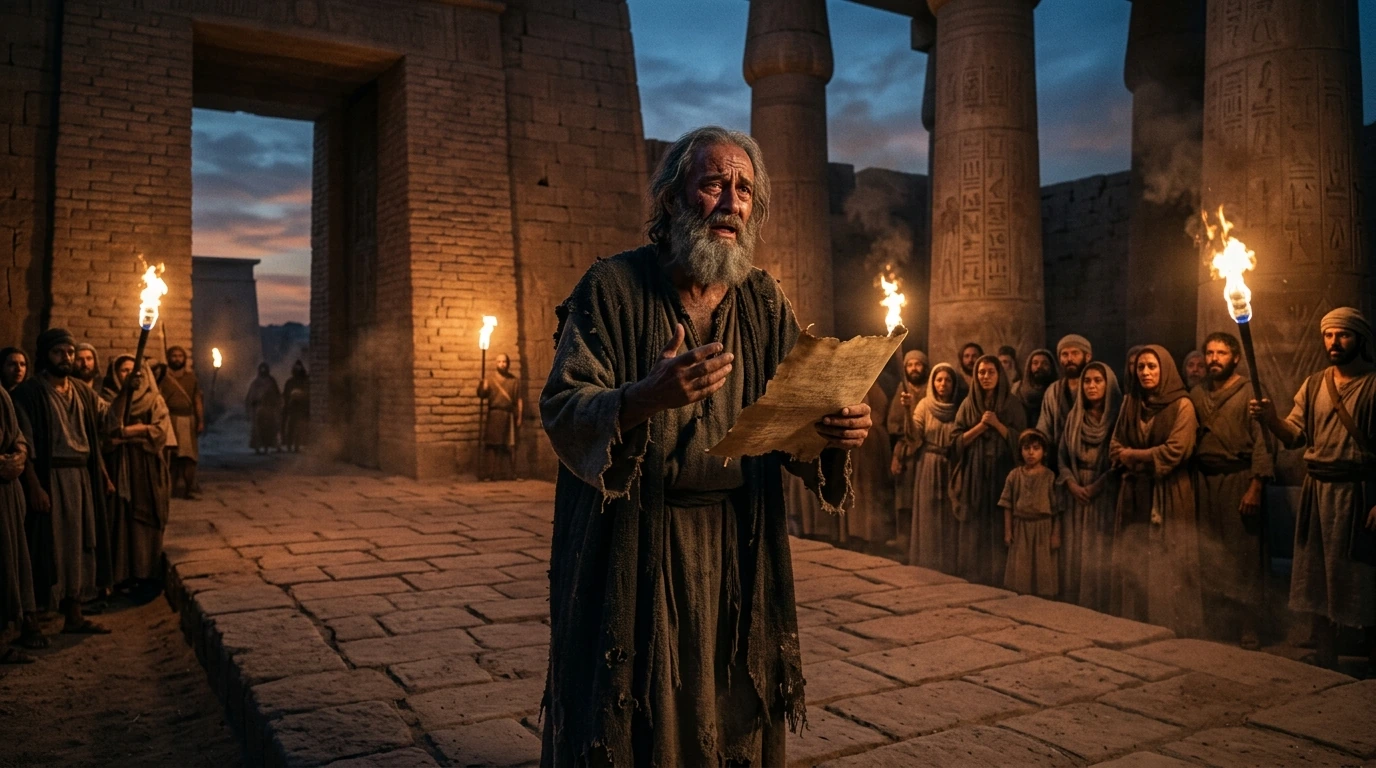
The canonical Book of Jeremiah ends in dramatic geopolitical tragedy. Following the assassination of Babylon’s appointed governor Gedaliah at Mizpah by the renegade royal prince Ishmael son of Nethaniah, the surviving Judean remnant panicked.
Fearing that Nebuchadnezzar II would execute collective retribution across Judah, military leader Johanan son of Kareah resolved to flee south into Egypt. They consulted Jeremiah, pleading for an oracle from Yahweh and swearing an absolute oath to obey (Jeremiah 42:1–6).
Jeremiah’s prophetic response was unequivocal:
- Stay in the land of Judah, and God will protect and build you up.
- Flee to Egypt, and the sword of Nebuchadnezzar will overtake you there, and you will die by sword, famine, and pestilence.
Accusing Jeremiah of treason and claiming his scribe Baruch son of Neriah was inciting him to hand them over to the Chaldeans, Johanan seized the aged prophet and Baruch by force and dragged them across the Sinai border to the Egyptian fortress city of Tahpanhes (Daphnae / Tell Defenneh, Jeremiah 43:1–7).
There, inside Egypt, the canonical text falls silent.
The Martyrology Account in the Lives of the Prophets
Extra-biblical Jewish and early Christian historical antiquity preserves uniform, detailed accounts of Jeremiah’s violent martyrdom.
The foremost ancient literary witness, The Lives of the Prophets (Vitae Prophetarum)—composed by Jewish scholars in Judea during the first century AD—records:
*"Jeremiah: This prophet was of Anathoth, and he died in Tahpanhes of Egypt, having been stoned to death by his people.
He was buried in the place where Pharaoh’s palace stood, because the Egyptians held him in great honor; for he had prayed and freed them from the water asps, which the Egyptians call crocodiles, and from serpents that bit men.
And all who believe in God take dust from his tomb and place it upon snakebites, and the poisonous beasts flee immediately."*
Early Church Patristic Consensus: Tertullian, Jerome, and Isidore
The tradition that Jeremiah was stoned to death in Egypt was universally accepted by the early Church Fathers:
- Tertullian (Scorpiace VIII, c. 208 AD): Discussing prophetic martyrdoms, Tertullian notes: "Jeremiah was stoned to death by the refugees in Egypt."
- Saint Jerome (Adversus Jovinianum II.37, c. 393 AD): Jerome writes: "Jeremiah the prophet was stoned and slain at Tahpanhes by his fellow exiles, because he ceased not to rebuke their idolatries."
- Isidore of Seville (De Ortu et Obitu Patrum XXXVIII, c. 600 AD): Confirms that Jeremiah suffered stoning at the hands of the rebellious Jewish colony at Tahpanhes.
- Epistle to the Hebrews (Hebrews 11:37): When the New Testament praises ancient heroes of faith who "were stoned, were sawn in two, were tempted, were slain with the sword", early Christian commentators understood the reference to stoning as pointing directly to Jeremiah and Zechariah son of Jehoiada.
Why Was Jeremiah Murdered by His Own People?
Why did the Jewish exiles turn violently against their venerable prophet?
Jeremiah 44 documents the bitter theological civil war that erupted in Tahpanhes. The Jewish exiles—especially the women—openly resumed the worship of the Queen of Heaven (Ishtar / Isis), baking sacrificial cakes and pouring drink offerings:
"As for the word that you have spoken to us in the name of the Lord, we will not listen to you! But we will certainly do whatever has gone out of our own mouth, to burn incense to the Queen of Heaven... for then we had plenty of food, were well-off, and saw no trouble. But since we stopped, we have lacked everything and been consumed by the sword and by famine!" (Jeremiah 44:16–18)
Jeremiah delivered his final, terrifying ultimatum: God would wipe out the Jewish colony in Egypt, and Pharaoh Hophra would be given into the hand of his mortal enemies.
Enraged by his uncompromising condemnation of their paganism and terrified by his prophecies of doom, the rebellious leaders silenced Jeremiah permanently with stones.
Alexander the Great and the Relics of Jeremiah in Alexandria
According to both The Lives of the Prophets and the fourth-century Church historian Epiphanius of Salamis, when Alexander the Great conquered Egypt in 332 BC, he visited the tomb of Jeremiah at Tahpanhes.
Learning of Jeremiah’s ancient miraculous protection against poisonous reptiles, Alexander ordered the prophet’s holy remains exhumed and transported with royal honors to his newly founded metropolis of Alexandria.
Jeremiah’s relics were interred in a circular mausoleum in the Jewish quarter of Alexandria, which became a prominent place of prayer and veneration throughout Hellenistic and Roman antiquity.
Frequently Asked Questions
How did Jeremiah the Prophet die according to tradition?
According to 1st-century Jewish records (The Lives of the Prophets) and early Church Fathers (Tertullian, Jerome), Jeremiah was stoned to death by Jewish exiles at Tahpanhes in Egypt.
Why did the Jewish exiles stone Jeremiah?
Because he fiercely condemned their idolatrous worship of the Queen of Heaven in Egypt and prophesied that Babylon would invade and annihilate their settlement.
Where was Jeremiah buried?
He was originally buried at Tahpanhes near the royal palace. Later historical traditions record that Alexander the Great moved his relics to Alexandria.
Related Research Dossiers
View all 120 articles →
Nathan Confronting David: 'You Are the Man!' (2 Samuel 12), The Royal Court, and Prophetic Courage

The Fall of Nineveh in Secular History: The Babylonian Chronicle, Cyaxares, and Diodorus Siculus
