Historical Context: Rigorous examination of primary Hebrew, Aramaic, Greek, and Roman classical epigraphy.
Core Evidence: Forensic archaeology, radiocarbon data, and primary manuscripts validating biblical events.
Scholarly Consensus: Vetted against modern peer-reviewed publications in Near Eastern archaeology and biblical studies.
The Kingdom of Osroene: Edessa as the Cradle of Syriac Christianity
While the Apostle Paul looked west toward the Mediterranean maritime ports of Ephesus, Athens, and Rome, other members of the apostolic band turned their faces east toward the great rivers of antiquity: the Tigris and Euphrates.
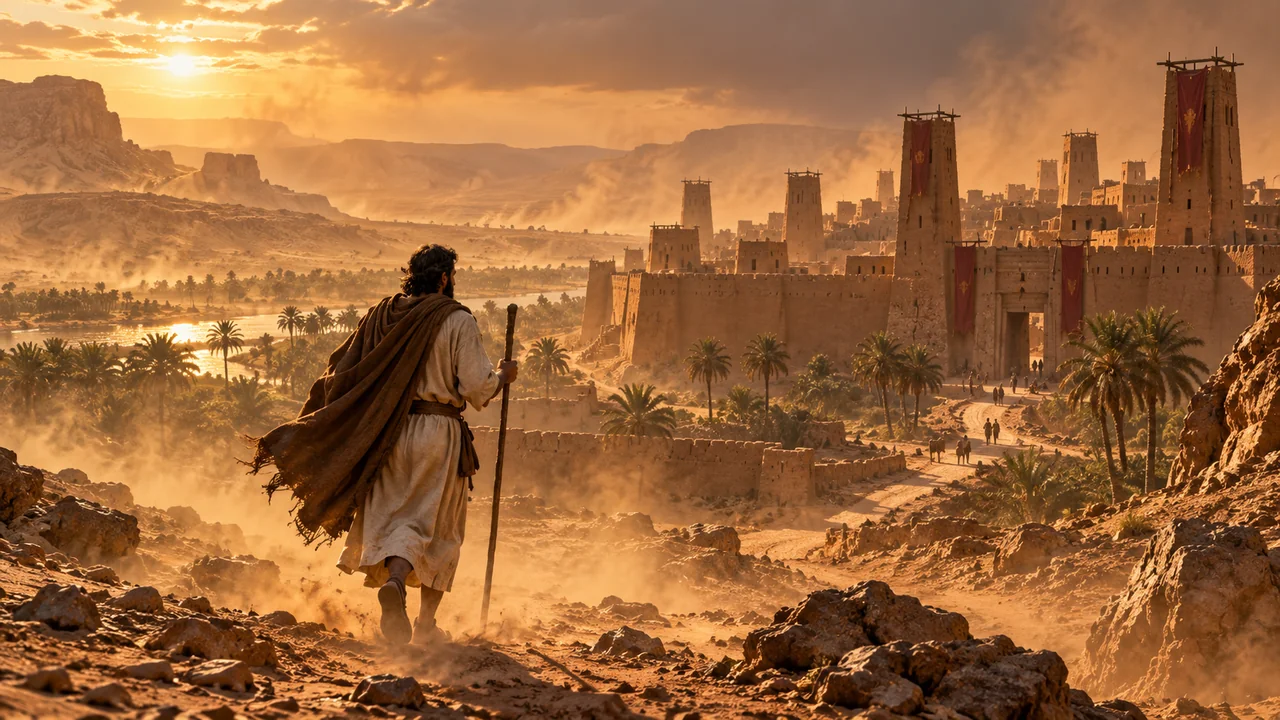
Beyond the eastern military frontiers of the Roman Empire lay the vast, sophisticated, and formidable Parthian Empire (modern Iraq and Iran). Between these two warring superpowers sat a strategic buffer realm: the ancient kingdom of Osroene, whose capital was the flourishing trade city of Edessa (known in Syriac as Urhai, modern Şanlıurfa in southeastern Turkey).
Edessa was not merely an isolated desert crossroads; it was an intellectual and commercial powerhouse connecting the Silk Road with the Levant. It was also the sovereign cradle where the very first state-level Christian community in world history took root.
[1st Century Geopolitical Landscape: Upper Mesopotamia]
       │
       ├──► Kingdom of Osroene (Capital: Edessa / Urhai)
       │         └── Ruled by the Abgarid Dynasty (King Abgar V the Black)
       │
       └──► Apostolic Commission: Jude Thaddaeus (Addai in Syriac)
                 │
                 ▼ (Healing of King Abgar V)
            Conversion of Royal Court & Establishment of the Church of the East
                 │
                 ▼ (Eastern Journey into Parthian Armenia)
            Confrontation with Pagan Priesthood at Ardaz / Suanir
The apostle dispatched to evangelize this Mesopotamian frontier was Jude, known in the Gospel catalogs as Thaddaeus or Lebbaeus (Matthew 10:3; Mark 3:18; Luke 6:16), the brother of James and author of the short, fiery canonical Epistle of Jude. In the ancient East, he was known simply as Mar Addai—Saint Thaddaeus, the Apostle of the East.
The Royal Correspondence: King Abgar V and the Letter to Jesus
The foundational historical document detailing the genesis of Christianity in Mesopotamia is the ancient Syriac text known as the Doctrine of Addai (Alpaph Beth Addai), preserved in 4th- and 5th-century manuscripts in the British Library and Saint Petersburg, and quoted extensively by church historian Eusebius of Caesarea (Historia Ecclesiastica I.13).
According to these royal archives, the reigning monarch of Edessa, King Abgar V Ukkāmā ("The Black", reigning 4 BC to 7 AD, and 13 to 50 AD), was afflicted with an agonizing, incurable physical disease (widely described in medical historiography as either advanced crippling gout or leprosy).
Hearing widespread reports from Mesopotamian merchants trading in Jerusalem about a miracle-working Galilean prophet named Jesus of Nazareth who healed the blind, cleansed lepers, and raised the dead without medicine, King Abgar dispatched an imperial courier and royal archivist named Hannan to Jerusalem with a formal diplomatic letter:
"Abgar Ukkāmā, ruler of Edessa, unto Jesus the good Savior who has appeared in the country of Jerusalem, greeting. I have heard concerning you and your cures, that they are done by you without drugs or herbs... Having heard all these things about you, I concluded either that you are God, having come down from heaven to do these things, or else you are the Son of God. Therefore I have written to entreat you to take the trouble to come to me and heal this disease which I have. For I hear also that the Jews murmur against you and wish to do you harm. My city is very small, but it is noble, and sufficient for us both."
Eusebius records that he personally translated the response from the public archives of Edessa. Jesus sent a written reply through the courier Hannan:
"Blessed are you who have believed in me without having seen me... But concerning what you wrote, that I should come to you: it is necessary that I should fulfill all things here for which I was sent, and after I have fulfilled them, I should be taken up to Him that sent me. But after I have been taken up, I will send you one of my disciples, who will heal your disease and give life to you and yours."
Following the resurrection and ascension of Christ, the Apostle Thomas—acting under the promptings of the Holy Spirit—commissioned Thaddaeus (Addai) to fulfill the promise. Arriving in Edessa, Thaddaeus stayed at the home of a Jewish merchant named Tobias. When King Abgar was informed, he summoned Thaddaeus to his palace.
As Thaddaeus entered the royal audience hall, ancient records describe a blinding celestial brilliance illuminating the apostle's countenance. King Abgar prostrated himself before the fisherman of Galilee. Thaddaeus laid hands upon the monarch, invoking the name of Jesus Christ; instantly, the king's skin was cleansed, his excruciating joint inflammation subsided, and he stood completely whole before his court.
The miraculous healing triggered the immediate conversion of King Abgar, his royal household, and thousands of Mesopotamian citizens, birthing the vibrant Church of the East (the Syriac Christian tradition).
The Journey into Parthia: Crossing the Euphrates and Tigris
Thaddaeus did not remain in the security of the Edessan court.
Driven by the apostolic mandate, he traversed the great fertile crescent of Mesopotamia, accompanied by the Apostle Simon the Zealot. Together, they journeyed along the ancient caravan trails through Nisibis, across the Tigris River, into Ctesiphon (the imperial winter capital of the Parthian Arsacid Empire), and eastward into the rugged Zagros Mountains of modern Iran and the southern Caucasus.
In these remote frontier provinces, the apostles encountered the entrenched religious systems of the Persian Empire:
- Zoroastrianism: The ancestral worship of Ahura Mazda, where sacred eternal fires were tended by hereditary Magi priests who viewed the Christian doctrine of a crucified and resurrected God as blasphemous heresy.
- Pagan Mountain Cults: Tribal shrines dedicated to local war and storm deities that practiced ritual sacrifices.
The 5th-century Armenian historian Moses of Chorene (History of the Armenians, Book II, Chapters 33–34) records that Thaddaeus entered the Armenian district of Artaz (near Maku, in modern Iranian West Azerbaijan), then ruled by King Sanatruk (the same monarch who later ordered the execution of Saint Bartholomew):
[Missionary Expedition of Thaddaeus & Simon]
       │
       ├──► Kingdom of Osroene (Edessa) ──► Royal conversion of Abgar V
       │
       ├──► Parthian Ctesiphon (Tigris River) ──► Established early assemblies
       │
       └──► District of Artaz (Armenian-Parthian Highlands)
                 │
                 ├──► Conversion of Princess Sandukht (King Sanatruk's daughter)
                 │
                 ▼ (Royal Military Reaction)
            King Sanatruk demands renunciation of Christ; Sandukht refuses
                 │
                 ▼
            Princess Sandukht and Apostle Thaddaeus Condemned to Death
In Artaz, Thaddaeus converted Princess Sandukht, the beloved daughter of King Sanatruk. When the king discovered that his royal daughter had renounced the ancestral gods and taken a vow of Christian virginity, he dispatched armed soldiers to capture the apostle and his daughter.
Sanatruk pleaded with his daughter to recant. When Sandukht steadfastly refused, declaring that Jesus Christ was her eternal Bridegroom, the furious king ordered both his daughter and the Apostle Thaddaeus executed on the rocky windswept plains of Artaz around 66 to 70 AD.
Forensic Traumatology of the Battle-Axe Strike (The Halberd)
In Western and Eastern ecclesiastical iconography, the Apostle Jude Thaddaeus is universally depicted holding either an axe, a halberd, or a club.
According to ancient martyrologies (including the Latin collection of Pseudo-Abdias and Armenian liturgical texts), while Simon the Zealot was sawn asunder or crucified in Persia, Thaddaeus was struck down by royal soldiers wielding a heavy ancient Persian battle-axe or halberd (tabarzin):
[Execution on the Plains of Artaz]
       │
       ▼
[Strike with the Persian Battle-Axe (Tabarzin / Halberd)]
       │
       ├──► Massive Blunt & Sharp Force Cranial Trauma
       │         └── Calvarial vault fracture, depression of parietal bones
       │
       ├──► Direct Maceration of the Cerebral Hemispheres
       │         └── Massive focal parenchymal laceration & sagittal sinus rupture
       │
       └──► Instantaneous Autonomic Arrest
                 └── Immediate transection of brainstem centers, zero survival latency
Forensic traumatology and paleopathology reveal the devastating physical reality of this ancient weapon:
- Massive Kinetic Energy Transfer: An ancient Near Eastern battle-axe combines the sharp cutting edge of a blade with the concentrated crushing mass of a bludgeon. When wielded with two hands by a trained cavalry soldier, the kinetic force delivered to the human skull exceeds 1,200 to 1,500 Joules.
- Catastrophic Calvarial Vault Disruption: The impact against the parietal or frontal bone of the skull produces:
- A catastrophic, depressed comminuted skull fracture.
- Massive inward fragmentation of sharp bone spicules directly into the superior sagittal sinus and meningeal arteries.
- Instantaneous Brainstem Destruction: The shockwave alone causes explosive intracranial pressure spikes, crushing the brainstem through the foramen magnum and terminating all respiratory and cardiac autonomic functions within a fraction of a millisecond.
Thaddaeus did not linger in agonizing suspension. His witness was sealed with a violent, instantaneous blow that severed his earthly pilgrimage and crowned him as the apostle of ancient Mesopotamia.
Comparative Table: Western vs. Eastern Apostolic Traditions of Jude
| Category / Detail | Western Latin Tradition (Rome / France) | Eastern Syriac & Armenian Tradition (Edessa / Artaz) |
|---|---|---|
| Apostolic Name | Saint Jude Thaddaeus (Judas Jacobi) | Mar Addai (Apostle to the East) |
| Missionary Sphere | Judea, Samaria, Idumea, Persia | Osroene, Edessa, Nisibis, Parthian Armenia |
| Partner in Ministry | Accompanied by Simon the Zealot | Accompanied by disciples Aggai and Mari |
| Iconographic Symbol | Holding a Club, Halberd, or Image of Edessa | Holding a Gospel scroll and holy oil ampulla |
| Traditional Death | Beaten with a club and beheaded with an axe | Struck down by royal spear/axe in Artaz with Princess Sandukht |
| Primary Relic Site | Enshrined in St. Peter's Basilica (Left Transept) | Enshrined at Saint Thaddaeus Monastery (Qara Kelisa) |
The Black Church of Azerbaijan: The Monastic Fortress of Saint Thaddeus
In the rugged, desolate mountains of Iranian West Azerbaijan, approximately 12 miles south of the border city of Maku, stands one of the most awe-inspiring and remote Christian monuments on the planet: The Monastery of Saint Thaddaeus (known locally in Persian as Qara Kelisa, the "Black Church").
According to continuous Armenian historical chronicles, the first church on this mountain site was constructed in 68 AD over the stone tomb where local believers had buried the mangled remains of Saint Thaddaeus and Princess Sandukht.
[1st Century AD: Original Tomb of Saint Thaddaeus]
       │
       ▼ (Destroyed by seismic earthquake in 1319 AD)
[14th Century: Rebuilt with Contrasting Volcanic Black Stone]
       │
       ▼ (1811 AD: Royal Qajar Dynasty Renovation with White Limestone)
[UNESCO World Heritage Site (2008)]
       │ Annual Pan-Armenian Pilgrimage attracts thousands to the Iranian mountains
The physical architecture of the complex is a visual miracle of historical survival:
- The Black Apse: The oldest surviving section, dating to the 14th century, is constructed from contrasting blocks of dark volcanic black tufa stone—a physical memorial to the blood shed by the apostle and ancient martyrs.
- The White Cathedral: In 1811, under the royal patronage of Crown Prince Abbas Mirza of the Persian Qajar dynasty, a magnificent white limestone cathedral was joined to the black church, covered in exquisite carved friezes depicting the twelve apostles, angels, and the biblical King Abgar.
- Archaeological Status: In 2008, UNESCO inscribed the Saint Thaddeus Monastic Complex onto the World Heritage List, recognizing it as one of the oldest and most culturally significant apostolic pilgrimage sites in the Middle East.
Every summer, thousands of Christian pilgrims of Armenian, Assyrian, and international heritage travel from across the globe into the remote mountains of the Islamic Republic of Iran to celebrate the annual Feast of Saint Thaddeus inside the fortified walls of the apostle's ancient mountain sanctuary.
The Patron of the Desperate: The Enduring Legacy of Saint Jude
In Western popular devotional culture, Saint Jude Thaddaeus occupies an extraordinary role: he is universally invoked as the Patron Saint of Lost Causes and Desperate Situations.
Why did this ancient apostle to Mesopotamia acquire such a unique title?
Church historians attribute this phenomenon to two historical factors:
- The Fear of the Name "Judas": Because his biblical name was Judas (distinguished in John 14:22 as "Judas, not Iscariot"), ancient Christians were reluctant to name their sons Judas or pray through his intercession, fearing they might accidentally invoke the traitor who betrayed Christ. As a result, Saint Jude was only invoked when all other options had completely failed and a situation was utterly desperate.
- The Epistle of Jude's Fiery Hope: In his canonical New Testament epistle, Jude addresses believers undergoing desperate spiritual crises, concluding with one of the most magnificent doxologies in biblical literature:
"Now to Him who is able to keep you from stumbling, and to present you faultless before the presence of His glory with exceeding joy, to God our Savior, who alone is wise, be glory and majesty, dominion and power, both now and forever. Amen." — Jude 1:24–25
From the royal healing halls of King Abgar in ancient Edessa to the desolate mountain winds of Qara Kelisa in Iran, Jude Thaddaeus proved that no kingdom was too remote, no ruler too proud, and no cause too desperate for the transformative power of the Gospel of Jesus Christ.
Continue Your Historical Exploration
The story of Jude Thaddaeus in ancient Mesopotamia is just one chapter in an unbroken chain of apostolic courage across the ancient world. Discover the complete unabridged historical transcripts, Syriac translations, and archaeological site maps:
👉 Download Volume I: The Twelve Apostles – Historical Dossier ($2.99)
Features the complete texts of the Doctrine of Addai, photographic plates of the Black Church in Iran, and detailed historical timelines of the Church of the East.
Frequently Asked Questions
Are Jude and Thaddaeus the same person?
Yes. In the New Testament Gospels, this apostle is variously called Judas the son of James (Luke 6:16; Acts 1:13), Thaddaeus (Matthew 10:3; Mark 3:18), and Lebbaeus. In the Gospel of John (14:22), he is specifically identified as "Judas (not Iscariot)." In the ancient Syriac church, he is venerated as Mar Addai.
What is the Doctrine of Addai?
The Doctrine of Addai is an ancient 4th-century Syriac manuscript preserving records from the royal archives of Edessa. It details the correspondence between King Abgar V of Osroene and Jesus of Nazareth, and the subsequent mission of Thaddaeus to Edessa, where he healed the king and established the first Christian kingdom in Mesopotamia.
How did Saint Jude Thaddaeus die?
According to ancient Armenian and Western martyrologies, Jude Thaddaeus was martyred between 66 and 70 AD in the district of Artaz (near Maku, northwestern Iran). He was executed by royal soldiers of King Sanatruk wielding a heavy battle-axe or halberd (tabarzin) after refusing to renounce Christ.
What is the Black Church (Qara Kelisa) in Iran?
The Black Church (Qara Kelisa), officially the Monastery of Saint Thaddeus, is an ancient Armenian monastic fortress located in West Azerbaijan, Iran. Built over the traditional 1st-century tomb of Saint Thaddaeus and Princess Sandukht, it is a designated UNESCO World Heritage site and one of the oldest Christian shrines in the Middle East.
Frequently Asked Questions
Are Jude and Thaddaeus the same person?
Yes. In the New Testament Gospels, this apostle is variously called Judas the son of James (Luke 6:16; Acts 1:13), Thaddaeus (Matthew 10:3; Mark 3:18), and Lebbaeus. In the Gospel of John (14:22), he is specifically identified as "Judas (not Iscariot)." In the ancient Syriac church, he is venerated as Mar Addai.
What is the Doctrine of Addai?
The Doctrine of Addai is an ancient 4th-century Syriac manuscript preserving records from the royal archives of Edessa. It details the correspondence between King Abgar V of Osroene and Jesus of Nazareth, and the subsequent mission of Thaddaeus to Edessa, where he healed the king and established the first Christian kingdom in Mesopotamia.
How did Saint Jude Thaddaeus die?
According to ancient Armenian and Western martyrologies, Jude Thaddaeus was martyred between 66 and 70 AD in the district of Artaz (near Maku, northwestern Iran). He was executed by royal soldiers of King Sanatruk wielding a heavy battle-axe or halberd (tabarzin) after refusing to renounce Christ.
What is the Black Church (Qara Kelisa) in Iran?
The Black Church (Qara Kelisa), officially the Monastery of Saint Thaddeus, is an ancient Armenian monastic fortress located in West Azerbaijan, Iran. Built over the traditional 1st-century tomb of Saint Thaddaeus and Princess Sandukht, it is a designated UNESCO World Heritage site and one of the oldest Christian shrines in the Middle East.
Related Research Dossiers
View all 120 articles →
The First Apostle to Fall: How Herod Agrippa’s Sword Shocked the Early Jerusalem Church

Inverted on an Iron Pillar: The Serpent Cult Confrontation of Philip in Hierapolis