Historical Context: Rigorous examination of primary Hebrew, Aramaic, Greek, and Roman classical epigraphy.
Core Evidence: Forensic archaeology, radiocarbon data, and primary manuscripts validating biblical events.
Scholarly Consensus: Vetted against modern peer-reviewed publications in Near Eastern archaeology and biblical studies.
The Spring of 44 AD: Political Calculations of Herod Agrippa I
In the spring of 44 AD, barely a decade after the crucifixion and resurrection of Jesus of Nazareth, the young Christian community in Jerusalem faced its first catastrophic leadership loss. Up to this point, despite intense harassment and the extrajudicial mob stoning of the deacon Stephen (Acts 7), the core apostolic circle of twelve men had remained completely intact.
That supernatural shield appeared to shatter under the reign of King Herod Agrippa I.
Grandson of Herod the Great and nephew of Herod Antipas (who had executed John the Baptist), Agrippa was a consummate political chameleon. Raised in the imperial court of Rome alongside future emperors Caligula and Claudius, Agrippa had accumulated mountainous gambling debts and lived a life of flamboyant decadence. However, when Emperor Claudius bestowed upon him the unified crown of Judea, Samaria, and Galilee in 41 AD, Agrippa underwent a dramatic public transformation:
[Emperor Claudius Grants Kingship (41 AD)]
       │
       ▼
[Agrippa I Arrives in Jerusalem]
       │
       ├──► Political Goal: Win Total Loyalty of the Temple Aristocracy (Sadducees & Pharisees)
       │         ├── Observes strict ceremonial Mosaic tithes
       │         └── Hangs his Roman gold chain in the Temple treasury
       │
       └──► The Tactical Target: The Nazarene Movement (Early Church)
                 │
                 ▼ (Passover Season, 44 AD)
            Arrests James, Son of Zebedee (Boanerges, Inner Circle)
                 │
                 ▼
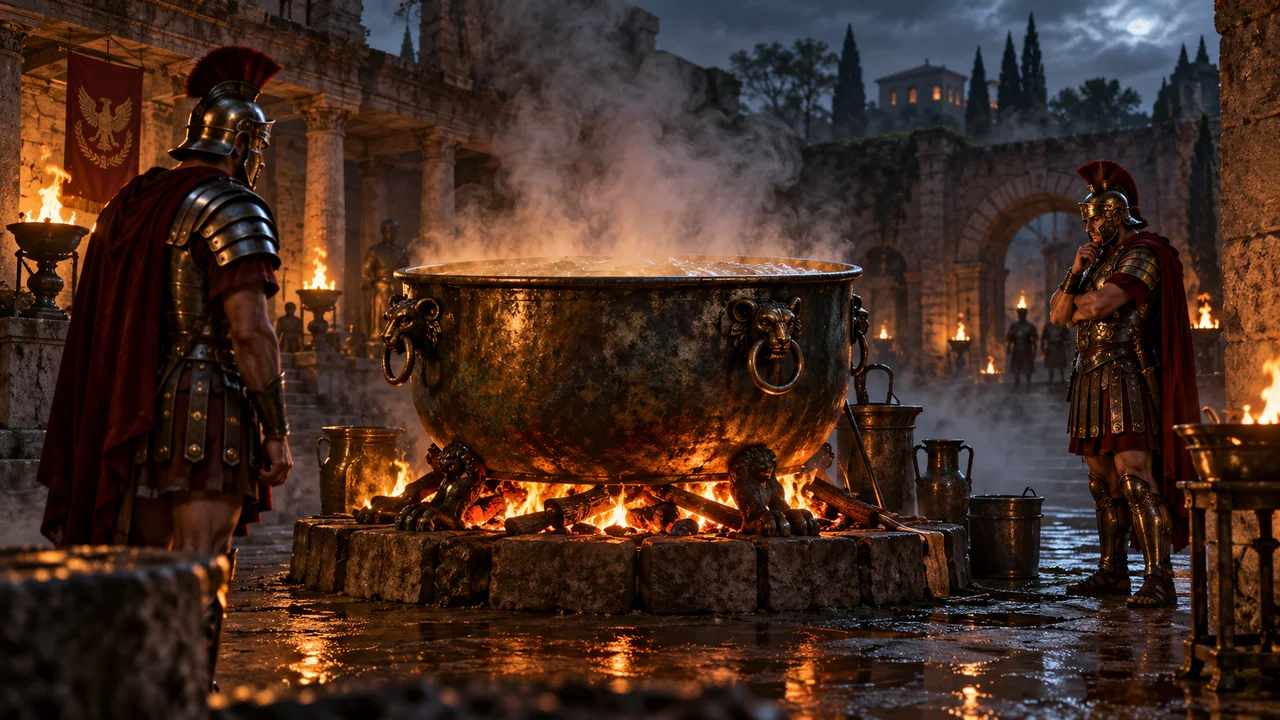
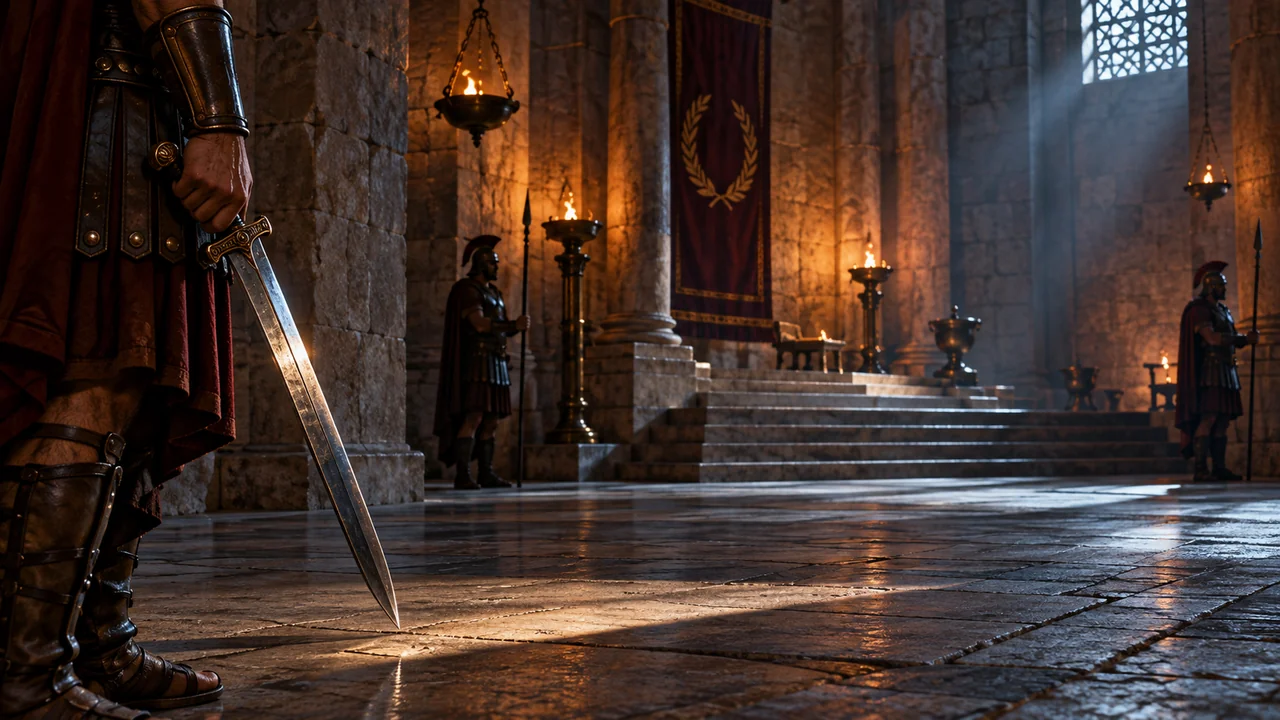
            Summary Military Decapitation by Sword (Machaera / Gladius)
The Jewish historian Flavius Josephus, in his Antiquities of the Jews (Book XIX, Chapter 7), records that Agrippa was desperate to secure the political favor of the Jerusalem populace:
"He was not at all like that Herod who had reigned before him... He loved to live continually at Jerusalem, and was exactly careful in the observance of the laws of his country. He kept himself entirely pure, nor did any day pass over his head without its appointed sacrifice."
For Agrippa, the rapidly multiplying assembly of Christians—composed of thousands of Jews who proclaimed a crucified carpenter as Messiah and welcomed uncircumcised Gentiles into table fellowship—represented a destabilizing threat to the religious establishment. To consolidate his royal legitimacy among the conservative temple aristocracy before the upcoming Passover festival, Agrippa targeted the most prominent, vocal leader of the apostolic inner triumvirate: James, the son of Zebedee.
The Brief Scriptural Record: Deconstructing Acts 12:1–2
The canonical New Testament narrative of James's death is recorded by the physician Luke in the Book of Acts with astonishing, almost jarring brevity:
"About that time Herod the king laid violent hands on some who belonged to the church. He killed James the brother of John with the sword, and when he saw that it pleased the Jews, he proceeded to arrest Peter also. This was during the days of Unleavened Bread." — Acts 12:1–3
Why does Luke dedicate entire chapters to the defense and stoning of Stephen, yet allocate a mere single sentence to the martyrdom of one of Christ’s closest companions—a member of the privileged trio (Peter, James, and John) who alone had witnessed the raising of Jairus's daughter (Mark 5:37), the glory of the Transfiguration (Matthew 17:1), and the bloody sweat of Gethsemane (Mark 14:33)?
Biblical scholars and historical critics identify three profound reasons for this economy of language:
- Universal Familiarity in the Early Church: When Luke composed Acts (c. 62–64 AD), the execution of James was an universally known, foundational watershed event across all Mediterranean assemblies. Elaborate exposition was unnecessary.
- Fulfillment of Christ's Direct Prophecy: In Mark 10:35–40, when James and his brother John famously asked to sit at the right and left hand of Jesus in his kingdom, Jesus asked them directly: "Can you drink the cup that I drink, or be baptized with the baptism with which I am baptized?" They answered, "We can." Jesus replied: "The cup that I drink you will drink." James was the very first of the twelve to drain that cup of royal martyrdom.
- The Literary Contrast with Peter's Deliverance: Luke immediately contrasts the sudden physical death of James with the miraculous angelic extraction of Peter from prison (Acts 12:6–11), emphasizing that life and death in the Kingdom of God are governed not by imperial decrees, but by sovereign divine appointment.
Clement of Alexandria's Lost Account: The Conversion of the Guard
While the canonical text concludes with the sword strike, the early church preserved a breathtaking eyewitness chronicle detailing the final moments of James’s trial.
In the seventh book of his lost theological masterpiece, the Hypotyposeis (Outlines), composed around 190 AD, Clement of Alexandria recorded a historical tradition handed down by the elders of the apostolic generation. This priceless narrative was preserved verbatim by church historian Eusebius of Caesarea in his Historia Ecclesiastical (Book II, Chapter 9):
"Clement, in the seventh book of his Hypotyposeis, produces a story worthy of memory... He says that the officer who led James to the judgment seat, seeing him bearing witness with such serenity and fearless peace, was so moved in his conscience that he confessed himself also to be a Christian. Both of them, therefore, were led away together to die. On the way, the soldier begged James to forgive him. James looked upon him for a moment, said: 'Peace be with thee,' and kissed him on the cheek. And so both of them were beheaded at the same time."
[Roman Guard Leading James to Scaffolding]
       │
       ▼
[Witnesses Unbroken Calm, Grace & Conviction]
       │
       ├──► Holy Spirit Conviction Strikes the Soldier
       │         └── Guard shouts publicly: "I too am a Christian!"
       │
       ├──► Immediate Sentence: Condemned to Die Beside His Prisoner
       │
       └──► Reconciling Kiss of Peace on the Way to Death
                 └── Both beheaded simultaneously by royal executioners
This remarkable account captures the moral power of the apostolic testimony. The Roman soldier had undoubtedly witnessed dozens of political rebels, bandits, and zealots screaming, cursing, or pleading for mercy before the executioner. In James, he encountered a supernatural composure and forgiveness that compelled him to forfeit his military career, his pension, and his physical life within minutes to share the eternal destiny of his condemned prisoner.
Forensic Traumatology of Decapitation with the Roman Gladius
Under Roman provincial jurisprudence, execution by the sword (animadversio gladio) was considered a standard military capital sentence. In the client kingdom of Herod Agrippa I, executions were carried out either using the Roman infantry sword (gladius hispaniensis) or the Hellenistic curved broadsword (machaera).
Modern forensic medicine and traumatology provide an exact anatomical reconstruction of decapitation:
- Target Anatomical Zone: The condemned prisoner was forced onto his knees, often blindfolded, with his neck flexed forward over a low wooden block. The executioner struck horizontally across the posterior cervical region, targeting the intervertebral spaces between the second (axis) and fourth cervical vertebrae (C2–C4).
- Instantaneous Neurovascular Transection:
- A skilled strike with a heavy, razor-honed blade completely severs the left and right common carotid arteries, internal jugular veins, vertebral arteries, and bilateral vagus nerves in a fraction of a millisecond.
- The immediate severance of arterial flow causes the mean arterial pressure in the circle of Willis to collapse to zero within 50 milliseconds.
- Cerebral Hypoxia and Loss of Consciousness: While popular myths claim severed heads retain consciousness for minutes, forensic neuro-trauma studies indicate that massive sudden disruption of the reticular activating system combined with instantaneous exsanguination causes electroencephalographic (EEG) flattening and total irreversible unconsciousness within 2 to 3 seconds.
James felt no prolonged torture comparable to Peter’s inversion or Andrew’s two-day suspension. His transition from the earthly fortress of Agrippa into the presence of his glorified Lord was violent, instantaneous, and definitive.
Comparative Table: Martyrdom Accounts Across the New Testament & Patristics
| Martyr | Primary Biblical / Historical Source | Date & Location | Method of Execution | Significant Detail |
|---|---|---|---|---|
| Stephen (Deacon) | Acts 7:54–60 | c. 34–35 AD, Jerusalem | Mob Stoning (Lapidatio) | First Christian martyr; saw Jesus standing at God's right hand |
| James the Greater | Acts 12:1–2, Clement of Alexandria (Hypotyp. VII) | Spring 44 AD, Jerusalem | Decapitation by Sword | First Apostle martyred; executioner confessed Christ and died beside him |
| James the Just | Josephus (Ant. XX.9.1), Hegesippus | c. 62 AD, Jerusalem | Thrown from Temple Pinnacle & Fuller's Club | Brother of Jesus; prayed for executioners from the ground |
| Peter | Eusebius (Hist. Eccl. III.1), Tacitus | c. 64–67 AD, Rome | Inverted Crucifixion | Demanded inverted cross out of humility before Christ |
| Paul | 1 Clement 5, Tertullian, Acts of Paul | c. 67 AD, Rome | Decapitation by Sword | Roman citizen privilege; martyred on Via Ostiensis |
The Spanish Translation Tradition: Santiago de Compostela vs. History
No examination of Saint James the Greater is complete without addressing the celebrated Spanish tradition of Santiago de Compostela.
According to a medieval Spanish tradition that crystallized in the 7th and 8th centuries (first appearing in Western texts like the Breviarium Apostolorum and the Chronicon of Fredegar):
- Following the dispersal of the apostles, James allegedly traveled to the Iberian Peninsula (Hispania) to preach the Gospel along the Atlantic coast.
- After his martyrdom in Jerusalem in 44 AD, his disciples miraculously transported his body across the Mediterranean in a stone boat guided by angels, landing in Galicia.
- In approximately 813 AD, a hermit named Pelagius claimed to follow a guiding star to a wooded field (Campus Stellae / Compostela), where the tomb of Saint James was allegedly uncovered, birthing the famous Camino de Santiago pilgrimage route that shaped medieval Europe.
[Jerusalem Execution (44 AD)]
       │ (Definitive Historical Reality: Martyred by Herod Agrippa I)
       ▼
[Medieval Spanish Tradition (8th-9th Century)]
       │ Translation legend: Body sailed to Galicia, Spain
       ▼
[Cathedral of Santiago de Compostela]
       │ Monumental spiritual, cultural & pilgrimage pilgrimage hub
Critical historical and literary scholars exercise careful distinction:
- Historical Fact: James was definitively executed in Jerusalem in 44 AD, as confirmed by both the canonical Book of Acts and early patristic manuscripts.
- Ecclesiastical Reality: There is zero contemporary 1st- or 2nd-century documentary evidence (neither in Paul’s Epistle to the Romans, where Paul mentions wanting to be the first to preach in Spain, nor in early Iberian church fathers like Hosius of Cordoba) demonstrating that James ever reached Spain during his brief lifetime.
- Devotional Legacy: Regardless of the historical validity of the Galician translation, the shrine of Santiago became a radiant engine of European Christian identity, hospitality, and spiritual renewal for over a millennium.
The Sovereign Hand: Why James Fell While Peter Escaped
The sudden martyrdom of James in Acts 12 raises one of the most troubling, perennial theological questions in scripture: Why does God allow one faithful apostle to be executed while miraculously dispatching an angel to break another out of prison?
Within the exact same chapter of Acts 12:
- James is struck down by Agrippa's sword; no angel intervenes, no prison doors shake, and his life is terminated in his early prime.
- Peter is placed in maximum security guarded by four squads of four soldiers each, yet an angel illuminates his cell, strikes off his chains, and leads him through the iron gate into freedom.
Were the prayers for James less fervent than the prayers for Peter? Was James less faithful, less anointed, or less valuable to the mission of the early church?
The biblical answer is an emphatic no.
In the sovereign economy of God, faithfulness is measured not by biological longevity, but by the completion of one's divinely appointed calling. James completed his race first. His blood became the fertile seed that emboldened the Jerusalem church to withstand the violent persecutions of the 1st century.
Barely a few months after executing James, King Herod Agrippa I donned a glittering silver garment in the Roman theater of Caesarea, where the populace shouted: "The voice of a god, not of a man!" Immediately, an angel of the Lord struck him down, and he was eaten by worms and died (Acts 12:21–23; Josephus, Ant. XIX.8.2).
Luke concludes Acts 12 with a triumphant, ironic climax:
"The angel struck Herod down... But the word of God grew and multiplied." — Acts 12:23–24
The earthly monarch who unsheathed the sword to destroy the church died in public agony; the Galilean fisherman who laid his neck upon the block inherited an everlasting throne among the twelve apostles of the Lamb (Revelation 21:14).
Continue Your Historical Exploration
The martyrdom of James son of Zebedee was the spark that tested the steel of the early church. Discover the complete unabridged historical transcripts, Roman court records, and forensic reconstructions:
👉 Download Volume I: The Twelve Apostles – Historical Dossier ($2.99)
Includes archaeological blueprints of 1st-century Jerusalem fortresses, complete translations of Clement of Alexandria, and critical analyses of early Christian martyrologies.
Frequently Asked Questions
Who was the first of Jesus’s twelve apostles to be martyred?
Saint James the Greater, the son of Zebedee and brother of John the Apostle, was the first of the original twelve apostles to be martyred. He was executed in Jerusalem in 44 AD by order of King Herod Agrippa I, as recorded in Acts 12:1–2.
How was Saint James the Greater executed?
James was executed by decapitation with a sword (gladius or machaera). In Roman provincial law, execution by the sword was the standard capital penalty for political and religious agitation against civic order.
Did the Roman guard who arrested James really convert to Christianity?
Yes, according to a historical tradition preserved by Clement of Alexandria (c. 190 AD) in his lost work Hypotyposeis and quoted by church historian Eusebius of Caesarea. The Roman soldier who led James to the tribunal was so moved by his serenity and faith that he publicly confessed Christ on the spot and was beheaded alongside James.
Did Saint James the Greater really travel to Spain?
While Spanish tradition asserts that James evangelized the Iberian Peninsula and that his relics are buried at Santiago de Compostela, contemporary 1st-century historical evidence shows that James spent his post-Pentecost ministry primarily in Judea until his execution in Jerusalem in 44 AD. The Spanish tradition emerged in textual records in the 8th century.
Frequently Asked Questions
Who was the first of Jesus’s twelve apostles to be martyred?
Saint James the Greater, the son of Zebedee and brother of John the Apostle, was the first of the original twelve apostles to be martyred. He was executed in Jerusalem in 44 AD by order of King Herod Agrippa I, as recorded in Acts 12:1–2.
How was Saint James the Greater executed?
James was executed by decapitation with a sword (gladius or machaera). In Roman provincial law, execution by the sword was the standard capital penalty for political and religious agitation against civic order.
Did the Roman guard who arrested James really convert to Christianity?
Yes, according to a historical tradition preserved by Clement of Alexandria (c. 190 AD) in his lost work Hypotyposeis and quoted by church historian Eusebius of Caesarea. The Roman soldier who led James to the tribunal was so moved by his serenity and faith that he publicly confessed Christ on the spot and was beheaded alongside James.
Did Saint James the Greater really travel to Spain?
While Spanish tradition asserts that James evangelized the Iberian Peninsula and that his relics are buried at Santiago de Compostela, contemporary 1st-century historical evidence shows that James spent his post-Pentecost ministry primarily in Judea until his execution in Jerusalem in 44 AD. The Spanish tradition emerged in textual records in the 8th century.
Related Research Dossiers
View all 120 articles →
The Spear at Mylapore: Did the Apostle Thomas Really Build Churches in Ancient India?

Bound for Two Days: The Unspoken Agony of St. Andrew on the Crux Decussata in Greece