Subject Scope: The Widow’s Mite (Lepton of Alexander Jannaeus): Primary Sources, Numismatic Archaeology, and Mark 12:42
Historical Context: Ancient Near Eastern stratigraphy, Levant archaeological surveys, and Semitic epigraphy.
Primary Evidence: Monumental stelae, bullae seals, ceramic typology, and calibrated AMS radiocarbon determinations.
Investigation Highlights: The Encounter in the Court of the Women: Mark 12:41–44 • The Numismatic Profile of the Lepton (Prutah) • The Thirteen Trumpet Chests (Shofarot) of the Gazophylakion
Scholarly Consensus: Aligned with published excavation reports from leading Near Eastern archaeological institutes.
The Encounter in the Court of the Women: Mark 12:41–44
During Passion Week, shortly before His arrest and crucifixion, Jesus sat opposite the Temple treasury:
"And he sat down opposite the treasury and watched the people putting money into the offering box. Many rich people put in large sums. And a poor widow came and put in two small copper coins, which make a penny. And he called his disciples to him and said to them, 'Truly, I say to you, this poor widow has put in more than all those who are contributing to the offering box. For they all contributed out of their abundance, but she out of her poverty has put in everything she had, all she had to live on.'" — Mark 12:41–44
The Greek text provides precise numismatic terminology:
- The Coins: Duo lepta ("two lepta").
- The Conversion: Ho estin kodrantes ("which is a quadrans").
This biographical snapshot anchors the narrative within the physical architecture of the Herodian Temple and the daily monetary circulation of Roman Judea.
+----------------------------------------------------------------------------------------------------+
|               THE NUMISMATIC IDENTITY OF THE "WIDOW'S MITE"                                        |
+--------------------------+-----------------------+-------------------+-----------------------------+
| GREEK TERM               | HEBREW EQUIVALENT     | COIN TYPE         | ISSUING AUTHORITY           |
+--------------------------+-----------------------+-------------------+-----------------------------+
| Lepton (Thin / Peeling)  | Prutah / Chazi Prutah | Tiny Bronze Disk  | Alexander Jannaeus          |
|                          |                       | (1.0–1.5 grams)   | (Hasmonean King, 103–76 BC) |
| Kodrantes (Quadrans)     | 1/4 of a Roman As     | Roman Imperial Cu | Standard Roman Copper Coin  |
+--------------------------+-----------------------+-------------------+-----------------------------+
The Numismatic Profile of the Lepton (Prutah)
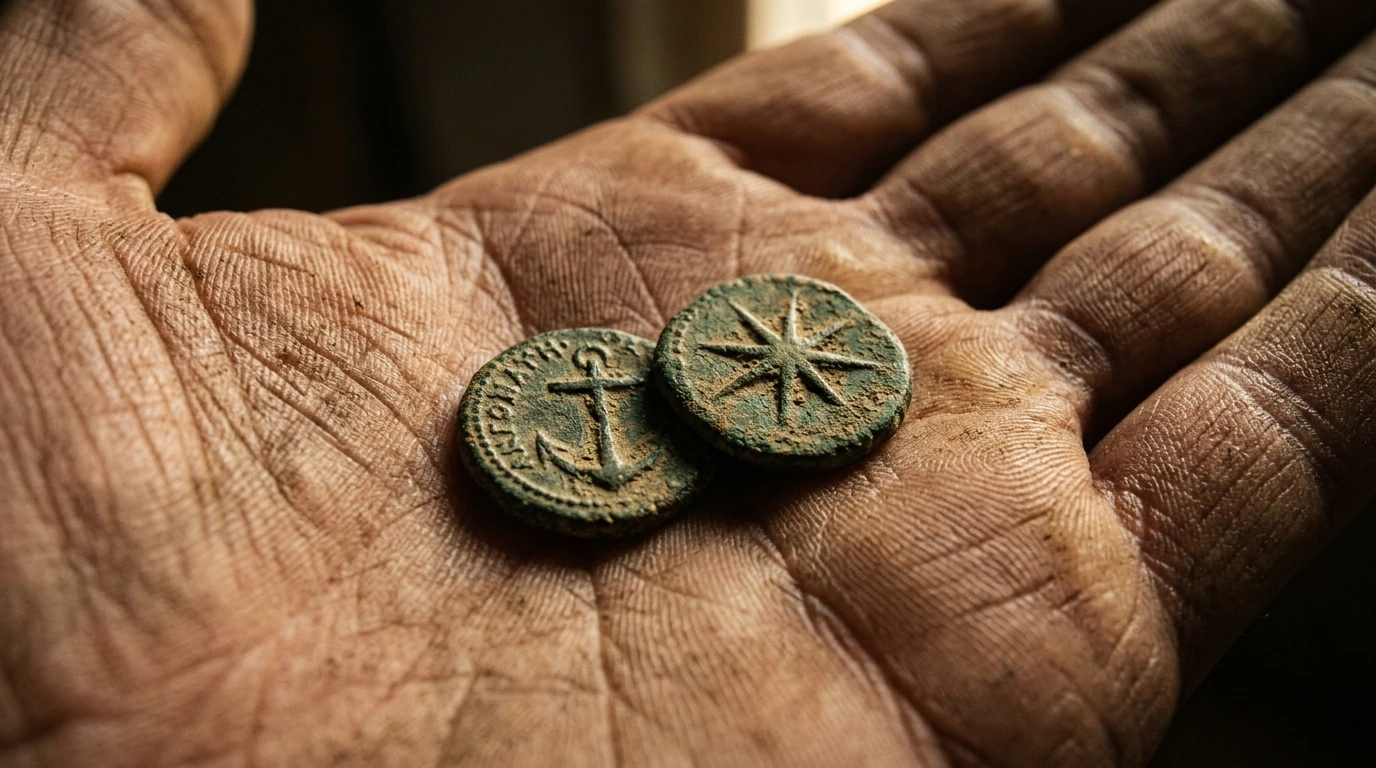
Archaeological excavations across Jerusalem—including the Southern Wall excavations, the City of David, and the Jewish Quarter—have unearthed tens of thousands of these tiny bronze coins. Numismatists confirm that the specific coin known as the lepton was struck primarily under the Hasmonean High Priest and King Alexander Jannaeus (Yehonatan ha-Melech, reigned 103–76 BC):
- Massive Production: Alexander Jannaeus minted millions of these tiny bronze pieces to fuel local everyday market transactions. Because bronze coins were practically indestructible and intrinsic metal value was negligible, they remained in continuous circulation throughout Judea for over 150 years, well into the 1st century AD.
- The Obverse Iconography: A maritime anchor surrounded by a circle and the Greek inscription: ALEXANDROU BASILEOS ("Of King Alexander").
- The Reverse Iconography: An eight-spoked star (or radiant wheel) enclosed within a circle, surrounded by the Paleo-Hebrew inscription between the rays: Yehonatan ha-Melech ("King Jonathan").
- Physical Degradation: Due to more than a century of friction in hands, pockets, and clay jars, most lepta found in 1st-century archaeological strata are worn smooth, paper-thin, and often off-center or clipped.
+----------------------------------------------------------------------------------------------------+
|               NUMISMATIC SPECIFICATIONS: THE HASMONEAN LEPTON OF ALEXANDER JANNAEUS                |
+--------------------------+-------------------------------------------------------------------------+
| ATTRIBUTE                | ARCHEOLOGICAL SPECIFICATION                                             |
+--------------------------+-------------------------------------------------------------------------+
| 1. Metallic Composition  | Base Bronze Alloy (Copper + Trace Tin/Lead)                             |
| 2. Weight Range          | 1.0 to 1.8 Grams (Extremely Lightweight)                                |
| 3. Diameter              | 12 to 15 Millimeters (Roughly the size of a modern button)               |
| 4. Hebrew Name           | Prutah (from the root paraṭ, meaning "small piece of metal")           |
+--------------------------+-------------------------------------------------------------------------+
The Thirteen Trumpet Chests (Shofarot) of the Gazophylakion
Jesus was not watching a solitary wooden box. In the Court of the Women (Ezrat Nashim)—the broad courtyard of the Temple accessible to both Jewish men and women—stood the Gazophylakion (Temple Treasury).
According to the Mishnah (Shekalim 6:1, 6:5), the treasury consisted of thirteen bronze collection receptacles called Shofarot (trumpets):
- Architectural Shape: Made of bronze, narrow at the top opening and flaring widely toward the base, resembling the curved horn of a ram (shofar). This design prevented dishonest worshipers from reaching their hands inside to steal coins.
- Acoustic Reality: When wealthy aristocrats, Pharisaic merchants, and Sadducean landowners tossed dozens of heavy silver Tyrian shekels, half-shekels, and Roman denarii into the bronze flutes, the coins cascaded down the metal horn with a loud, ringing clamor that resonated across the entire courtyard.
- The Whisper of the Lepta: When the destitute widow approached, she dropped in two tiny, featherweight bronze lepta. They fell into the bronze horn with a nearly imperceptible, muffled click.
Nobody in the bustling crowd noticed her contribution—except the Son of God, who sat deliberately observing not how much people gave, but how much they had left.
+----------------------------------------------------------------------------------------------------+
|               THE THIRTEEN BRONZE TRUMPET CHESTS (SHOFAROT) IN THE TEMPLE                          |
+--------------------------+-------------------------------------------------------------------------+
| CHEST NUMBER             | DESIGNATED PURPOSE (MISHNAH SHEKALIM 6:5)                               |
+--------------------------+-------------------------------------------------------------------------+
| Chests 1 & 2             | Current and past year's half-shekel Temple tax dues                     |
| Chests 3, 4, 5           | Offerings for turtledoves, pigeons, and burnt offerings                 |
| Chests 6, 7, 8           | Wood, incense, and golden vessels for the sanctuary                     |
| Chests 9 to 13           | Free-will offerings (Nedavah) for general altar maintenance             |
+--------------------------+-------------------------------------------------------------------------+
The Economic Scale: How Small Was the Widow’s Offering?
To appreciate the radical nature of her gift, one must calculate the monetary hierarchy of the 1st-century Roman economy:
+----------------------------------------------------------------------------------------------------+
|               CURRENCY SCALE OF 1ST-CENTURY ROMAN JUDEA                                            |
+--------------------------+-----------------------+-------------------+-----------------------------+
| COIN DENOMINATION        | FRACTIONAL VALUE      | PURCHASING POWER  | EQUIVALENT LABORED TIME     |
+--------------------------+-----------------------+-------------------+-----------------------------+
| 1 Tyrian Shekel (Sela)   | 4 Roman Denarii       | 4 Sheep or Grain  | 4 Days of Labor             |
| 1 Roman Denarius         | 1 Day's Standard Wage | Daily Subsistence | 1 Full 12-Hour Day          |
| 1 Roman As (Assarion)    | 1/16 of a Denarius    | 2 Sparrows (Mt 10)| 45 Minutes of Labor         |
| 1 Roman Quadrans         | 1/64 of a Denarius    | Small Loaf / Cup  | 11 Minutes of Labor         |
| 1 Lepton (Widow's Mite)  | 1/128 of a Denarius   | Handful of Olives | Less than 6 Minutes of Labor|
+--------------------------+-----------------------+-------------------+-----------------------------+
Two lepta equaled exactly one quadrans (1/64th of a denarius).
- In purchasing power, two lepta could barely purchase a handful of cheap wild figs, a sip of cheap vinegar wine, or a crust of stale barley bread.
- Yet Mark notes: she had two lepta. She could have legally and morally justified keeping one coin for her evening meal and giving the other to God.
- Instead, she cast in both: "All that she had to live on" (holon ton bion autes, literally "her whole life").
Three-Tier Evidentiary Evaluation: Material Artifacts
+----------------------------------------------------------------------------------------------------+
|               THREE-TIER EVIDENTIARY AUDIT: THE WIDOW'S MITE AND TEMPLE FINDS                      |
+--------------------------+-----------------------+-------------------+-----------------------------+
| ARTIFACT / FIND          | LOCATION / EXCAVATION | CHRONOLOGY        | EVIDENTIARY SIGNIFICANCE    |
+--------------------------+-----------------------+-------------------+-----------------------------+
| 1. Alexander Jannaeus    | Jerusalem Excavations | Minted 103–76 BC  | Direct material match with  |
|    Bronze Lepta (Thousands| (City of David, Ophel)| (In use 1st C. AD)| the "Widow's Mite" coins    |
| 2. Southern Temple Steps | Ophel Archaeological P| Herodian Era      | Staircase where pilgrims    |
|    and Double Gate       | (Benjamin Mazar)      | (1st Cent. AD)    | entered Court of Women      |
| 3. Mishnah Shekalim      | Codified Oral Law     | 2nd Cent. AD      | Documentation of the 13     |
|    Tractate              | (Codex Kaufmann)      | (Compiling 1st C.)| bronze trumpet chests       |
| 4. Stone Measuring Table | Jewish Quarter Museum | 1st Cent. AD      | Proof of standardized       |
|    (Market Inspector)    | (Nahman Avigad)       |                   | volume and price controls   |
+--------------------------+-----------------------+-------------------+-----------------------------+
Frequently Asked Questions
Why does Mark explain that two lepta equal a quadrans?
The Gospel of Mark was written primarily for a Roman Gentile audience in Rome. Because Roman readers were unfamiliar with local Judean bronze lepta, Mark provides an immediate currency conversion into the well-known Roman copper denomination: ho estin kodrantes ("which is a quadrans").
Were lepta the only coins accepted in the trumpet chests?
No. The trumpet chests accepted all legal silver and bronze coins, including Tyrian shekels, Roman denarii, and local copper prutot. The free-will chests (Nedavah) accepted small bronze coins from common worshipers, whereas the official Temple tax chests accepted only Tyrian silver.
Why did Alexander Jannaeus coins stay in circulation for 150 years?
Bronze coins had no significant silver content to tempt hoarders or foreign conquerors to melt them down. Because small retail transactions (buying eggs, herbs, bread, and water) required tiny denominations, successive Roman prefects and Jewish rulers simply allowed millions of existing Hasmonean lepta to remain in everyday commercial circulation.
How does the widow's offering contrast with the scribes in Mark 12:40?
The narrative juxtaposition is intentional: immediately before observing the widow, Jesus condemns the scribes who "devour widows' houses" (Mark 12:40). While corrupt religious elites exploited the vulnerable under the guise of piety, this destitute widow demonstrated pure, unadulterated devotion, surrendering her very survival to God.
Primary Sources & Scholarly Archives
Editorial Standard →Official archaeological field reports, certified stratigraphy surveys, and Semitic epigraphy catalogs.
Catalog of Levantine, Mesopotamian, and Persian artifacts, royal cylinder seals, and cuneiform tablets.
Peer-reviewed scholarly analyses on Levant excavations, ancient architecture, and artifact forensics.
Frequently Asked Questions
Why does Mark explain that two lepta equal a quadrans?
Mark wrote for Roman believers unfamiliar with provincial Judean coins, converting the Jewish lepta into the standard Roman copper quadrans.
Were lepta the only coins accepted in the trumpet chests?
No. The 13 trumpet chests accepted various coins; free-will chests received bronze lepta, while Temple tax chests took Tyrian silver.
Why did Alexander Jannaeus coins stay in circulation for 150 years?
Base metal bronze coins were durable and never melted down; their massive production made them the universal small change of Roman Judea.
How does the widow’s offering contrast with the scribes in Mark 12:40?
Jesus juxtaposes the corrupt scribes who "devour widows’ houses" against this destitute widow who models total sacrificial faith.
Related Research Dossiers
View all 515 research dossiers →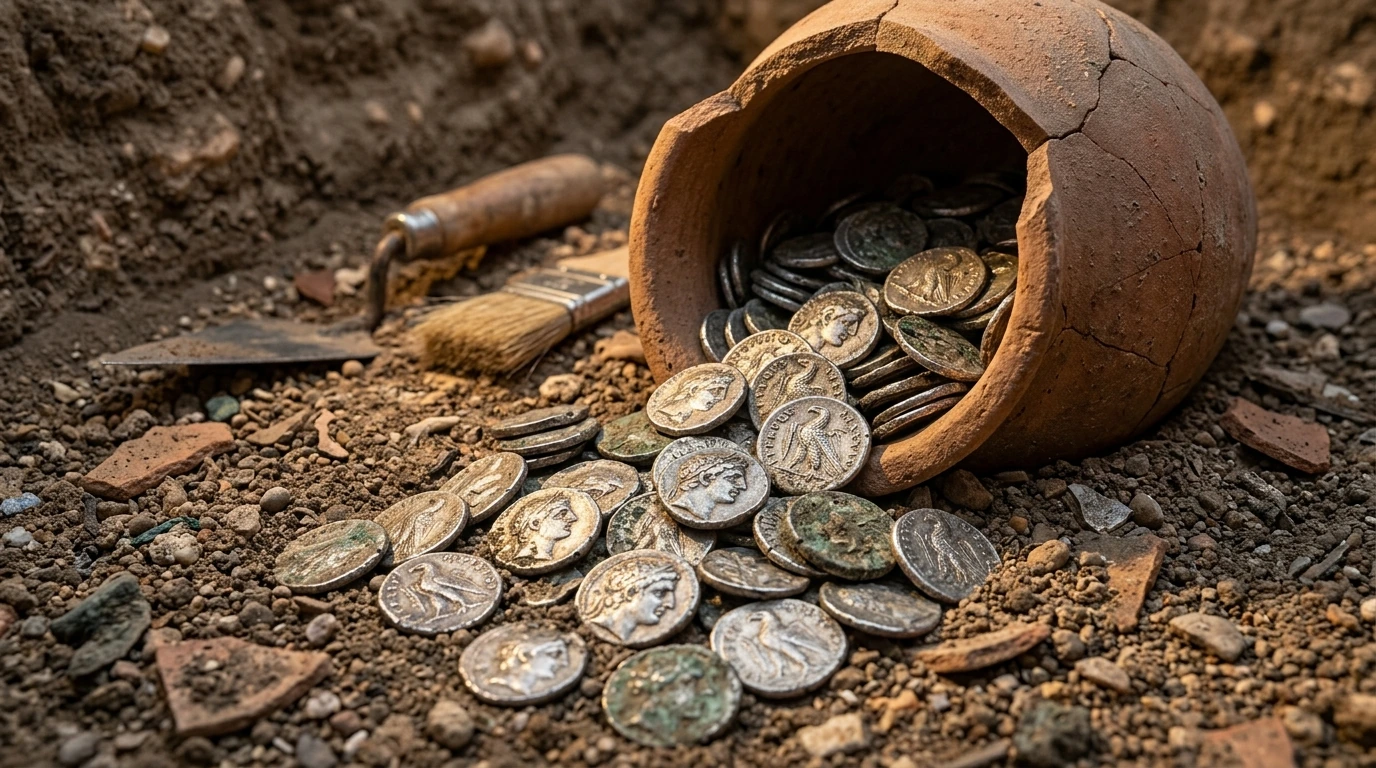
The Tyrian Shekel, Temple Tax, and the 30 Pieces of Silver: Numismatics, Matthew 26, and Judas’s Betrayal
Render to Caesar: The Tribute Penny, Tiberius Denarius, and Mark 12 in Primary Roman Numismatic Sources
