Subject Scope: Render to Caesar: The Tribute Penny, Tiberius Denarius, and Mark 12 in Primary Roman Numismatic Sources
Historical Context: Ancient Near Eastern stratigraphy, Levant archaeological surveys, and Semitic epigraphy.
Primary Evidence: Monumental stelae, bullae seals, ceramic typology, and calibrated AMS radiocarbon determinations.
Investigation Highlights: The Lethal Trap: Pharisees and Herodians Unite • The Tribute Penny: The Silver Denarius of Tiberius • The Inscription: Imperial Deification and Blasphemy
Scholarly Consensus: Aligned with published excavation reports from leading Near Eastern archaeological institutes.
The Lethal Trap: Pharisees and Herodians Unite
In Mark 12:13–17, during Passion Week in Jerusalem, an unnatural alliance of political enemies joined forces to assassinate Jesus Christ intellectually and legally:
- The Pharisees: Nationalist, anti-Roman religious conservatives who resented imperial subjugation.
- The Herodians: Secular political pragmatists who supported the Roman puppet dynasty of Herod Antipas.
Approaching Jesus with oily flattery ("Teacher, we know that you are true and do not care about anyone's opinion," Mark 12:14), they sprang their perfectly constructed dilemma:
"Is it lawful to pay taxes to Caesar, or not? Should we pay them, or should we not?"
It was a lethal pincer trap:
- If Jesus said "Yes, pay the tax": He would be instantly discredited before the Jewish crowds as a traitor to Israel and a collaborator with pagan oppressors.
- If Jesus said "No, do not pay": The Herodians would immediately arrest Him on charges of sedition and treason against the Roman Empire, handing Him over to Pontius Pilate for crucifixion.
Jesus’ response did not merely sidestep the trap; He revolutionized the relationship between human government, divine sovereignty, and individual conscience for all time:
"Bring me a denarius and let me look at it." — Mark 12:15
+----------------------------------------------------------------------------------------------------+
|               THE TRIBUTE DILEMMA AT A GLANCE                                                      |
+--------------------------+-----------------------+-------------------------------------------------+
| ANSWER OPTION            | POLITICAL RESULT      | LETHAL CONSEQUENCE                              |
+--------------------------+-----------------------+-------------------------------------------------+
| "Yes, Pay Caesar"        | Religious Apostasy    | Denounced as collaborator; mob abandons Him     |
| "No, Refuse Caesar"      | Civil Rebellion       | Arrested by Roman legion for sedition/treason   |
| **Jesus' Answer**        | **Radical Sovereignty**| **"Render to Caesar what is Caesar's, and to    |
|                          |                       |  God what is God's"**                           |
+--------------------------+-----------------------+-------------------------------------------------+
The Tribute Penny: The Silver Denarius of Tiberius
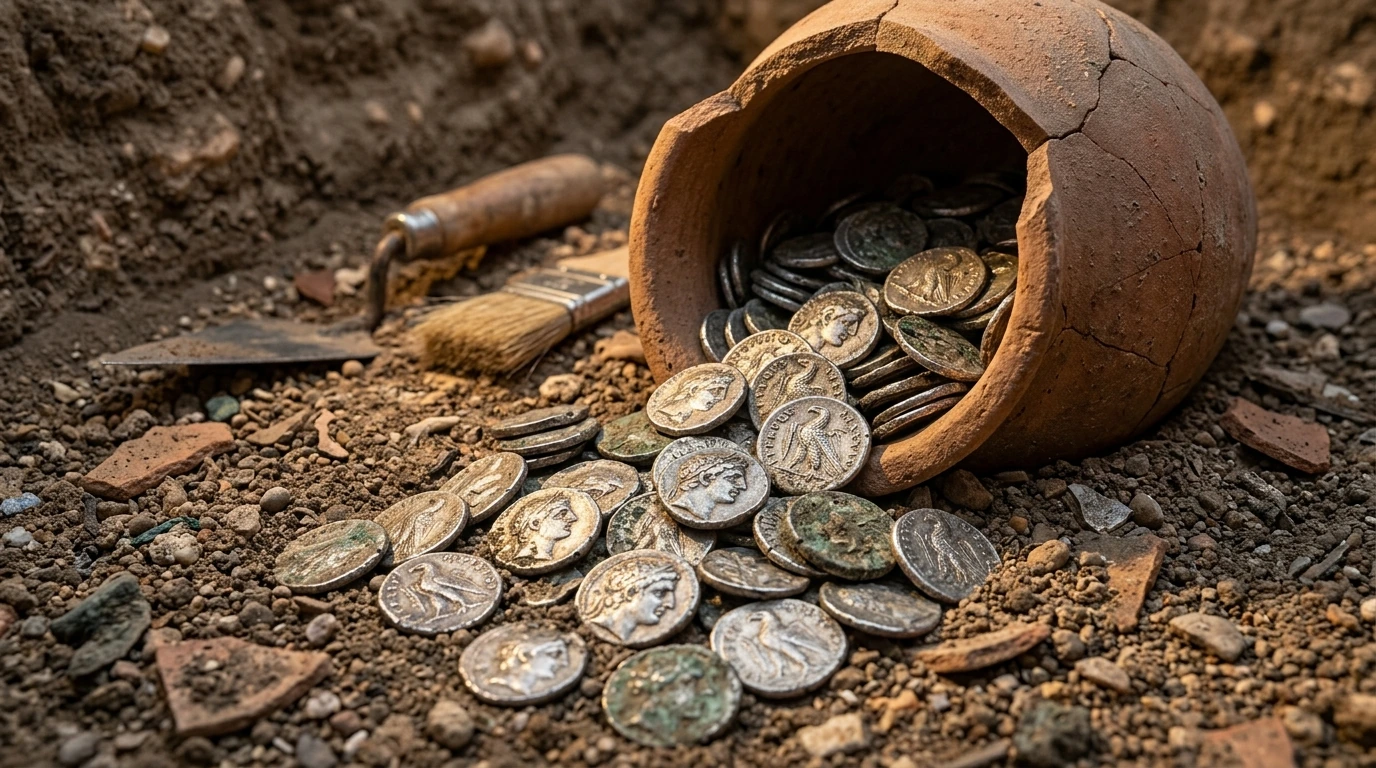
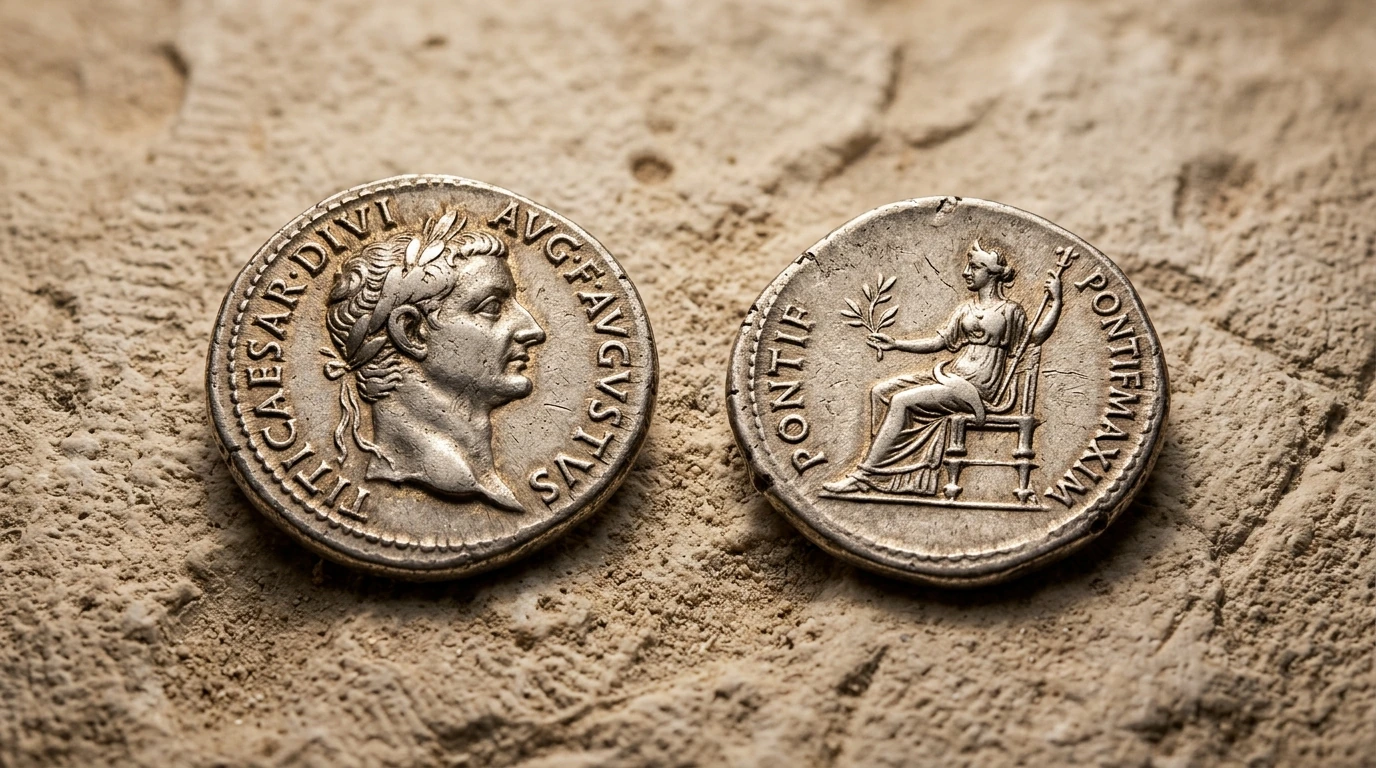
The coin handed to Jesus in the Temple courts was the famous silver denarius of Emperor Tiberius (reigned AD 14–37), commonly known in numismatic history as the Tribute Penny:
- Mint of Origin: Struck in massive quantities at the imperial mint of Lugdunum (modern Lyon, France).
- Physical Dimensions: Approximately 19 millimeters in diameter, weighing 3.8 grams, composed of roughly 95% silver.
- Purchasing Power: One denarius represented the standard daily wage for an agricultural laborer or Roman foot soldier (Matthew 20:2).
The Inscription: Imperial Deification and Blasphemy
When Jesus asked: "Whose likeness [eikon] and inscription [epigraphe] is this?", the coin carried shocking theological assertions:
Obverse (Heads):
- Image: The laureate head of Emperor Tiberius, facing right.
- Latin Inscription: TI CAESAR DIVI AVG F AVGVSTVS
- Expanded: Tiberius Caesar Divi Augusti Filius Augustus
- Translation: "Tiberius Caesar, Son of the Divine Augustus, Augustus"
- The coin explicitly claimed that Tiberius was the biological son of a god (divi filius)!
Reverse (Tails):
- Image: A female figure seated on a throne (representing Livia, mother of Tiberius, as Pax, the goddess of Peace), holding an olive branch and a scepter.
- Latin Inscription: PONTIF MAXIM
- Expanded: Pontifex Maximus
- Translation: "High Priest"
- The pagan emperor claimed supreme spiritual high priesthood over the Roman world!
To an observant Jew, holding this coin in the holy Temple was an offensive encounter with idolatry and blasphemy.
The Poll Tax (Tributum Capitis) and the Zealot Revolt
The tax in question was the tributum capitis (head tax or poll tax), imposed directly on every individual in Judea following the annexation of Judea as an official Roman province in AD 6:
- When the Roman governor Quirinius ordered the initial census in AD 6 to assess this tax, it ignited the bloody revolt of Judas the Galilean (Acts 5:37), who founded the radical Zealot movement.
- The Zealots taught that paying taxes to Caesar was a treasonous sin against Yahweh, because God alone was the King of Israel.
- The denarius was the only currency accepted by Roman tax collectors for the poll tax.
Whose Image and Inscription? The Imago Dei
Notice Jesus' brilliant pedagogical strategy:
- He Did Not Have a Denarius: Jesus asked them to produce one: "Bring me a denarius." By pulling a denarius out of their own pockets inside the Temple, His hypocritical accusers proved that they were already using, benefiting from, and circulating Caesar's imperial coinage!
- Caesar’s Coin Belongs to Caesar: The coin carried Caesar's face and name; it was his property, minted for his economy:
"Render to Caesar the things that are Caesar's..." (Apodote ta Kaisaros Kaisari)
- The Supreme Punchline: The Imago Dei:
"...and to God the things that are God's." (kai ta tou Theou to Theo)
The Greek verb apodote means "to pay back a debt." Jesus’ logic was inescapable:
- If the coin bears Caesar’s image (eikon), give it back to Caesar.
- But what bears the image (eikon) of God?
- Man! (Genesis 1:26–27: "Let us make man in our image, after our likeness").
- Caesar may claim your silver coins, but God claims your very life, heart, mind, and soul!
Comparative Numismatic Matrix
+----------------------------------------------------------------------------------------------------+
|                         ROMAN COINAGE IN FIRST-CENTURY JUDEA                                       |
+--------------------------+-----------------------+-------------------+-----------------------------+
| COIN NAME                | RULER / ISSUER        | METAL             | BIBLICAL APPEARANCE         |
+--------------------------+-----------------------+-------------------+-----------------------------+
| Denarius (Tribute Penny) | Tiberius Caesar       | Silver (3.8g)     | Mark 12:15; Matt 22:19      |
| Tyrian Shekel            | Auton. Tyre / Temple  | Silver (14.2g)    | Temple tax; 30 pieces       |
| Bronze Prutah            | Pontius Pilate        | Copper / Bronze   | Local market trade          |
| Roman As                 | Imperial Provincial   | Bronze            | Two sparrows for an as      |
+--------------------------+-----------------------+-------------------+-----------------------------+
Frequently Asked Questions
Was the Tribute Penny definitely a denarius of Tiberius?
Over 95% of numismatic scholars agree that the denarius of Tiberius (the PONTIF MAXIM type) was the coin circulating in Judea during Jesus' public ministry (c. AD 30–33). While occasional denarii of Augustus also circulated, Tiberius was the reigning Caesar.
Does Romans 13 contradict Mark 12?
No. In Romans 13:1–7, the Apostle Paul elaborates on Jesus’ teaching, explaining that civil government is ordained by God to maintain public order and punish evil. Christians are commanded to pay taxes, honor magistrates, and live as peaceful citizens, while reserving supreme worship for God alone.
Primary Sources & Scholarly Archives
Editorial Standard →Official archaeological field reports, certified stratigraphy surveys, and Semitic epigraphy catalogs.
Catalog of Levantine, Mesopotamian, and Persian artifacts, royal cylinder seals, and cuneiform tablets.
Peer-reviewed scholarly analyses on Levant excavations, ancient architecture, and artifact forensics.
Related Research Dossiers
View all 515 research dossiers →
Deborah and Jael: Historical Evidence, Ancient Iron Chariots, and the Canaanite City of Hazor

Deborah, Jael, and Sisera: 10 Verified Archaeological Facts vs. Popular Myths