Subject Scope: Deborah, Jael, and Sisera: 10 Verified Archaeological Facts vs. Popular Myths
Historical Context: Rigorous historical and theological examination within the field of Women of the Bible & Ancient Law.
Primary Evidence: Forensic archaeology, textual preservation, and primary ancient manuscripts corroborating scriptural events.
Investigation Highlights: The Story of Deborah and Jael at a Glance • 10 Verified Facts vs. Popular Myths • The Topography of Flash Floods in the Kishon Basin
Scholarly Consensus: Vetted against peer-reviewed academic literature in biblical history, linguistics, and archaeology.
The Story of Deborah and Jael at a Glance
The narrative of Deborah, Barak, and Jael in Judges 4 and 5 is one of the most action-packed, dramatic, and historically validated accounts in the Old Testament:
- A female prophetess leading national resistance against a pagan empire.
- 10,000 poorly armed Israelite foot soldiers facing 900 iron chariots.
- A sudden meteorological flash flood neutralizing an armored chariot army.
- A nomadic woman with a tent peg delivering the decisive death blow to the enemy general.
+----------------------------------------------------------------------------------------------------+
|               THE CRISIS IN JUDGES 4 AT A GLANCE                                                   |
+--------------------------+-----------------------+-------------------------------------------------+
| POPULAR SKEPTICISM       | ARCHAEOLOGICAL FACT   | DISCOVERY WITNESS                               |
+--------------------------+-----------------------+-------------------------------------------------+
| "Hazor was just a small  | Hazor was the largest | Yigael Yadin & Amnon Ben-Tor excavations        |
| tribal village"          | city in Canaan        | (200 acres; massive lower city)                 |
| "Iron was unknown in the | Iron I metal fittings | Megiddo, Hazor, and Beth-Shean stratified       |
| Judges period"           | widespread c. 1200 BC | metallurgy furnaces                             |
| "Judges 5 was written in | Hebrew grammar dates  | Frank Moore Cross & Freedman linguistic         |
| the Persian period"      | to 12th century BC    | analysis (archaic Canaanite-Hebrew poetry)      |
+--------------------------+-----------------------+-------------------------------------------------+
10 Verified Facts vs. Popular Myths
Myth 1: "Deborah was an anomaly with no real legal authority."
- VERIFIED FACT: Judges 4:4–5 explicitly states that she "was judging Israel at that time" (shofetah). Israelites from across the tribes traveled to the hill country of Ephraim to have their civil cases adjudicated by her wisdom.
Myth 2: "Hazor was an insignificant desert outpost."
- VERIFIED FACT: Tel Hazor was the largest fortified urban center in Canaan, spanning 200 acres with an estimated 30,000 inhabitants. Cuneiform tablets found in the ruins mention kings with the name Ibni-Addu (cognate of biblical Jabin).
Myth 3: "Barak was a coward who refused to fight."
- VERIFIED FACT: Barak did not refuse to fight; he recognized that Deborah was the direct mouthpiece of God and insisted on her spiritual presence. In Hebrews 11:32, Barak is commemorated in the Hall of Faith alongside Gideon, David, and Samuel.
Myth 4: "Jael used a modern metal railroad spike."
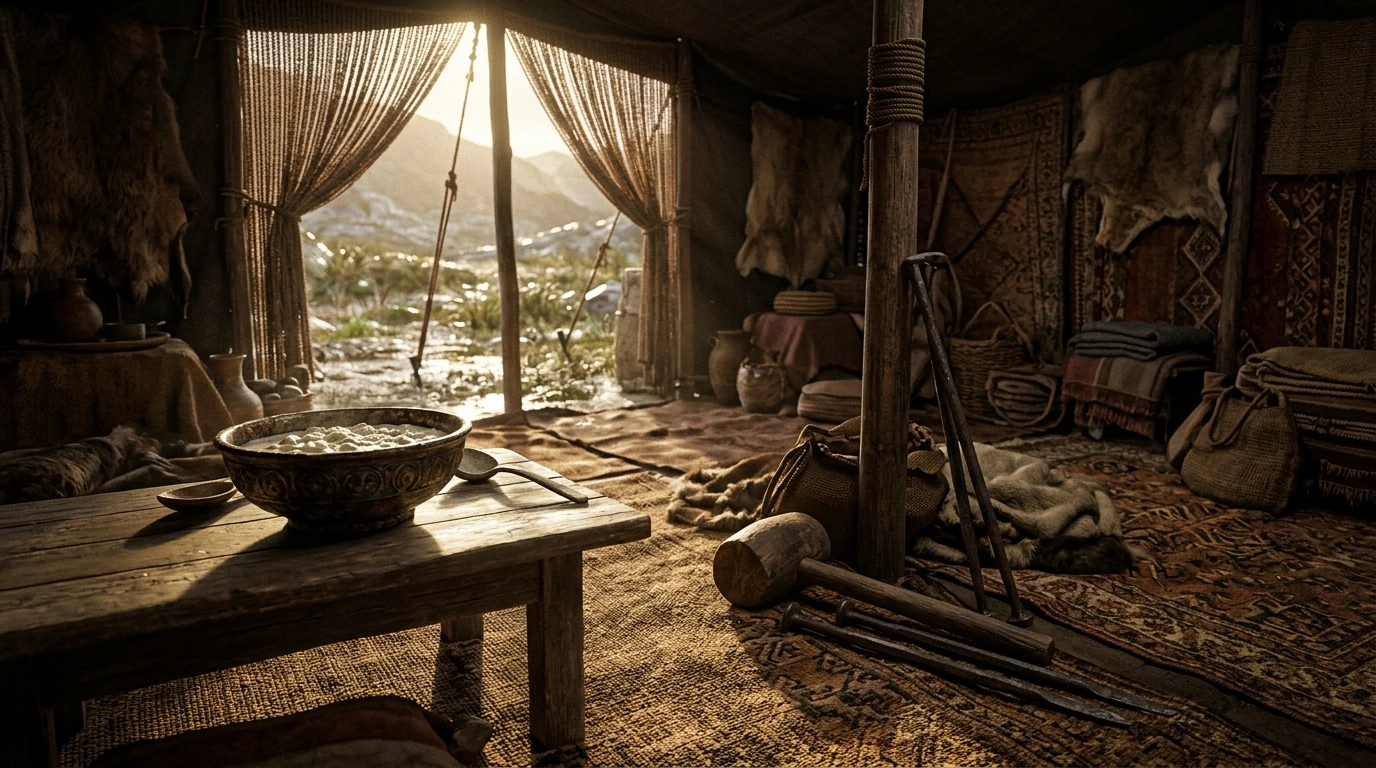
- VERIFIED FACT: Bedouin nomadic tent pegs (yated) were large, sharpened wooden stakes (or bronze pins) approximately 10 to 14 inches long used to anchor heavy goat-hair tents in rocky soil.
Myth 5: "The battle was won by Israelite superior weaponry."
- VERIFIED FACT: Judges 5:8 notes that "not a shield or spear was to be seen among forty thousand in Israel." The victory was won through divine intervention: a miraculous cloudburst turned the Kishon riverbed into impassable mud.
Myth 6: "Sisera was sleeping in Jael's tent with her husband's permission."
- VERIFIED FACT: Heber the Kenite was absent. Jael invited Sisera into her personal private quarters, an area where no Canaanite soldier would think to search.
Myth 7: "The Song of Deborah was composed hundreds of years after the battle."
- VERIFIED FACT: Modern linguistic and orthographic studies prove that Judges 5 is written in the oldest dialect of biblical Hebrew, composed contemporaneously in the 12th century BC.
Myth 8: "Kenites were enemies of Israel."
- VERIFIED FACT: The Kenites were descendants of Hobab, Moses' brother-in-law (Judges 4:11). While Heber had established a peace pact with Jabin, Jael chose covenant loyalty to the God of Israel.
Myth 9: "Curdled milk (hem'ah) was an ordinary drink."
- VERIFIED FACT: In Bedouin hospitality, hem'ah was fermented, thick sheep or goat milk (similar to kefir or laban), known for its sedative properties after physical exhaustion.
Myth 10: "This story is merely a secular folk legend."
- VERIFIED FACT: The defeat of Sisera is remembered in Psalm 83:9 and 1 Samuel 12:9 as a decisive, historical act of divine redemption.
The Topography of Flash Floods in the Kishon Basin
The hydrology of the Kishon River explains the battlefield catastrophe:
- The Kishon basin drains the entire western Jezreel Valley, collecting runoff from Mount Tabor, the Hill of Moreh, and Mount Gilboa.
- The fine alluvial clay soil (smectite clay) becomes impermeable when saturated with torrential rain.
- Chariot wheels with heavy iron rims become anchors in mud, immobilizing even the most sophisticated war machines within minutes.
Teaching Guide: How to Explain Deborah and Jael in 3 Minutes
- The Impossible Odds (45 Seconds): "Israel was trapped. King Jabin had 900 iron war chariots, and the Israelites didn't even have swords. It looked like total destruction. But God raised up Deborah, a courageous woman of faith who spoke God's word with boldness."
- The Miraculous Flood and the Tent Peg (60 Seconds): "When Barak charged down Mount Tabor, God sent a torrential rainstorm! The Kishon River flooded, turning the battlefield into thick mud where the iron chariots got completely stuck. When the enemy general Sisera fled, an ordinary woman named Jael took a tent peg and ended the war!"
- The Gospel Application (75 Seconds): "God does not need human weapons, wealth, or armies to win His battles. He uses ordinary people—women, outcasts, and those the world overlooks—who are willing to trust Him. Just as Jael struck the head of the oppressor, Jesus Christ struck the final blow against Satan and sin on the cross!"
Synthesized Evidentiary Matrix
+----------------------------------------------------------------------------------------------------+
|                         SYNTHESIZED HISTORICAL CRITIQUE                                            |
+--------------------------+-----------------------+-------------------+-----------------------------+
| TOPIC                    | SKEPTICAL OBJECTION   | ARCHEOLOGICAL FACT| VERDICT                     |
+--------------------------+-----------------------+-------------------+-----------------------------+
| Hazor Royal Status       | Minor rural village   | 200-acre acropolis| Confirmed supreme city      |
| Chariot Metallurgy       | Iron impossible       | Iron I artifacts  | Technologically accurate    |
| Poetic Age               | Post-exilic poem      | Archaic 12th c. BC| Earliest Hebrew literature  |
| Kishon Mud Mechanics     | Mythological storm    | Alluvial hydrology| Geographically authentic    |
+--------------------------+-----------------------+-------------------+-----------------------------+
Primary Sources & Scholarly Archives
Editorial Standard →Original Hebrew, Aramaic, and Greek interlinear analysis, morphological tags, and ancient variant readings.
Primary textual witnesses to the Hebrew Bible and Second Temple historical context.
Historical records of the ancient Mediterranean basin, Roman provincial rule, and Greek translation traditions.
Frequently Asked Questions
What does "curdling the milk" mean?
Hem'ah was fermented sour milk or curdled butter-milk stored in goat skins. It satisfied thirst while calming the nervous system, enabling Sisera to fall into a deep, comatose sleep.
Where was Mount Tabor situated?
Mount Tabor rises dramatically 1,886 feet above sea level at the northeastern end of the Jezreel Valley, standing like an isolated dome with panoramic views of the entire surrounding plains.
Related Research Dossiers
View all 515 research dossiers →
Deborah and Jael: Historical Evidence, Ancient Iron Chariots, and the Canaanite City of Hazor
The Tyrian Shekel, Temple Tax, and the 30 Pieces of Silver: Numismatics, Matthew 26, and Judas’s Betrayal