Subject Scope: The War Scroll (1QM): Apocalyptic Warfare, Sons of Light vs. Sons of Darkness, and Eschatological Realities in the Dead Sea Scrolls
Historical Context: Second Temple Jewish literature, Dead Sea Scrolls (Qumran caves), and early Christian papyrological codices.
Primary Evidence: Palaeographical dating, textual criticism, and bilingual Greek, Hebrew, and Coptic transmission lines.
Investigation Highlights: The Genesis of 1QM: An Eschatological Military Manual • The Dualistic Cosmic Divide: Sons of Light vs. Sons of Darkness • The Forty-Year War: Campaign Logistics and Phases
Scholarly Consensus: Validated through critical editions of the Septuagint, Pseudepigrapha, and Nag Hammadi codices.
The Genesis of 1QM: An Eschatological Military Manual
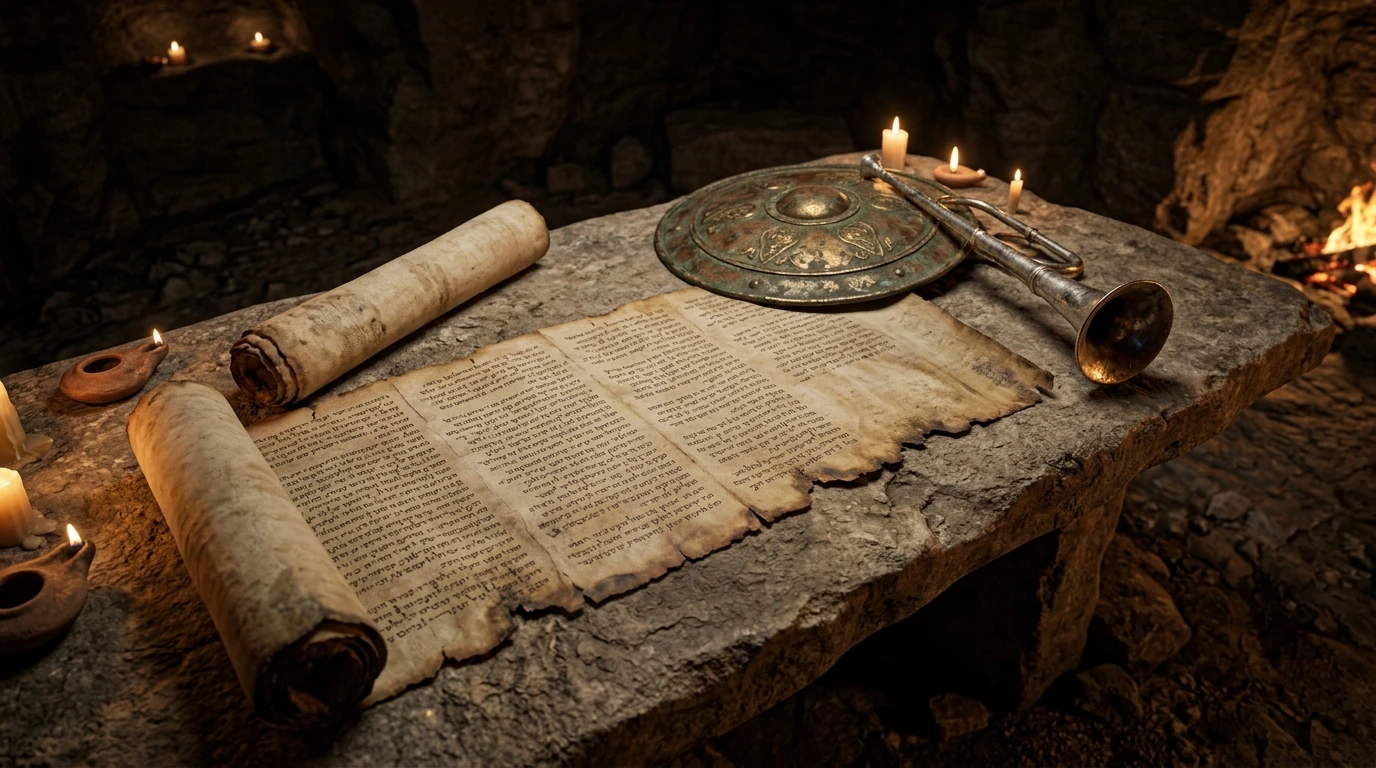
Discovered in 1947 inside Qumran Cave 1 alongside the Great Isaiah Scroll, the War Scroll, scientifically cataloged as 1QM (Milchamah), is one of the most mesmerizing sectarian manuscripts ever unearthed. Preserved on nineteen columns of leather parchment (originally comprising a scroll over 9 feet in length), 1QM is not an allegorical spiritual poem; it is an exhaustive, tactical manual of eschatological warfare.
Written during the late second century BC or early first century BC by the Qumran community (commonly associated with the Essenes), 1QM provides rigid, step-by-step liturgical, tactical, and logistical battle orders for a final, apocalyptic forty-year war that would culminate in the total annihilation of all evil, the overthrow of foreign imperial oppression (the Kittim, representing the Seleucids or Romans), and the universal establishment of the Kingdom of God.
+----------------------------------------------------------------------------------------------------+
|               THE STRUCTURE AND COMPOSITION OF THE WAR SCROLL (1QM)                                |
+--------------------------+-----------------------+-------------------+-----------------------------+
| COLUMN SECTION           | SUBJECT MATTER        | OPERATIONAL FOCUS | BIBLICAL PARALLELS          |
+--------------------------+-----------------------+-------------------+-----------------------------+
| Columns 1–2              | Outbreak of the War;  | 40-year campaign  | Daniel 11–12;               |
|                          | Temple roster of priests| organization     | Numbers 1–2                 |
| Columns 3–5              | Signals & Inscriptions| Inscribed silver  | Numbers 10:1–10;            |
|                          | on Trumpets & Banners | battle trumpets   | Revelation 8–9              |
| Columns 6–9              | Weaponry, Cavalry,    | Roman-style shield| Ephesians 6:10–18;          |
|                          | and Tactical Manoeuvers| wall & skirmishers| 1 Samuel 17                 |
| Columns 10–14            | Liturgical Prayers    | Priestly blessing | Deuteronomy 20:1–4;         |
|                          | and Hymns of Defeat   | and thanksgiving  | Psalm 68                    |
| Columns 15–19            | The Final Seven-Stage | Direct battle with| Revelation 19:11–21;        |
|                          | Hand-to-Hand Conflict | the King of Kittim| Ezekiel 38–39 (Gog & Magog) |
+--------------------------+-----------------------+-------------------+-----------------------------+
The Dualistic Cosmic Divide: Sons of Light vs. Sons of Darkness
The theological engine of 1QM is an absolute, uncompromising moral and cosmic dualism:
- The Sons of Light (Benei Or, בְּנֵי אוֹר): Comprising the faithful remnant of Israel—principally the tribes of Levi, Judah, and Benjamin—allied with the elect holy angels under the leadership of the Prince of Light, the Archangel Michael.
- The Sons of Darkness (Benei Choshekh, בְּנֵי חֹשֶׁךְ): Comprising the ungodly nations—Edom, Moab, Ammon, the Philistines, and the imperial Kittim—allied with demonic spirits under the prince of malice, Belial (בְּלִיַּעַל).
This stark light/darkness dichotomy directly parallels the theological vocabulary found in the Gospel of John ("The light shines in the darkness, and the darkness did not comprehend it", John 1:5) and the Epistles of Paul ("What communion has light with darkness? And what accord has Christ with Belial?", 2 Corinthians 6:14–15). 1QM proves that this rich theological vocabulary was widely recognized in Judea during the Second Temple period.
The Forty-Year War: Campaign Logistics and Phases
The war detailed in 1QM is calibrated to endure for precisely forty years, echoing Israel’s forty years of wilderness wandering before entering the Promised Land:
- Sabbatical Year Cycles: Because Israel must strictly observe the Sabbatical Year (Shmita) every seventh year—during which all agricultural and military exertion is forbidden—actual combat takes place over thirty-five years, with five complete years dedicated exclusively to rest, worship, and Torah study.
- Phase I (The First Six Years): Cleansing of Judea and destruction of immediate neighboring enemies (Edom, Moab, Ammon, and the coastal cities).
- Phase II (Twenty-Nine Years): Global military campaigns against the remote descendants of Shem, Ham, and Japheth across Mesopotamia, Egypt, and the Mediterranean world, systematically dismantling the Gentile empires of the world.
The Sacred Metallurgy of Trumpets, Standards, and Weapons
In strict conformity with Numbers 10:1–10, the War Scroll assigns command and coordination of the army not to secular generals, but to consecrated Aaronic priests:
- Silver Trumpets of Assemblage: Fabricated of pure hammered silver, inscribed with holy theological mottoes that change according to each tactical phase of the battle.
- Battle Banners (Otot): Before marching out, the giant flag was inscribed: "The People of God" (Am El). At the start of combat, it was unfurled with: "The War of God" (Milchemet El). Upon victorious return, it read: "The Deliverance of God" (Yeshu'at El).
- Weapons and Armor: Infantry soldiers carried bronze and iron swords overlaid with pure gold and silver, double-edged and engraved with floral motifs, along with oval shields (tzinah) of polished mirror-bright bronze designed to blind the enemy in desert sunlight.
Angelic Intervention and the Final Defeat of the Kittim
Column 16–19 describes the climactic battle. Unlike modern warfare, the engagement is structured as a supernatural tournament comprising seven distinct rounds:
- Rounds 1–3: The Sons of Light surge forward and strike down battalions of the Kittim.
- Rounds 4–6: The demonic forces of Belial rally; the Sons of Darkness push back, and the Sons of Light suffer severe casualties.
- Round 7: In the darkest hour of the struggle, when human strength is completely exhausted, the Great Hand of God (Yad El HaGedolah) descends alongside the Archangel Michael, breaking the power of the Kittim and casting Belial into eternal ruin.
Master 20-Question Theological Quiz on the War Scroll
Round 1: Discovery, Manuscripts & Identity
- Q: In which Qumran cave was the primary War Scroll manuscript (1QM) discovered in 1947?
- Answer: Cave 1.
- Q: What is the Hebrew title commonly given to the War Scroll?
- Answer: Milchamah (מִלְחָמָה, meaning "War" or "Battle").
- Q: What enigmatic foreign imperial power in 1QM represents the primary earthly enemy of the Sons of Light?
- Answer: The Kittim (כִּתִּיִּים, representing Seleucids or Romans).
- Q: What evil supernatural entity leads the hosts of darkness in opposition to God in 1QM?
- Answer: Belial (בְּלִיַּעַל).
- Q: What great archangel leads the heavenly angelic army to deliver the Sons of Light in the final battle?
- Answer: The Archangel Michael (1QM 17:6–8).
Round 2: Military Regulations & Priestly Roles
- Q: Who was responsible for blowing the signal trumpets and directing tactical maneuvers during the battle according to 1QM?
- Answer: The Aaronic priests and Levites (Num 10; 1QM 3).
- Q: What was the required physical and ritual qualification for soldiers serving in the army of the Sons of Light?
- Answer: They had to be ritually pure, physically unblemished adult males between the ages of 25 and 50, free from nocturnal emission or ritual uncleanness.
- Q: Were women or youths permitted to enter the military camp of the Sons of Light?
- Answer: No; women and young boys were strictly excluded from the camp to preserve ritual holiness, for the holy angels were present in the camp (1QM 7:3–4).
- Q: What material were the sacred signal trumpets forged from?
- Answer: Pure beaten silver (1QM 3:1).
- Q: What phrase was inscribed on the trumpets sounded to trigger the final deadly ambush?
- Answer: "The Trumpets of the Ambush of God" (Chatzotzrot Maarav El).
Round 3: Campaign Chronology & Rituals
- Q: Over how many total years was the eschatological war envisioned to unfold?
- Answer: Forty years.
- Q: How many of the forty years were designated as battle years, excluding Sabbatical years of rest?
- Answer: Thirty-five years (five Sabbatical years observed with zero combat).
- Q: In the final battle against the Kittim, how many distinct tactical rounds or lots (goralot) take place before God intervenes?
- Answer: Seven rounds (three won by Light, three by Darkness, the seventh won by God).
- Q: What happened to the booty and spoils of war according to 1QM regulations?
- Answer: It was gathered together, consecrated, and subjected to strict purity regulations before distribution.
- Q: What did the high priest wear into the final battle according to Column 15?
- Answer: Holy linen garments, leading the army with prayers of faith rather than carrying iron weapons.
Round 4: Biblical Parallels & Comparative Theology
- Q: What New Testament epistle echoes the light-versus-Belial dualism of 1QM when warning believers against unequal yokes?
- Answer: 2 Corinthians 6:14–15.
- Q: In what chapter of the Book of Revelation does the Archangel Michael fight with his angels against the dragon and his angels, paralleling 1QM?
- Answer: Revelation 12:7–9.
- Q: What ancient Old Testament battle law in Deuteronomy 20:1–4 is cited verbatim in 1QM 10?
- Answer: The exhortation: "Do not let your heart faint, do not fear, and do not tremble... for the LORD your God is He who goes with you to fight for you."
- Q: What famous title for Jesus in Revelation 19 describes Him returning on a white horse to wage war in righteousness?
- Answer: "Faithful and True" and "The Word of God" (Revelation 19:11–13).
- Q: What is the supreme theological lesson of the War Scroll for understanding biblical faith?
- Answer: It proves that ultimate cosmic victory belongs not to human military prowess or political empire, but to the sovereign, righteous intervention of God.
Comparative Matrix: 1QM vs. The Book of Revelation
+----------------------------------------------------------------------------------------------------+
|               THEOLOGICAL SYNTHESIS: 1QM (DEAD SEA SCROLLS) VS. REVELATION                         |
+--------------------------+-----------------------+-------------------+-----------------------------+
| THEMATIC ELEMENT         | 1QM (WAR SCROLL)      | BOOK OF REVELATION| THEOLOGICAL INSIGHT         |
+--------------------------+-----------------------+-------------------+-----------------------------+
| Chief Celestial Warrior  | Archangel Michael     | Jesus Christ      | Revelation elevates Christ  |
|                          | (Prince of Light)     | (King of Kings)   | above all created angels    |
| Nature of the Conflict   | Armed earthly army    | Spiritual & cosmic| Revelation emphasizes the   |
|                          | with swords & shields | victory by blood  | blood of the Lamb (Rev 12:11|
| Imperial Oppressor       | The Kittim            | Babylon the Great | Identifies pagan imperial   |
|                          | (Rome/Seleucids)      | and the Beast     | world systems as antichrist |
| Liturgical Battle Trumpets| Seven silver trumpets| Seven angelic     | Trumpet blasts signal divine|
|                          | blown by priests      | judgment trumpets | sovereign judgment on earth |
+--------------------------+-----------------------+-------------------+-----------------------------+
Primary Sources & Scholarly Archives
Editorial Standard →Multi-spectral ultra-high-resolution digital archive of Qumran cave biblical and sectarian fragments.
Direct high-resolution digital photographs of ancient Greek New Testament papyri and uncial codices.
Critical academic editions, textual criticism guidelines, and ancient Near Eastern linguistic tools.
Frequently Asked Questions
What is the War Scroll (1QM)?
The War Scroll is an apocalyptic Hebrew manuscript discovered in Qumran Cave 1 outlining tactical rules, priestly prayers, and divine battle orders for an eschatological forty-year war between the Sons of Light and the Sons of Darkness.
Who are the 'Kittim' in the War Scroll?
In ancient Jewish literature, 'Kittim' originally designated inhabitants of Cyprus, but in late Second Temple apocalyptic texts like 1QM, it was a code name for the dominant imperial world power—first the Seleucid Greeks, and later the Roman legions.
How does the War Scroll help us understand the New Testament?
It demonstrates that first-century Jewish society was deeply engaged with concepts of cosmic spiritual warfare, angelic mediation, the kingdom of light vs. darkness, and the urgent anticipation of God’s sovereign reign, illuminating the historical backdrop of Jesus' preaching.
Related Research Dossiers
View all 515 research dossiers →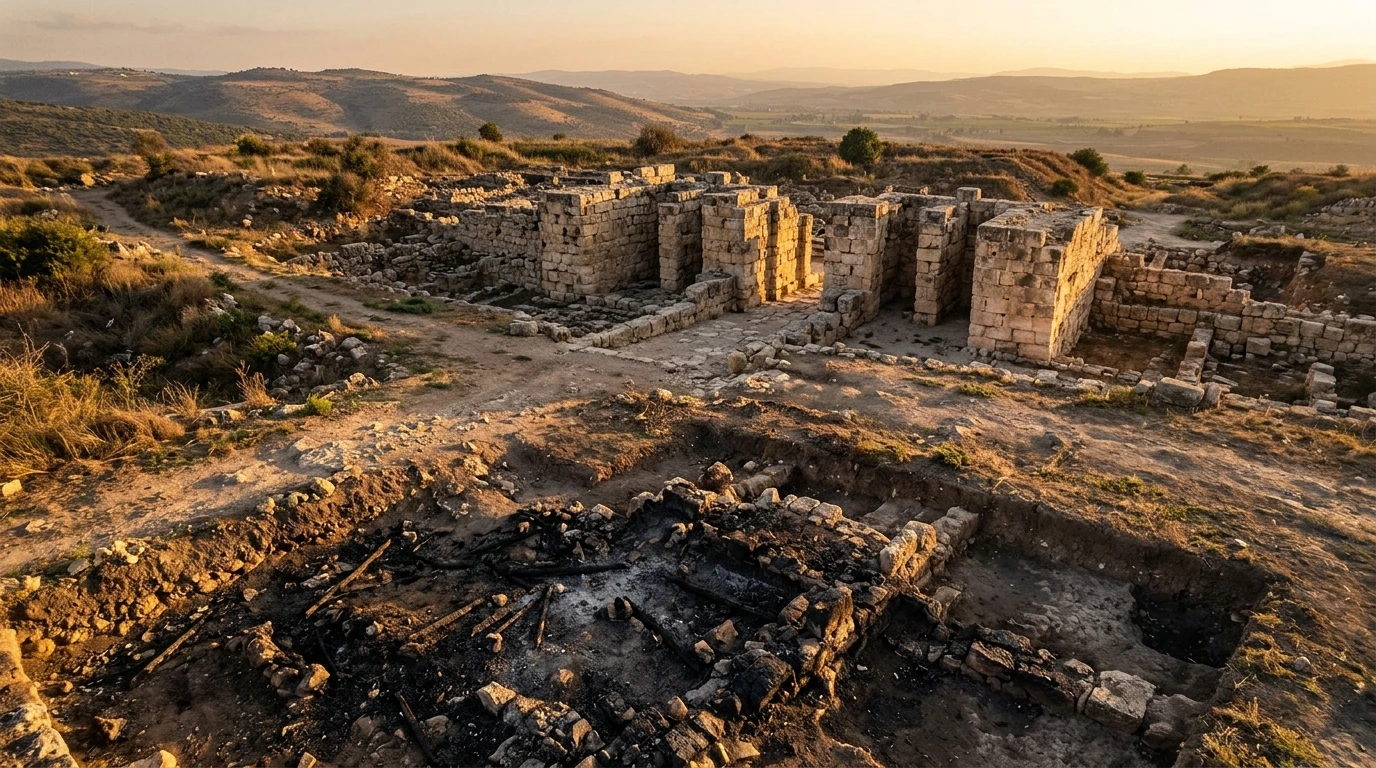
Archaeological Atlas of Tel Hazor ('The Head of All Those Kingdoms', Joshua 11:10): Primary Inscriptions, Conflagration Layers, and Royal Architecture
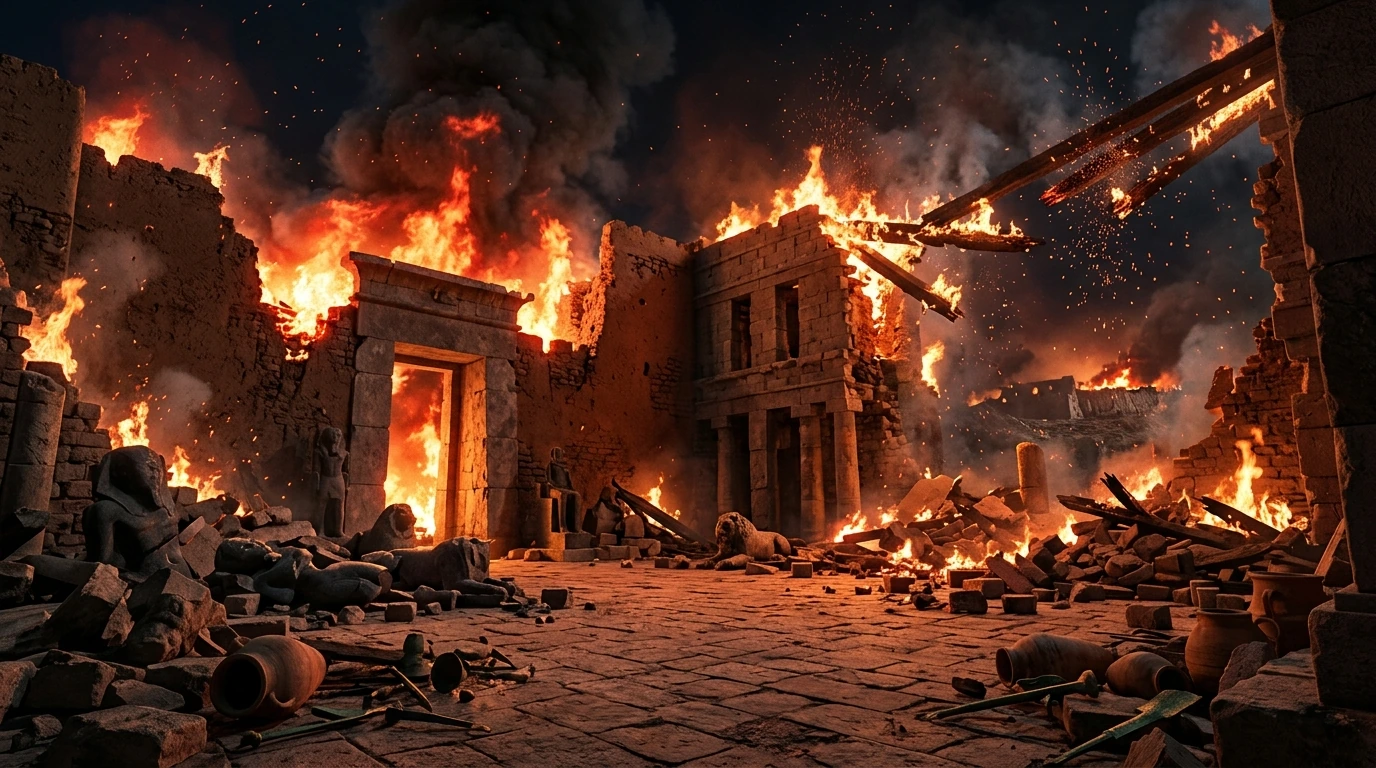
How Tel Hazor Proves the Historical and Geographic Precision of the Biblical Conquest and the United Monarchy