Subject Scope: How the Tyrian Silver Shekel Transforms Your Understanding of the Gospels: Exegetical and Historical Evidence
Historical Context: Ancient Near Eastern stratigraphy, Levant archaeological surveys, and Semitic epigraphy.
Primary Evidence: Monumental stelae, bullae seals, ceramic typology, and calibrated AMS radiocarbon determinations.
Investigation Highlights: The Great Temple Paradox: Melqart in the Holy of Holies • The Economics of Debasement: Why Rome Failed the Purity Test • The Miracle of the Stater: Royal Exemption and Sovereign Grace
Scholarly Consensus: Aligned with published excavation reports from leading Near Eastern archaeological institutes.
The Great Temple Paradox: Melqart in the Holy of Holies
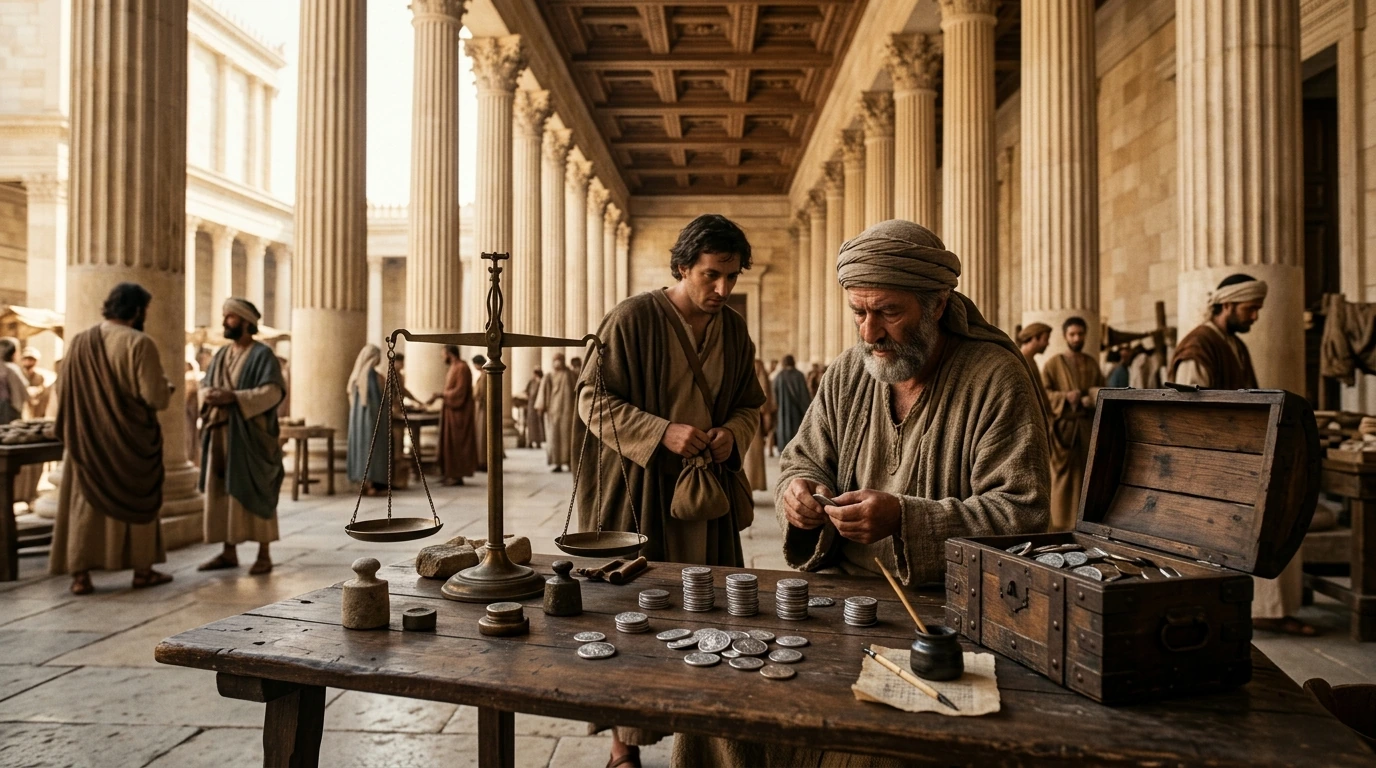
Few realities in biblical archaeology provoke greater shock to modern readers than discovering what kind of currency circulated within the sacred precincts of the Second Temple. While Jesus walked the marble colonnades of Solomon’s Portico, the only coin officially accepted by the Sadducean high-priestly aristocracy for sacred offerings was the Tyrian Silver Shekel (Shekel Tsori):
- The Obverse Imagery: The prominent, laureate head of Melqart, the ancient Phoenician patron deity of Tyre—worshiped by Canaanites, Phoenicians, Greeks, and Romans as Heracles/Hercules.
- The Reverse Legend: A defiant Ptolemaic-style eagle with a ship's prow, bearing the Greek inscription: TYROY IERAS KAI ASYLOY ("Of Tyre, the Holy and Inviolable").
How could an uncompromisingly monotheistic nation, whose foundational Torah commanded: "You shall have no other gods before me... you shall not make for yourself a carved image" (Exodus 20:3–4), mandate that every adult worshiper bring a pagan god’s portrait directly into the Temple treasury?
The answer reveals an astonishing intersection of ancient monetary debasement, halakhic pragmatism, and high-priestly commercial enterprise.
+----------------------------------------------------------------------------------------------------+
|               THE THEOLOGICAL PARADOX OF THE TYRIAN SHEKEL IN SECOND TEMPLE JUDAISM                |
+--------------------------+-----------------------+-------------------+-----------------------------+
| TORAH COMMANDMENT        | MISHNAIC HALAKHAH     | NUMISMATIC REALITY| THEOLOGICAL COMPROMISE      |
+--------------------------+-----------------------+-------------------+-----------------------------+
| Exodus 20:4              | Mishnah Bekhorot 8:7  | Laureate portrait | High priests prioritized    |
| "No graven images or     | "All silver in Torah  | of pagan deity    | 94% silver purity over      |
| likeness of anything"    | is Tyrian silver"     | Melqart/Hercules  | visual idolatry concerns    |
+--------------------------+-----------------------+-------------------+-----------------------------+
The Economics of Debasement: Why Rome Failed the Purity Test
To understand why the Sanhedrin mandated Tyrian coinage, one must examine the macroeconomic chaos of the 1st-century Mediterranean world:
- The Mosaic Requirement: Exodus 30:13 required every Israelite male to contribute a half-shekel of pure silver (be-shekel ha-kodesh, "according to the shekel of the sanctuary," weighing twenty gerahs or approximately 7.0 grams of refined silver).
- Roman Currency Debasement: The imperial Roman mints frequently debased their silver coins to finance military campaigns and opulent monuments. The Roman denarius contained between 70% and 80% silver, while provincial silver tetradrachms minted at Antioch or Alexandria frequently dropped below 50% silver, padded with copper and tin alloys.
- The Unbroken Tyrian Standard: From 126 BC onward, the mint at Tyre preserved an uncompromising, legendary standard of 94% to 98% silver purity.
For the Temple authorities, accepting debased Roman or Syrian coins was tantamount to defrauding God of His sacred dues. The Mishnah (Bekhorot 8:7) explicitly codified the rule:
"The five selas for the redemption of the firstborn son, the thirty selas for an injured slave, the fifty selas for a violator... all of these are in the shekels of the sanctuary, in Tyrian currency (kesef Tsori)."
Metallic purity trumped visual iconoclasm. The Sadducean priesthood ruled that as long as the coins were melted down or stored in treasury chests (shofarot) to purchase daily sacrifices, the idolatrous image of Melqart was legally "nullified" by the sacred purpose of the silver.
The Miracle of the Stater: Royal Exemption and Sovereign Grace
In Matthew 17:24–27, tax collectors for the half-shekel Temple tax approached Peter in Capernaum:
"Does your teacher not pay the tax?" He said, "Yes." And when he came into the house, Jesus spoke to him first, saying, "What do you think, Simon? From whom do kings of the earth take toll or tax? From their sons or from others?" And when he said, "From others," Jesus said to him, "Then the sons are free. However, not to give offense to them, go to the sea and cast a hook and take the first fish that comes up, and when you open its mouth you will find a stater. Take that and give it to them for me and for yourself." — Matthew 17:24–27
+----------------------------------------------------------------------------------------------------+
|               THE NUMISMATIC EQUATION OF MATTHEW 17:24–27                                          |
+----------------------------------------------------------------------------------------------------+
|                                                                                                    |
|    1 Temple Tax Demand per Male   = 1 Didrachm (Half-Shekel = ~7.1 grams fine silver)              |
|                                                                                                    |
|    Total Tax for Jesus + Peter    = 2 Didrachms (1 Full Shekel = ~14.2 grams fine silver)          |
|                                                                                                    |
|    Coin in the Fish's Mouth       = 1 Stater (Tetradrachm = Exactly 1 Tyrian Full Shekel!)         |
|                                                                                                    |
+----------------------------------------------------------------------------------------------------+
The theological implications are breathtaking:
- The Son's Exemption: As the true, eternal Son of God—whose Father owned the Temple—Jesus was exempt from paying tribute to His own Father’s house! Earthly kings do not tax their royal heirs.
- The Grace of Non-Offense: Rather than demanding His divine rights, Jesus chose voluntary submission to prevent stumbling (hina me skandalizomen autous).
- Cosmic Sovereignty: Jesus did not borrow money from Judas’s common purse; He commanded the natural creation. A fish in the Sea of Galilee snatched a dropped silver Tyrian stater from the lakebed and delivered it to Peter's hook at the precise second required.
The Price of a Slave: Exegetical Horror of Matthew 26:15
When Judas Iscariot approached the chief priests to negotiate the betrayal of his Master:
"What will you give me if I deliver him over to you? And they paid him thirty pieces of silver." — Matthew 26:15
Because the chief priests disbursed this money directly from the sacred treasury (korbanas), these thirty pieces of silver were thirty Tyrian silver shekels (the only currency in their possession).
This exact sum carries profound prophetic and legal gravity:
- The Compensation for a Gored Slave (Exodus 21:32): "If the ox gores a slave, male or female, the owner shall give to their master thirty shekels of silver, and the ox shall be stoned." The supreme religious court of Israel evaluated the Son of God at the exact statutory compensation value of a mortally injured slave!
- The Wager of the Rejected Shepherd (Zechariah 11:12–13): "Then I said to them, 'If it seems good to you, give me my wages; but if not, keep them.' And they weighed out as my wages thirty pieces of silver. Then the Lord said to me, 'Throw it to the potter'—the lordly price at which I was priced by them."
The chief priests thought they were conducting a shrewd political transaction; in reality, they were fulfilling divine prophetic typology with surgical numismatic precision.
The Blood Field (Akeldama) and the Potter’s Clay
The final chapter of Judas's coins is recorded in Matthew 27:3–7:
"When Judas, his betrayer, saw that Jesus was condemned, he repented and brought back the thirty pieces of silver to the chief priests and the elders, saying, 'I have sinned by betraying innocent blood.' They said, 'What is that to us? See to it yourself.' And throwing down the pieces of silver into the temple, he departed, and he went and hanged himself. But the chief priests, taking the pieces of silver, said, 'It is not lawful to put them into the treasury, since it is blood money.' So they took counsel and bought with them the potter’s field as a burial place for strangers." — Matthew 27:3–7
+----------------------------------------------------------------------------------------------------+
|               THE LEGAL ROUTE OF THE THIRTY TYRIAN SHEKELS                                         |
+----------------------------------------------------------------------------------------------------+
|                                                                                                    |
|    [ TEMPLE TREASURY ] ---> 30 Tyrian Shekels disbursed as a corrupt bribe                         |
|             |                                                                                      |
|             v                                                                                      |
|    [ JUDAS ISCARIOT ] ---> Thrown across the marble floor into the Sanctuary (*Naos*)              |
|             |                                                                                      |
|             v                                                                                      |
|    [ CHIEF PRIESTS ] ---> Deemed "Blood Money" (*dmei damim* / *timē haimatos*)                    |
|             |                                                                                      |
|             v                                                                                      |
|    [ POTTER'S FIELD (AKELDAMA) ] ---> Purchased in the Hinnom Valley for burying Gentiles          |
|                                                                                                    |
+----------------------------------------------------------------------------------------------------+
The priests refused to return the coins to the Temple treasury because Jewish law (Deuteronomy 23:18) prohibited placing the wages of sin or blood into the altar fund. With tragic irony, the very silver used to betray the Savior of the world was expended to purchase a cemetery in the Valley of Hinnom to give dignified burial to poor, despised Gentile strangers—foreshadowing how Christ’s atoning blood would redeem outcasts from all nations.
Three-Tier Evidentiary Evaluation: Numismatic Matrix
+----------------------------------------------------------------------------------------------------+
|               THREE-TIER EVIDENTIARY AUDIT: THE TYRIAN SHEKEL IN GOSPEL EXEGESIS                   |
+--------------------------+-----------------------+-------------------+-----------------------------+
| PASSAGE / FIND           | NUMISMATIC ARTIFACT   | CHRONOLOGY        | EXEGETICAL SIGNIFICANCE     |
+--------------------------+-----------------------+-------------------+-----------------------------+
| 1. Matthew 17:27 (Fish)  | Tyrian Stater (4-dr.) | 1st Cent. AD      | Exact mathematical payment  |
|                          | (Tetradrachm)         | (Reign of Tiberius| for 2 adult males           |
| 2. Matthew 26:15 (Judas) | 30 Tyrian Shekels     | Disbursed AD 30–33| Fulfillment of Zechariah 11 |
|                          | (Silver Treasury)     |                   | and Exodus 21:32 slave price|
| 3. Matthew 21:12 (Tables)| Kollybistai Booths    | Court of Gentiles | Overturning exploitative    |
|                          | and Exchange Scale    |                   | currency surcharge system   |
| 4. Akeldama Necropolis   | Hinnom Valley Tombs   | Second Temple Era | Material reality of the     |
|    (Potter's Field)      | (Excavated Jerusalem) | (1st Cent. AD)    | cemetery bought with silver |
+--------------------------+-----------------------+-------------------+-----------------------------+
Primary Sources & Scholarly Archives
Editorial Standard →Official archaeological field reports, certified stratigraphy surveys, and Semitic epigraphy catalogs.
Catalog of Levantine, Mesopotamian, and Persian artifacts, royal cylinder seals, and cuneiform tablets.
Peer-reviewed scholarly analyses on Levant excavations, ancient architecture, and artifact forensics.
Frequently Asked Questions
Did Jesus carry or use Tyrian shekels during His ministry?
Jesus generally used copper coins for daily needs; when debating Roman taxation, He asked for a Roman denarius, distinguishing civic tax from the sacred shekel.
Why did the chief priests consider Judas’s money "blood money"?
Rabbinic halakhah strictly banned money derived from betrayal or murder from the altar treasury; the priests hypocritically preserved ritual law while murdering the Messiah.
Where was Akeldama (the Field of Blood) located?
Akeldama lies in the Hinnom Valley south of Jerusalem, a site famous for red potter’s clay and 1st-century burial caves used for deceased foreign pilgrims.
How heavy were thirty Tyrian shekels?
Thirty Tyrian shekels weighed about 426 grams (nearly a pound of solid silver), producing a loud resonance when thrown across the stone floor of the sanctuary.
Related Research Dossiers
View all 515 research dossiers →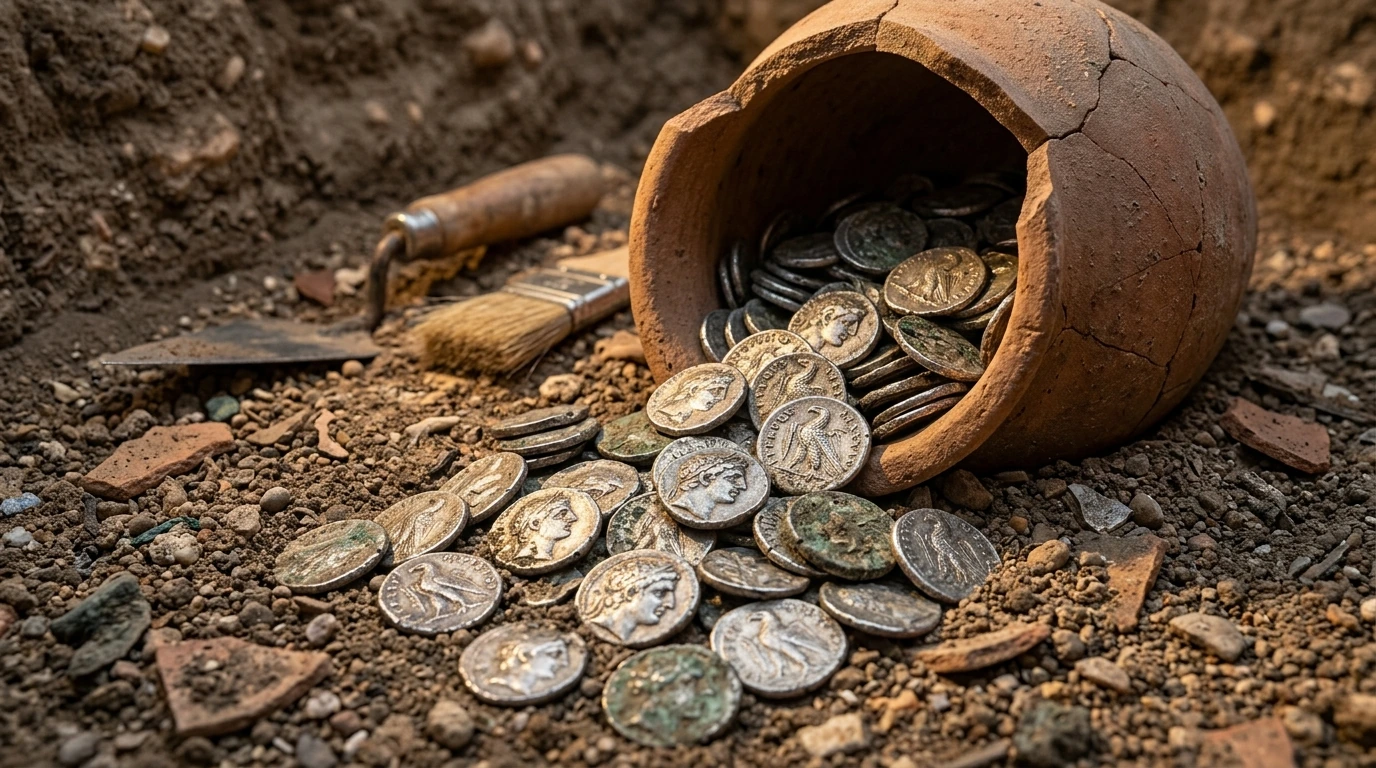
The Tyrian Shekel, Temple Tax, and the 30 Pieces of Silver: Numismatics, Matthew 26, and Judas’s Betrayal
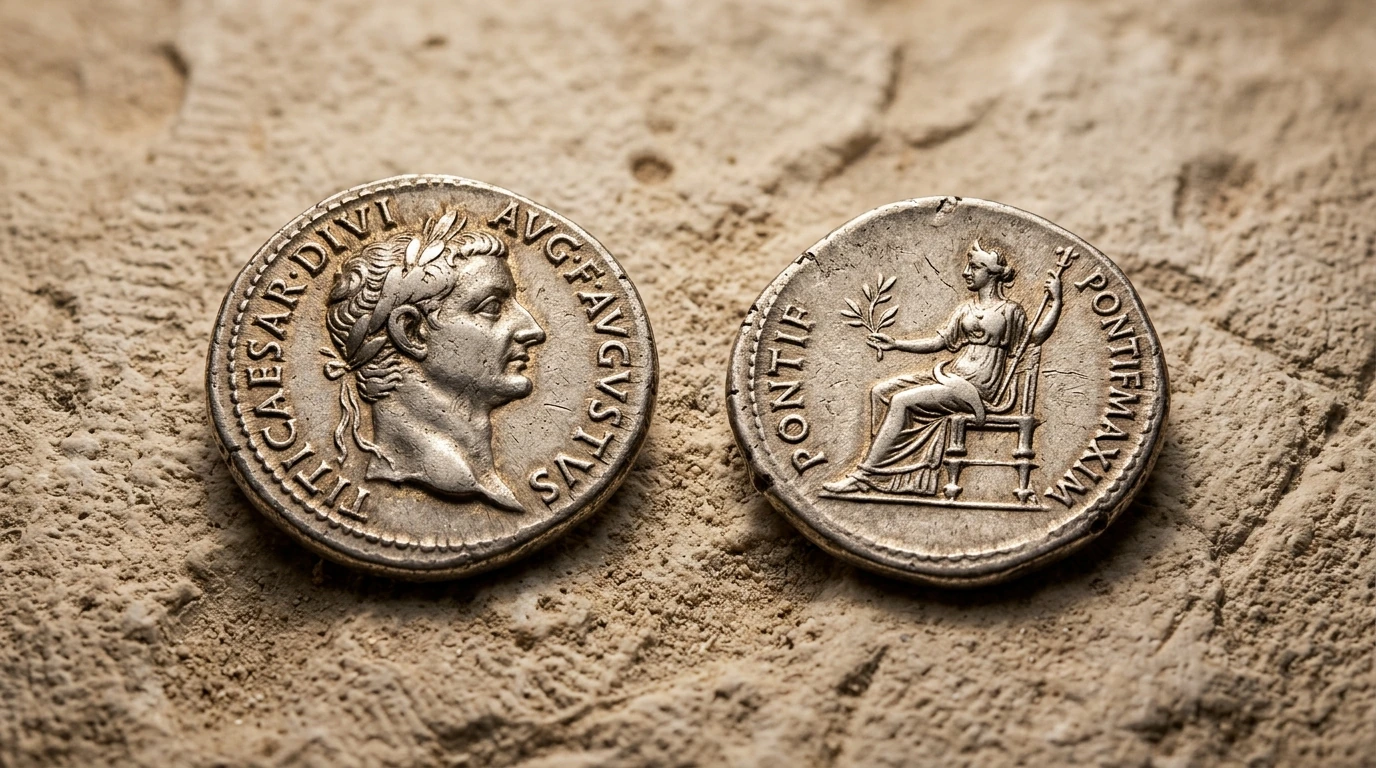
Render to Caesar: The Tribute Penny, Tiberius Denarius, and Mark 12 in Primary Roman Numismatic Sources
