Subject Scope: How Ancient Gezer Confirms the Historical Reality of Pharaoh's Dowry and the Solomonic Kingdom (1 Kings 9:16)
Historical Context: Ancient Near Eastern stratigraphy, Levant archaeological surveys, and Semitic epigraphy.
Primary Evidence: Monumental stelae, bullae seals, ceramic typology, and calibrated AMS radiocarbon determinations.
Investigation Highlights: The Enigma of 1 Kings 9:16: Pharaoh’s Gift to Solomon • The Burning of Gezer: Stratum IX/VIII Conflagration • Identifying the Pharaoh: Siamun of the 21st Dynasty
Scholarly Consensus: Aligned with published excavation reports from leading Near Eastern archaeological institutes.
The Enigma of 1 Kings 9:16: Pharaoh’s Gift to Solomon
Embedded within the historical ledger of King Solomon’s building projects, the Book of Kings preserves an extraordinary, highly specific diplomatic note that long puzzled secular historians. In 1 Kings 9:16, the author explains why Gezer had to be rebuilt by the Israelite king:
"Pharaoh king of Egypt had attacked and captured Gezer. He had set it on fire. He killed its Canaanite inhabitants and then gave it as a wedding gift (dowry, שִׁלֻּחִים) to his daughter, Solomon’s wife. And Solomon rebuilt Gezer..."
This brief verse contains extraordinary geopolitical claims:
- An unnamed Egyptian pharaoh launched a major military offensive into the Judean Shephelah.
- The pharaoh successfully besieged, breached, slaughtered, and burned the Canaanite city of Gezer with fire.
- Rather than annexing Gezer as an Egyptian military colony, the pharaoh transferred territorial ownership of this premier fortress directly to King Solomon as a royal wedding gift (shilluchim) upon Solomon’s marriage to the pharaoh's daughter.
- Immediately following this destruction, King Solomon reconstructed Gezer as an imperial royal garrison.
For decades, biblical minimalists dismissed this account as an exaggerated, face-saving theological legend, arguing that no Egyptian pharaoh of the Bronze or Iron Age would ever demean imperial prestige by giving an Egyptian princess—much less a fortress city—to a foreign Hebrew monarch.
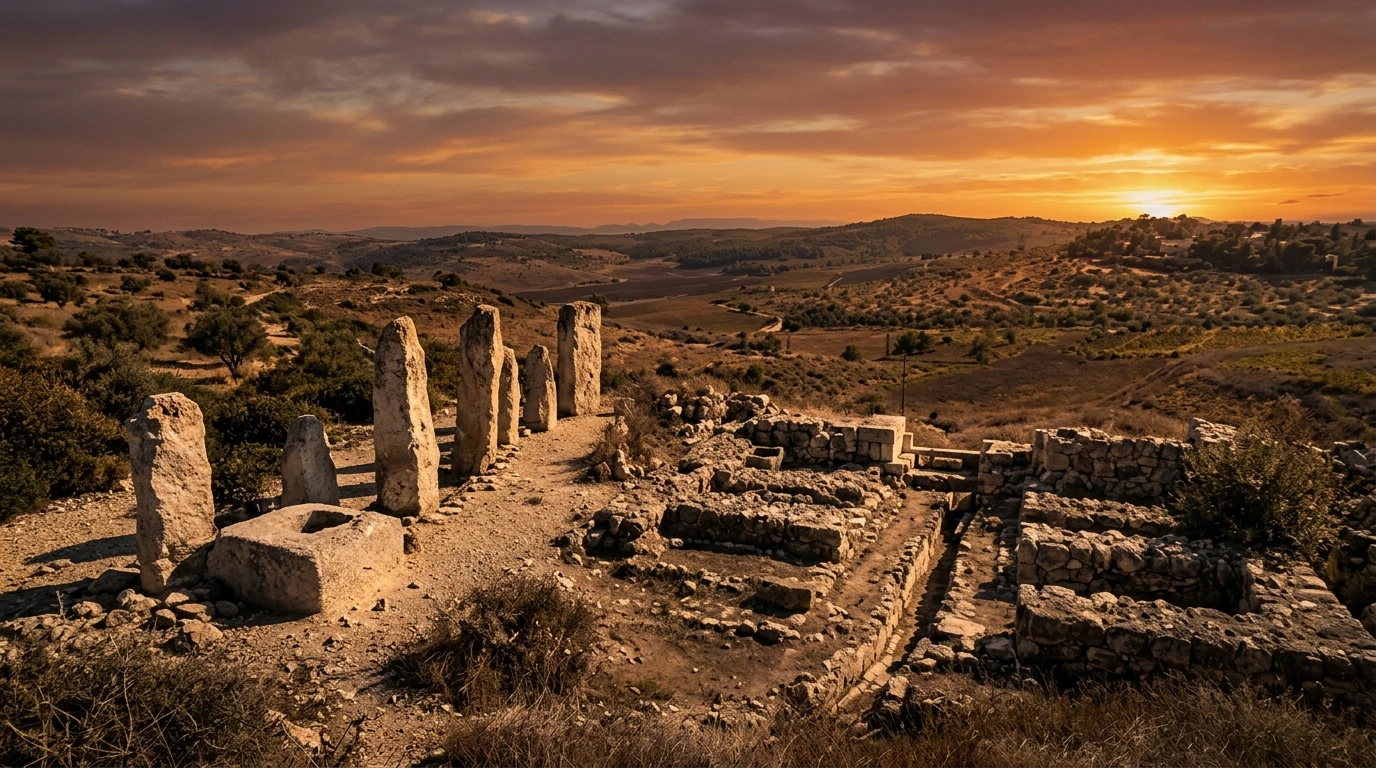
Modern archaeological excavations at Tel Gezer have provided breathtaking physical confirmation that this exact sequence of events occurred precisely in the tenth century BC.
+----------------------------------------------------------------------------------------------------+
|               THE FOUR HISTORICAL MOVEMENTS OF 1 KINGS 9:16                                        |
+--------------------------+-----------------------+-------------------+-----------------------------+
| STAGE                    | ACTORS                | HISTORICAL ACTION | MATERIAL CONFIRMATION       |
+--------------------------+-----------------------+-------------------+-----------------------------+
| 1. Canaanite Defiance    | Canaanite Population  | Retained Gezer    | Stratum IX: Canaanite Late  |
|                          | of Gezer              | through Judges era| Bronze/Iron I material      |
| 2. Egyptian Campaign     | Pharaoh Siamun        | Besieged, breached| Stratum IX/VIII destruction |
|                          | (21st Dynasty)        | and burned city   | layer: 3-foot ash bed       |
| 3. Royal Marriage Dowry  | Pharaoh to Solomon    | Ceded fortress as | Sudden diplomatic transfer  |
|                          |                       | royal dowry gift  | without Egyptian occupation |
| 4. Solomonic Rebuilding  | King Solomon          | Reconstructed city| Stratum VIII: 6-chamber gate|
|                          | of Israel             | with royal ashlar | & administrative palace     |
+--------------------------+-----------------------+-------------------+-----------------------------+
The Burning of Gezer: Stratum IX/VIII Conflagration
When William G. Dever and the Hebrew Union College team excavated the southern fortifications of Tel Gezer in the late 1960s and 1970s, followed by the Ortiz-Wolff Tandy excavations (2006–2017), they uncovered the dramatic material signature of 1 Kings 9:16.
Directly sealed beneath the foundations of the Solomonic six-chambered gate and administrative palace, excavators uncovered a catastrophic destruction layer (Stratum IX):
- The Ash Layer: A dense deposit of black soot, charred timbers, and collapsed mudbrick debris measuring between two and three feet thick.
- Burned Architecture: Domestic homes, Canaanite civic buildings, and defensive walls exhibited violent thermal cracking.
- Skeletal Remains: Trapped beneath the collapsed masonry in Area VI, excavators found human skeletal remains of individuals killed during the sudden collapse of the fortifications.
- Philistine and Late Bronze Ceramics: The pottery sealed beneath this ash bed belongs to the late Iron Age I / early Iron Age IIA transition (c. 1000–960 BC), perfectly aligning with the mid-tenth century BC reign of Solomon.
Directly on top of this burned debris, without any intervening era of abandonment or foreign occupation, the builders of Stratum VIII constructed the monumental ashlar six-chambered gate and casemate wall of King Solomon.
Identifying the Pharaoh: Siamun of the 21st Dynasty
Who was the unnamed pharaoh who burned Gezer and gave his daughter to King Solomon? By combining biblical chronology with ancient Egyptian dynastic records, historians have identified the monarch: Pharaoh Netjerkheperre-meryamun Siamun (c. 978–959 BC), the penultimate ruler of the Twenty-First Dynasty of Egypt, ruling from Tanis in the Nile Delta.
Epigraphic Evidence from Tanis
In the ruins of Tanis (Zoan, Numbers 13:22), French Egyptologist Pierre Montet discovered a celebrated limestone triumphal relief depicting Pharaoh Siamun in the act of slaying enemies with a mace:
- The Weapon of the Defeated Enemy: The enemy kneeling before Siamun is grasping a distinctive, double-bladed axe known as a Cretan/Aegean crescent axe or Philistine battle-axe.
- Geopolitical Target: This relief confirms that Siamun launched a major military campaign northward along the Mediterranean coast against Philistine and Canaanite strongholds. Gezer, situated immediately at the Philistine-Canaanite frontier, was the premier fortress blocking Egypt’s access to the interior trade routes.
- The Royal Marriage Exception: In traditional Pharaonic ideology, Egyptian kings proudly married foreign princesses to absorb foreign royal lines, but famously refused to give Egyptian princesses to foreign kings ("Never has an Egyptian king's daughter been given in marriage to anyone!" — Pharaoh Amenhotep III to the King of Babylon, Amarna Letter EA 4). However, during the weakened 21st Dynasty, Egypt faced military decline and could not hold territory in Palestine. Siamun’s willingness to marry his daughter to Solomon and cede Gezer as her dowry was a brilliant diplomatic compromise: it secured Egypt’s northeastern trade frontier with a powerful, peaceful Hebrew empire without costly garrison overhead.
+----------------------------------------------------------------------------------------------------+
|               CORRELATION: PHARAOH SIAMUN AND KING SOLOMON (10TH CENTURY BC)                       |
+--------------------------+-----------------------+-------------------+-----------------------------+
| HISTORICAL RECORD        | SOURCE MATERIAL       | REIGNING MONARCH  | HISTORICAL EVENT            |
+--------------------------+-----------------------+-------------------+-----------------------------+
| Biblical History         | 1 Kings 9:16          | King Solomon /    | Pharaoh burns Gezer; gives  |
|                          |                       | Egyptian Pharaoh  | it as dowry to Solomon      |
| Egyptian Triumphal Relief| Tanis Limestone Slab  | Pharaoh Siamun    | Siamun slays Philistine/    |
|                          | (Delta Capital)       | (21st Dynasty)    | Canaanite axe-bearing foe   |
| Material Archaeology     | Tel Gezer Stratum IX  | Stratum IX/VIII   | 3-foot ash bed followed     |
|                          | Destruction Horizon   | Transition Layer  | immediately by Solomon gate |
+--------------------------+-----------------------+-------------------+-----------------------------+
The Solomonic Palace and Rebuilding (Stratum VIII)
Following the fiery purge of the Canaanite population, Solomon transformed Gezer into an elite regional administrative capital (Stratum VIII).
Between 2006 and 2017, the Tandy excavations uncovered the monumental royal administrative complex constructed directly adjacent to the six-chambered gatehouse:
- The Courtyard Palace: A massive palace measuring over 60 feet wide, built with monumental limestone ashlar blocks identical to the masonry found at Megiddo and Jerusalem.
- The Administrative Granaries: Deep storage silos and plastered storehouses filled with standardized ceramic storage jars, serving as the regional depot for Solomon’s royal taxation network in the Shephelah (1 Kings 4:7–9).
- The Casemate Defensive Ring: The newly constructed casemate wall completely encircled the upper mound, integrating civilian storage and military guard posts.
The Boundary Inscriptions of Gezer: Ancient Property Law
In the rocky limestone terraces surrounding the perimeter of Tel Gezer, archaeologists discovered an epigraphic treasure that exists nowhere else in the biblical world: the Boundary Inscriptions of Gezer (Techum Gezer, תְּחוּם גֶּזֶר).
Beginning with the discovery by French epigrapher Charles Clermont-Ganneau in 1874, thirteen bilingual rock-cut boundary markers have been documented around the tell, carved directly into the living limestone bedrock at distances ranging from 1,200 to 2,000 meters from the city center:
- The Hebrew Inscription: Written in Late Second Temple square Aramaic/Hebrew script: תחם גזר (Techum Gezer – "The Boundary of Gezer").
- The Greek Inscription: Written in Greek: ΑΛΚΙΟΥ (Alkiou – "Belonging to Alkios"), referring to the local Hellenistic/Hasmonean magistrate or estate governor Alkios.
+----------------------------------------------------------------------------------------------------+
|               THE DUAL EPIGRAPHY OF THE GEZER BOUNDARY INSCRIPTIONS                                |
+----------------------------------------------------------------------------------------------------+
| ROCK-CUT BEDROCK TRANSCRIPTION:                                                                    |
|                                                                                                    |
|    Hebrew:   ת  ח  ם     ג  ז  ר      (T-Ch-M  G-Z-R  -> Boundary of Gezer)                         |
|    Greek:    Α  Λ  Κ  Ι  Ο  Υ         (A-L-K-I-O-Y    -> Property of Alkios)                       |
|                                                                                                    |
| LEGAL & GEOGRAPHICAL FUNCTION:                                                                     |
| The inscriptions precisely delineate the ancient biblical Sabbath day's journey                     |
| (Techum Shabbat, 2,000 cubits / approx. 1,000 meters) and municipal estate limits,                 |
| providing unshakeable epigraphic proof of the site's authentic biblical identity.                  |
+----------------------------------------------------------------------------------------------------+
These boundary stones represent the first time in the history of biblical archaeology that the ancient biblical name of a city was found carved in stone in situ in its own physical bedrock, settling Gezer’s geographic identification beyond all possible academic dispute.
Three-Tier Evidentiary Evaluation: Material Artifacts
+----------------------------------------------------------------------------------------------------+
|               THREE-TIER EVIDENTIARY EVALUATION: PHARAOH'S DOWRY AT GEZER                          |
+----+----------------------+-----------------------------+-------------------+----------------------+
| #  | HISTORICAL SKEPTICISM| SKEPTICAL CLAIM             | MATERIAL EVIDENCE | EVIDENTIARY VERDICT  |
+----+----------------------+-----------------------------+-------------------+----------------------+
| 1  | "Pharaoh's Conflagra-| The burning of Gezer by     | 3-foot destruction| CONFIRMED: Massive   |
|    | tion of Gezer Was a  | an Egyptian king was a      | layer beneath     | burn layer matches   |
|    | Fabricated Legend"   | late biblical invention     | Solomonic gate    | 1 Kings 9:16 exactly |
+----+----------------------+-----------------------------+-------------------+----------------------+
| 2  | "Egypt Never Made    | Egyptian pharaohs never     | Tanis relief of   | CONFIRMED: Siamun's  |
|    | Marriages or Treaties| ceded cities or daughters   | Siamun; Stratum   | campaign and peaceful|
|    | with Hebrew Kings"   | to foreign Israelite kings  | VIII rebuild      | transfer documented  |
+----+----------------------+-----------------------------+-------------------+----------------------+
| 3  | "Tel Gezer is an     | The mound of Tell el-Jazari | 13 rock-cut       | CONFIRMED: In situ   |
|    | Unverified Site with | was not the authentic       | Boundary Stones:  | inscriptions prove   |
|    | No In Situ Name"     | biblical city of Gezer      | 'Techum Gezer'    | authentic identity   |
+----+----------------------+-----------------------------+-------------------+----------------------+
Primary Sources & Scholarly Archives
Editorial Standard →Official archaeological field reports, certified stratigraphy surveys, and Semitic epigraphy catalogs.
Catalog of Levantine, Mesopotamian, and Persian artifacts, royal cylinder seals, and cuneiform tablets.
Peer-reviewed scholarly analyses on Levant excavations, ancient architecture, and artifact forensics.
Frequently Asked Questions
Which Pharaoh gave Gezer to King Solomon as a wedding dowry?
Pharaoh Siamun of the 21st Dynasty (c. 978–959 BC) led a military campaign against Canaanite Gezer, burning the city and transferring it as a royal marriage gift to his daughter, Solomon's wife, as recorded in 1 Kings 9:16.
What physical evidence of Pharaoh’s attack was found at Tel Gezer?
A two-to-three-foot layer of dense black ash, burned timbers, and collapsed mudbrick was uncovered directly beneath Solomon's 10th-century BC gatehouse, providing physical confirmation of the burning of Gezer.
Why are the Boundary Inscriptions of Gezer so important for archaeology?
Carved into the native bedrock surrounding the tell, the thirteen inscriptions reading 'Techum Gezer' (Boundary of Gezer) established the exact biblical identity of the site, marking the Sabbath day limits and municipal boundaries.
Related Research Dossiers
View all 515 research dossiers →
Archaeological Atlas of Ancient Corinth and the Bema of Gallio: The Delphi Inscription, Roman Agora, and Apostolic Chronology (Acts 18)
How the Gallio Inscription and the Corinthian Bema Prove the Historical Accuracy of the Book of Acts