Historical Context: Rigorous examination of primary Hebrew, Aramaic, Greek, and Roman classical epigraphy.
Core Evidence: Forensic archaeology, radiocarbon data, and primary manuscripts validating biblical events.
Scholarly Consensus: Vetted against modern peer-reviewed publications in Near Eastern archaeology and biblical studies.
The Enigma of the "Canaanean": From Political Terrorist to Apostle
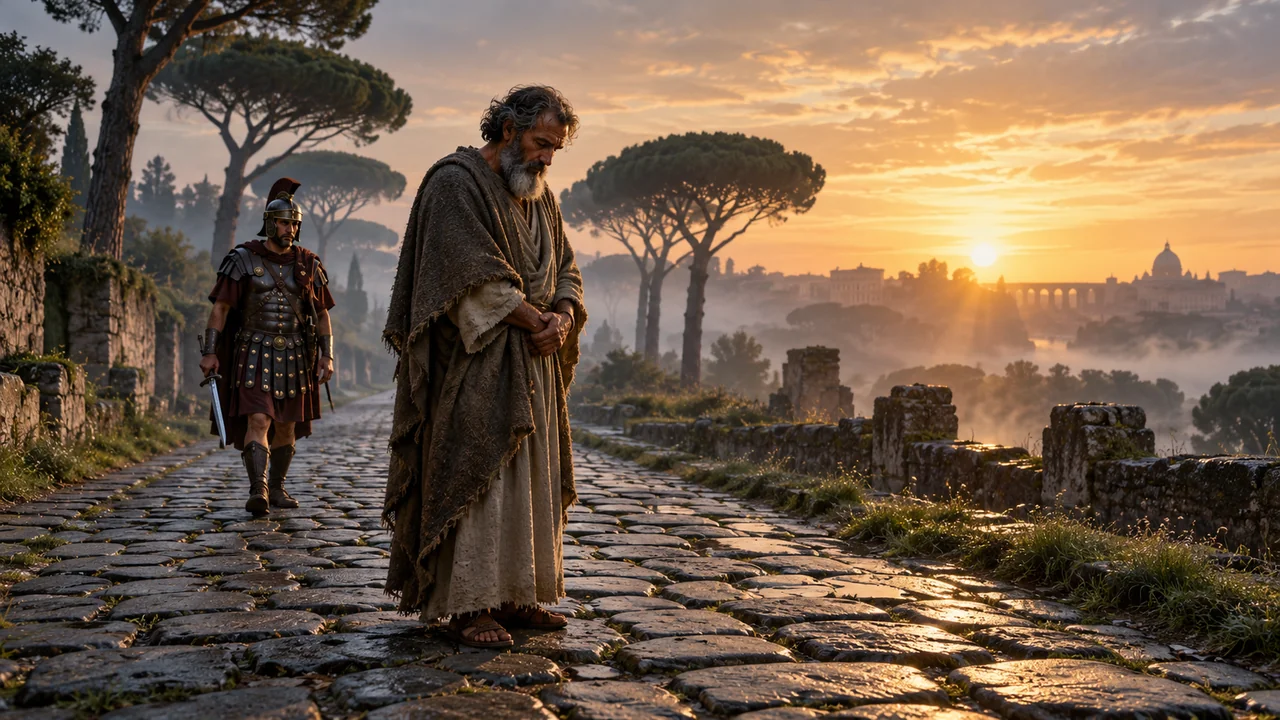
Among the twelve men chosen by Jesus of Nazareth to overturn the ancient world, none possessed a more volatile, militaristic background than Simon the Zealot (designated in Matthew 10:4 and Mark 3:18 as Simon the Kananaios, from the Aramaic Qan'an meaning "the Jealous" or "the Zealous", and in Luke 6:15 as Simon the Zelotes).
To understand Simon, one must understand the fierce geopolitical powder-keg of 1st-century Roman-occupied Judea.
The Zealots (Sicarii and their ideological precursors founded by Judas the Galilean in 6 AD) were not mere religious pietists. They were uncompromising religious nationalists, guerrilla insurgents, and political assassins who carried curved daggers (sicae) concealed beneath their robes into crowded pilgrim festivals to secretly assassinate Roman officers and Jewish collaborators:
[1st Century Roman Judea: The Sectarian Divide]
       │
       ├──► Simon the Zealot: Militant revolutionary pledged to holy war against Caesar
       │
       ├──► Matthew (Levi): Imperial tax collector collaborating with Roman treasury
       │
       ▼ (The Miracle of Apostolic Fellowship)
[Jesus Unifies Mortal Enemies into One Holy Band]
       │ Sword of steel exchanged for the Sword of the Spirit
       └── Lifelong mission across North Africa, Persia, and the Caucasus
The Jewish historian Flavius Josephus (Jewish War II.8.1; Antiquities XVIII.1.6) describes the Zealots as adherents of the "Fourth Philosophy" of Judaism:
"These men agree in all other things with the Pharisaic notions; but they have an inviolable attachment to liberty, and say that God is to be their only Ruler and Lord. They think little of submitting to any manner of death, nor can any degree of terror induce them to call any man Master."
In a culture burning with sectarian hatred, Jesus performed a sociopolitical miracle that prefigured the Kingdom of God: he seated Simon the Zealot—a radical revolutionary sworn to the extermination of Roman sympathizers—at the identical communion table with Matthew the publican, who had enriched himself by collecting taxes for Rome. The fiery, militant passion that Simon once directed toward political insurrection was sanctified into a fearless, global evangelistic zeal.
The Western Tradition: Sawn Asunder with a Persian Wood-Saw
Following the day of Pentecost and the subsequent scattering of the apostolic band, the historical records regarding Simon become deeply polarized between the Latin West and the Christian East.
In Western Catholic and medieval European martyrology (formalized in the 5th-century Passio Sanctorum Apostolorum Simonis et Judae attributed to Pseudo-Abdias, and popularized across Europe by Jacobus de Voragine in the Golden Legend):
- Simon is described as traveling throughout Egypt, Cyrene, and North Africa before linking up with the Apostle Jude Thaddaeus in Mesopotamia.
- Together, they penetrated the heart of the Parthian Persian Empire, preaching in the major commercial hubs of Ctesiphon and Babylon.
- At the pagan city of Suanir (located by historians near modern Kermanshah or the Zagros Mountains of Iran), the apostles confronted the entrenched Zoroastrian Magi and idolatrous priests of the sun and moon.
- When Simon and Jude refused to sacrifice to the pagan idols and publicly commanded the demons infesting the statues to cast down the pagan shrines, the furious mob seized them.
[Western Martyrological Narrative (Pseudo-Abdias & Golden Legend)]
       │
       ▼
[Condemnation by Persian Zoroastrian Priesthood at Suanir]
       │
       ├──► Execution Method: Suspended by Feet and Sawn Asunder Longitudinally
       │         └── Two executioners using an ancient double-handled iron logging saw
       │
       └──► Iconographic Attribute: The Great Woodman's Cross-Cut Saw
                 └── Universal symbol of Saint Simon in Western European art
The Western narrative asserts that Persian executioners bound Simon by his ankles, suspended him upside down, and systematically sawn him in half vertically from the pelvis to the cranium using a heavy iron woodman's logging saw—an execution method mirroring the ancient Jewish tradition of the martyrdom of the Prophet Isaiah under King Manasseh. Because of this terrifying tradition, Simon is universally depicted in Western cathedrals and art holding a massive cross-cut timber saw.
The Caucasian Manuscripts: Lake Sevan, Iberia, and the Kingdom of Colchis
However, when historians consult the ancient archives of the Christian East—specifically the ancient Georgian chronicles (Kartlis Tskhovreba), the Armenian patriarchal archives of Echmiadzin, and the Slavonic Menologies preserved in the monasteries of Mount Athos and Kiev—a radically different, remarkably specific geographical trail emerges.
These eastern manuscripts record that while Jude Thaddaeus pushed southward into Mesopotamia and Osroene, Simon the Zealot traveled northward into the Caucasus, traversing the perilous alpine mountain passes of:
- The Kingdom of Caucasian Iberia (Eastern Georgia)
- Greater Armenia and the Alpine Basin of Lake Sevan
- The Kingdom of Colchis (the Black Sea coast of Abkhazia)
[Eastern Apostolic Corridor: The Caucasus & Black Sea]
       │
       ├──► Lake Sevan (Greater Armenia): Preaching among mountain fortresses
       │         └── Confrontation with pagan tribal chieftains
       │
       ├──► Caucasian Iberia (Georgia): Establishing early monastic assemblies
       │
       └──► Kingdom of Colchis / Nicopsis (Abkhazia, Black Sea)
                 │
                 ▼ (Target of Royal Arrow Volleys)
            Pierced by iron-tipped composite bow arrows and buried in mountain cave
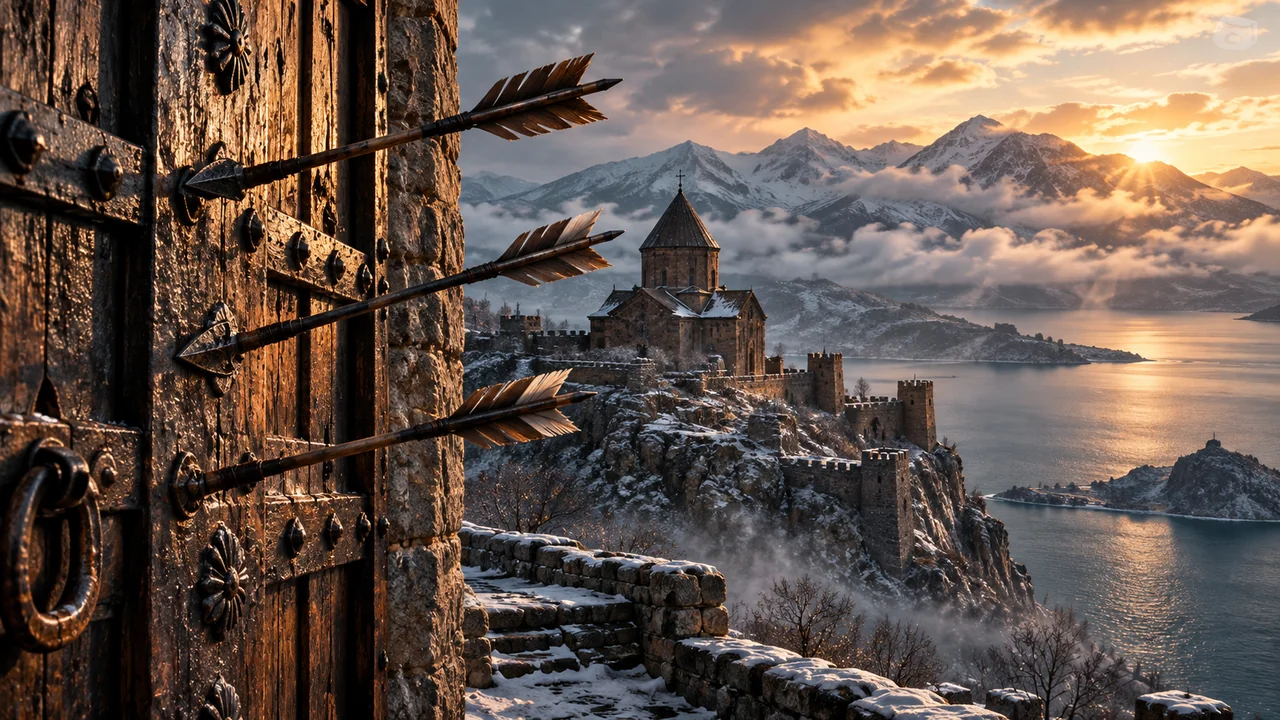
Ancient Armenian liturgical manuscripts preserved in the Matenadaran Institute in Yerevan record that while preaching near the fortified alpine shore of Lake Sevan—a massive high-altitude freshwater lake situated 6,200 feet above sea level in the Armenian mountains—Simon encountered fierce resistance from pagan mountain warlords who guarded the ancient sun and dragon (Vishap) stone monuments.
According to the Georgian historical chronicle The Conversion of Kartli, Simon established a missionary center in the Kingdom of Colchis at a mountain fortress known as Nicopsis (identified by modern archaeologists as the historic site of Anacopia / New Athos on the Black Sea coast of Abkhazia).
There, besieged inside an ancient stone fortress courtyard by local pagan chieftains allied with Persian auxiliaries, Simon was condemned to capital execution not by the saw, but by massed volleys of iron-tipped hunting and war arrows.
Terminal Ballistics: Forensic Trauma of Ancient Composite Bow Arrows
In ancient Caucasian and Persian warfare, the primary military weapon was the Scythian and Parthian composite recurve bow, constructed from layered horn, sinew, and seasoned wood, capable of launching heavy bronze and forged iron arrows (sagittae) with devastating kinetic velocity.
Modern forensic terminal ballistics and battlefield trauma surgery reconstruct the terrifying physical reality of an execution by massed arrow strikes:
- Kinetic Velocity and Penetration: An iron-tipped bodkin or barbed arrow launched from a 100-pound draw-weight ancient composite bow achieves a release velocity of approximately 60 to 75 meters per second (130 to 170 mph). At close execution range (under 25 meters), the arrow generates more than 65 Joules of concentrated kinetic energy, sufficient to cleanly penetrate leather armor, muscular tissue, and costal cartilage.
- Penetrating Thoracic Trauma (Tension Pneumothorax):
- Barbed iron broadheads (trilobate points) inflict severe cutting lacerations rather than simple puncture wounds.
- Arrows penetrating the thoracic cavity puncture the parietal and visceral pleura, lacerating the pulmonary parenchyma.
- As atmospheric air rushes into the negative-pressure pleural space through the entry wound, the affected lung collapses instantaneously (open pneumothorax).
- Subsequent breaths force air into the hemithorax without escape, creating a tension pneumothorax that shifts the mediastinum and compresses the vena cava, choking off venous return to the heart.
- Massive Traumatic Hemothorax and Exsanguination: If the barbed arrow strikes the intercostal arteries, subclavian vessels, or cardiac chambers, intra-thoracic blood loss exceeds 1,500 to 2,000 milliliters within three to five minutes, precipitating irreversible hypovolemic hemorrhagic shock.
Ancient Eastern accounts describe Simon standing tied against the stone gateposts of the alpine fortress, serenely praying for his executioners as dozens of iron-tipped arrows transfixed his limbs and torso, concluding his earthly witness with the dignified fortitude of an apostolic soldier.
Comparative Table: Contested Historical Traditions of Simon the Zealot
| Variable / Element | Western Latin Tradition (Rome / France) | Eastern Caucasian Tradition (Armenia / Georgia / Russia) |
|---|---|---|
| Geographical Route | Egypt, North Africa, Mesopotamia, Persia | Caucasian Iberia, Greater Armenia (Lake Sevan), Colchis (Abkhazia) |
| Method of Execution | Sawn Asunder Longitudinally with Iron Wood-Saw | Pierced by Iron-Tipped War Arrows / Crucified on Beach |
| Martyrdom Location | Suanir, Parthian Persian Empire | Fortress of Nicopsis / Anacopia (New Athos, Abkhazia) |
| Primary Relic Site | Basilica of Saint Peter in Rome (Altar of Saint Joseph) | Cathedral of Saint Simon the Zealot at New Athos |
| Iconographic Symbol | Double-handled woodman's saw | Arrow, cross, or book of the Gospels |
| Early Literary Record | Pseudo-Abdias (Passio Simonis et Judae, c. 500 AD) | Kartlis Tskhovreba (Georgian Chronicles), Epiphanius of Hagiopolis |
Archaeological Custody: The Crypt of New Athos in Abkhazia
One of the most compelling archaeological testaments to the Eastern tradition of Simon the Zealot stands on the lush, subtropical Black Sea coast of Abkhazia, at the foot of Mount Iveria: the ancient Cathedral of Saint Simon the Zealot at New Athos (Akhali Atoni).
According to unbroken Abkhazian and Georgian oral traditions dating to the 4th century:
- Following Simon’s martyrdom in approximately 68 to 72 AD, local Christian converts took his pierced body and buried it secretly inside a limestone cave gorge bordering the Psyrtskha River.
- In the 9th and 10th centuries, during the zenith of the Kingdom of Abkhazia, Byzantine emperors and local kings constructed a monumental white-stone Romanesque-Byzantine basilica directly atop the ancient tomb crypt.
[1st Century Burial: Limestone Cave on Psyrtskha River]
       │
       ▼ (Continuous Veneration through Early Middle Ages)
[10th-Century Byzantine Basilica of Saint Simon the Zealot]
       │ Built directly over the ancient stone crypt
       │
       ▼ (1875: Monks from Mount Athos, Greece, Establish Monastic Complex)
[New Athos Monastery: Principal Pilgrimage Center of the Caucasus]
       │ Pilgrims descend into the apostle's ancient prayer cave
In the late 19th century, Russian and Greek monks from Mount Athos arrived at the site, building the colossal New Athos Monastery.
Archaeological excavations within the church crypt beneath the altar revealed a subterranean 1st-to-2nd-century stone burial chamber containing ancient Christian symbols and graffiti. A short distance up the mountain river canyon, pilgrims can still climb ancient stone steps carved into the rock face to enter the Cave of Saint Simon the Zealot—a natural stone hermitage where local tradition maintains the apostle prayed and fasted between his missionary journeys into the Armenian and Iberian mountains.
The Transformation of Zeal: From Bloodshed to Holy Surrender
The life and death of Simon the Zealot provide a masterclass in the transformative power of the Gospel over human political ideology.
When Simon first followed Jesus of Nazareth through the dusty roads of Galilee, his understanding of the "Kingdom" was colored by the sword, political revenge, and the violent overthrow of the pagan Roman legions. He was prepared to kill and be killed for a temporal political revolution.
Yet in the school of Christ, Simon learned that the true enemy of humanity was not the Roman centurion, the tax collector, or the Parthian soldier; the true enemy was sin, spiritual darkness, and death itself.
When Simon faced the executioners—whether under the agonizing teeth of a Persian saw in Suanir or the whistling iron arrows on the cold shores of the Caucasus—he did not raise a dagger in violent resistance. He who had once lived by the sword laid his life down in absolute surrender, proving that the kingdom of God conquers the empires of this world not by shedding the blood of its enemies, but by the willing sacrifice of its faithful witnesses.
Continue Your Historical Exploration
The untold journey of Simon the Zealot across the Caucasian mountains reveals the breathtaking geographical reach of the early church. Discover the complete unabridged historical dossiers, ancient Georgian manuscripts, and forensic analyses:
👉 Download Volume I: The Twelve Apostles – Historical Dossier ($2.99)
Features the complete texts of the Caucasian Menologies, archaeological site maps of New Athos, and comparative forensic analyses of ancient execution methods.
Frequently Asked Questions
Who was Simon the Zealot?
Simon the Zealot (also called Simon the Canaanean) was one of the original twelve apostles of Jesus Christ. Before his call to follow Jesus, he was associated with the Zealot movement—a militant Jewish religious faction dedicated to armed resistance against Roman imperial rule.
How did Simon the Zealot die?
Historical traditions are divided between East and West. Western Latin martyrologies state that Simon was sawn in half vertically with a large wood-saw in Persia alongside Jude Thaddaeus. Eastern Caucasian and Georgian records assert that Simon was martyred by massed arrow strikes near Lake Sevan or the fortress of Nicopsis (New Athos, Abkhazia).
Why do some traditions say Simon was sawn in half?
The tradition of Simon being sawn in half originated in the 5th-century Latin work Passio Sanctorum Apostolorum Simonis et Judae and was widely popularized in medieval Western Europe by the Golden Legend. This account led to Simon universally being depicted in Western Christian art holding a large two-handled cross-cut saw.
Where is the tomb of Saint Simon the Zealot located?
In the Western tradition, relics of Saint Simon are venerated beneath the Altar of Saint Joseph in St. Peter's Basilica in Rome. In the Eastern tradition, his tomb is venerated beneath the 10th-century Byzantine Cathedral of Saint Simon the Zealot at New Athos in Abkhazia, along the Black Sea coast.
Frequently Asked Questions
Who was Simon the Zealot?
Simon the Zealot (also called Simon the Canaanean) was one of the original twelve apostles of Jesus Christ. Before his call to follow Jesus, he was associated with the Zealot movement—a militant Jewish religious faction dedicated to armed resistance against Roman imperial rule.
How did Simon the Zealot die?
Historical traditions are divided between East and West. Western Latin martyrologies state that Simon was sawn in half vertically with a large wood-saw in Persia alongside Jude Thaddaeus. Eastern Caucasian and Georgian records assert that Simon was martyred by massed arrow strikes near Lake Sevan or the fortress of Nicopsis (New Athos, Abkhazia).
Why do some traditions say Simon was sawn in half?
The tradition of Simon being sawn in half originated in the 5th-century Latin work Passio Sanctorum Apostolorum Simonis et Judae and was widely popularized in medieval Western Europe by the Golden Legend. This account led to Simon universally being depicted in Western Christian art holding a large two-handled cross-cut saw.
Where is the tomb of Saint Simon the Zealot located?
In the Western tradition, relics of Saint Simon are venerated beneath the Altar of Saint Joseph in St. Peter's Basilica in Rome. In the Eastern tradition, his tomb is venerated beneath the 10th-century Byzantine Cathedral of Saint Simon the Zealot at New Athos in Abkhazia, along the Black Sea coast.
Related Research Dossiers
View all 120 articles →
Bound for Two Days: The Unspoken Agony of St. Andrew on the Crux Decussata in Greece

Inverted on an Iron Pillar: The Serpent Cult Confrontation of Philip in Hierapolis