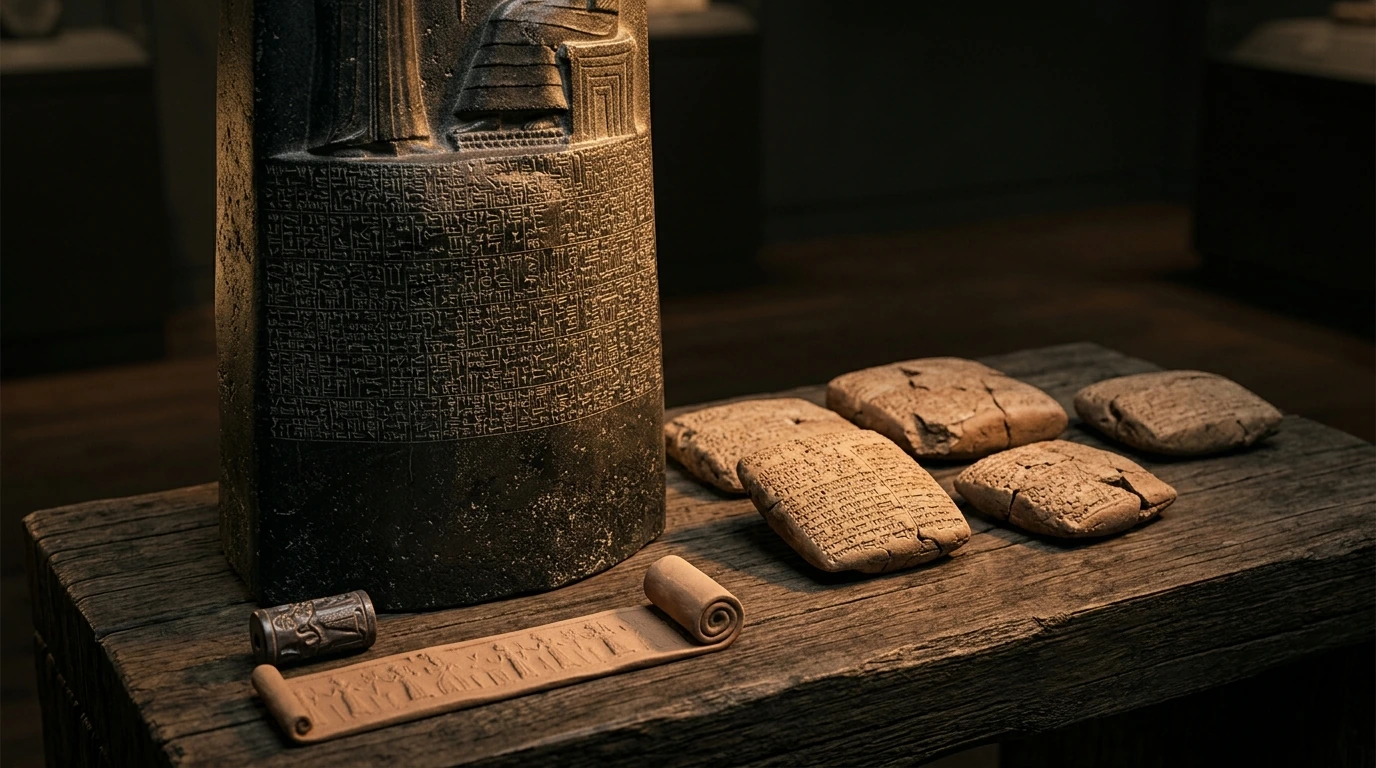
Subject Scope: Sarah, Hagar, and the Code of Hammurabi: Ancient Near Eastern Surrogate Motherhood in Primary Sources
Historical Context: Rigorous historical and theological examination within the field of Women of the Bible & Ancient Law.
Primary Evidence: Forensic archaeology, textual preservation, and primary ancient manuscripts corroborating scriptural events.
Investigation Highlights: The Genesis 16 Crisis: Barrenness and the Promise • The Code of Hammurabi (§§ 144–146): Surrogacy Laws • The Nuzi Marriage Tablet of Kelim-ninu
Scholarly Consensus: Vetted against peer-reviewed academic literature in biblical history, linguistics, and archaeology.
The Genesis 16 Crisis: Barrenness and the Promise
In Genesis 16, ten years after arriving in the land of Canaan, Abram and Sarai faced an agonizing crisis of faith:
- God had promised Abram a biological heir ("he who shall come forth out of your own bowels shall be your heir," Genesis 15:4).
- Yet Sarai remained childless at seventy-five years of age.
Faced with permanent barrenness, Sarai presented an astonishing proposal to her husband:
"Behold now, the LORD has prevented me from bearing children. Go in to my servant; it may be that I shall obtain children by her." — Genesis 16:2
To modern readers, Sarai’s offer sounds bizarre, morally shocking, and emotionally cruel: giving her Egyptian maidservant Hagar to Abram as a secondary concubine (ishah) to bear a surrogate child. However, ancient Near Eastern legal archaeology reveals that Sarai was not acting impulsively or inventing an ad-hoc arrangement: she was executing a standard, legally mandated surrogate motherhood clause found in 2nd-millennium BC Mesopotamian marriage contracts.
+----------------------------------------------------------------------------------------------------+
|               SARAH AND HAGAR: LEGAL FRAMEWORK AT A GLANCE                                         |
+--------------------------+-----------------------+-------------------+-----------------------------+
| SCRIPTURAL ACTION        | BIBLICAL RECORD       | MESOPOTAMIAN CODE | LEGAL IMPLICATION           |
+--------------------------+-----------------------+-------------------+-----------------------------+
| Provision of Surrogate   | Genesis 16:1–3        | Hammurabi § 144;  | Barren wife legally required|
|                          |                       | Nuzi Tablet HSS 60| to provide servant for heir |
| Servant's Insolence      | Genesis 16:4          | Hammurabi § 146   | Concubine claiming equality |
| Punishment / Demotion    | Genesis 16:6          | Hammurabi § 146   | Demoted, but cannot be sold |
| Final Expulsion          | Genesis 21:9–14       | Lipit-Ishtar § 25 | Given freedom, forfeits heir|
+--------------------------+-----------------------+-------------------+-----------------------------+
The Code of Hammurabi (§§ 144–146): Surrogacy Laws
The famous black diorite stele of the Code of Hammurabi (discovered at Susa in 1901, dating to c. 1750 BC) contains three consecutive legal statutes that mirror the exact sequence of events in Genesis 16:
Statute 144: The Barren Wife and the Maidservant
"If a man takes a wife, and she gives a female slave to her husband and she bears children, and that man sets his face to take a concubine, they shall not permit that man; he shall not take a concubine."
Under Mesopotamian law, if a barren wife provided her own maidservant to her husband as a surrogate, she protected her exclusive marital status, preventing the husband from marrying a rival free woman.
Statute 146: Insolence of the Surrogate Maid
"If a man takes a wife, and she gives a female slave to her husband and she bears children, and afterward that female slave considers herself equal to her mistress because she has borne children, her mistress shall not sell her for money; she may put a slave mark on her and count her among the female slaves."
This statute explains the explosive domestic crisis in Genesis 16:4:
- When Hagar conceived, "she looked with contempt on her mistress" (watteqal gevirtah b'eneha).
- In ancient society, childlessness was a crushing social stigma. Hagar believed her fertility elevated her above the barren Sarai.
- Sarai complained to Abram: "May the wrong done to me be on you!" (Genesis 16:5).
The Nuzi Marriage Tablet of Kelim-ninu
Even closer to patriarchal family customs is a marriage contract excavated at Nuzi (Tablet HSS V 67):
- A bride named Kelim-ninu was given in marriage to a man named Shennima.
- The contract explicitly states:
"If Kelim-ninu bears children, Shennima shall not take another wife. But if Kelim-ninu does not bear, Kelim-ninu shall acquire a woman of the land of Lullu as a wife for Shennima, and Kelim-ninu shall have authority over her offspring."
Notice the phrase: Kelim-ninu shall have authority over her offspring. This is the exact legal formula used by Sarai in Genesis 16:2: "It may be that I shall obtain children by her" (literally in Hebrew: ibbeneh mimmennah = "I shall be built up through her"). Under this law, the child born of the maidservant was legally considered the child of the barren mistress!
Why Sarah Could Not Sell Hagar as a Slave
When Sarai appealed to Abram to resolve Hagar's insolence, Abram replied:
"Behold, your servant is in your power; do to her as you please." — Genesis 16:6
Why didn't Sarai simply sell Hagar to an Egyptian merchant caravan?
- Because the Code of Hammurabi § 146 explicitly forbade selling a surrogate maidservant who had borne children to the master!
- The law prohibited selling her, but permitted the mistress to demote her back to regular servant status and impose heavy domestic labor (affliction).
- Genesis 16:6 records: "Then Sarai dealt harshly with her, and she fled from her presence." The Hebrew verb used (wa-te'anneha) denotes rigorous disciplinary subjugation, perfectly matching the legal remedy prescribed in Babylon!
The Expulsion of Hagar (Genesis 21) in Mesopotamian Law
Fourteen years later, after Sarah miraculously gave birth to Isaac, a new legal crisis erupted in Genesis 21:
- At the feast celebrating Isaac’s weaning, Sarah saw Ishmael (now a teenager) "mocking" (metzacheq).
- Sarah demanded: "Cast out this slave woman with her son, for the son of this slave woman shall not be heir with my son Isaac!" (Genesis 21:10).
Abram was deeply distressed because Ishmael was his biological son. However, God instructed Abraham to heed Sarah's voice. How does this expulsion align with ancient Near Eastern jurisprudence?
The Laws of Lipit-Ishtar (§§ 25–26, c. 1930 BC)
"If a man marries a wife and she bears him children, and he also has children by his female slave, the father may grant freedom to the slave and her children; they shall forfeit their share of the paternal estate."
By formally releasing Hagar and Ishmael with bread and water into the wilderness of Beersheba, Abraham was legally emancipating them:
- Hagar was transformed from a domestic bondwoman into a free woman.
- Ishmael received his freedom, but forfeited all legal claims to the patriarchal inheritance of Canaan, which belonged exclusively to Isaac, the son of the covenant promise.
- God preserved Ishmael, blessed him with twelve princes, and made him a great nation (Genesis 21:18).
Comparative Ancient Near Eastern Legal Code Table
+----------------------------------------------------------------------------------------------------+
|                         LEGAL SYNCHRONISM: PATRIARCHS VS. CUNEIFORM LAWS                           |
+--------------------------+-----------------------+-------------------+-----------------------------+
| STATUTORY ACTION         | HAMMURABI (c. 1750 BC)| LIPIT-ISHTAR (1930)| GENESIS NARRATIVE          |
+--------------------------+-----------------------+-------------------+-----------------------------+
| Barren Wife Provides Maid| § 144                 | Nuzi HSS V 67     | Genesis 16:2 (Sarah/Hagar)  |
| Maid Claims Superiority  | § 146                 | —                 | Genesis 16:4 (Hagar despises)|
| Prohibition Against Sale | § 146                 | —                 | Genesis 16:6 (Discipline)   |
| Emancipation / Inheritance| § 170–171            | § 25–26           | Genesis 21:10–14 (Expulsion)|
+--------------------------+-----------------------+-------------------+-----------------------------+
Primary Sources & Scholarly Archives
Editorial Standard →Original Hebrew, Aramaic, and Greek interlinear analysis, morphological tags, and ancient variant readings.
Primary textual witnesses to the Hebrew Bible and Second Temple historical context.
Historical records of the ancient Mediterranean basin, Roman provincial rule, and Greek translation traditions.
Frequently Asked Questions
Did God command Abraham to take Hagar?
No. Genesis 16:1–3 records human initiative driven by anxiety and cultural conformity. While surrogacy was completely legal under Mesopotamian law, it bypassed faith in God’s miraculous power. The result was domestic strife and ongoing heartache. God remained faithful to His original covenant promise, ultimately giving Sarah a son in her old age through divine grace.
What is the theological meaning of Sarah and Hagar in the New Testament?
In Galatians 4:21–31, the Apostle Paul uses Sarah and Hagar as an allegory of two covenants:
- Hagar represents the Old Covenant of Mount Sinai, slavery to the law, and human effort (according to the flesh).
- Sarah represents the New Covenant of heavenly Jerusalem, freedom in Christ, and divine promise (according to the Spirit). Believers are children of the promise, born free through faith in Jesus Christ.
Why was God merciful to Hagar?
God demonstrated immense compassion to Hagar. When she fled into the wilderness, the Angel of the LORD met her at the spring of Beer-lahai-roi ("The Well of the Living One Who Sees Me"). Hagar is the only woman in the entire Old Testament to give God a personal name (El Roi = "You are a God of seeing," Genesis 16:13). God promised to multiply her offspring, showing that His grace reaches the marginalized and oppressed.
Related Research Dossiers
View all 515 research dossiers →
Deborah and Jael: Historical Evidence, Ancient Iron Chariots, and the Canaanite City of Hazor

Deborah, Jael, and Sisera: 10 Verified Archaeological Facts vs. Popular Myths