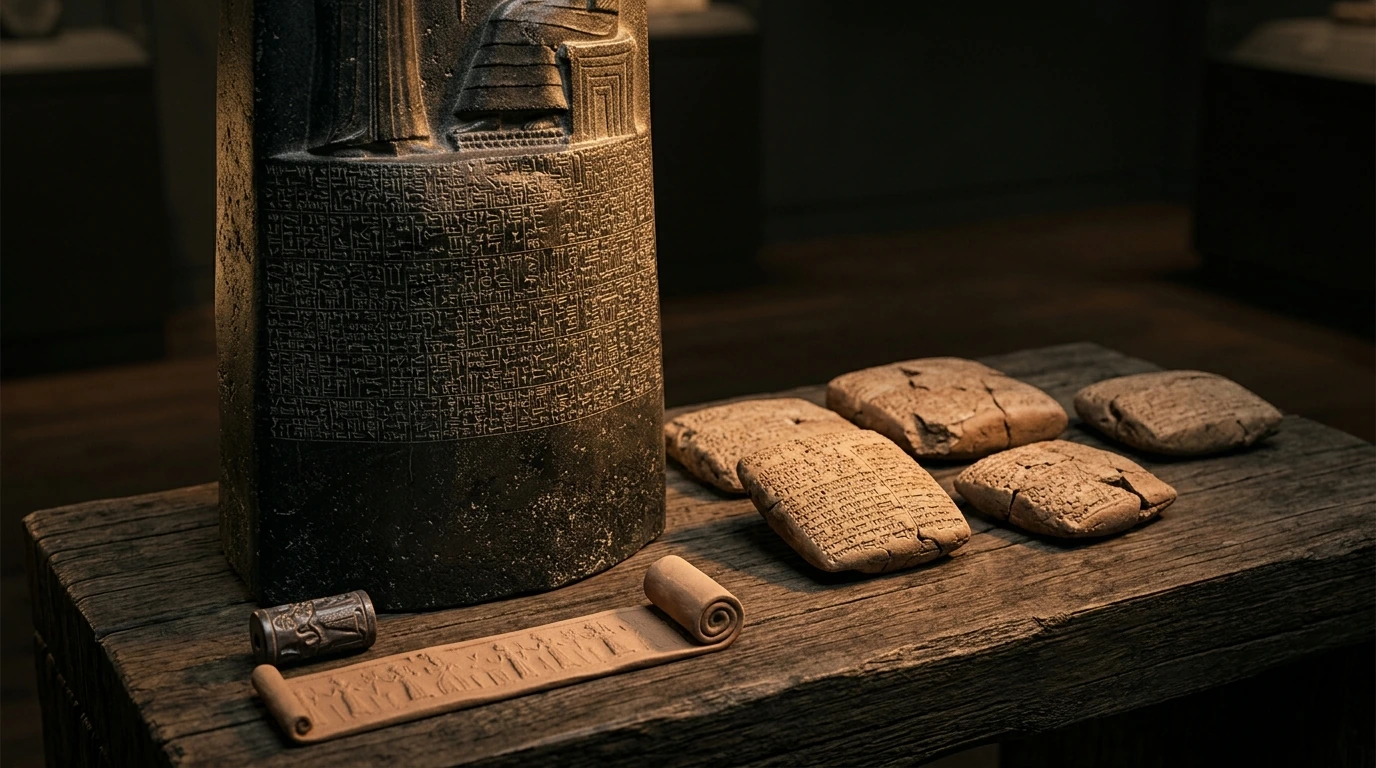
Subject Scope: Sarah and Hagar: Historical Evidence, Cuneiform Legal Tablets, and the Status of Concubines in Mesopotamia
Historical Context: Rigorous historical and theological examination within the field of Women of the Bible & Ancient Law.
Primary Evidence: Forensic archaeology, textual preservation, and primary ancient manuscripts corroborating scriptural events.
Investigation Highlights: The Historical Milieu of Abraham and Sarah • Surrogacy in Mesopotamian Cuneiform Jurisprudence • The Legal Protection of the Barren Primary Wife
Scholarly Consensus: Vetted against peer-reviewed academic literature in biblical history, linguistics, and archaeology.
The Historical Milieu of Abraham and Sarah
When modern readers open Genesis 16, the domestic drama between Abraham, Sarah, and Hagar often evokes feelings of moral discomfort. To contemporary western sensibilities, Sarah’s decision to give her personal Egyptian slave girl Hagar to her husband to father a child—and her subsequent harsh treatment and expulsion of Hagar—appears erratic, patriarchal, and cruel.
However, when examined through the lens of ancient Near Eastern comparative legal history, the entire narrative of Genesis 16 and 21 transforms:
- Every decision made by Sarah, Abraham, and Hagar adhered precisely to the strict, binding civil jurisprudence of the Middle Bronze Age (c. 2000–1600 BC).
- Far from acting as arbitrary tyrants, the biblical patriarchs were navigating established statutory codes governing domestic marriage, infertility, slave concubinage, and inheritance rights.
+----------------------------------------------------------------------------------------------------+
|               SARAH AND HAGAR: HISTORICAL-LEGAL TIMELINE                                           |
+--------------------------+-----------------------+-------------------------------------------------+
| DATE / PERIOD            | SOURCE CODE           | LEGAL PARALLEL IN GENESIS                       |
+--------------------------+-----------------------+-------------------------------------------------+
| c. 1930 BC               | Laws of Lipit-Ishtar  | Emancipation and forfeiture of inheritance      |
|                          | (§§ 25–26)            | matches Ishmael's expulsion in Genesis 21       |
| c. 1750 BC               | Code of Hammurabi     | Barren wife provides slave (§ 144);             |
|                          | (§§ 144–146)          | insolent slave demoted but not sold (§ 146)     |
| c. 1500 BC               | Nuzi Tablet HSS V 67  | Kelim-ninu contract: barren wife must supply    |
|                          |                       | slave girl to bear children for husband         |
| c. 1400 BC               | Alalakh Tablet 92     | Concubine rights and child legitimacy clauses   |
+--------------------------+-----------------------+-------------------------------------------------+
Surrogacy in Mesopotamian Cuneiform Jurisprudence
In the ancient Near East, marriage was not solely an emotional union; it was a socio-economic covenant established to preserve the family line, protect property, and ensure care for elderly parents.
- The Obligation of Fertility: If a free woman proved barren, she bore a legal duty to provide her husband with an heir.
- If she failed to do so, ancient civil law granted the husband the right to take a secondary wife (amtum or concubine) independently, which threatened the primary wife's social standing and domestic supremacy.
- By taking the initiative to supply her own personal slave (amatum), Sarah retained legal ownership of both the surrogate mother and the resulting offspring!
The Legal Protection of the Barren Primary Wife
Statute 146 of the Code of Hammurabi specifically anticipated the psychological dynamic that unfolded between Sarah and Hagar:
"If a man takes a wife, and she gives a female slave to her husband and she bears children, and afterward that female slave considers herself equal to her mistress because she has borne children, her mistress shall not sell her for money; she may put a slave mark on her and count her among the female slaves."
When Hagar conceived, she naturally felt triumphant: in an honor-shame society, fertility was divine favor, while barrenness was social disgrace. She began to despise Sarah.
- Sarah turned to Abraham for legal remedy.
- Abraham, acknowledging Sarah’s supreme legal authority over her own personal property, declared: "Your servant is in your power; do to her as you please" (Genesis 16:6).
- Bound by the civil law that forbade selling a mother of the master's child, Sarah applied the statutory punishment: disciplinary subjugation and labor demotion.
Hagar’s Status: Egyptian Maid to Patriarchal Mother
How did Hagar enter the patriarchal household?
- Genesis 12:16 records that when Pharaoh returned Sarai to Abram after the plague episode in Egypt, he enriched Abram with sheep, oxen, male donkeys, male servants, and female servants (shefahot).
- Jewish and Christian historical traditions (including the Targum Pseudo-Jonathan and Rashi) suggest that Hagar was an Egyptian royal attendant or gift from Pharaoh’s court who chose to join the household of Abram after witnessing the power of the God of the Hebrews.
The Legal Act of Emancipation and Expulsion (Genesis 21)
Fourteen years later, when Isaac was weaned, Sarah observed Ishmael mocking. Her demand was unequivocal:
"Cast out this slave woman with her son, for the son of this slave woman shall not be heir with my son Isaac!" — Genesis 21:10
Under Laws of Lipit-Ishtar § 25:
- A father who fathered children with a female slave had two legal options:
- Formally adopt them as co-heirs alongside the children of the free wife.
- Grant the slave and her children formal emancipation (freedom), in which case they forfeited all rights to the primary paternal estate.
Abraham chose the second course under divine direction (Genesis 21:12). By sending Hagar away with provision, he legally emancipated Ishmael from servitude, releasing him to become the father of an independent nation under God's sovereign protection.
Synthesized Legal Synchronism Table
+----------------------------------------------------------------------------------------------------+
|                         SYNTHESIZED LEGAL JURISPRUDENCE TABLE                                      |
+--------------------------+-----------------------+-------------------+-----------------------------+
| NARRATIVE EVENT          | BIBLICAL TEXT         | CUNEIFORM CODE    | STATUTORY SIGNIFICANCE      |
+--------------------------+-----------------------+-------------------+-----------------------------+
| Surrogacy Arrangement   | Gen 16:1–3            | Hammurabi § 144   | Preserves primary wife rank |
| Concubine Insolence      | Gen 16:4              | Hammurabi § 146   | Breaches domestic hierarchy |
| Disciplinary Demotion    | Gen 16:6              | Hammurabi § 146   | Re-imposes servant status   |
| Inheritance Forfeiture   | Gen 21:10             | Lipit-Ishtar § 25 | Emancipation separates heir |
+--------------------------+-----------------------+-------------------+-----------------------------+
Primary Sources & Scholarly Archives
Editorial Standard →Original Hebrew, Aramaic, and Greek interlinear analysis, morphological tags, and ancient variant readings.
Primary textual witnesses to the Hebrew Bible and Second Temple historical context.
Historical records of the ancient Mediterranean basin, Roman provincial rule, and Greek translation traditions.
Frequently Asked Questions
Did Sarah commit a crime by mistreating Hagar?
Under the legal codes of the Middle Bronze Age, Sarah operated completely within her statutory rights as the legal owner of Hagar and primary mistress of the household. While human pride and jealousy infected both women, their actions reflected the legitimate legal remedies of their civilization.
Why didn't Abraham intervene to protect Hagar?
Abraham was bound by the customary marriage contract. In ancient Mesopotamia, a husband could not interfere with his wife’s personal maidservant unless the wife granted permission. Abraham honored Sarah's legal jurisdiction until God intervened to provide for Hagar.
How does this story confirm the historical accuracy of Genesis?
The specific legal rights and limitations regarding slave concubines found in Genesis 16 disappear from Near Eastern legal texts after 1200 BC. No late author living during the Babylonian Exile could have invented these exact Middle Bronze Age customs.
Related Research Dossiers
View all 515 research dossiers →
Deborah and Jael: Historical Evidence, Ancient Iron Chariots, and the Canaanite City of Hazor

Deborah, Jael, and Sisera: 10 Verified Archaeological Facts vs. Popular Myths