Subject Scope: The Roman Flagrum and the Scourging of Jesus: Primary Sources, Archaeology, and Classical Penal Law
Historical Context: Ancient Near Eastern stratigraphy, Levant archaeological surveys, and Semitic epigraphy.
Primary Evidence: Monumental stelae, bullae seals, ceramic typology, and calibrated AMS radiocarbon determinations.
Investigation Highlights: The Brutal Instrument: The Anatomy of the Flagrum • Roman Penal Law: Fustigatio, Flagellatio, and Verberatio • The Jewish Thirty-Nine Lashes vs. Roman Limitless Scourging
Scholarly Consensus: Aligned with published excavation reports from leading Near Eastern archaeological institutes.
The Brutal Instrument: The Anatomy of the Flagrum
In the Passion narratives of the Gospels, a single brief phrase records an event of unimaginable physical ferocity:
"Then Pilate took Jesus and flogged him." — John 19:1
"Having scourged Jesus, he delivered him to be crucified." — Matthew 27:26; Mark 15:15
The Greek verb used is phragellosas (a direct loanword from the Latin flagellare). To Roman citizens and provincial subjects throughout the Empire, this word evoked absolute terror.
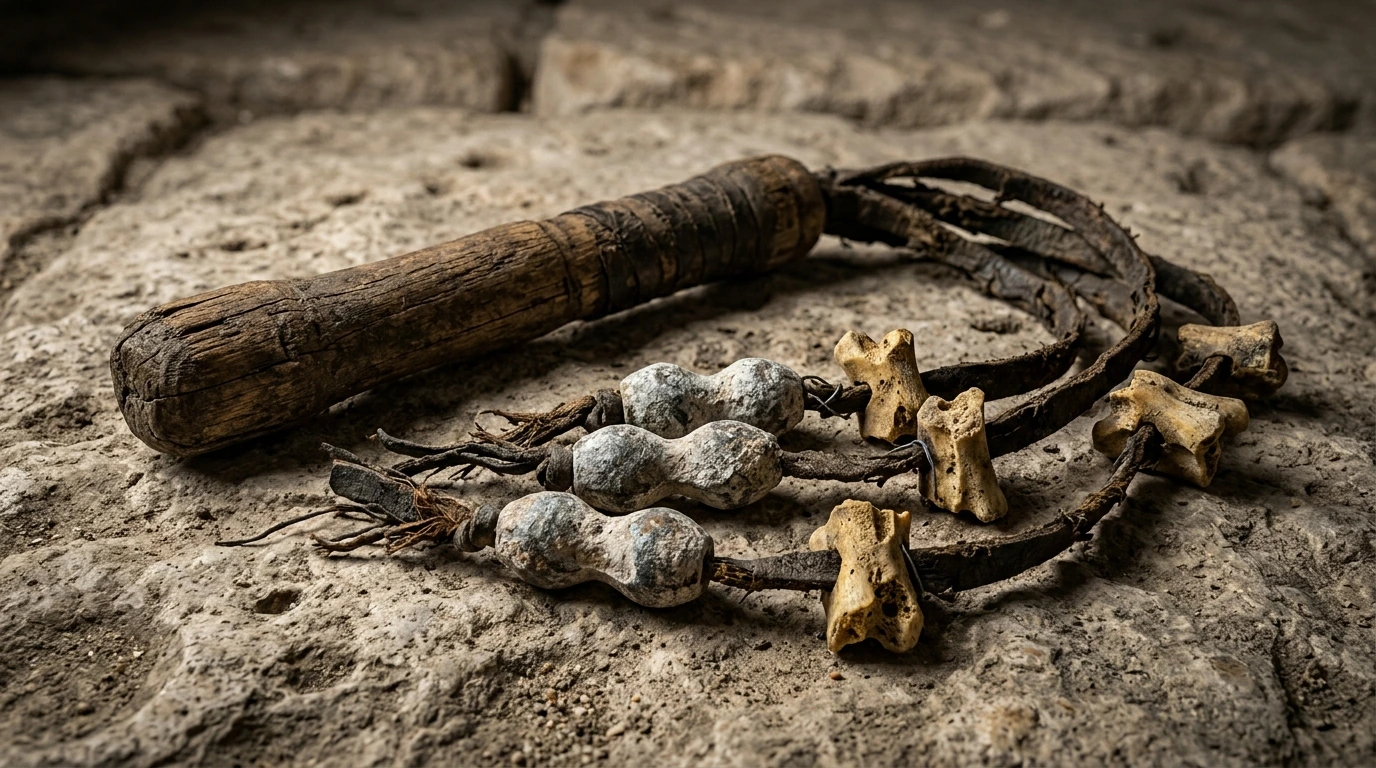
The instrument employed was the Flagrum (or flagellum taxillatum):
- The Handle: A short, sturdy wooden or bronze handle measuring approximately 30 to 40 centimeters (12 to 15 inches).
- The Thongs: Attached to the head of the handle were three to nine braided leather cords or sinews of varying lengths.
- The Embedded Weights: Knotted firmly along the length and at the tips of the leather thongs were dual forensic agents of destruction:
- Lead Dumbbells (Plumbatae): Small barbell-shaped lead weights designed to deliver catastrophic blunt-force contusions, pulverizing deep subcutaneous tissue and underlying muscle.
- Sheep Knucklebones (Astragaloi): Sharp, jagged talus bones of sheep or goats cut with barbed edges, designed to slice, tear, and lacerate skin and muscle with vicious tearing force.
+----------------------------------------------------------------------------------------------------+
|               ANATOMICAL COMPOSITION OF THE ROMAN FLAGELLUM TAXILLATUM                             |
+----------------------------------------------------------------------------------------------------+
|                                                                                                    |
|    [ WOODEN / BRONZE HANDLE ]                                                                      |
|                |                                                                                   |
|                +===> Braided Leather Thongs (3 to 9 strips)                                        |
|                          |                                                                         |
|                          +---> [ LEAD DUMBBELLS (PLUMBATAE) ] ---> Blunt-force deep contusions     |
|                          |                                                                         |
|                          +---> [ SHEEP KNUCKLEBONES (ASTRAGALOI) ] ---> Jagged tearing lacerations |
|                                                                                                    |
+----------------------------------------------------------------------------------------------------+
Roman Penal Law: Fustigatio, Flagellatio, and Verberatio
In classical Roman jurisprudence, corporal punishment was categorized into three distinct, increasingly lethal tiers depending on the legal status of the accused and the severity of the crime:
- Fustigatio (Beating with Rods): The lightest form of corporal chastisement, administered with wooden staves (fustes) by municipal magistrates for minor civil infractions or military insubordination. Roman citizens were legally protected from this punishment under the Lex Porcia and Lex Sempronia unless convicted of treason.
- Flagellatio (Scourging with Whips): A severe judicial whipping administered with leather whips to slaves, provincial aliens (peregrini), and criminal convicts.
- Verberatio (The Pre-Crucifixion Scourging): The supreme, most savage grade of torture. Under Roman military law, verberatio was the mandatory preliminary torture inflicted upon all non-Roman capital offenders condemned to crucifixion. Its legal purpose was not rehabilitation, but systematic physical debilitation: weakening the prisoner’s vital organs, inducing massive blood loss, and ensuring the victim would not possess the physical stamina to survive prolonged days on the cross.
Jesus was subjected to verberatio inside the Roman Praetorium (Matthew 27:27).
The Jewish Thirty-Nine Lashes vs. Roman Limitless Scourging
A critical historical distinction must be drawn between Jewish rabbinic flogging and Roman military scourging:
+----------------------------------------------------------------------------------------------------+
|               JEWISH SYNAGOGUE SCOURGING VS. ROMAN MILITARY FLAGELLATIO                            |
+--------------------------+-----------------------+-------------------+-----------------------------+
| LEGAL FEATURE            | JEWISH LAW (TORAH / MISHNAH)              | ROMAN MILITARY PRACTICE     |
+--------------------------+-------------------------------------------+-----------------------------+
| 1. Scriptural Law        | Deuteronomy 25:1–3 (Max 40 Lashes)        | No statutory legal limit    |
| 2. Standard Count        | Strictly 39 Lashes ("Forty less one")     | At discretion of soldiers   |
| 3. Instrument            | Single strap of folded calfskin leather   | Multi-tailed flagrum with Pb|
| 4. Medical Supervision   | Physician present; halted if danger of d. | Inflicted by legionary team |
| 5. Lethality             | Non-lethal disciplinary correction        | Frequently fatal in itself  |
+--------------------------+-----------------------+-------------------+-----------------------------+
Under Jewish halakhah (Mishnah Makkot 3:10–14), the flogger delivered precisely thirty-nine lashes (13 on the chest, 13 on the right shoulder, 13 on the left shoulder) using a flat calfskin strap. If the overseer delivered even one extra lash, he was held guilty of a crime! Paul notes that he received this Jewish disciplinary flogging five times: "Five times I received at the hands of the Jews the forty lashes less one" (2 Corinthians 11:24).
In stark, horrifying contrast, Roman scourging had zero upper limit. The Roman soldiers took sadistic pleasure in flogging provincial victims until their arms grew weary or until the presiding centurion ordered them to halt before the condemned died prematurely.
Classical Primary Sources: Cicero, Seneca, and Livy
Classical Greco-Roman literature preserves terrifying firsthand accounts of the flagrum:
- Cicero (Against Verres 5.62): Cicero describes the criminal cruelty of the corrupt Sicilian governor Verres:
"To bind a Roman citizen is an outrage; to scourge him is an atrocious crime; to put him to death is almost parricide; what shall I say of crucifying him?"
- Seneca the Younger (De Ira 3.19): Mentions the horrific sight of convicts whose flesh was so torn by scourging that their internal organs and skeletal structure were visible to onlookers.
- Eusebius of Caesarea (Ecclesiastical History IV.15.4): Describing the scourging of early Christian martyrs under Roman proconsuls:
"Their bodies were torn by scourgings even to the innermost veins and arteries, so that the hidden inward parts of the body, both their viscera and their other members, were laid open to view."
Forensic Pathology of the Scourging: Trauma and Shock
Modern trauma medicine and forensic pathology (analyzed by Dr. William D. Edwards in the Journal of the American Medical Association, JAMA 1986) provide an exact clinical reconstruction of Christ’s physical state following the flagrum:
- Massive Tissue Laceration: As the Roman soldiers lashed Jesus across His back, shoulders, buttocks, and legs, the lead balls produced deep contusions that tore open subcutaneous tissues. The sharp sheep bones cut through the skin into the deep fascia and the latissimus dorsi, trapezius, and sacrospinalis muscle groups.
- Exsanguination and Hypovolemia: Massive arterial and capillary hemorrhage caused severe loss of blood and extracellular fluid, inducing hypovolemic shock (extreme tachycardia, rapid drop in blood pressure, and severe cellular dehydration).
- Pleural Effusion and Respiratory Distress: Repeated blunt-force blows to the thoracic ribcage induced traumatic fluid accumulation around the lungs (pleural effusion) and heart (pericardial effusion).
This clinical reality explains why Jesus—who had endured the agonizing agony of Gethsemane, a sleepless night of beatings before Caiaphas, and the brutal Roman scourging—collapsed beneath the weight of the crossbeam (patibulum), compelling the Roman soldiers to conscript Simon of Cyrene to carry it behind Him (Luke 23:26).
Three-Tier Evidentiary Evaluation: Material Artifacts
+----------------------------------------------------------------------------------------------------+
|               THREE-TIER EVIDENTIARY AUDIT: ROMAN FLAGELLATION & PRAETORIUM                        |
+--------------------------+-----------------------+-------------------+-----------------------------+
| ARTIFACT / FIND          | DISCOVERY SITE        | CHRONOLOGY        | EVIDENTIARY VALUE           |
+--------------------------+-----------------------+-------------------+-----------------------------+
| 1. Lead Plumbatae Weights| Roman Military Camps  | 1st Cent. BC–AD   | Direct material finds of    |
|    (Excavated Dumbbells) | (Herculaneum & Rhine) | (Imperial Period) | lead scourging weights      |
| 2. The Lithostrotos      | Antonia / Herod Palace| 1st Cent. AD      | Paved stone floor of the    |
|    (Gabbatha Pavement)   | (Jerusalem Excav.)    | (Pilate's Era)    | Roman soldier tribunal      |
| 3. King's Game Scratches | Flagstone Pavement    | 1st Cent. AD      | Graffiti dice game etched   |
|    (Basileus Inscription)| (Sisters of Zion)     | (Roman Garrison)  | by soldiers who mocked Jesus|
| 4. Pilate Inscription    | Caesarea Maritima     | AD 26–36          | Epigraphic confirmation of  |
|    (Stone Stela)         | (Antonio Frova, 1961) | (Tiberieum Stela) | the Prefect who ordered it  |
+--------------------------+-----------------------+-------------------+-----------------------------+
Frequently Asked Questions
Did Roman soldiers scourge Jesus with 39 lashes?
No. The "thirty-nine lashes" was strictly an internal Jewish rabbinic limit (Deuteronomy 25:3) administered in synagogues with a leather strap. Roman soldiers operated under Roman military penal law, which had no numerical limit; Jesus was scourged savagely at the whim of the soldiers until His back was a lacerated mass of bleeding tissue.
Where did the scourging of Jesus take place?
The scourging occurred inside the Praetorium in Jerusalem. Most modern archaeologists (including Shimon Gibson and Father Pierre Benoit) identify the Praetorium with Herod the Great's luxurious Upper Palace near the modern Jaffa Gate (at the Citadel of David), where Pilate resided when visiting Jerusalem, rather than the Antonia Fortress.
What was the "King's Game" discovered on the Roman pavement?
Excavated on ancient stone paving slabs near the Ecce Homo Arch, archaeologists found etched geometric game boards where Roman auxiliary soldiers played the Basileus Game (King's Game). In this cruel game, a prisoner was mockingly crowned, dressed in mock royal robes, humiliated, and then beaten, matching Matthew 27:27–31.
Did anyone ever survive Roman crucifixion after scourging?
Josephus (Life 420–421) records that during the siege of Jerusalem, he saw three of his acquaintances being crucified. He wept and begged Titus for their pardon; Titus immediately ordered them taken down and given intensive medical treatment. Despite the finest Roman medical care, two of the three died immediately from traumatic shock and blood loss, illustrating the nearly 100% lethality of combined scourging and crucifixion.
Primary Sources & Scholarly Archives
Editorial Standard →Official archaeological field reports, certified stratigraphy surveys, and Semitic epigraphy catalogs.
Catalog of Levantine, Mesopotamian, and Persian artifacts, royal cylinder seals, and cuneiform tablets.
Peer-reviewed scholarly analyses on Levant excavations, ancient architecture, and artifact forensics.
Frequently Asked Questions
Did Roman soldiers scourge Jesus with 39 lashes?
No. Thirty-nine lashes was Jewish law; Roman flagellatio had no upper numerical limit and was administered at the soldiers’ sadistic discretion.
Where did the scourging of Jesus take place?
Inside the Praetorium in Jerusalem, identified by archaeologists as Herod’s monumental Upper Palace near the Jaffa Gate.
What was the "King’s Game" on the Roman pavement?
An etched game board found on garrison flagstones where soldiers mocked and abused condemned prisoners, mirroring Matthew 27:27–31.
Did anyone ever survive Roman crucifixion after scourging?
Josephus saved three friends from crosses; despite immediate elite medical intervention, two died from severe scourging shock and trauma.
Related Research Dossiers
View all 515 research dossiers →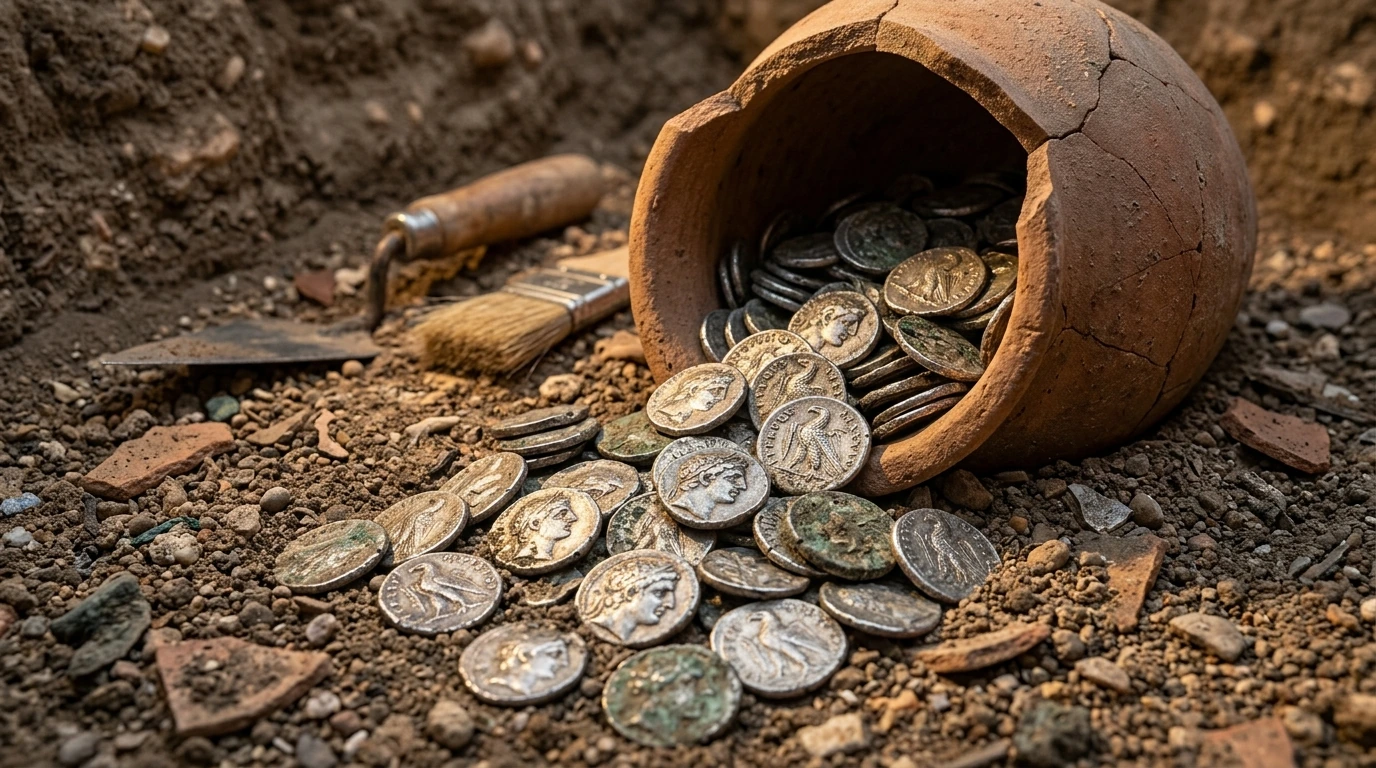
The Tyrian Shekel, Temple Tax, and the 30 Pieces of Silver: Numismatics, Matthew 26, and Judas’s Betrayal
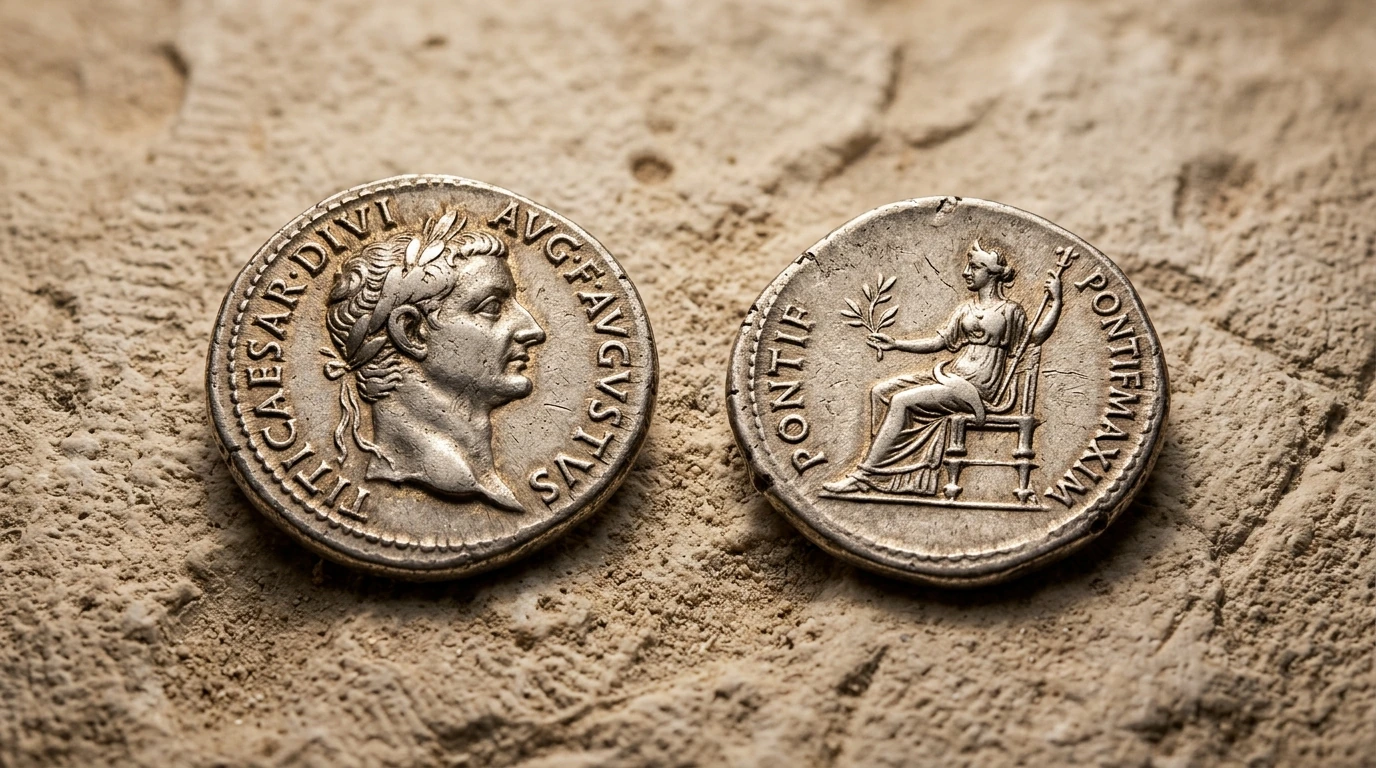
Render to Caesar: The Tribute Penny, Tiberius Denarius, and Mark 12 in Primary Roman Numismatic Sources
