Subject Scope: Archaeology and Ancient Legal Customs Behind the Story of Rahab: Grain Pithoi, Mudbrick Collapses, and Ancient Near Eastern Covenant Law
Historical Context: Rigorous historical and theological examination within the field of Women of the Bible & Ancient Near Eastern Law.
Primary Evidence: Forensic archaeology, textual preservation, and primary ancient manuscripts corroborating scriptural events.
Investigation Highlights: The Fall of Jericho: Stratigraphy and Field Evidence • Full Grain Pithoi: Carbonized Proof of a Short Spring Siege • The Outward Mudbrick Collapse: A Ramp Up into the City
Scholarly Consensus: Vetted against peer-reviewed academic literature in biblical history, linguistics, and archaeology.
The Fall of Jericho: Stratigraphy and Field Evidence
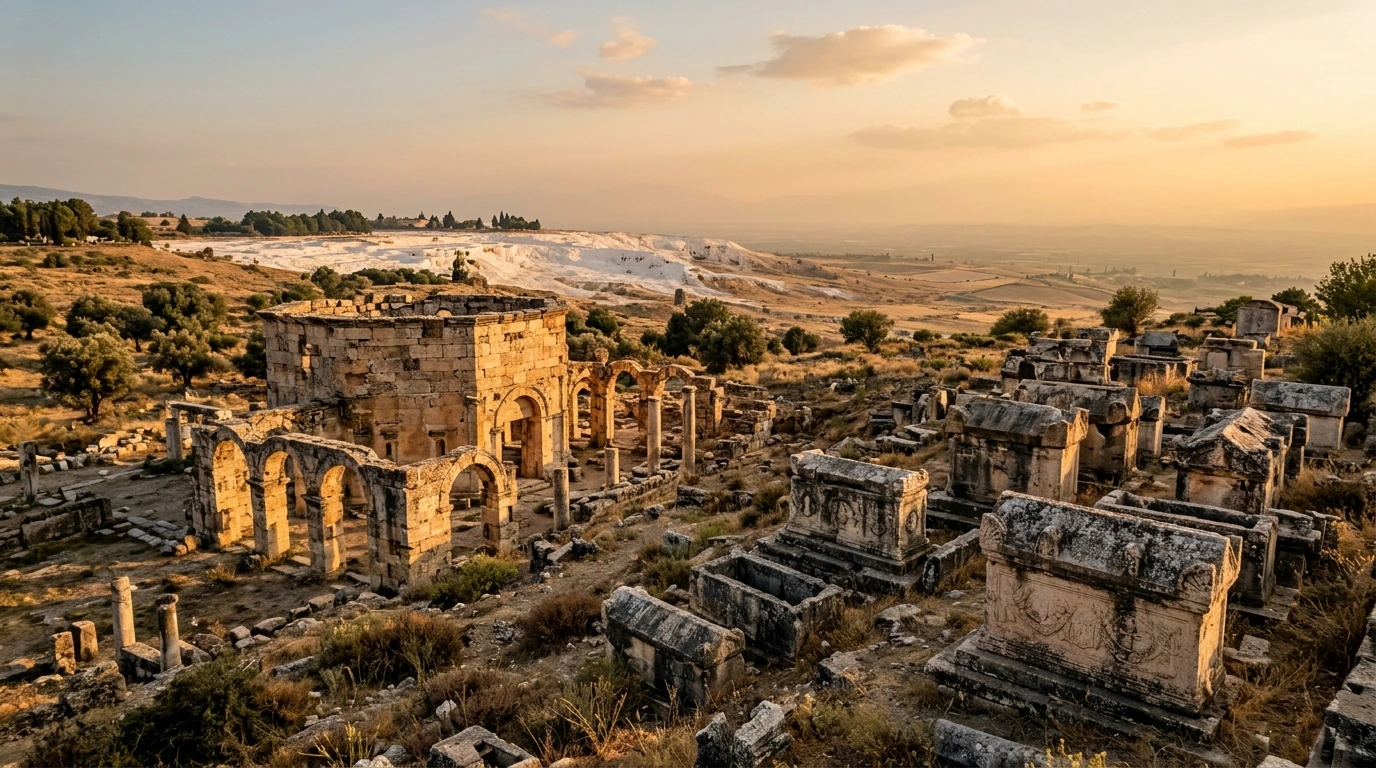
Few archaeological sites have generated more intense academic scrutiny than Tell es-Sultan, the ancient mound of biblical Jericho. When modern secular minimalists attempt to dispute the historical reliability of the Old Testament, the conquest narrative of Joshua 6 is frequently cited as their prime battleground.
However, when the stratigraphical data documented by Kathleen Kenyon in the 1950s is re-examined alongside Bronze Age Near Eastern siege customs—as meticulously demonstrated by epigrapher and archaeologist Dr. Bryant G. Wood—the archaeological evidence does not contradict Scripture; it corroborates the biblical text with astonishing forensic precision.
Every major detail recorded in the biblical account of Jericho’s fall:
- The season of the harvest.
- The extraordinary brevity of the siege.
- The miraculous outward collapse of the defensive walls.
- The unplundered condition of the food supplies.
- The total destruction of the city by an intentional firestorm.
- The preservation of houses on the northern wall. ...is attested by hard physical artifacts resting beneath the soil of Tell es-Sultan.
+----------------------------------------------------------------------------------------------------+
|               FORENSIC CHECKLIST: JOSHUA 6 VS. ARCHAEOLOGY OF TELL ES-SULTAN                       |
+--------------------------+-----------------------+-------------------+-----------------------------+
| BIBLICAL PHENOMENON      | SCRIPTURE TEXT        | MATERIAL FINDING  | ARCHAEOLOGICAL FIT          |
+--------------------------+-----------------------+-------------------+-----------------------------+
| 1. Spring Barley Harvest | Joshua 2:6; 3:15      | Pithoi packed     | EXACT: Grain harvested      |
|                          | (Jordan at flood stage| with charred grain| weeks prior to siege        |
| 2. Brief 7-Day Siege     | Joshua 6:15           | Unconsumed grain  | EXACT: Siege too short to   |
|                          | (7 days marching)     | in every kitchen  | exhaust city food supplies  |
| 3. Walls Fell Flat       | Joshua 6:20           | Mudbrick rampart  | EXACT: Bricks collapsed     |
|                          | (*tahteyha* -> beneath| fallen outward    | forming natural climb ramp  |
| 4. City Burned with Fire | Joshua 6:24           | 3-foot dense ash  | EXACT: Universal charcoal & |
|                          | ("Burned whole city") | & scorched debris | reddened brick burn layer   |
| 5. Plunder Forbidden     | Joshua 6:17–19        | Valuable grain    | EXACT: Food left to burn    |
|                          | (Under *Cherem* ban)  | left unlooted     | rather than taken as loot   |
+--------------------------+-----------------------+-------------------+-----------------------------+
Full Grain Pithoi: Carbonized Proof of a Short Spring Siege
In ancient warfare, conquering armies laid siege to walled cities for months or even years. The defenders slowly starved, slaughtering their pack animals, boiling leather sandals, and consuming every last scrap of grain stored in their ceramic storage jars (pithoi). When the city finally fell, the victorious soldiers immediately plundered whatever grain remained as precious food supplies.
When Kathleen Kenyon excavated the residential quarters of Jericho’s destruction layer (City IV), she made an extraordinary discovery:
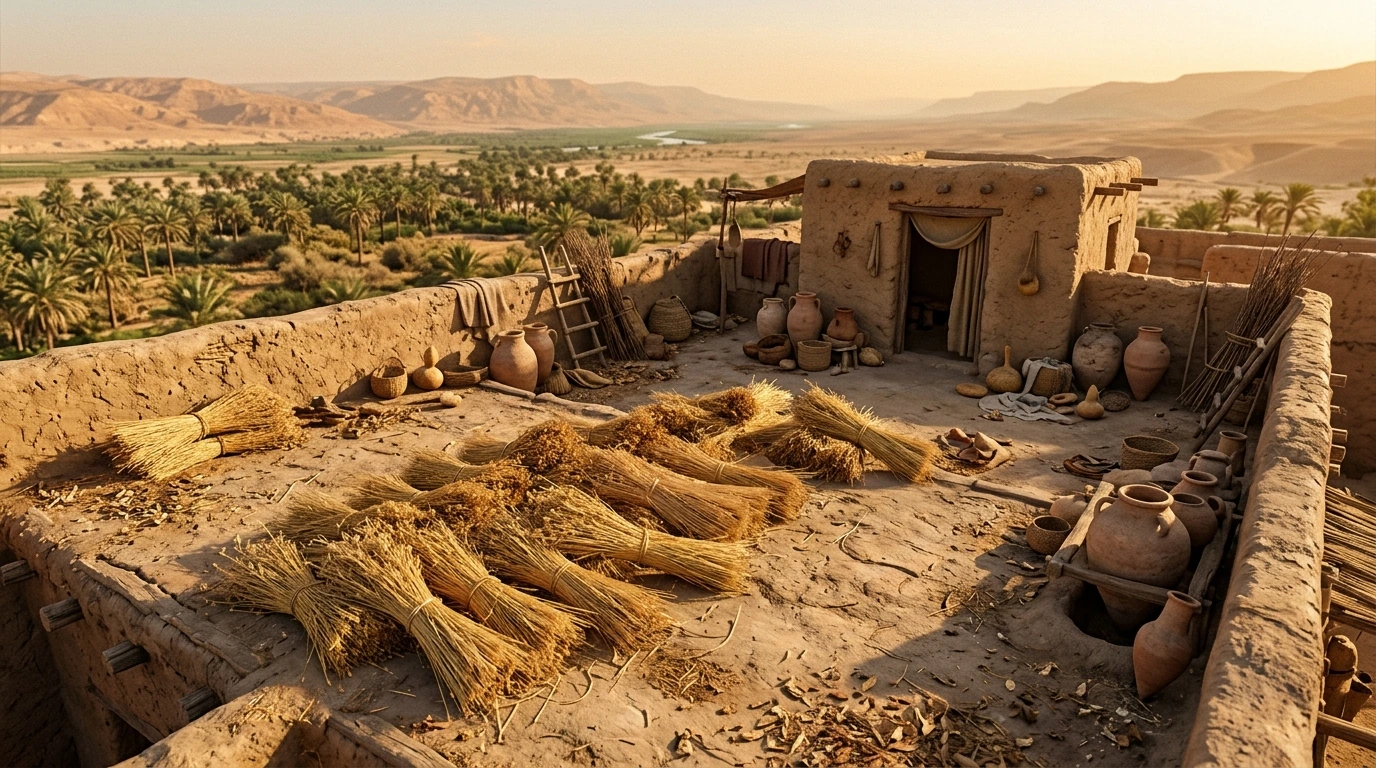
- Dozens of Intact Pithoi: In domestic rooms throughout the city, Kenyon uncovered large two-handled storage jars standing in rows, filled to the brim with carbonized barley and wheat.
- The Spring Harvest Confirmation: The presence of vast stores of grain proves that Jericho was attacked in the spring, immediately following the spring harvest, precisely as recorded in Joshua 2:6 (drying flax on Rahab's roof) and Joshua 3:15 ("the Jordan overflows all its banks throughout harvest").
- The Seven-Day Siege Confirmation: Had Jericho been besieged for months, the food jars would have been scraped empty by starving Canaanites. The full jars prove that the siege was extraordinarily brief—matching Joshua 6:15, where the siege lasted merely seven days.
- The Sacred Ban (Cherem): Why did the invading Israelites not plunder this mountain of valuable grain? In the ancient world, grain was equivalent to liquid gold. The Israelites left the grain to burn in the ashes because Joshua had declared the entire city under the Cherem (the sacred ban, Joshua 6:17–19): all silver, gold, bronze, and iron belonged to the treasury of Yahweh, while everything else was devoted to total destruction as a firstfruit offering to God.
+----------------------------------------------------------------------------------------------------+
|               THE GRAIN STORAGE PITHOI DISCOVERY AT TELL ES-SULTAN                                 |
+--------------------------+---------------------------------+---------------------------------------+
| ARCHAEOLOGICAL PHENOMENON| PHYSICAL EVIDENCE               | EXEGETICAL SIGNIFICANCE               |
+--------------------------+---------------------------------+---------------------------------------+
| 1. Full Grain Contents   | Charred barley seeds filled     | Confirms siege lasted days, not       |
|                          | jars to the brim                | months (Joshua 6:15)                  |
| 2. Unlooted Stores       | Soldiers did not take grain     | Confirms adherence to the absolute    |
|                          | as plunder                      | divine ban (*cherem*, Joshua 6:18)    |
| 3. High Carbonization    | Flash-burned at high heat       | Confirms Joshua 6:24 ("burned the     |
|                          | into preserved carbon           | whole city and everything in it")     |
+--------------------------+---------------------------------+---------------------------------------+
The Outward Mudbrick Collapse: A Ramp Up into the City
The central miracle of the conquest is described in Joshua 6:20:
"When the trumpets sounded, the army shouted, and at the sound of the trumpet, when the men gave a loud shout, the wall collapsed (fell flat, תִּפֹּל הַחוֹמָה תַּחְתֶּיהָ, tipol hachomah tahteyha); so every man charged straight in, and they took the city."
The Hebrew idiom tahteyha literally translates as "fell beneath itself" or "fell downward."
In secular siege warfare, an attacking army battering down a defensive wall causes the bricks to tumble inward into the city street, or the walls collapse into the ditch.
When John Garstang and Kathleen Kenyon dug at the base of Jericho’s 15-foot stone revetment wall, they discovered a geological phenomenon that stunned field engineers:
- The Red Mudbrick Heap: At the outer base of the stone revetment wall lay a massive heap of collapsed red mudbricks, measuring several feet deep.
- Outward Fall: The upper mudbrick defensive wall had collapsed outward and downward, tumbling over the face of the stone revetment and piling up at the bottom of the tell.
- The Natural Assault Ramp: This outward collapse created a continuous earthen ramp from the valley floor directly up to the top of the stone retaining wall, allowing the Israelite soldiers encircling the city to run directly up the rubble ramp and storm "straight in" (negedo), exactly as Joshua 6:20 describes.
Ancient Near Eastern Covenant Law: The Inviolable Oath
In Joshua 2:12–14, Rahab negotiated a binding legal treaty with the Israelite spies:
"Now then, please swear to me by the LORD that you will show kindness to my family, because I have shown kindness to you. Give me a sure sign (ot emet) that you will spare the lives of my father and mother, my brothers and sisters, and all who belong to them..."
The Legal Mechanics of Ancient Oaths (Shevu'ah)
In Ancient Near Eastern law (attested in the Code of Hammurabi, Hittite vassal treaties, and biblical jurisprudence):
- The Divine Invocation: An oath sworn in the personal name of a deity (YHWH) established a divine covenant of blood. To violate an oath sworn by God’s name was to invite the deity’s immediate curse and death upon the oath-maker and their offspring.
- The Reciprocal Obligation (Chesed): Rahab’s plea was grounded in the ancient legal concept of Chesed (loyal covenant love / reciprocal kindness). Because she risked her life to protect the ambassadors of Israel, Israel was legally and morally bound to protect her family.
- The Immunity Seal: Joshua honored the oath completely. When the trumpet blasted and the city fell under the cherem judgment, Joshua commanded the two spies: "Go into the prostitute’s house and bring her out and all who belong to her, in accordance with your oath to her" (Joshua 6:22).
Hebrews 11 and James 2: Faith and Works Harmonized
In the New Testament, Rahab occupies a singular, elevated position as the only woman alongside Sarah honored in Hebrews 11 (The Hall of Faith), and the only woman paired with Abraham in James 2 (Faith and Works):
-
Hebrews 11:31 (The Inward Heart of Faith):
"By faith the prostitute Rahab, because she welcomed the spies in peace, was not killed with those who were disobedient."
The author of Hebrews highlights Rahab’s spiritual discernment: she believed God’s promise before seeing the walls fall. -
James 2:25 (The Outward Evidence of Works):
"In the same way, was not even Rahab the prostitute considered righteous for what she did when she gave lodging to the spies and sent them off in a different direction? As the body without the spirit is dead, so faith without deeds is dead."
James demonstrates that genuine saving faith is never an abstract intellectual assent; it produces radical, courageous, self-sacrificial action.
Rahab’s legacy bridges the Old and New Covenants: she was saved by grace through faith, evidenced her faith through courageous deeds, and entered the royal genealogy of the King of Kings.
Three-Tier Evidentiary Evaluation: Material Artifacts
+----------------------------------------------------------------------------------------------------+
|               THREE-TIER EVIDENTIARY EVALUATION: JERICHO FORENSICS                                 |
+----+----------------------+-----------------------------+-------------------+----------------------+
| #  | HISTORICAL SKEPTICISM| SKEPTICAL CLAIM             | MATERIAL EVIDENCE | EVIDENTIARY VERDICT  |
+----+----------------------+-----------------------------+-------------------+----------------------+
| 1  | "Jericho Suffered an | Jericho fell after a multi- | Full grain jars   | REFUTED: Grain stores|
|    | Extended Starvation  | year siege like all ancient | found unconsumed  | prove a short, sudden|
|    | Siege"               | walled cities               | in kitchens       | spring siege         |
+----+----------------------+-----------------------------+-------------------+----------------------+
| 2  | "The Walls Collapsed | Walls collapsed inward or   | Red mudbrick heap | REFUTED: Outward fall|
|    | Inward Under Siege   | were breached by battering  | fallen outward at | created ramp into the|
|    | Rams"                | rams                        | base of revetment | city as described    |
+----+----------------------+-----------------------------+-------------------+----------------------+
| 3  | "Israel Plundered the| The Israelites pillaged all | Jars of valuable  | REFUTED: Obeyed the  |
|    | City for Food and    | food and goods like ordinary| grain burned to   | sacred Cherem ban of |
|    | Supplies"            | desert marauders            | carbon in ash     | Joshua 6:18          |
+----+----------------------+-----------------------------+-------------------+----------------------+
Primary Sources & Scholarly Archives
Editorial Standard →Original Hebrew, Aramaic, and Greek interlinear analysis, morphological tags, and ancient variant readings.
Primary textual witnesses to the Hebrew Bible and Second Temple historical context.
Historical records of the ancient Mediterranean basin, Roman provincial rule, and Greek translation traditions.
Frequently Asked Questions
What do the full grain jars found at Jericho prove about the biblical story?
The jars packed with carbonized grain prove that the siege occurred in spring right after harvest, lasted only a few days without starving the defenders, and that the Israelites obeyed the Cherem ban by leaving the grain to burn.
Did the walls of Jericho collapse outward or inward?
The mudbrick walls collapsed outward over the lower stone retaining wall, piling up at the base of the mound to form a natural ramp that allowed the Israelite soldiers to charge directly into the city.
Why do both Hebrews and James praise Rahab in the New Testament?
Hebrews 11 honors her inward faith in the God of Israel, while James 2 celebrates her outward courage in risking her life to hide the messengers, demonstrating that genuine faith produces tangible works.
Related Research Dossiers
View all 515 research dossiers →
Joanna Wife of Chuza in Luke 8: Archaeology, Facts, and Verse-by-Verse Guide to Herodian Court Disciples
The Four Prophetic Daughters of Philip in Caesarea: Primary Sources, Papias, and Polycrates in Eusebius