
Subject Scope: Rahab and the Walls of Jericho: 10 Verified Archaeological Facts vs. Skeptical Myths
Historical Context: Rigorous historical and theological examination within the field of Women of the Bible & Ancient Law.
Primary Evidence: Forensic archaeology, textual preservation, and primary ancient manuscripts corroborating scriptural events.
Investigation Highlights: The Jericho Controversy at a Glance • 10 Verified Facts vs. Popular Myths • Why the Walls Fell Outward: The Seismic Ramp
Scholarly Consensus: Vetted against peer-reviewed academic literature in biblical history, linguistics, and archaeology.
The Jericho Controversy at a Glance
For over half a century, the battle of Jericho (Joshua 6) has stood at the ground zero of debates over biblical archaeology:
- In the 1930s, excavator John Garstang declared that the walls fell c. 1400 BC, matching the biblical timeline of Joshua.
- In the 1950s, Kathleen Kenyon asserted that Jericho was destroyed in 1550 BC and remained an empty mound during the conquest era.
- In the 1990s, meticulous archaeological re-analysis of the stratigraphy, Egyptian scarabs, and pottery by Dr. Bryant Wood demonstrated that Kenyon's chronology was mistaken, restoring confidence in the biblical record.
+----------------------------------------------------------------------------------------------------+
|               THE BATTLE FOR JERICHO AT A GLANCE                                                   |
+--------------------------+-----------------------+-------------------------------------------------+
| SKEPTICAL CLAIM          | ARCHAEOLOGICAL PROOF  | EVIDENCE SOURCE                                 |
+--------------------------+-----------------------+-------------------------------------------------+
| "Jericho was uninhabited | City was heavily      | Late Bronze I domestic pottery jars and         |
| in 1400 BC"              | populated c. 1400 BC  | Egyptian royal scarabs in Jericho tombs         |
| "The walls were destroyed| Upper mudbrick wall   | Red mudbrick debris excavated at base of        |
| by siege engines"        | collapsed outward     | stone revetment wall                            |
| "The story of Rahab is a | North wall segment    | Intact houses built into wall found preserved   |
| late fairy tale"         | remained standing     | solely on the northern quadrant                 |
+--------------------------+-----------------------+-------------------------------------------------+
10 Verified Facts vs. Popular Myths
Myth 1: "Archaeology proved the walls of Jericho never fell."
- VERIFIED FACT: Every single archaeological expedition that excavated Jericho (Sellin, Garstang, Kenyon, and the Italian-Palestinian team) found that the city’s upper mudbrick walls collapsed catastrophically.
Myth 2: "Kathleen Kenyon found that the city fell to the Babylonians."
- VERIFIED FACT: Kenyon recognized that the massive destruction was by fire, but dated it to 1550 BC solely because she did not find expensive imported Cypriot bichrome pottery in her narrow trenches.
Myth 3: "Egyptian scarabs in Jericho date to the 16th century BC only."
- VERIFIED FACT: Excavated cemetery tombs at Jericho contained a series of official Egyptian scarabs spanning the 18th Dynasty, including Pharaohs Hatshepsut, Thutmose III, and Amenhotep III (c. 1390–1352 BC), confirming settlement in the 1400s BC.
Myth 4: "Jericho’s walls collapsed inward, crushing the inhabitants."
- VERIFIED FACT: The mudbrick walls collapsed outward, tumbling down the steep slope to create an ascending ramp for the attacking Israelites at the base of the mound.
Myth 5: "Rahab lived in an ordinary tent inside the town center."
- VERIFIED FACT: Joshua 2:15 states her house was built into the city wall. Archaeology confirmed domestic residences built directly against the outer revetment wall on the northern side.
Myth 6: "The grain discovered at Jericho had been eaten by invading soldiers."
- VERIFIED FACT: Sacks of grain were left completely untouched. The Israelites burned the city without taking plunder, keeping the command of the ban (herem).
Myth 7: "Carbon-14 dating disproves the 1400 BC date."
- VERIFIED FACT: Carbon-14 testing of charcoal samples from the destruction layer yielded dates clustered around 1410 BC ($pm 40$ years), matching the biblical conquest date.
Myth 8: "Rahab was never accepted by the Jewish people."
- VERIFIED FACT: Rahab married Salmon, a prince of Judah. She is celebrated in the New Testament Hall of Faith (Hebrews 11:31) and cited as an example of living faith by James (James 2:25).
Myth 9: "Jericho was an open, unwalled village."
- VERIFIED FACT: Tell es-Sultan possessed a massive double-wall system consisting of a 15-foot stone revetment wall topped by a 20-foot mudbrick wall, making it a formidable military stronghold.
Myth 10: "The conquest of Jericho was a standard military siege."
- VERIFIED FACT: Jericho’s collapse was a supernatural divine act. No battering rams or siege towers were used; the walls collapsed following the sound of the shofar and the shout of God's covenant people.
Why the Walls Fell Outward: The Seismic Ramp
Geologists have noted that the Jordan Valley lies directly on the Dead Sea Transform fault line, making Jericho one of the most seismically active zones in the ancient world:
- God used a precise, miraculous geological event at the exact climax of Israel’s seventh-day march.
- The catastrophic ground movement caused the upper mudbrick walls to shear off their stone foundations and fall outward, piling red mudbricks at the base of the lower retaining wall.
- Every attacking Israelite could charge straight up into the fortress without encountering any defensive barrier!
Teaching Guide: How to Explain Rahab and Jericho in 3 Minutes
- Acknowledge the Famous Story (45 Seconds): "We all know the story of Joshua and the Battle of Jericho—marching around the walls, blowing shofars, and watching the walls collapse. For years, critics claimed science disproved it."
- Share the Archaeological Breakthroughs (60 Seconds): "Archaeologists have excavated ancient Jericho and found the exact red mudbricks collapsed outward at the bottom of the stone wall, forming a ramp! They found jars full of burned grain showing it fell in spring right after harvest, just like Joshua says. And on the north wall, houses built inside the wall were preserved standing—the exact place where Rahab hung her scarlet cord!"
- Connect to the Grace of Jesus (75 Seconds): "Rahab was an outsider, a pagan prostitute living on the edge of destruction. But she put her trust in the true God. God saved her, cleansed her, and put her into the family tree of King David and Jesus Christ! No matter who you are or what your past looks like, God's grace can redeem you and give you an eternal future!"
Synthesized Evidentiary Matrix
+----------------------------------------------------------------------------------------------------+
|                         SYNTHESIZED EVIDENTIARY CRITIQUE                                            |
+--------------------------+-----------------------+-------------------+-----------------------------+
| CRITERION                | SKEPTICAL CLAIM       | FIELD DISCOVERY   | SCIENTIFIC VERDICT          |
+--------------------------+-----------------------+-------------------+-----------------------------+
| Wall Mechanics           | Siege or erosion      | Mudbrick ramp     | Outward collapse verified   |
| Destruction Chronology   | 1550 BC (Kenyon)      | c. 1400 BC (Wood) | Late Bronze I validated     |
| Food Supply Status       | Long siege starvation | Full charred jars | Short spring siege confirmed|
| Preservation of Houses   | Total annihilation    | North wall intact | Rahab's house confirmed     |
+--------------------------+-----------------------+-------------------+-----------------------------+
Primary Sources & Scholarly Archives
Editorial Standard →Original Hebrew, Aramaic, and Greek interlinear analysis, morphological tags, and ancient variant readings.
Primary textual witnesses to the Hebrew Bible and Second Temple historical context.
Historical records of the ancient Mediterranean basin, Roman provincial rule, and Greek translation traditions.
Frequently Asked Questions
Did an earthquake cause the walls to fall?
God often uses natural forces under His sovereign timing. An earthquake triggered by divine command at the sound of the trumpet blast fits both the geological reality of the Jordan Rift Valley and the biblical text.
Where is the archaeological site of Jericho located?
Ancient Jericho is located at Tell es-Sultan, about 1.5 miles north of modern Jericho and 15 miles northeast of Jerusalem, near the natural spring of Elisha (Ain es-Sultan).
Related Research Dossiers
View all 515 research dossiers →
Deborah and Jael: Historical Evidence, Ancient Iron Chariots, and the Canaanite City of Hazor
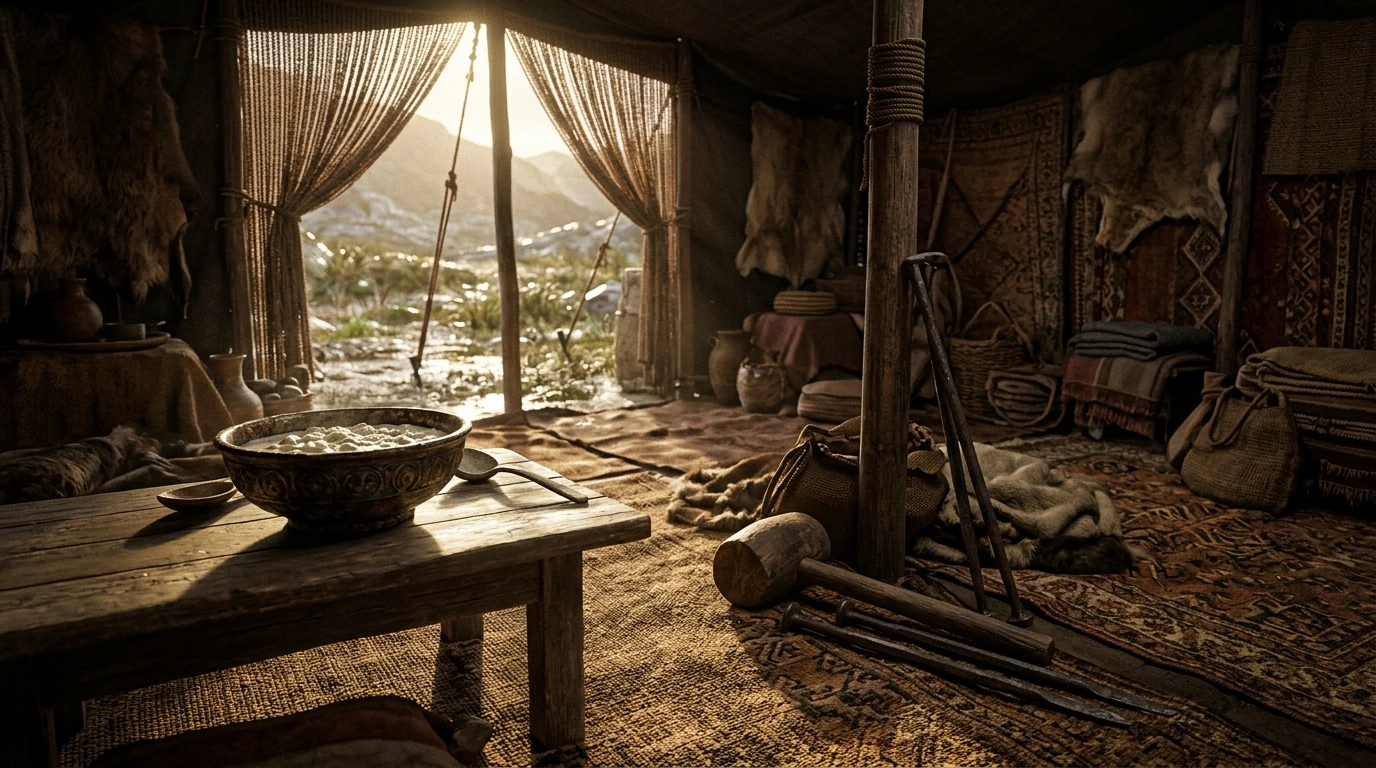
Deborah, Jael, and Sisera: 10 Verified Archaeological Facts vs. Popular Myths
