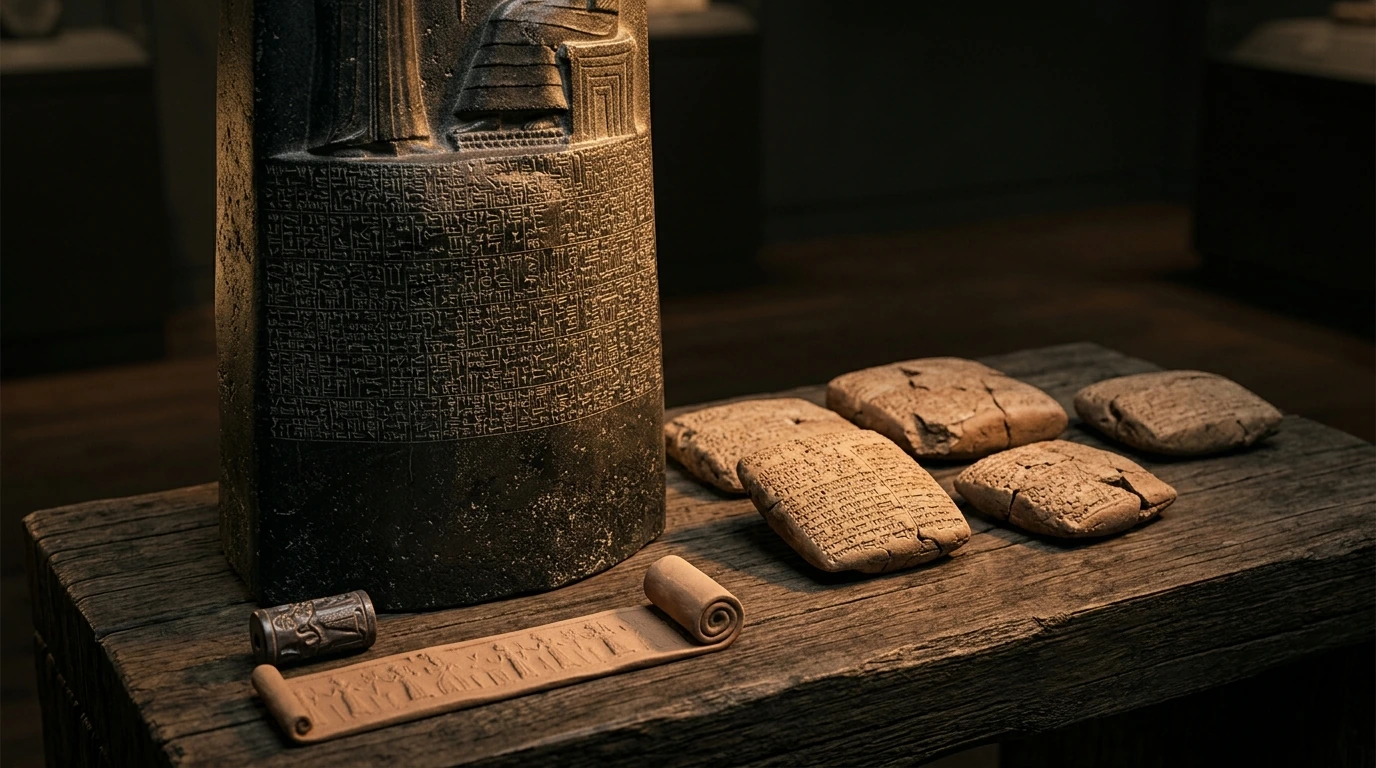
Subject Scope: Why Did Rachel Steal Laban’s Household Gods (Teraphim)? Ancient Nuzi Tablets and Genesis 31 Primary Sources
Historical Context: Rigorous historical and theological examination within the field of Women of the Bible & Ancient Law.
Primary Evidence: Forensic archaeology, textual preservation, and primary ancient manuscripts corroborating scriptural events.
Investigation Highlights: The Genesis 31 Mystery: Rachel’s Dangerous Theft • What Were Teraphim? Etymology and Function • The Nuzi Tablets: The 1925 Discovery That Unlocked the Patriarchs
Scholarly Consensus: Vetted against peer-reviewed academic literature in biblical history, linguistics, and archaeology.
The Genesis 31 Mystery: Rachel’s Dangerous Theft
In Genesis 31, after twenty grueling years of laboring under the deceitful exploitation of his father-in-law Laban in Paddan-Aram (Upper Mesopotamia), the Patriarch Jacob resolved to flee back to the land of Canaan with his wives, children, and flocks. Amid the high-stakes logistics of this secret departure, the biblical narrator records a startling detail:
"Laban had gone to shear his sheep, and Rachel stole her father's household gods [teraphim]." — Genesis 31:19
When Laban discovered their flight three days later, he mustered his armed kinsmen and pursued them for seven days into the hill country of Gilead. Yet when Laban confronted Jacob, his primary, frantic accusation was not the loss of his daughters or his livestock:
"And now you have gone away because you longed greatly for your father's house, but why did you steal my gods?" — Genesis 31:30
Rachel hid the stolen idols inside her camel saddle (kar ha-gamal) and sat upon them, successfully avoiding discovery by claiming she could not rise due to the "way of women" (Genesis 31:34–35).
Why would Rachel risk her life, Jacob’s safety, and the entire covenant family to steal small figurines of clay, wood, or stone?
- Was she a secret idolater craving pagan protection?
- Or was she executing a calculated, desperate legal maneuver to secure her children's economic survival under ancient Mesopotamian jurisprudence?
+----------------------------------------------------------------------------------------------------+
|               THE CRISIS OF LABAN'S TERAPHIM AT A GLANCE                                           |
+--------------------------+-----------------------+-------------------+-----------------------------+
| SCRIPTURAL ACTION        | BIBLICAL TEXT         | HEBREW TERM       | HISTORICAL SIGNIFICANCE     |
+--------------------------+-----------------------+-------------------+-----------------------------+
| Secret Theft             | Genesis 31:19         | Wattignob Rachel  | High-risk theft carrying    |
|                          |                       | et-ha-teraphim    | potential death penalty     |
| Laban's Hot Pursuit      | Genesis 31:23         | Wayyirdop aharav  | 7-day military pursuit      |
| Search for the Idols     | Genesis 31:33–35      | B'kar ha-gamal    | Concealed under saddle      |
| Covenant at Galeed       | Genesis 31:44–53      | Mitzpah / Galeed  | Non-aggression border treaty|
+--------------------------+-----------------------+-------------------+-----------------------------+
What Were Teraphim? Etymology and Function
The Hebrew word teraphim ($ ext{תְּרָפִים}$) is a plural noun of dignity or intensity denoting household deities, ancestor images, or divination figurines:
- Physical Appearance: Teraphim varied greatly in size. While Rachel's stolen teraphim were small enough to fit inside a woven camel cushion (Genesis 31:34), the teraph in 1 Samuel 19:13—used by Michal to disguise David’s absence in bed—was large enough to mimic a human torso.
- Divination and Oracles: In later Israelite history, teraphim were illicitly consulted as divination tools (oracles) to discern future outcomes (Ezekiel 21:21; Zechariah 10:2).
- Ancestor Veneration: In ancient Semitic and Hurrian society, small figurines represented deceased family patriarchs, acting as guardians of the ancestral hearth and domestic peace.
The Nuzi Tablets: The 1925 Discovery That Unlocked the Patriarchs
For centuries, western commentators found Rachel’s theft inexplicable, assuming she was simply superstitious. However, between 1925 and 1931, American archaeologist Edward Chiera excavated over 4,000 cuneiform clay tablets at Yorghan Tepe (ancient Nuzi), an ancient Hurrian provincial center near Kirkuk in modern Iraq.
Dating to the mid-second millennium BC (c. 1500–1400 BC), the Nuzi tablets preserved thousands of legal contracts, family wills, adoption agreements, and property disputes from the exact cultural and geographical sphere of northern Mesopotamia (Mitanni / Paddan-Aram) where Laban and his daughters lived!
+----------------------------------------------------------------------------------------------------+
|               THE NUZI DISCOVERY: CUNEIFORM LEGAL REVELATIONS                                      |
+--------------------------+-----------------------+-------------------------------------------------+
| TABLET CITATION          | LEGAL PHENOMENON      | DIRECT BIBLICAL CORRELATION                     |
+--------------------------+-----------------------+-------------------------------------------------+
| HSS V 67 / JEN 204       | Sale of Birthright    | Esau selling birthright to Jacob for food       |
| HSS IX 22                | Wife-Sister Status    | Abraham & Isaac identifying wives as sisters    |
| HSS V 60                 | Handmaid Surrogate    | Sarah giving Hagar; Rachel giving Bilhah        |
| Gadd 51 / JEN 403        | Possession of Gods    | Rachel stealing Laban's household teraphim      |
+--------------------------+-----------------------+-------------------------------------------------+
Hurrian Adoption Law and Patriarchal Inheritance
Among the Nuzi legal contracts, the adoption tablet translated by C. J. Gadd (Tablet 51) provides the decisive historical context for Genesis 31:
The Adoption Contract of Nashwi and Wullu
In Tablet 51, a Hurrian patriarch named Nashwi, who had no biological sons, adopted a young man named Wullu:
- Nashwi gave his daughter Nuhuya in marriage to Wullu.
- In exchange, Wullu agreed to care for Nashwi in his old age and arrange his funeral.
- The contract explicitly stipulates:
"If Nashwi has a son of his own, he shall divide the estate equally with Wullu, but the biological son shall take Nashwi's gods. If Nashwi does not have a son, then Wullu shall take Nashwi's gods."
Why the Gods Dictated the Inheritance
In Hurrian and Mesopotamian legal custom, possession of the household gods constituted the tangible title deed to the family estate:
- The heir who held the physical idols retained the primary legal right to the family homestead and the largest portion of the inheritance.
- In court, holding the family gods was prima facie evidence that the father had designated that individual as the chief executor and principal beneficiary.
When Jacob first arrived in Haran, Laban had no biological sons (only daughters, Genesis 29:9). Laban virtually adopted Jacob as his manager and son-in-law. Twenty years later, however, Laban had biological sons (Genesis 31:1), who grew intensely jealous of Jacob's rising wealth: "Jacob has taken all that was our father's" (Genesis 31:1).
Rachel and Leah’s Grievance: Daughters Treated as Foreigners
When Jacob summoned Rachel and Leah into the open fields to propose fleeing back to Canaan, their joint response reveals the severe economic and legal injustice they had suffered under their father:
"Is there any portion or inheritance left to us in our father's house? Are we not regarded by him as foreigners? For he has sold us, and he has indeed devoured our money." — Genesis 31:14–15
- Under Mesopotamian law (Codex Hammurabi §§ 138–139, 163–164), a bride’s father was obligated to preserve the bridal gift (terhatum / mohar) as a protected financial reserve for his daughters in the event of their husband's death or destitution.
- Laban had consumed this reserve himself, giving his daughters nothing!
- By stealing the teraphim, Rachel was seizing the ultimate legal deed to Laban’s estate, ensuring that if Laban ever attempted to pursue Jacob or disinherit her children, they held the physical legal deed recognized in Hurrian courts!
Comparative Legal and Archaeological Matrix
+----------------------------------------------------------------------------------------------------+
|                         LEGAL MATRIX: NUZI JURISPRUDENCE VS. GENESIS 31                             |
+--------------------------+-----------------------+-------------------+-----------------------------+
| LEGAL ELEMENT            | NUZI HURRIAN CODE     | PADDAN-ARAM REALITY| GENESIS 31 ACTION          |
+--------------------------+-----------------------+-------------------+-----------------------------+
| Estate Title Deed        | Physical family gods  | Laban's teraphim  | Rachel takes the idols      |
| Daughter's Bride-Price   | Reserved for dowry    | Embezzled by Laban| Daughters declare grievance |
| Right to Pursue          | Seven-day legal chase | Laban pursues     | Confrontation at Gilead     |
| Border Treaty            | Non-encroachment pile | Galeed cairn      | Border agreement sealed     |
+--------------------------+-----------------------+-------------------+-----------------------------+
Primary Sources & Scholarly Archives
Editorial Standard →Original Hebrew, Aramaic, and Greek interlinear analysis, morphological tags, and ancient variant readings.
Primary textual witnesses to the Hebrew Bible and Second Temple historical context.
Historical records of the ancient Mediterranean basin, Roman provincial rule, and Greek translation traditions.
Frequently Asked Questions
Did Jacob know that Rachel had stolen the idols?
No. Genesis 31:32 explicitly states: "Jacob did not know that Rachel had stolen them." In fact, confident in his own integrity, Jacob pronounced a rash death sentence upon the unknown thief: "Anyone with whom you find your gods shall not live." Providentially, Rachel’s deception prevented Laban from finding them, saving her life.
Why did Rachel sit on the camel saddle?
The women's camel saddle (kar ha-gamal) was a large, cushioned basket structure strapped to the beast of burden. When detached in a nomad tent, it served as a seat or bed. By sitting upon it and claiming ceremonial impurity (the way of women), she exploited ancient Near Eastern taboos: no man would touch or search a woman's menstrual seat, ensuring the hidden idols remained undetected.
What happened to the stolen teraphim later?
In Genesis 35:2–4, when God commanded Jacob to move to Bethel, Jacob ordered his entire household: "Put away the foreign gods that are among you and purify yourselves." Rachel and the rest of the household surrendered all their foreign gods and amulets to Jacob, who buried them permanently under the great terebinth tree near Shechem.
Did Rachel commit idolatry by stealing the teraphim?
While Rachel was undoubtedly motivated by property rights and legal security according to the customs of her homeland, her actions demonstrate that she had not yet fully embraced exclusive faith in Yahweh. True spiritual maturation occurred in Genesis 35, where the idols of Mesopotamia were buried forever in Canaanite soil.
Related Research Dossiers
View all 515 research dossiers →
Deborah and Jael: Historical Evidence, Ancient Iron Chariots, and the Canaanite City of Hazor

Deborah, Jael, and Sisera: 10 Verified Archaeological Facts vs. Popular Myths