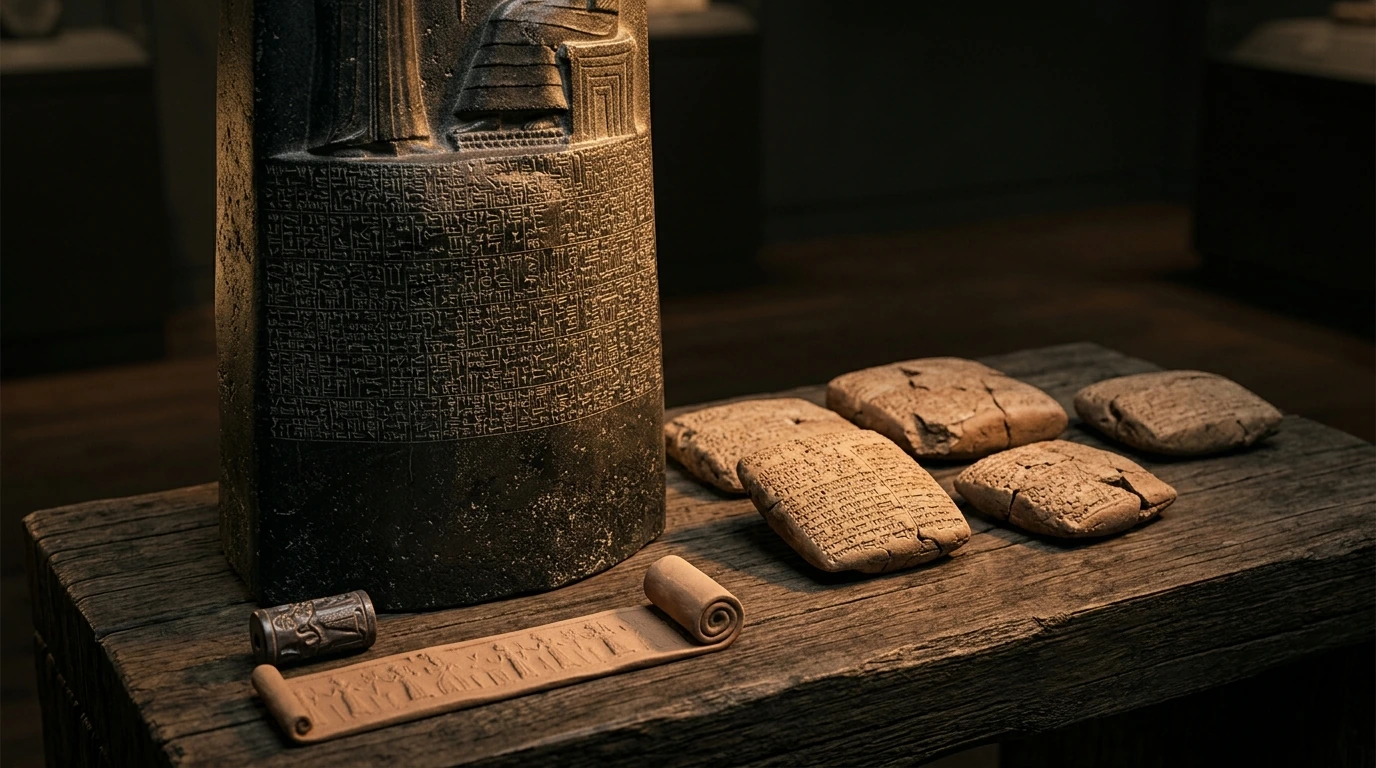
Subject Scope: Rachel and the Teraphim: Historical Evidence, Hurrian Inheritance Law, and Patriarchal Property Rights
Historical Context: Rigorous historical and theological examination within the field of Women of the Bible & Ancient Law.
Primary Evidence: Forensic archaeology, textual preservation, and primary ancient manuscripts corroborating scriptural events.
Investigation Highlights: The Historical Battle Over Patriarchal Authenticity • The Cultural Geography of Paddan-Aram • Property Litigation in the Ancient Near East
Scholarly Consensus: Vetted against peer-reviewed academic literature in biblical history, linguistics, and archaeology.
The Historical Battle Over Patriarchal Authenticity
During the nineteenth and early twentieth centuries, nineteenth-century European biblical critics (most notably Julius Wellhausen and the Graf-Wellhausen school) argued that the stories of Abraham, Isaac, and Jacob in the Book of Genesis were retrojected fictions invented by post-exilic scribes in the fifth century BC.
- Skeptics claimed that characters like Laban, Rachel, and Leah were mythological personifications of nomadic tribes.
- They asserted that the odd legal customs described in Genesis—such as stealing household gods to claim an inheritance, selling a birthright for stew, or claiming a wife as a sister—had no basis in historical reality.
However, the twentieth-century explosion of ancient Near Eastern archaeology, particularly the decipherment of the Nuzi Tablets, the Mari Archives, and the Code of Hammurabi, shattered this critical consensus. The specific legal institutions embedded in Genesis 31 do not reflect the Persian or Hellenistic periods; they reflect with photographic accuracy the unique, highly localized civil customs of second-millennium BC Hurrian society in northern Mesopotamia.
+----------------------------------------------------------------------------------------------------+
|               THE PARADIGM SHIFT IN PATRIARCHAL ARCHAEOLOGY                                       |
+--------------------------+-----------------------+-------------------------------------------------+
| OLD 19TH-CENTURY THEORY  | ARCHAEOLOGICAL FACT   | CONFIRMING ARCHAEOLOGICAL SITE                  |
+--------------------------+-----------------------+-------------------------------------------------+
| "Patriarchs were 5th-c.  | Customs reflect exact | Nuzi (Yorghan Tepe, 4,000+ cuneiform tablets)   |
| post-exilic fictions"    | 2nd-millennium laws   | Mari (Royal Archives, Upper Euphrates)          |
| "Household gods were     | Teraphim functioned   | C. J. Gadd, Tablet 51 (Adoption & Gods as deed) |
| mere pagan charms"       | as property deeds     | Alalakh & Ugarit legal court records            |
+--------------------------+-----------------------+-------------------------------------------------+
The Cultural Geography of Paddan-Aram
Genesis 31 takes place in the region known biblically as Paddan-Aram or Aram-Naharaim (the fertile plains between the Euphrates and Tigris rivers in modern northern Syria and southeastern Turkey):
- Haran: The city where Terah settled and where Laban lived (Genesis 24:10; 28:10) was a major trading hub on the Royal Road connecting Nineveh, Damascus, and the Mediterranean.
- The Hurrian Dominance: Between 1800 and 1300 BC, this entire region was dominated culturally by the Hurrians (the biblical Horites), who formed the powerful kingdom of Mitanni.
- Hurrian society was characterized by distinct civil laws regarding adoption, family inheritance, and domestic religion that differed markedly from Semitic laws in southern Mesopotamia or Canaan.
Property Litigation in the Ancient Near East
When Laban caught up with Jacob in Gilead, his behavior follows the precise protocol of an ancient Near Eastern legal prosecution:
- The Formal Interrogation (Rib): Laban begins with a legal deposition, accusing Jacob of deceit ("You have carried away my daughters like captives of the sword," Genesis 31:26) and grand theft ("Why did you steal my gods?" v. 30).
- The Right of Search (Inquisitio): Under ancient Mesopotamian law, a homeowner whose goods were stolen had the legal right to inspect the accused party's baggage in the presence of witnesses. Laban systematically searched Leah’s tent, the two female servants' tents, and Jacob’s tent, finally entering Rachel's tent (Genesis 31:33).
- Jacob’s Counter-Claim: When the search yielded nothing, Jacob turned upon Laban with a furious counter-suit, reciting twenty years of unbroken fidelity:
- He absorbed every livestock loss caused by predators ("That which was torn by wild beasts I did not bring to you; I bore the loss of it myself," v. 39).
- Under the Code of Hammurabi § 266, an honest shepherd who lost livestock to a lion or disease was legally cleared if he presented the remains to the owner. Jacob had gone beyond the law, paying for every loss out of his own pocket!
The Covenant at Galeed: A Classical Hurrian Non-Aggression Pact
Finding no evidence of stolen gods, Laban and Jacob settled their legal impasse by entering into a formal treaty:
- The Stone Pillar and Cairn (Galeed / Yegar-Sahadutha): They erected a mound of stones to serve as an eternal legal boundary.
- Bilingual Inscription: Notice that Laban names the boundary heap in Aramaic (Yegar-sahadutha), while Jacob names it in Hebrew (Galeed), reflecting the precise linguistic transition zone between the Aramean northeast and the Canaanite southwest!
- Non-Encroachment Clause: "This heap is a witness, and the pillar is a witness, that I will not pass beyond this heap to you, and you will not pass beyond this heap and this pillar to me, to do harm" (Genesis 31:52).
Why 19th-Century Skepticism Collapsed Under Archaeology
The presence of these specific Hurrian elements in Genesis provides undeniable proof of the antiquity of the text:
- Unrepeatable Cultural Milieu: By the first millennium BC (the time of David, Solomon, or the Babylonian exile), the Hurrian civilization had vanished, and their distinct legal codes regarding household gods as property deeds were completely forgotten across the ancient world.
- Scribal Inability to Invent: A fifth-century Jewish scribe in Babylon or Jerusalem could not have fabricated these second-millennium customs, because no such laws existed in the Persian Empire!
- Historical Veracity: The Genesis account could only have been recorded by someone with direct, eyewitness knowledge of Middle Bronze Age Mesopotamian life.
Chronological Legal Synchronism Table
+----------------------------------------------------------------------------------------------------+
|               SYNCHRONISM: MESOPOTAMIAN JURISPRUDENCE & GENESIS 31                                 |
+--------------------------+-----------------------+-------------------------------------------------+
| JURISPRUDENTIAL CODE     | APPROXIMATE DATE      | CORRESPONDING GENESIS PRACTICE                  |
+--------------------------+-----------------------+-------------------------------------------------+
| Code of Lipit-Ishtar     | c. 1930 BC            | Inheritance rights of handmaid children         |
| Laws of Eshnunna         | c. 1770 BC            | Shepherding contracts and restitution           |
| Code of Hammurabi        | c. 1750 BC            | Dowry embezzlement & predator liability (§ 266) |
| Nuzi Cuneiform Tablets   | c. 1500–1400 BC       | Household gods as title deeds to estate (Tab 51)|
+--------------------------+-----------------------+-------------------------------------------------+
Primary Sources & Scholarly Archives
Editorial Standard →Original Hebrew, Aramaic, and Greek interlinear analysis, morphological tags, and ancient variant readings.
Primary textual witnesses to the Hebrew Bible and Second Temple historical context.
Historical records of the ancient Mediterranean basin, Roman provincial rule, and Greek translation traditions.
Frequently Asked Questions
Did ancient household gods possess legal value outside Nuzi?
Yes. Legal texts from Emar and Alalakh in Syria also indicate that domestic deities (ilani) were inherited by the primary heir. The heir was obligated to maintain the ancestral shrine, and possession of the physical images served as tangible public proof of primacy in family disputes.
Why was Laban so frantic about the stolen gods?
Laban knew that without the teraphim, his own biological sons might face legal challenges if Jacob ever returned to Haran to claim a share of the estate. The gods represented the physical guarantee of family ownership, ancestral legitimacy, and religious protection.
How does the Galeed covenant protect Jacob's wives?
In Genesis 31:50, Laban solemnly warns Jacob: "If you mistreat my daughters, or if you take other wives besides my daughters, although no one is with us, see, God is witness between you and me." This clause matches marriage contracts found at Nuzi, which legally prohibited the husband from taking a secondary wife if the primary wife had borne sons.
Related Research Dossiers
View all 515 research dossiers →
Deborah and Jael: Historical Evidence, Ancient Iron Chariots, and the Canaanite City of Hazor

Deborah, Jael, and Sisera: 10 Verified Archaeological Facts vs. Popular Myths