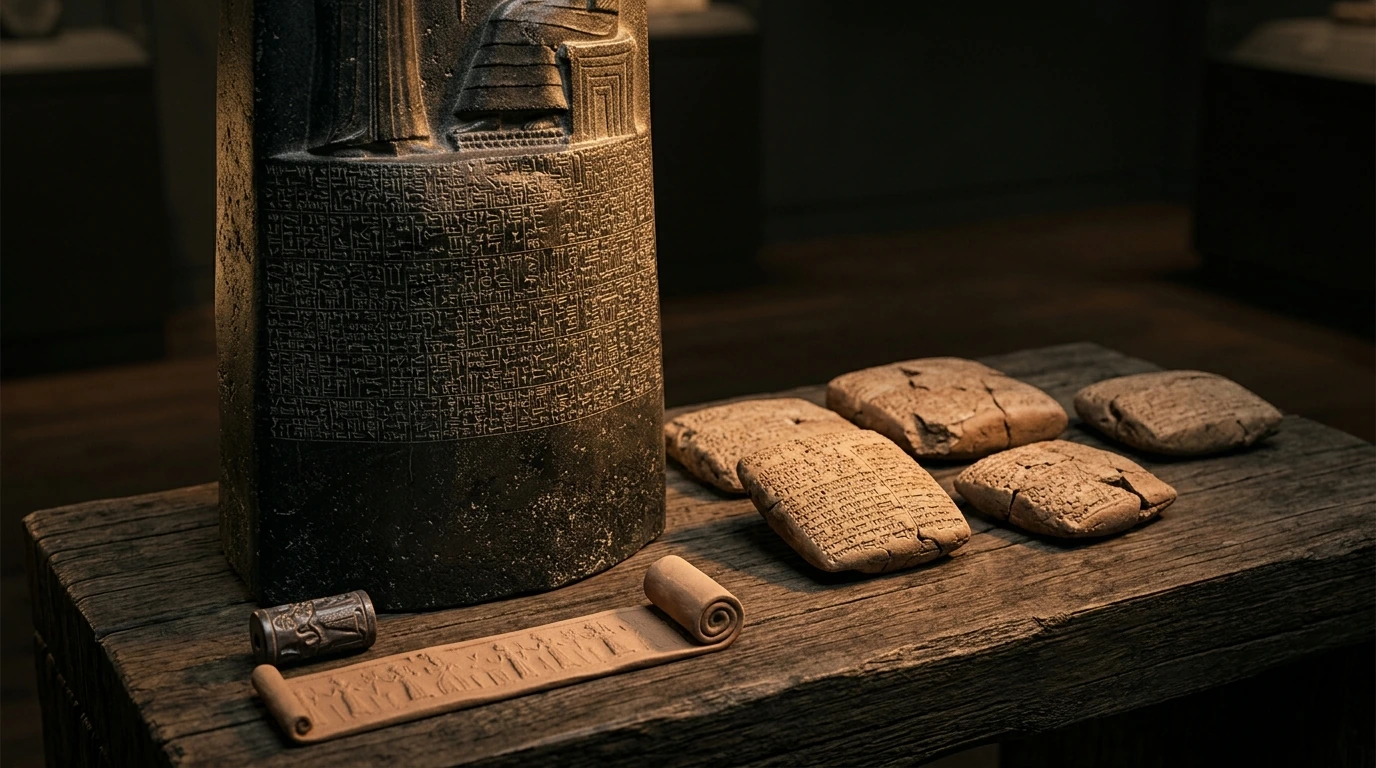
Subject Scope: Rachel and the Stolen Household Gods: 10 Verified Facts vs. Popular Myths on Teraphim and Nuzi Tablets
Historical Context: Rigorous historical and theological examination within the field of Women of the Bible & Ancient Law.
Primary Evidence: Forensic archaeology, textual preservation, and primary ancient manuscripts corroborating scriptural events.
Investigation Highlights: The Genesis 31 Episode at a Glance • 10 Verified Facts vs. Popular Myths • Why Camels and Saddles in Genesis Are Historically Authentic
Scholarly Consensus: Vetted against peer-reviewed academic literature in biblical history, linguistics, and archaeology.
The Genesis 31 Episode at a Glance
The narrative of Rachel stealing Laban’s household gods (teraphim) in Genesis 31:19–35 is one of the most colorful, dramatic, and historically illuminating stories in the Old Testament:
- A frantic escape from Mesopotamia across the Euphrates River into Gilead.
- An armed father-in-law pursuing them with righteous fury to recover his stolen gods.
- A clever daughter concealing the idols inside her camel cushion and claiming the physical weakness of her monthly cycle to avoid a fatal discovery.
For generations, readers wondered why a matriarch of Israel would commit such a dangerous act. Modern archaeology has unlocked the mystery: Rachel was not just stealing religious figurines; she was reclaiming her family's stolen economic inheritance under ancient Mesopotamian law.
+----------------------------------------------------------------------------------------------------+
|               THE STORY AT A GLANCE                                                                |
+--------------------------+-----------------------+-------------------------------------------------+
| KEY QUESTION             | POPULAR ASSUMPTION    | HISTORICAL REALITY (NUZI TABLETS)               |
+--------------------------+-----------------------+-------------------------------------------------+
| Why did she steal them?  | She wanted lucky charms| Possession of gods equaled title deed to estate |
| Was it a minor theft?    | Just family quarrel   | Carried death penalty under patriarchal law     |
| What were the teraphim?  | Giant temple idols    | Small clay/stone figurines fitting in saddle bag|
| Did Jacob approve?       | Jacob was in on it    | Jacob was completely ignorant of the theft      |
+--------------------------+-----------------------+-------------------------------------------------+
10 Verified Facts vs. Popular Myths
Myth 1: "Rachel stole the gods because she worshiped pagan idols."
- VERIFIED FACT: While polytheism lingered in Mesopotamia (Joshua 24:2), cuneiform contracts from Nuzi prove that household gods were the primary legal certificates of inheritance. Rachel stole them to protect her and her children’s inheritance after Laban squandered their dowry.
Myth 2: "Teraphim were massive statues like Greek temple gods."
- VERIFIED FACT: Household teraphim varied in size. The archaeological specimens recovered in northern Syria and Mesopotamia are small terracotta or carved stone figurines ranging from 5 to 15 centimeters (2 to 6 inches) in height, easily concealed in a saddle cushion.
Myth 3: "Camels in the patriarchal era are an anachronism."
- VERIFIED FACT: While large-scale camel caravans became common in the 1st millennium BC, zooarchaeological remains of domesticated camels have been excavated at Middle Bronze Age sites in Mesopotamia and the Levant (e.g., Mari, Ugarit, and Byblos), confirming limited patriarchal use.
Myth 4: "Jacob was an accomplice in the crime."
- VERIFIED FACT: Genesis 31:32 explicitly states that Jacob had no knowledge of Rachel's actions. He was so confident in his family's innocence that he declared: "Anyone with whom you find your gods shall not live!"
Myth 5: "Laban pursued them for seven days just because he missed his daughters."
- VERIFIED FACT: Laban pursued them with armed kinsmen over 300 miles. Under Hurrian law, losing the household gods threatened his biological sons’ entire future estate.
Myth 6: "The Bible portrays Rachel's deception as morally righteous."
- VERIFIED FACT: The Bible records history truthfully without whitewashing its heroes. While Rachel's desperation is understandable given Laban's cruelty, her reliance on deception mirrors Jacob's earlier deception of Isaac, showing a family in need of God's sanctifying grace.
Myth 7: "The Nuzi tablets were discovered in Jerusalem."
- VERIFIED FACT: The Nuzi tablets were discovered near Kirkuk in modern Iraq between 1925 and 1931 by Edward Chiera, uncovering the lost Hurrian civilization.
Myth 8: "The term teraphim always refers to evil witchcraft."
- VERIFIED FACT: In the patriarchal era, teraphim functioned as ancestral markers and property deeds. Only later in Israel's monarchy, after the complete revelation of the Mosaic Law, were teraphim strictly condemned as idolatrous divination tools (1 Samuel 15:23).
Myth 9: "Rachel kept the gods until she died."
- VERIFIED FACT: In Genesis 35:2–4, Jacob commanded his household to put away all foreign gods. Rachel surrendered her idols, which Jacob buried permanently under the oak at Shechem before going to Bethel.
Myth 10: "This story proves Genesis was written during the Babylonian Exile."
- VERIFIED FACT: The exact opposite is true. The specific Hurrian legal customs of Nuzi disappeared after 1200 BC. No post-exilic Jewish author could have manufactured authentic second-millennium Hurrian legal practices.
Why Camels and Saddles in Genesis Are Historically Authentic
Critics once claimed that mentions of camels in Genesis were anachronistic. However, archaeological research by Dr. K. A. Kitchen and Dr. Richard Bulliet demonstrates:
- The Camel Cushion (Kar ha-Gamal): Second-millennium nomadic travelers utilized specialized wooden frames padded with woven wool blankets strapped to camel humps.
- The Impurity Shield: When Rachel claimed she could not rise because of the "way of women" (Genesis 31:35), she invoked ancient taboos regarding blood and ritual uncleanness. Laban, fearful of ritual defilement, refrained from touching the saddle, leaving the idols undetected.
Teaching Guide: How to Explain Rachel’s Theft in 3 Minutes
- Set the Stage (45 Seconds): "Jacob worked 20 years for Laban, but Laban constantly cheated him, changing his wages ten times and squandering his daughters' dowries. When Jacob finally left for home, Rachel did something dangerous: she stole her father's household idols."
- Explain the Ancient Archaeology (60 Seconds): "Why did she steal them? In 1925, archaeologists found thousands of clay tablets in Iraq called the Nuzi Tablets. They proved that in Rachel's culture, whoever possessed the family idols legally owned the family estate! Rachel wasn't just grabbing lucky charms; she was taking back the legal deed to the inheritance Laban had stolen from her."
- Deliver the Gospel Truth (75 Seconds): "Rachel thought her future depended on stolen clay idols and deception. But God showed her that our true security does not come from earthly deeds or deceit—it comes from the living God. A few chapters later, Jacob buried all those idols in the ground forever. When we follow God, we can leave our old idols behind, trusting His sovereign promises!"
Synthesized Evidentiary Matrix
+----------------------------------------------------------------------------------------------------+
|                         SYNTHESIZED EVIDENTIARY CRITIQUE                                            |
+--------------------------+-----------------------+-------------------+-----------------------------+
| CRITERION                | ARCHAEOLOGICAL PROOF  | BIBLICAL HARMONY  | HISTORICAL VERDICT          |
+--------------------------+-----------------------+-------------------+-----------------------------+
| Cuneiform Parallels      | Nuzi Tablet 51        | Genesis 31:19     | Authentic 2nd-millennium law|
| Camel Saddle Customs     | Middle Bronze finds   | Genesis 31:34     | Culturally accurate         |
| Burial of Foreign Gods   | Shechem excavations   | Genesis 35:4      | Historical milestone        |
+--------------------------+-----------------------+-------------------+-----------------------------+
Primary Sources & Scholarly Archives
Editorial Standard →Original Hebrew, Aramaic, and Greek interlinear analysis, morphological tags, and ancient variant readings.
Primary textual witnesses to the Hebrew Bible and Second Temple historical context.
Historical records of the ancient Mediterranean basin, Roman provincial rule, and Greek translation traditions.
Frequently Asked Questions
Did Rachel believe the teraphim had real magical power?
Living in ancient Mesopotamia, Rachel likely grew up with superstitious beliefs in ancestral protection. However, the primary motivation for stealing them at the exact moment of permanent departure was economic and legal security.
How far did Laban chase Jacob?
Laban pursued Jacob from Haran (Paddan-Aram) to Mount Gilead, a journey of approximately 300 to 350 miles (500 km) across arid terrain, taking seven days of forced horseback and camel riding.
Why didn't Laban kill Jacob when he caught him?
God intervened directly. In Genesis 31:24, God appeared to Laban the Aramean in a dream by night and warned him: "Be careful not to say anything to Jacob, either good or bad." Divine protection shielded the covenant family.
Related Research Dossiers
View all 515 research dossiers →
Deborah and Jael: Historical Evidence, Ancient Iron Chariots, and the Canaanite City of Hazor

Deborah, Jael, and Sisera: 10 Verified Archaeological Facts vs. Popular Myths