Subject Scope: The Mikveh (Jewish Ritual Bath) on the Temple Mount: Primary Sources, Halakhah, and the 3,000 Baptized in Acts 2:41
Historical Context: Ancient Near Eastern stratigraphy, Levant archaeological surveys, and Semitic epigraphy.
Primary Evidence: Monumental stelae, bullae seals, ceramic typology, and calibrated AMS radiocarbon determinations.
Investigation Highlights: The Pentecost Enigma: How Were 3,000 Immersed in One Day? • The Archaeology of the Ophel: Over 150 Excavated Miqva’ot • The Halakhic Architecture: 40 Se’ahs and Living Water
Scholarly Consensus: Aligned with published excavation reports from leading Near Eastern archaeological institutes.
The Pentecost Enigma: How Were 3,000 Immersed in One Day?
On the Day of Pentecost (Shavuot), following Peter’s Spirit-empowered sermon in the visual shadow of the Temple Mount, Luke records an astonishing statistical milestone in the birth of the Christian Church:
"So those who received his word were baptized, and there were added that day about three thousand souls." — Acts 2:41
For centuries, critical biblical commentators, secular historians, and theological skeptics raised fierce objections against the historical credibility of this passage:
- The Aridity of Jerusalem: Jerusalem is not situated on a river like the Jordan, the Nile, or the Tiber; it is a high mountain city (2,500 feet above sea level) perched on dry limestone ridges on the edge of the Judean desert.
- The Logistical Impossibility: Lacking a flowing river within a day's march, skeptics claimed that immersing 3,000 adult converts in a matter of hours was physically impossible, forcing some commentators to theorize that the apostles must have sprinkled water or merely dipped fingers.
However, monumental archaeological excavations conducted directly south of the Temple Mount have utterly shattered this skepticism, providing dramatic, rock-solid physical confirmation of the biblical text.
+----------------------------------------------------------------------------------------------------+
|               THE HISTORICAL SKEPTICISM VS. ARCHAEOLOGICAL REALITY (ACTS 2:41)                     |
+--------------------------+-----------------------+-------------------+-----------------------------+
| SKEPTICAL OBJECTION      | PROPOSED WATER SOURCE | ARCHAEOLOGICAL DISCOVERY                        |
+--------------------------+-----------------------+-------------------+-----------------------------+
| "No river in Jerusalem   | Jordan River (20 miles| Over 150 monumental rock-cut stepped immersion  |
| to immerse 3,000 souls   | away - 2 days march)  | baths (miqva'ot) discovered directly adjacent   |
| in a single afternoon"   |                       | to the Southern Temple Gates and Robinson's Arch|
+--------------------------+-----------------------+-------------------+-----------------------------+
The Archaeology of the Ophel: Over 150 Excavated Miqva’ot
Following the 1967 reunification of Jerusalem, Hebrew University archaeologists led by Professor Benjamin Mazar initiated the monumental Southern Wall and Ophel Excavations, continued in subsequent decades by Ronny Reich and Yuval Baruch for the Israel Antiquities Authority:
- The Extraordinary Concentration: Excavators uncovered the dense urban public zone stretching from the Huldah Gates (Double and Triple Gates) westward to Robinson’s Arch. Within this compact sector, archaeologists unearthed over 150 stepped ritual immersion pools (miqva’ot) dating precisely to the 1st century AD.
- Monumental Scale: Unlike small private baths found in residential homes, the public miqva’ot at the foot of the Temple Mount were massive, rock-cut installations capable of accommodating hundreds of bathers per hour.
- The Water Supply: These pools were continuously fed by gravity through an intricate network of rock-hewn aqueducts, settling basins, and rain-harvesting conduits connected to Solomon’s Pools in Bethlehem and the Gihon Spring.
Pilgrims ascending to the Temple Mount were legally required under Torah law (Leviticus 15; Numbers 19) to undergo full bodily immersion (tevilah) before setting foot on the sacred esplanade. The southern plaza of the Temple Mount was quite literally the most water-saturated immersion facility in the ancient Mediterranean world!
The Halakhic Architecture: 40 Se’ahs and Living Water
To be halakhically valid under Jewish rabbinic jurisprudence (codified in Mishnah Miqva'ot), a ritual bath had to satisfy rigorous legal and architectural specifications:
- Volume of Living Water (Mayim Chayim): The pool had to hold at least forty se’ahs of natural water—approximately 250 to 500 liters (roughly 66 to 132 gallons), sufficient for an adult human being to be completely submerged in a single motion without touching the sides.
- Untouched by Vessels (Mayim She'uvim): The water could not be drawn by human hands or carried in buckets; it had to flow into the pool directly through natural gravitational runoff from rainfall or living springs.
- Hydraulic Plastering: The pools were carved out of solid limestone bedrock and coated with thick layers of gray hydraulic lime plaster containing crushed pottery sherds and ash, ensuring total impermeability.
+----------------------------------------------------------------------------------------------------+
|               HALAKHIC SPECIFICATIONS: SECOND TEMPLE PERIOD MIKVEH                                 |
+--------------------------+-------------------------------------------------------------------------+
| ARCHITECTURAL CRITERION  | MISHNAIC REQUIREMENT & PHYSICAL REALITY                                 |
+--------------------------+-------------------------------------------------------------------------+
| 1. Minimum Volume        | 40 Se'ahs (250–500 Liters minimum)                                      |
| 2. Water Origin          | Natural precipitation or spring flow (Living Water)                     |
| 3. Entry Mechanism       | Broad, continuous stone-cut steps descending to the floor               |
| 4. Separation Barrier    | Low plaster/stone partition ridge down the center of the staircase      |
+--------------------------+-------------------------------------------------------------------------+
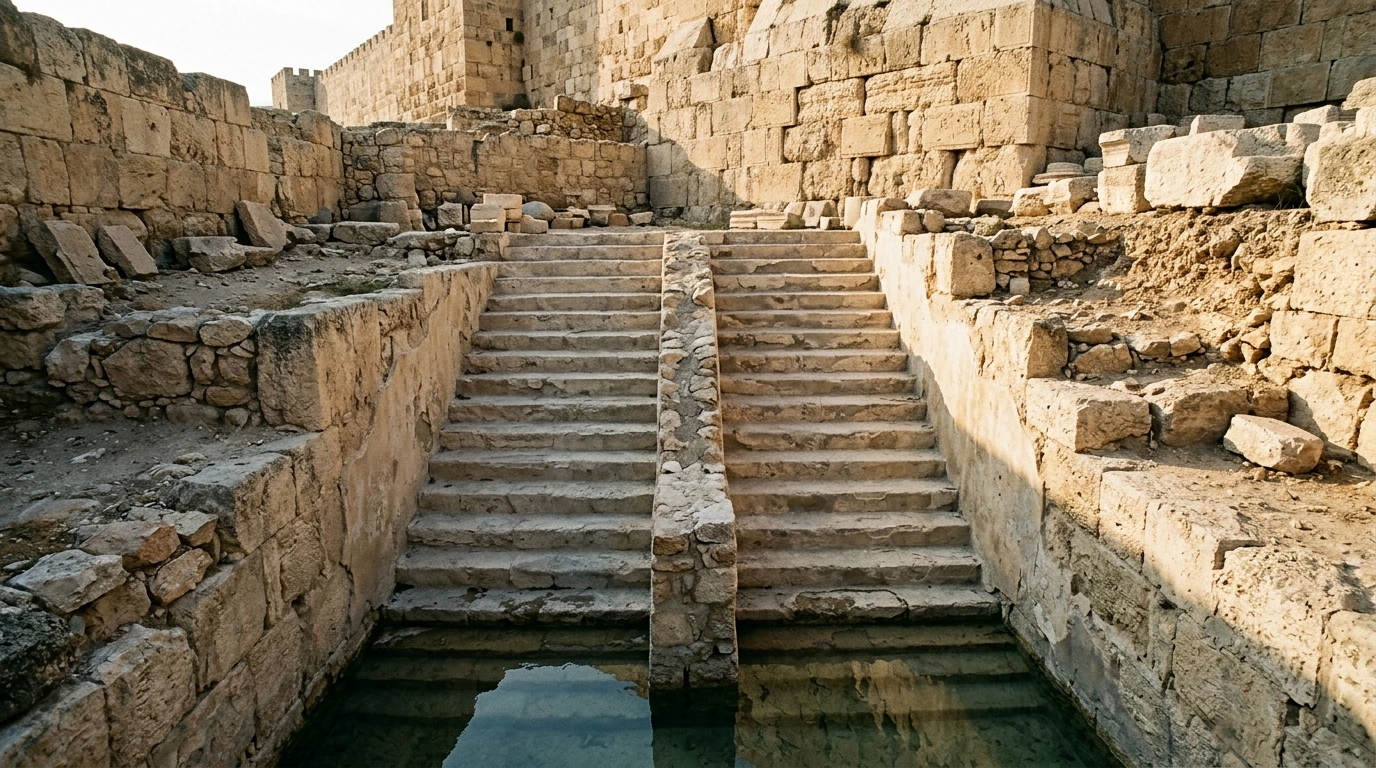
The Partitioned Steps: Pure vs. Impure Traffic Control
One of the most striking architectural features of the Temple Mount miqva’ot is the presence of a low stone partition ridge running down the middle of the broad staircase:
- The Descent (Right Side): The ritually impure worshiper (tamei) walked down into the water on the right side of the staircase.
- Full Immersion: At the bottom, the individual submerged completely under water, unassisted, with hair and limbs spread so that the water contacted every square millimeter of skin.
- The Ascent (Left Side): Now ritually pure (tahor), the worshiper walked up the opposite side of the staircase.
The physical barrier prevented the newly purified person from accidentally brushing against incoming impure bathers, which would instantly negate the immersion and require repeating the entire process!
The Logistical Math of Acts 2:41: Hours, Apostles, and Immersion
With the archaeological discovery of more than 150 miqva’ot surrounding the Southern Steps and Ophel, the mathematical logistics of Acts 2:41 become remarkably straightforward:
+----------------------------------------------------------------------------------------------------+
|               LOGISTICAL SIMULATION: IMMERSING 3,000 SOULS AT THE SOUTHERN STEPS                   |
+----------------------------------------------------------------------------------------------------+
|                                                                                                    |
|    Total Converts to be Baptized:             3,000 Individuals                                    |
|    Available Public & Semi-Public Miqva'ot:   50 to 75 Pools in Immediate Ophel Area               |
|    Authorized Baptizers Available:            12 Apostles + 70 Disciples = 82 Leaders (Luke 10:1)  |
|                                                                                                    |
|    If 60 pools were used simultaneously:                                                           |
|    Each pool needed to immerse only:          50 individuals (3,000 / 60)                          |
|                                                                                                    |
|    At a standard rate of 1 immersion per minute per pool:                                          |
|    TOTAL TIME REQUIRED:                       ONLY 50 MINUTES!                                     |
|                                                                                                    |
+----------------------------------------------------------------------------------------------------+
Even if only the Twelve Apostles performed the baptisms across twelve large communal pools, each apostle would have immersed 250 people, taking roughly four hours.
The public steps and bathing pools of the Southern Temple Mount were the only place in Judea where thousands of people could hear Peter preach simultaneously and immediately transition into dozens of pre-existing ritual immersion pools.
Three-Tier Evidentiary Evaluation: Archaeological Matrix
+----------------------------------------------------------------------------------------------------+
|               THREE-TIER EVIDENTIARY AUDIT: MIQVA'OT & ACTS 2 PENTECOST                            |
+--------------------------+-----------------------+-------------------+-----------------------------+
| MONUMENTAL SITE          | EXCAVATOR             | CHRONOLOGY        | EVIDENTIARY VALUE           |
+--------------------------+-----------------------+-------------------+-----------------------------+
| 1. Ophel Southern Steps  | Benjamin Mazar &      | 1st Cent. BC–AD   | Direct material proof of    |
|    Miqva'ot Complex      | Ronny Reich           | (Herodian Period) | mass immersion facilities   |
| 2. Robinson's Arch Baths | Israel Antiquities    | Pre-AD 70         | Public ritual baths along   |
|    (Paved Street Area)   | Authority             | Destruction Layer | commercial pilgrim avenue   |
| 3. Palatial Mansion      | Nahman Avigad         | 1st Cent. AD      | Private aristocratic double |
|    Double Mikveh         | (Jewish Quarter)      | (Second Temple)   | mikveh with dividing ridge  |
| 4. Qumran Stepped Pools  | Roland de Vaux        | 1st Cent. BC–AD   | Proof of contemporary Jewish|
|    (Cisterns with steps) | (Dead Sea Expedition) | (Essene Period)   | immersion theology          |
+--------------------------+-----------------------+-------------------+-----------------------------+
Frequently Asked Questions
Did Jewish people immerse naked in the mikveh?
Yes. Under rabbinic halakhah (Mishnah Miqva'ot 8:5), any clothing, jewelry, bandages, or hair ribbons constituted an unlawful barrier (chatzitzah) between the water and the skin. In public municipal miqva’ot, men and women immersed in separate enclosed chambers, or at designated separate hours, to maintain strict modesty.
Did early Christian baptism differ from Jewish mikveh immersion?
Yes, profoundly. While the Jewish tevilah was a repeated ritual performed frequently for ceremonial purity, Christian baptism (baptisma) was a one-time initiatory sacrament of spiritual regeneration, repentance, and union with the death and resurrection of Jesus Christ (Romans 6:3–4), administered in the name of the Father, Son, and Holy Spirit.
Was water scarce in Jerusalem during the summer festival of Pentecost?
While Jerusalem is semi-arid, Herod the Great and the Hasmonaeans engineered colossal high-level and low-level aqueducts that transported millions of gallons of water from the springs of Arrub and Solomon’s Pools in Bethlehem directly into massive cisterns beneath the Temple Mount (holding over 10 million gallons of water), ensuring abundant water for the massive pilgrim crowds.
Why did Peter preach near the Southern Steps?
The monumental Southern Steps (Huldah Gates) were the primary public entrance and exit for the hundreds of thousands of pilgrims attending Shavuot (Pentecost). The wide open limestone plaza, combined with natural amphitheater acoustics against the towering Herodian retaining wall, provided the perfect public venue for Peter to address a multitude of thousands.
Primary Sources & Scholarly Archives
Editorial Standard →Official archaeological field reports, certified stratigraphy surveys, and Semitic epigraphy catalogs.
Catalog of Levantine, Mesopotamian, and Persian artifacts, royal cylinder seals, and cuneiform tablets.
Peer-reviewed scholarly analyses on Levant excavations, ancient architecture, and artifact forensics.
Frequently Asked Questions
Did Jewish people immerse naked in the mikveh?
Yes. Clothing or jewelry constituted an invalidating barrier (chatzitzah); public pools maintained strict modesty through segregated chambers and hours.
Did early Christian baptism differ from Jewish mikveh immersion?
Yes. Mikveh tevilah was repeated regularly for ceremonial purity; Christian baptism was a one-time sacrament of regeneration and faith in Christ.
Was water scarce in Jerusalem during Pentecost?
No. Herodian aqueducts channels millions of gallons from Solomon’s Pools into vast underground cisterns beneath the Temple Mount.
Why did Peter preach near the Southern Steps?
The Southern Steps formed the broad public plaza where festive crowds congregated, offering perfect acoustics and immediate access to dozens of miqva’ot.
Related Research Dossiers
View all 515 research dossiers →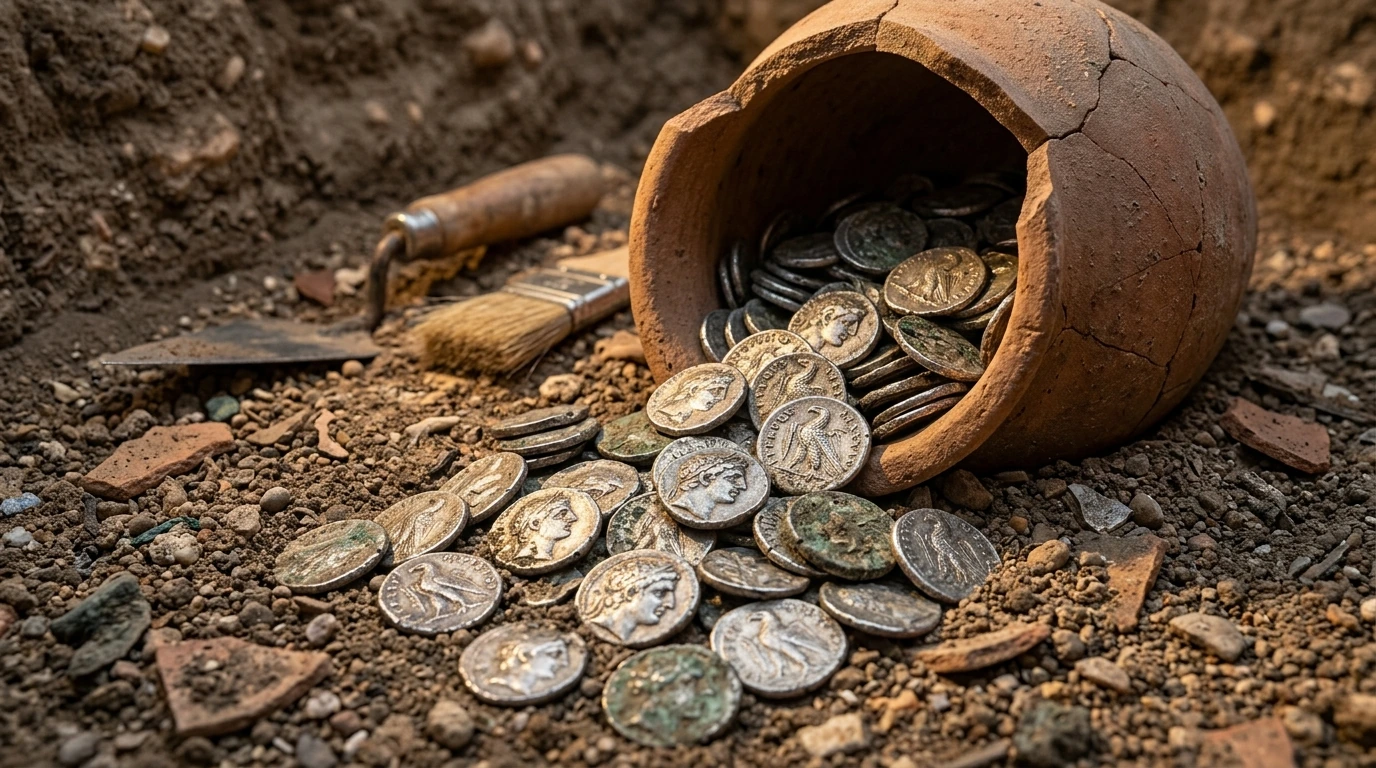
The Tyrian Shekel, Temple Tax, and the 30 Pieces of Silver: Numismatics, Matthew 26, and Judas’s Betrayal
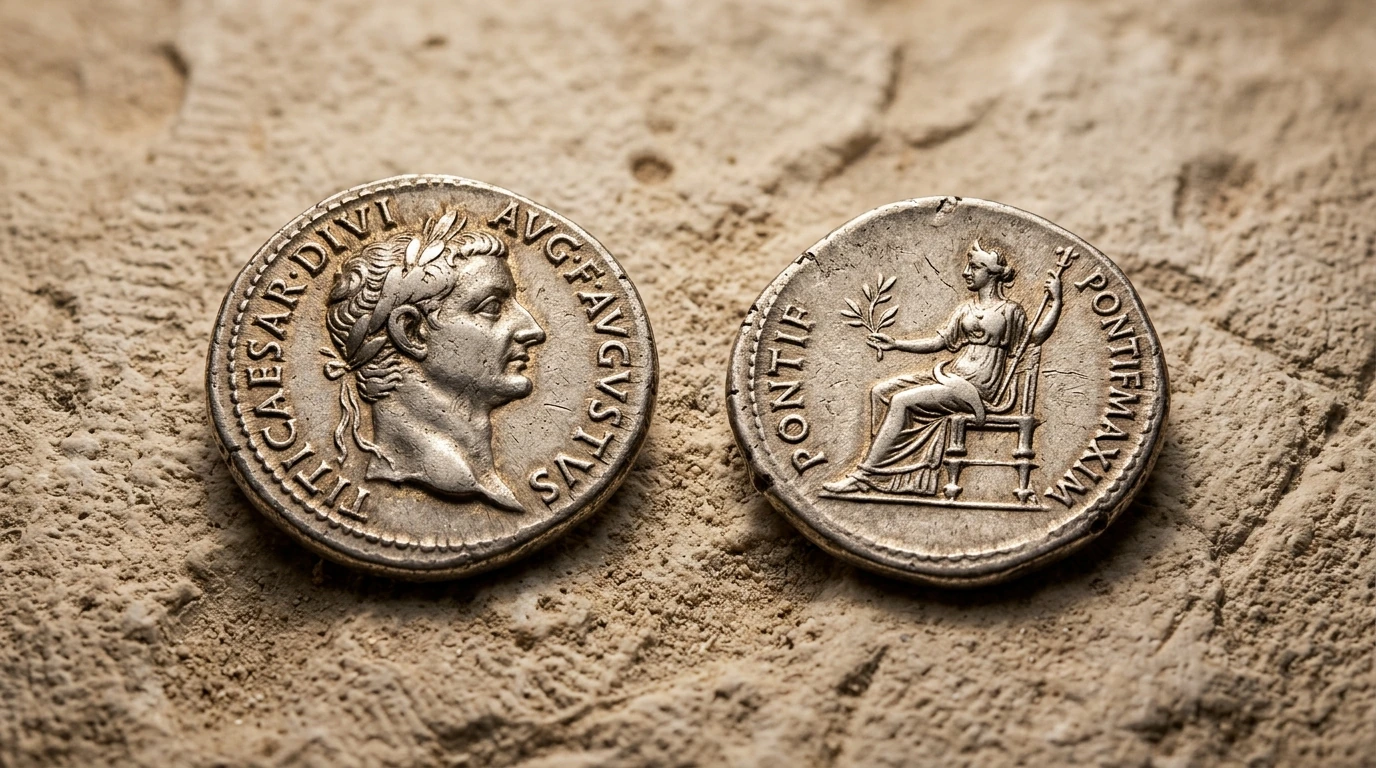
Render to Caesar: The Tribute Penny, Tiberius Denarius, and Mark 12 in Primary Roman Numismatic Sources
