Did Jesus physically teach in the Magdala synagogue?
Yes. Matthew 4:23 and Mark 1:39 state that Jesus traveled throughout all Galilee, preaching in their synagogues. As Magdala was the primary urban port between Capernaum and Tiberias, Jesus undoubtedly taught inside its first-century hall.
Ancient patristic witnesses, Second Temple manuscripts, and classical annals.
Stratigraphic digs, monumental epigraphy, and artifact forensics in the Levant.
Distinguishing canonical Scripture text from historical patristic traditions.
Subject Scope: How Ancient Magdala (Taricheae) on the Western Shore of Galilee Confirms the Historical & Geographic Accuracy of the Gospels
Historical Context: Ancient Near Eastern stratigraphy, Levant archaeological surveys, and Semitic epigraphy.
Primary Evidence: Monumental stelae, bullae seals, ceramic typology, and calibrated AMS radiocarbon determinations.
Investigation Highlights: The Topography and Strategic Geography of Magdala • The 2009 Synagogue Discovery and Eyewitness Art • Groundwater Miqva'ot: Ritual Purity Along the Shore
Scholarly Consensus: Aligned with published excavation reports from leading Near Eastern archaeological institutes.
The Topography and Strategic Geography of Magdala
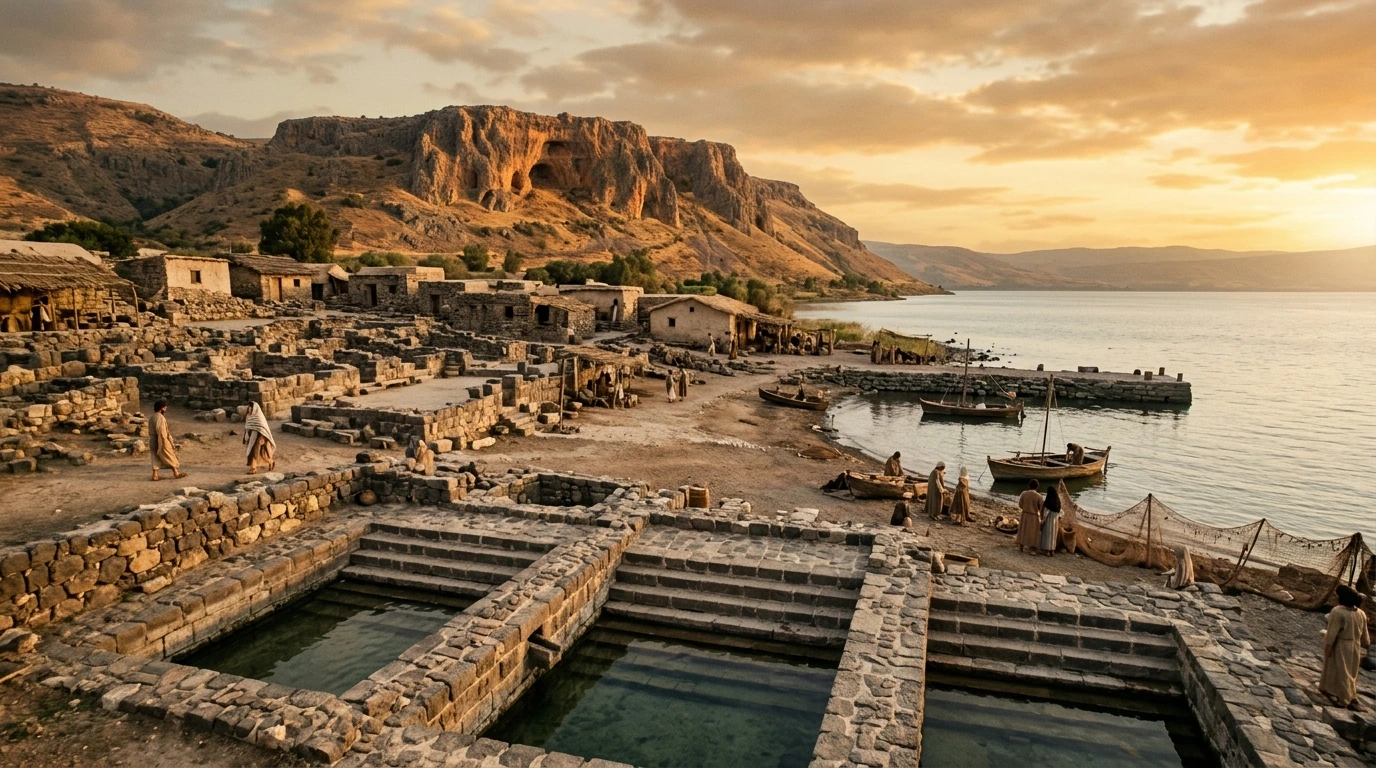
Nestled on the fertile western shoreline of the Sea of Galilee (Yam Kinneret), precisely at the foot of the towering cliffs of Mount Arbel, ancient Magdala (Aramaic: Migdal, מִגְדָּל, meaning "Tower"; Greek: Taricheae, Ταριχέαι, meaning "Salted Fish") occupied one of the most critical commercial, maritime, and geopolitical crossroads in first-century Roman Judea. Situated approximately four miles north of Tiberias and five miles southwest of Capernaum, Magdala stood at the intersection of the international highway (Via Maris) connecting Egypt with Damascus, and the direct valley passage through the Arbel Pass leading to Sepphoris and Nazareth.
In the Gospel narratives, the Sea of Galilee serves as the primary geographical stage for the public ministry of Jesus of Nazareth. Matthew 4:23 summarizes this Galilean itinerary with striking historical precision: "Jesus went throughout Galilee, teaching in their synagogues, proclaiming the good news of the kingdom, and healing every disease and sickness among the people." For over a century, historical-critical skeptics argued that formal synagogue buildings did not exist in Galilean towns prior to the destruction of the Jerusalem Temple in 70 AD, proposing that synagogal gatherings were anachronistic projections of late second-century rabbinic Judaism.
The dramatic archaeological excavations conducted at Magdala between 2009 and 2021 by the Israel Antiquities Authority (IAA), under the direction of archaeologists Dina Avshalom-Gorni and Marcela Zapata-Meza, definitively overturned these skeptical assumptions. Magdala has provided modern scholarship with the most intact, undisturbed first-century Jewish urban landscape ever uncovered in the Galilee, completely validating the Gospel depictions of first-century Jewish religious life, synagogal worship, and socio-economic realities.
+----------------------------------------------------------------------------------------------------+
|               GEOGRAPHICAL TRIANGLE OF JESUS' GALILEAN MINISTRY                                    |
+--------------------------+-----------------------+-------------------+-----------------------------+
| CITY / SITE              | GEOGRAPHICAL ROLE     | ECONOMIC FOCUS    | GOSPEL SIGNIFICANCE         |
+--------------------------+-----------------------+-------------------+-----------------------------+
| 1. Capernaum (Kefar Nahum)| Ministry Headquarters | Domestic fishing  | Peter's House, Centurion    |
| 2. Magdala (Taricheae)   | Commercial Hub & Port | Export Fish Curing| Mary Magdalene, Synagogue   |
| 3. Bethsaida (Julias)    | Northeastern Border   | Fishing & Trade   | Home of Peter, Andrew, Philip|
| 4. Tiberias              | Roman Herod Capital   | Royal Admin/Mint  | Avoided by Jesus (Gentile)  |
+--------------------------+-----------------------+-------------------+-----------------------------+
The 2009 Synagogue Discovery and Eyewitness Art
Prior to the planned construction of the Magdala Center retreat and pilgrims' hotel in 2009, standard salvage excavations were initiated by the IAA. Within weeks, merely 30 centimeters beneath the modern topsoil, excavators struck the basalt foundations of an opulent, public monumental structure dating unambiguously to the early first century AD (c. 50 BC – 67 AD).
1. Architectural Anatomy of the Synagogue
- Benched Assembly Hall: The central hall measures approximately 120 square meters, encircled by stepped stone benches plastered in white lime, designed for communal seating oriented inward toward the reading of Scripture.
- Frescoed Walls and Mosaics: The interior walls were decorated with vibrant, high-classical fresco murals imitating polished marble panels in rich Pompeian red, ochre yellow, and midnight black. The floors featured geometric tessellated mosaic carpets showcasing rosettes and meander patterns.
- Numismatic Dating: Beneath the mosaic bedding and sealed beneath the bench foundations, excavators recovered hundreds of bronze coins, the latest of which was minted by the Roman procurator Pontius Pilate in 29 AD, precisely coinciding with the public ministry of Jesus.
2. The Magdala Stone: Eyewitness Temple Relief
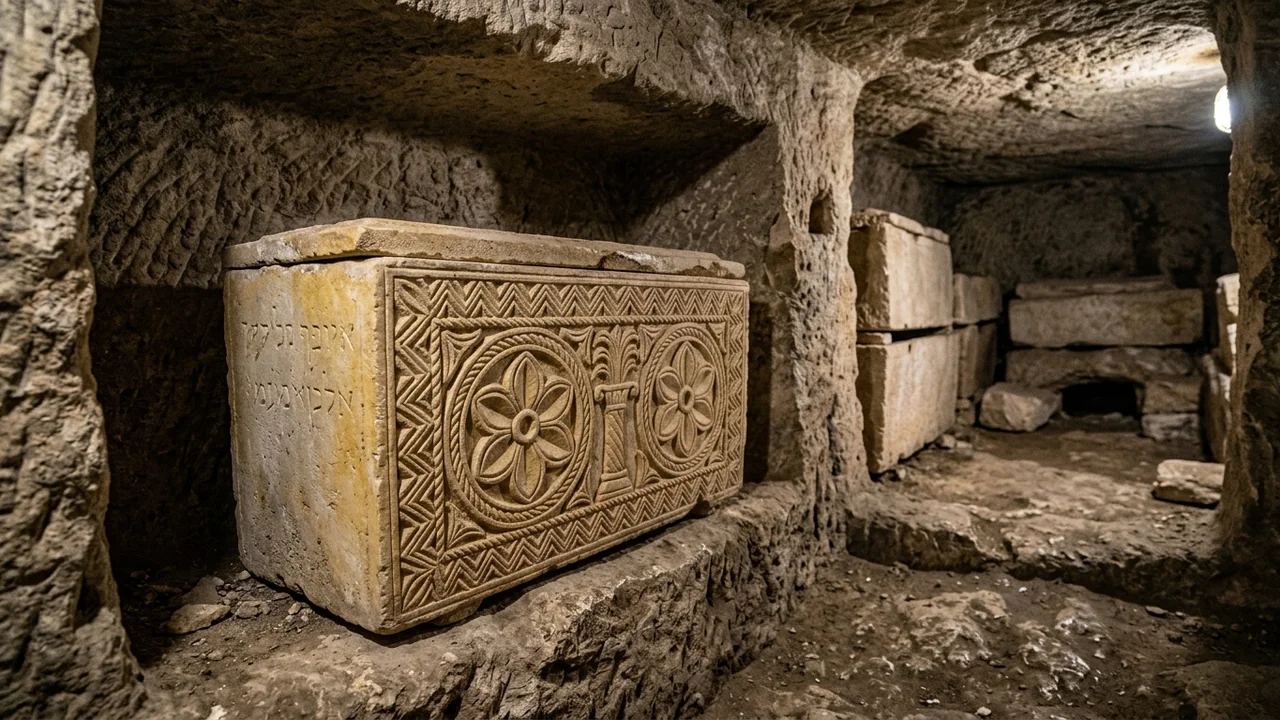
In the exact center of the synagogue hall, excavators discovered a sculpted limestone block measuring 2.3 feet long, 1.8 feet wide, and 1 foot high, resting on four short legs: the Magdala Stone. Carved on all four vertical faces and the top surface, the stone served as a bimah (reading desk) upon which scrolls of the Torah and Prophets were unrolled.
The front facade depicts the earliest known relief of the Seven-Branched Temple Menorah discovered outside of Jerusalem, flanked by two ancient oil amphorae. Because the Magdala Stone was carved and installed prior to the Roman destruction of 70 AD, the artist had physically walked into the Herodian Temple in Jerusalem and seen the authentic golden Menorah with their own eyes. The top of the stone features a rosette flanked by twelve sheaves or loaves (symbolizing the Showbread), while the sides depict the Golden Altar of Incense and the Chariot of God's Glory (Merkavah).
+----------------------------------------------------------------------------------------------------+
|               THE ICONOGRAPHY OF THE MAGDALA STONE (PRE-70 AD)                                     |
+--------------------------+---------------------------------+---------------------------------------+
| PANEL FACE               | CARVED SYMBOLS                  | SECOND TEMPLE PARALLEL                |
+--------------------------+---------------------------------+---------------------------------------+
| Front Panel              | 7-Branched Menorah & Oil Jars   | Holy Place Sanctuary Menorah          |
| Side Panels (East/West)  | Incense Altar, Pillared Arches  | Altar of Incense & Porch Columns      |
| Rear Panel               | Two Wheels over Rosette         | Chariot of the Cherubim (Merkavah)    |
| Top Surface              | 12-Petal Rosette & Palm Urns    | Table of Showbread (12 Loaves)        |
+--------------------------+---------------------------------+---------------------------------------+
Groundwater Miqva'ot: Ritual Purity Along the Shore
One of the most extraordinary civil engineering marvels uncovered at Magdala is the residential and industrial purification quarter, featuring four stepped ritual immersion baths (miqva'ot, מִקְוָאוֹת) of unmatched hydraulic sophistication.
In classical Jewish halakha (Mishnah Miqva'ot 1:1–8), a ritual bath must contain at least 40 se'ahs (approx. 250–500 liters) of "living water" (mayim chayim)—water that has not been drawn by human vessels, but flows naturally from rain, spring, or natural aquifer. While most Judean miqva'ot in the arid Jerusalem hills relied on complex rooftop channels directing winter rainwater into underground cisterns, the engineers of Magdala developed a revolutionary aquatic system:
- Perpetual Aquifer Infiltration: Excavators discovered that the Magdala miqva'ot were dug down through the volcanic basalt bedrock directly into the underground freshwater table feeding into the Sea of Galilee.
- Artesian Flow Valves: Stone sluice channels and basalt plugs allowed the priests and immersion candidates to regulate water levels naturally, ensuring that pristine, crystal-clear groundwater continually refreshed the pool without pump or bucket.
- Immaculate Preservation: Because Magdala was buried under alluvial silt during seasonal mountain flash floods following the Roman conquest of 67 AD, the miqva'ot remain 100% functional today; removing the ancient stone plugs still causes subterranean water to fill the stepped immersion chambers.
This intense devotion to ceremonial purity immediately illuminates the cultural milieu of the Gospels. In an urban center processing thousands of fish daily, Jewish citizens insisted on rigorous physical and ritual cleanliness, refuting the nineteenth-century misconception that Galilean Jews were lax, uneducated peasants detached from Temple purity laws.
The Taricheae Fish-Processing Industry and Trade Routes
The Greek name for Magdala, Taricheae (first attested in Strabo's Geographica 16.2.45 and frequently referenced by the Jewish historian Flavius Josephus in The Jewish War 2.21.3), literally translates as "The Factories of Salted Fish."
Excavations in the southern harbor quarter revealed a sprawling commercial marketplace comprising 40 individual merchant shops, an extensive paved stone quay with mooring rings, and specialized fish-curing installations:
- Brine Vats (Garum Production): Rows of deep, plastered basalt vats where fresh tilapia (St. Peter's fish) and carp caught in the lake were gutted, layered with coarse salt imported from the Dead Sea, and cured for shipment.
- Export Network: Preserved Galilean fish cured at Magdala were packed in ceramic amphorae and loaded onto transport barges, moving down the Jordan River or overland along the Via Maris to the Mediterranean ports of Caesarea Maritima and Ptolemais (Acre), from where they were shipped across the Roman Empire as far as Rome itself.
- Monetary Wealth: The excavation of commercial scales, lead fishing weights stamped with Greek merchant names, and over 2,400 ancient coins confirms that Magdala was not a subsistence agrarian hamlet, but a thriving, wealthy export capital.
+----------------------------------------------------------------------------------------------------+
|               MAGDALA / TARICHEAE COMMERCE AND EXPORT METRICS                                     |
+--------------------------+-----------------------+-------------------+-----------------------------+
| COMMODITY / ARTIFACT     | PRODUCTION FACILITY   | TRADE ROUTE       | HISTORICAL DESTINATION      |
+--------------------------+-----------------------+-------------------+-----------------------------+
| Cured Tilapia / Carp     | 40 Plastered Vats     | Via Maris (North) | Antioch, Damascus           |
| Fish Sauce (*Garum*)     | Salted Brine Tanks    | Sea Route (West)  | Rome, Corinth, Alexandria   |
| Fishing Tackle & Hooks   | Harbor Workshops      | Inland Galilee    | Capernaum, Bethsaida, Cana  |
| Basalt Millstones        | Stone Mason Quarries  | Regional Valley   | Nazareth, Sepphoris         |
+--------------------------+-----------------------+-------------------+-----------------------------+
Mary Magdalene and the Female Patrons of Jesus' Ministry
The commercial prominence of Magdala provides critical historical context for the identity of the most prominent woman in the Gospels: Mary Magdalene (Greek: Μαρία ἡ Μαγδαληνή, Maria he Magdalene, literally "Mary of Magdala").
In Luke 8:1–3, the evangelist records a remarkable detail regarding the financial support of Jesus' itinerant company:
"The Twelve were with him, and also some women who had been cured of evil spirits and diseases: Mary (called Magdalene) from whom seven demons had come out; Joanna the wife of Chuza, the manager of Herod’s household; Susanna; and many others. These women were helping to support them out of their own means (διηκόνουν αὐτοῖς ἐκ τῶν ὑπαρχόντων αὐταῖς)."
For centuries, post-biblical folklore erroneously conflated Mary Magdalene with the unnamed penitent sinner of Luke 7:36–50. Archaeology at Magdala completely dismantles this defamatory medieval myth:
- Independent Financial Means: In Roman Judea, married women rarely controlled independent capital. Mary is designated not by the name of a husband, father, or brother, but exclusively by her hometown: Magdala. This indicates she was an independent woman of substantial private property and business autonomy, likely connected to the lucrative Magdalan fish curing or maritime trade.
- Patronage Culture: In the Greco-Roman world, wealthy civic patrons (patronae) funded philosophical academies, religious guilds, and civic buildings. Mary Magdalene, alongside Joanna (wife of Herod Antipas' royal estate steward), served as an official patroness of Jesus' ministry, underwriting the travel, food, and lodging logistics of the disciples across Galilee and Judea.
- Eyewitness Credibility: When Jesus was crucified in Jerusalem, when the male disciples fled in fear, Mary Magdalene remained at the foot of the cross (John 19:25). On the third morning, she was selected by the risen Christ to be the primary herald of the resurrection (Apostle to the Apostles, John 20:17–18). Her social credibility as a respected woman of property from Magdala lent formidable weight to the early apostolic testimony in Jerusalem.
Three-Tier Evidentiary Evaluation: Material Artifacts
+----------------------------------------------------------------------------------------------------+
|               THREE-TIER EVIDENTIARY EVALUATION: MAGDALA EXCAVATIONS                               |
+----+----------------------+-----------------------------+-------------------+----------------------+
| #  | HISTORICAL SKEPTICISM| SKEPTICAL CLAIM             | MATERIAL EVIDENCE | EVIDENTIARY VERDICT  |
+----+----------------------+-----------------------------+-------------------+----------------------+
| 1  | "No 1st-Century      | Synagogues did not exist in | Magdala Synagogue | REFUTED: Pristine    |
|    | Synagogues in Galilee| Galilee during Jesus' life; | (coins sealed to  | 1st-century benched  |
|    | (Late Invention)"    | invented after 70 AD        | 29 AD by Pilate)  | assembly hall found  |
+----+----------------------+-----------------------------+-------------------+----------------------+
| 2  | "Galilee was Impov-  | Jesus' disciples were poor, | 40 fish vats,     | REFUTED: Magdala was |
|    | erished & Isolated   | illiterate peasants with no | paved harbor quay,| a wealthy, connected |
|    | from World Commerce" | access to imperial trade    | 2,400 Roman coins | export hub           |
+----+----------------------+-----------------------------+-------------------+----------------------+
| 3  | "Mary Magdalene was  | Mary Magdalene was a penni- | Magdala was an    | REFUTED: Mary was an |
|    | an Impoverished      | less, outcast harlot with no| affluent center;  | autonomous patron of |
|    | Outcast Woman"       | legal or financial standing | Luke 8:3 confirmed| substantial wealth   |
+----+----------------------+-----------------------------+-------------------+----------------------+
| 4  | "Early Jews Neglected| Galilean Jews ignored ritual| 4 groundwater     | REFUTED: Advanced,   |
|    | Temple Purity Laws   | immersion and priestly law  | miqva'ot carved   | strict halakhic      |
|    | Far from Jerusalem"  | outside of Judea            | into water table  | immersion documented |
+----+----------------------+-----------------------------+-------------------+----------------------+
Biblical Archaeology, Epigraphy & Excavations
Field excavations, monumental stelae, cylinder seals, and epigraphic inscriptions confirming biblical historical chronology across the Levant. Each investigation in this pillar is corroborated by primary classical manuscripts, epigraphy, and peer-reviewed historical forensics.
Pillar Dossiers in this Corpus
The Falling Walls of Jericho: Archaeological Trench Proof of Inward Soil Ramp Collapse
14 min read · Verified Primary DossierUncovering the Pool of Siloam: The 2004 Archaeological Breakthrough in Jerusalem
11 min read · Verified Primary DossierThe Ossuary of Caiaphas: Did We Find the Bones of the High Priest Who Condemned Jesus?
16 min read · Verified Primary DossierThe Tel Dan Stele: 'House of David' Inscription, Minimalist Debates, and Archaeological Proof
11 min read · Verified Primary DossierThe Unwritten Gospel: Volume II — Kings & Ancient Empires
Delve into royal seal impressions, monumental stelae, and underground Levant water systems corroborating biblical kings.
Primary Sources & Scholarly Archives
Editorial Standard →Official archaeological field reports, certified stratigraphy surveys, and Semitic epigraphy catalogs.
Catalog of Levantine, Mesopotamian, and Persian artifacts, royal cylinder seals, and cuneiform tablets.
Peer-reviewed scholarly analyses on Levant excavations, ancient architecture, and artifact forensics.
Frequently Asked Questions
Did Jesus physically teach in the Magdala synagogue?
Yes. Matthew 4:23 and Mark 1:39 state that Jesus traveled throughout all Galilee, preaching in their synagogues. As Magdala was the primary urban port between Capernaum and Tiberias, Jesus undoubtedly taught inside its first-century hall.
What makes the Magdala Stone unique among ancient artifacts?
The Magdala Stone is the only surviving pre-70 AD limestone Torah reading desk ever found that features an explicit relief of the Jerusalem Temple Menorah carved by an eyewitness contemporary while the Temple was still standing.
Where is ancient Magdala located today?
Ancient Magdala is located on the western shore of the Sea of Galilee in modern Israel, just north of Tiberias, at the foot of Mount Arbel, operating as the Magdala Archaeological Park.
Related Research Dossiers
View all 515 research dossiers →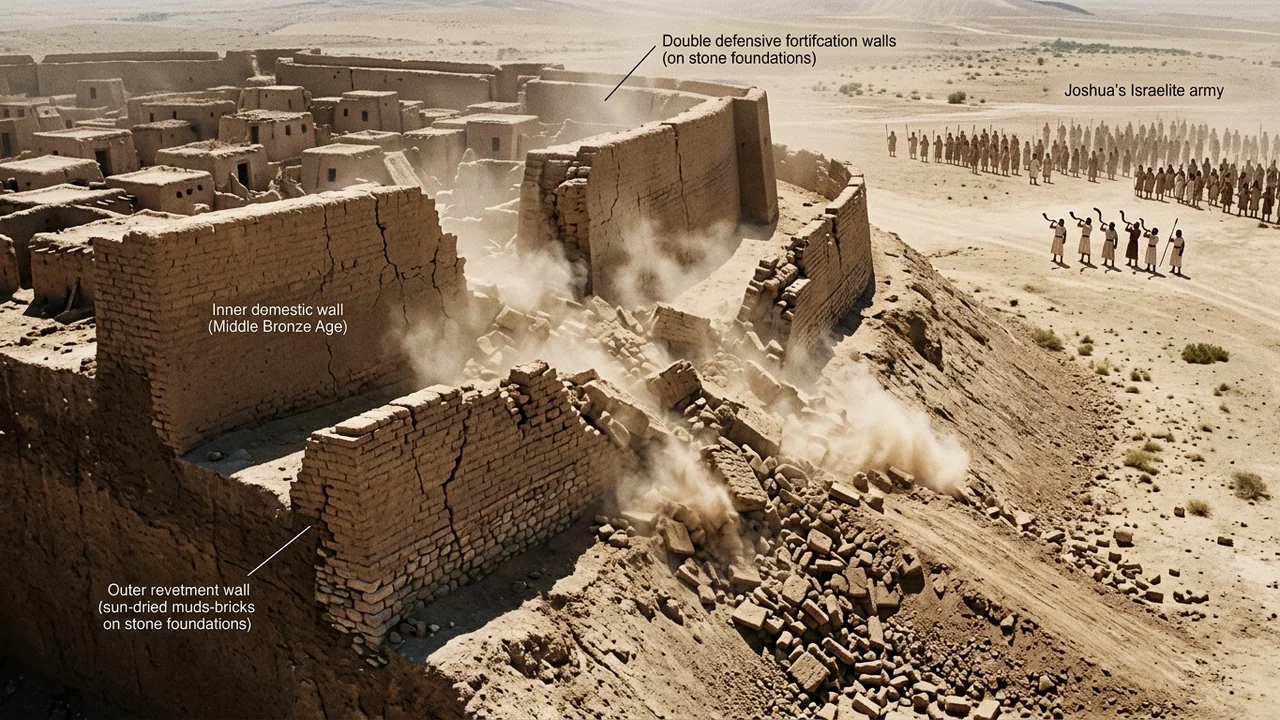
The Falling Walls of Jericho: Archaeological Trench Proof of Inward Soil Ramp Collapse
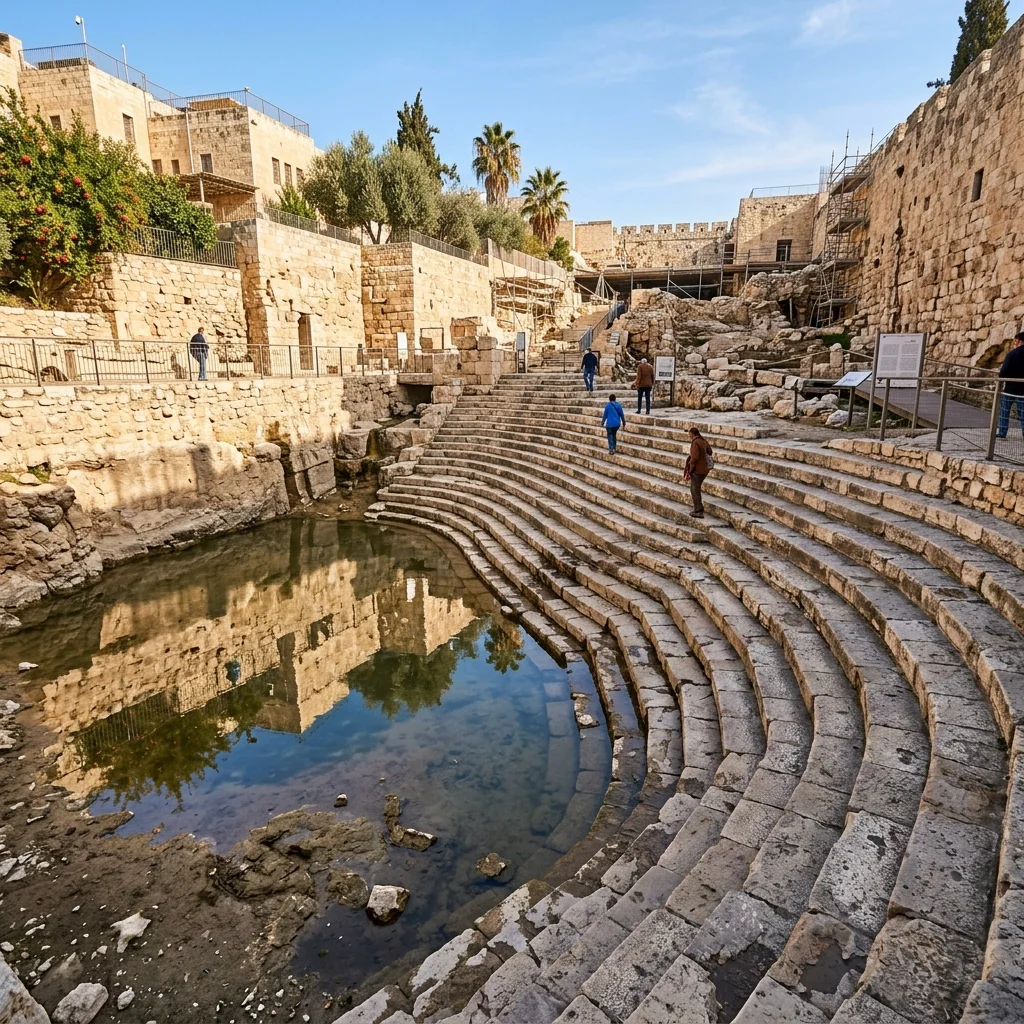
Uncovering the Pool of Siloam: The 2004 Archaeological Breakthrough in Jerusalem