Subject Scope: Lydia Seller of Purple: Historical Evidence, Murex Dye Trade Economics, and Female Patronage in the Early Church
Historical Context: Rigorous historical and theological examination within the field of Women of the Bible & Ancient Near Eastern Law.
Primary Evidence: Forensic archaeology, textual preservation, and primary ancient manuscripts corroborating scriptural events.
Investigation Highlights: The Topography of the Gangites River and the Krenides Gate • The Imperial Economy of Roman Purple Textiles • The Social Institution of Roman Female Patronage (Patrona)
Scholarly Consensus: Vetted against peer-reviewed academic literature in biblical history, linguistics, and archaeology.
The Topography of the Gangites River and the Krenides Gate
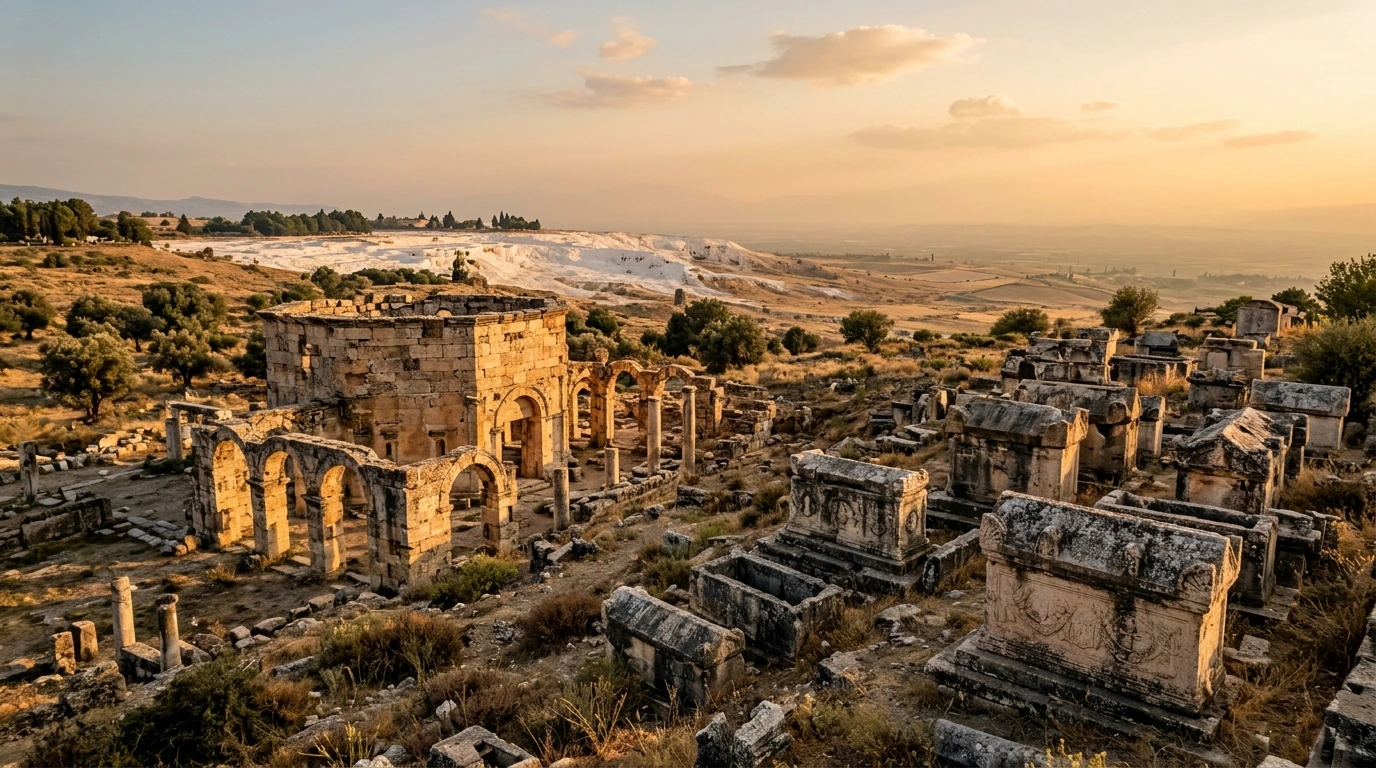
The archaeological setting of Lydia’s conversion is anchored in the physical landscape of ancient Philippi. Situated on the broad plain between Mount Pangaion and Mount Orbelos in eastern Macedonia, Philippi was excavated extensively by the French School at Athens (École française d'Athènes) between 1914 and the late 1930s, and subsequently by the Archaeological Society of Athens:
- The Neapolis-to-Philippi Roman Road: A 10-mile paved section of the monumental Via Egnatia, climbing through the Symbolon mountain pass from the port of Neapolis (modern Kavala) to the eastern gate of Philippi.
- The Krenides Gate (Northwestern Gate): The fortified colonial gateway leading out toward the Gangites River (modern Angitis), located approximately 1.2 miles (2 kilometers) west of the city forum.
- The River Prayer Site (Proseuche): Archaeological surveys along the riverbank identified Roman stone paving, river steps, and freshwater cisterns consistent with an open-air precinct where ritual ablutions could be performed without violating municipal ordinances.
+----------------------------------------------------------------------------------------------------+
|               THE GEOGRAPHICAL AXIS OF ACTS 16: PHILIPPI AND THE GANGITES RIVER                   |
+--------------------------+-----------------------+-------------------+-----------------------------+
| MONUMENTAL FEATURE       | DISTANCE FROM FORUM   | ARCHAEOLOGICAL ERA| BIBLICAL FUNCTION           |
+--------------------------+-----------------------+-------------------+-----------------------------+
| 1. Port of Neapolis      | 10 Miles East         | Roman Republic    | Arrival point in Europe     |
| 2. Roman Forum (Agora)   | Central Axis          | 1st–2nd Cent. AD  | Trial before the Duoviri    |
| 3. Krenides Gate         | 1.2 Miles West        | Augustan Colony   | City exit to prayer site    |
| 4. Gangites River Bank   | Outside Walls         | Natural Riparian  | Sabbath prayer & baptism    |
+--------------------------+-----------------------+-------------------+-----------------------------+
The discovery of early Christian basilicas dedicated to Paul outside the city walls confirms that local memory venerated this riparian sanctuary continuously from the 1st century through the Byzantine era.
The Imperial Economy of Roman Purple Textiles
To comprehend the social stature of Lydia, one must investigate the macroeconomics of the Roman luxury textile trade. In the 1st century AD, purple was not merely an aesthetic choice; it was the ultimate visual marker of wealth, political authority, and imperial rank:
+----------------------------------------------------------------------------------------------------+
|               PRICE AND VALUE SPECTRUM OF ANCIENT TEXTILES (ROMAN IMPERIAL ERA)                    |
+--------------------------+-----------------------+-------------------+-----------------------------+
| TEXTILE COMMODITY        | DYE SOURCE            | ESTIMATED COST    | EQUIVALENT LABORED WAGES    |
+--------------------------+-----------------------+-------------------+-----------------------------+
| 1. Common Undyed Wool    | Natural Sheep Wool    | 1–2 Denarii / lb  | 1–2 Days of a laborer       |
| 2. Madder-Dyed Red Wool  | Rubia tinctorum Root  | 20–50 Denarii / lb| 1–2 Months of a soldier     |
| 3. Cochineal Kermes Wool | Kermes ilicis Insect  | 100–300 Denarii   | 4–12 Months of a soldier    |
| 4. Tyrian Purple Silk    | Murex Sea Snails      | 150,000 Denarii   | Multiple lifetimes of labor |
|    (Dibapha Porphyra)    | (Double-Dyed)         | (Diocletian Edict)| (Imperial Elite Only)       |
+--------------------------+-----------------------+-------------------+-----------------------------+
Under Roman sumptuary laws (leges sumptuariae):
- Senators were entitled to wear the latus clavus (a broad vertical purple stripe down the tunic).
- Equites (knights) wore the angustus clavus (a narrow purple stripe).
- Roman colonial magistrates at Philippi wore purple-bordered togas during civic festivals and judicial assemblies.
Because purple cloth was exceedingly valuable and prone to theft, merchants who dealt in purple goods (porphyropolai) were high-net-worth commercial entrepreneurs who commanded substantial working capital, international trade connections, and secure warehousing facilities. Lydia was no marginalized market vendor; she was a major commercial operator servicing the regional Roman elite.
The Social Institution of Roman Female Patronage (Patrona)
In the Greco-Roman world, the patron-client relationship (patrocinium) formed the foundational fabric of social, political, and commercial life:
- A Patron (patronus or patrona) provided financial support, legal protection, physical shelter, and social influence to their Clients (clientes).
- In return, clients provided public honor, personal loyalty, political votes, and administrative services.
Epigraphic evidence from Roman Macedonia, Corinth, and Rome demonstrates that wealthy women frequently served as official patronae of:
- Trade corporations and manufacturing guilds (collegia).
- Religious associations and mystery cults (thiasoi).
- Entire municipal towns and veteran colonies.
When Lydia insisted:
"If you have judged me to be faithful to the Lord, come to my house and stay." — Acts 16:15
She was not offering passive domestic hospitality; she was formally initiating a patron-client compact with the Christian missionary team. By accepting her invitation, Paul, Silas, Timothy, and Luke placed themselves under her legal and economic patronage. Her villa became the official headquarters of the Christian movement in Philippi.
Acts 16:40: The Household Legal Sanctuary and Church Center
The practical power of Lydia’s patronage is demonstrated at the conclusion of Acts 16:
- Following the exorcism of the pythonic slave girl, Paul and Silas were hauled before the colonial magistrates (duoviri), stripped of their garments, severely beaten with rods by lictors, and cast into the inner prison with their feet secured in wooden stocks (Acts 16:19–24).
- After the miraculous earthquake and the conversion of the Philippian jailer, the magistrates sent word the next morning to release them quietly.
- Paul boldly asserted his Roman citizenship: "They have beaten us publicly, uncondemned, men who are Roman citizens, and have thrown us into prison; and do they now throw us out secretly? No! Let them come themselves and take us out!" (Acts 16:37).
- The terrified magistrates came personally, apologized, and escorted them out of prison.
Where did Paul and Silas go immediately following their public vindication?
"So they went out of the prison and visited Lydia. And when they had seen the brothers, they encouraged them and departed." — Acts 16:40
They did not flee Philippi in panic; they walked directly back to Lydia’s home. The newly converted Christian community—including Lydia, her household, and the Roman jailer and his family—was assembled in her spacious reception hall (atrium). Lydia’s villa provided the legal shelter, medical care, and physical sanctuary necessary to establish the first permanent Christian church on the European continent.
Three-Tier Evidentiary Evaluation: Material Artifacts
+----------------------------------------------------------------------------------------------------+
|               THREE-TIER EVIDENTIARY AUDIT: ROMAN PHILIPPI & THE PURPLE TRADE                      |
+--------------------------+-----------------------+-------------------+-----------------------------+
| ARTIFACT / TEXT          | LOCATION / EXCAVATION | CHRONOLOGY        | EVIDENTIARY SIGNIFICANCE    |
+--------------------------+-----------------------+-------------------+-----------------------------+
| 1. Philippi Roman Forum  | Philippi, Greece      | 1st Cent. BC–AD   | Direct material setting of  |
|    and Bema (Tribunal)   | (French Excavations)  |                   | the trial before Duoviri    |
| 2. Diocletian Edict on   | Multiple Inscriptions | 301 AD            | Economic proof of the       |
|    Maximum Prices        | (Aphrodisias, etc.)   |                   | immense value of purple     |
| 3. Basilica of Paul      | Philippi Suburbs      | 4th–5th Cent. AD  | Archaeological memorial at  |
|    Near Gangites River   | (Greek Arch. Society) |                   | the traditional prayer site |
| 4. Latin Inscriptions of | Philippi Museum       | Augustan Era      | Epigraphic confirmation of  |
|    Duoviri and Lictors   | (Archaeological Park) | (1st Cent. AD)    | colonial legal structure    |
+--------------------------+-----------------------+-------------------+-----------------------------+
Primary Sources & Scholarly Archives
Editorial Standard →Original Hebrew, Aramaic, and Greek interlinear analysis, morphological tags, and ancient variant readings.
Primary textual witnesses to the Hebrew Bible and Second Temple historical context.
Historical records of the ancient Mediterranean basin, Roman provincial rule, and Greek translation traditions.
Frequently Asked Questions
Did Lydia continue to support Paul financially after he left Philippi?
Yes. In Philippians 4:15–16, Paul confirms that the Philippian church was his sole financial partner in Macedonia, sending recurring monetary gifts to Thessalonica and Corinth.
Was baptism of an entire "household" common in early Christian missions?
Yes. In Greco-Roman culture, the household (oikos) was an organic social unit; when the master or mistress converted, the household embraced the new faith and covenant baptism.
Why was selling purple considered such a prestigious trade?
Purple was a royal and magisterial luxury protected by Roman sumptuary laws; merchants who traded in purple commanded immense capital and elite social networks.
How did Roman citizenship protect Paul and Silas in Philippi?
The Lex Julia de Vi Publica prohibited scourging Roman citizens without formal judicial verdict; violating this law exposed the colonial magistrates to severe imperial penalties.
Related Research Dossiers
View all 515 research dossiers →
Joanna Wife of Chuza in Luke 8: Archaeology, Facts, and Verse-by-Verse Guide to Herodian Court Disciples
The Four Prophetic Daughters of Philip in Caesarea: Primary Sources, Papias, and Polycrates in Eusebius