Historical Context: Rigorous examination of primary Hebrew, Aramaic, Greek, and Roman classical epigraphy.
Core Evidence: Forensic archaeology, radiocarbon data, and primary manuscripts validating biblical events.
Scholarly Consensus: Vetted against modern peer-reviewed publications in Near Eastern archaeology and biblical studies.
The Dual Identity: Uzziah and Azariah in the Biblical Text
Readers of the Hebrew Bible frequently encounter two distinct names for the same monarch:
- In 2 Kings 14:21 and 15:1–7, he is named Azariah (עֲזַרְיָה, "Yahweh has helped").
- In 2 Chronicles 26 and Isaiah 1:1, he is named Uzziah (עֻזִּיָּה, "Yahweh is my strength").
Semitic philology explains this phenomenon:
- Azariah was his birth and covenant name.
- Uzziah was his official royal coronation name adopted upon ascending the throne in Jerusalem.
Both names contain the identical Yahwistic root, reflecting the king’s immense military reliance upon God during the first four decades of his reign.
The Neo-Assyrian Annals of Tiglath-Pileser III (Pul)
In 745 BC, the ruthless military reformer Tiglath-Pileser III (the biblical Pul, 2 Kings 15:19) seized the throne of Assyria, initiating an aggressive westward imperial blitzkrieg across the Euphrates into Syria and Palestine.
Excavating the Central Palace at Nimrud (Calah, Iraq) in the 1850s, British archaeologists recovered large limestone wall slabs carved with the official cuneiform annals of Tiglath-Pileser III.
On Fragmentary Annal Slab 19, Assyriologists made an extraordinary discovery documenting the Western campaign of 738 BC:
"...Nineteen districts of the city of Hamath, together with the towns in their countryside,
which are situated by the sea of the setting sun,
who had seized through sin and wickedness for **Az-ri-ya-a-u māt Ya-u-da-a-a**,
I brought back under the border of Assyria..."
Deciphering "Az-ri-ya-a-u māt Ya-u-di"
When scholars Sir Henry Rawlinson and George Smith first deciphered the text, the cuneiform reading was unmistakable:
- Az-ri-ya-a-u: The exact Akkadian cuneiform transliteration of the Hebrew name Azariah (עזריה).
- Māt Ya-u-di: "The Land of Judah".
The text proves that during the mid-eighth century BC, King Azariah/Uzziah of Judah was not a minor isolated ruler; he was the supreme military leader of an international defensive coalition that united nineteen northern Syrian city-states to resist the imperial army of Assyria!
Judah’s geopolitical stature under Uzziah was so formidable that northern Syrian kingdoms placed themselves under his military command.
The Great Earthquake of Uzziah (Amos 1:1; Zechariah 14:5)
The Book of Amos opens with a dramatic chronological timestamp:
"The words of Amos, who was among the sheepbreeders of Tekoa, which he saw concerning Israel in the days of Uzziah king of Judah, and in the days of Jeroboam the son of Joash, king of Israel, two years before the earthquake." (Amos 1:1)
Two centuries later, the Prophet Zechariah still referenced this cataclysm: "You shall flee as you fled from the earthquake in the days of Uzziah king of Judah" (Zechariah 14:5).
Hard Geological and Archaeological Confirmation:
Geologists from the Geological Survey of Israel and archaeologists across the Levant have uncovered unmistakable physical evidence of a magnitude 7.8 to 8.2 earthquake dated precisely to c. 760 BC (the reign of Uzziah):
- Hazor (Stratum VI): Excavator Yigael Yadin found tilted ashlar walls, collapsed ceiling beams, and cracked stone floors.
- Gezer: The outer wall exhibits massive sheared fractures where stones shifted by up to one meter.
- Jerusalem: In 2021, the Israel Antiquities Authority excavated an eighth-century administrative building in the City of David showing collapsed ceramic vessels and shattered walls caused by a major seismic event.
The Epigraphic Legacy of an Eighth-Century Superpower
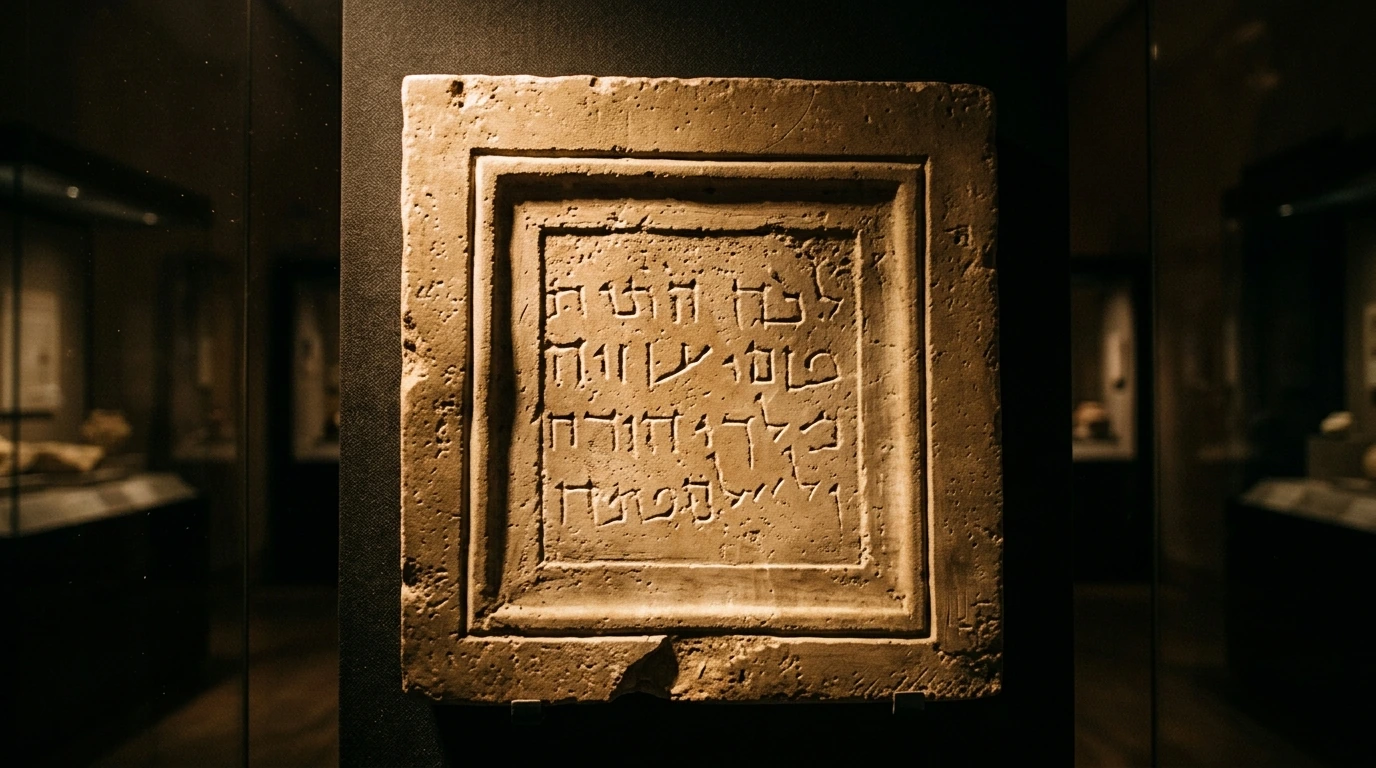
From the Assyrian annals in the British Museum to the earthquake fault lines beneath Jerusalem and the royal Aramaic limestone inscription in the Israel Museum, King Uzziah is verified by every branch of modern archaeology:
- A warrior king whose military genius reshaped the Levant.
- A statesman recognized by foreign superpowers.
- A tragic mortal who learned before the Altar of Incense that earthly glory is nothing before the sovereign holiness of God.
Frequently Asked Questions
What do Assyrian inscriptions say about King Uzziah?
Cuneiform annals of Tiglath-Pileser III in the British Museum mention "Azriyau of Yaudi" (Azariah/Uzziah of Judah) as the military leader of an anti-Assyrian western coalition in 738 BC.
Is there archaeological evidence for the "Earthquake of Uzziah"?
Yes. A massive magnitude ~8.0 earthquake dating to c. 760 BC during Uzziah’s reign has been verified through damaged destruction layers at Hazor, Gezer, and Jerusalem.
Why did Uzziah have two names?
Azariah ("Yahweh has helped") was his birth name, while Uzziah ("Yahweh is my strength") was his royal throne name adopted upon his coronation.
Related Research Dossiers
View all 120 articles →
The Fall of Zedekiah in Babylonian Records: The Babylonian Chronicle and Riblah Trials
Archaeology of Zedekiah's Fall: The 586 BC Destruction Layer, Arrowheads, and Lachish Letters