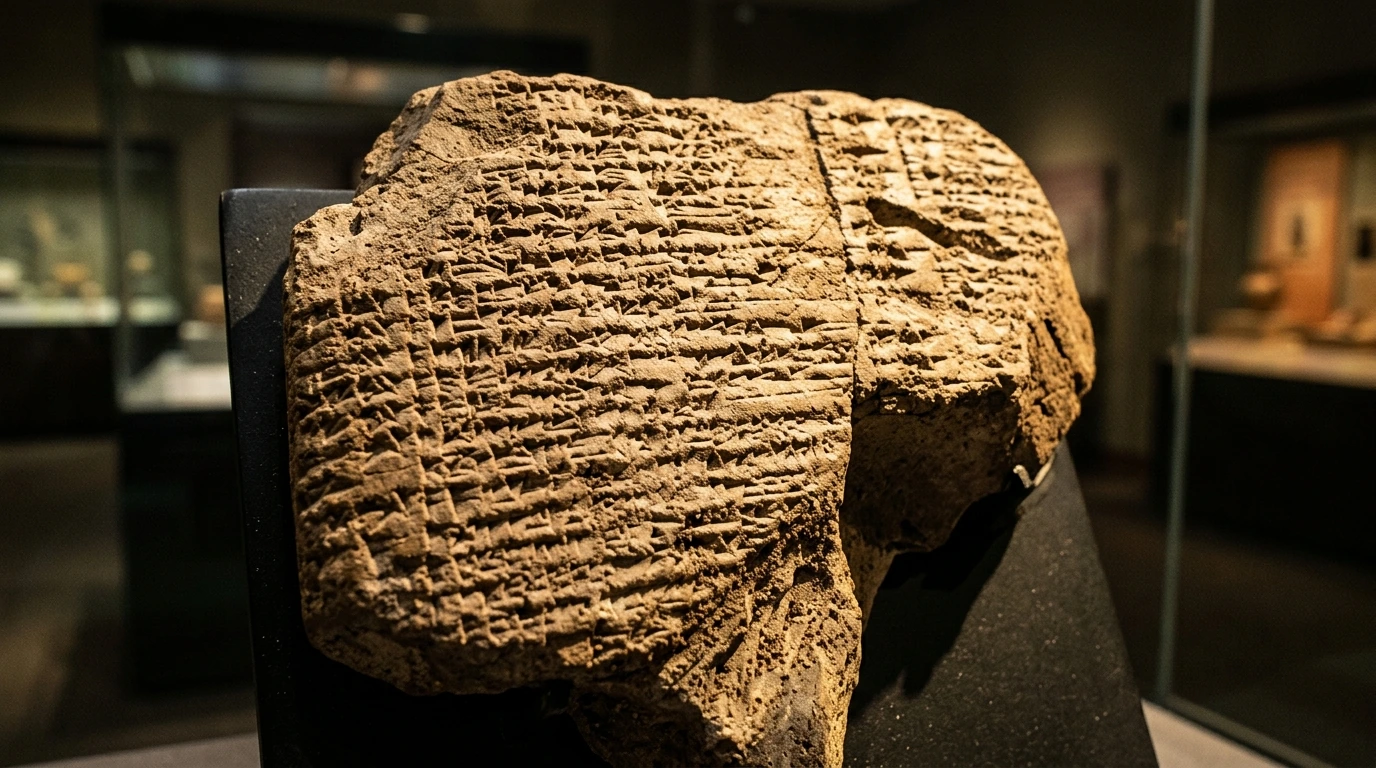
Historical Context: Rigorous examination of primary Hebrew, Aramaic, Greek, and Roman classical epigraphy.
Core Evidence: Forensic archaeology, radiocarbon data, and primary manuscripts validating biblical events.
Scholarly Consensus: Vetted against modern peer-reviewed publications in Near Eastern archaeology and biblical studies.
The Dethroned Eighteen-Year-Old King
In December 598 BC, during the first siege of Jerusalem by Nebuchadnezzar II, King Jehoiakim of Judah died under mysterious circumstances. His eighteen-year-old son, Jehoiachin (also called Jeconiah or Coniah), ascended the throne in the midst of national peril (2 Kings 24:8).
Jehoiachin reigned for only three months and ten days. Recognizing the futility of military resistance against the Babylonian siege lines, Jehoiachin made the agonizing decision to surrender himself to save Jerusalem from immediate destruction:
"Then Jehoiachin king of Judah, his mother, his servants, his princes, and his officers went out to the king of Babylon; and the king of Babylon, in the eighth year of his reign, took him prisoner." (2 Kings 24:12)
Nebuchadnezzar stripped the Temple of its gold treasures, rounded up the royal family, the royal court, 7,000 elite warriors, and 1,000 craftsmen and smiths, and deported them to Babylon.
Thirty-Seven Years in Babylonian Confinement
For thirty-seven long years (597–561 BC), while Jerusalem rebelled under his uncle Zedekiah and was burned to ashes in 586 BC, Jehoiachin lived as an imperial captive in the palace complex of Babylon.
Throughout this grueling confinement:
- The prophet Jeremiah had pronounced a severe divine curse upon Jehoiachin: "Write this man down as childless, a man who shall not prosper in his days; for none of his descendants shall prosper, sitting on the throne of David" (Jeremiah 22:30).
- Yet the Jewish exile community continued to view Jehoiachin as their legitimate hereditary monarch. In the Book of Ezekiel, all prophetic chronological dates are calculated according to "the year of King Jehoiachin’s exile" (e.g., Ezekiel 1:2; 8:1; 24:1).
The Accession of Evil-Merodach (Awil-Marduk)
In 562 BC, the mighty emperor Nebuchadnezzar II died after a celebrated 43-year reign. His son Awil-Marduk (rendered in the Hebrew Bible as Evil-Merodach, meaning "Man of Marduk") assumed the throne.
Seeking to inaugurate his reign with acts of imperial clemency and amnesty, Evil-Merodach ordered an immediate review of the imperial prisons:
"Now it came to pass in the thirty-seventh year of the captivity of Jehoiachin king of Judah, in the twelfth month, on the twenty-seventh day of the month, that Evil-Merodach king of Babylon, in the year that he began to reign, released Jehoiachin king of Judah from prison." (2 Kings 25:27)
The Steps of Jehoiachin's Elevation:
- Pardoned and Released: Brought out from subterranean palace detention into the sunlit royal halls.
- Spoke Kindly to Him: The Akkadian idiom indicates a formal royal restoration of honor and friendship.
- Elevated His Throne: Evil-Merodach set Jehoiachin’s seat above the seats of all the other vassal kings who were captive in Babylon.
The Royal Banquet Table and Daily Allowance
The transformation of Jehoiachin’s condition was total:
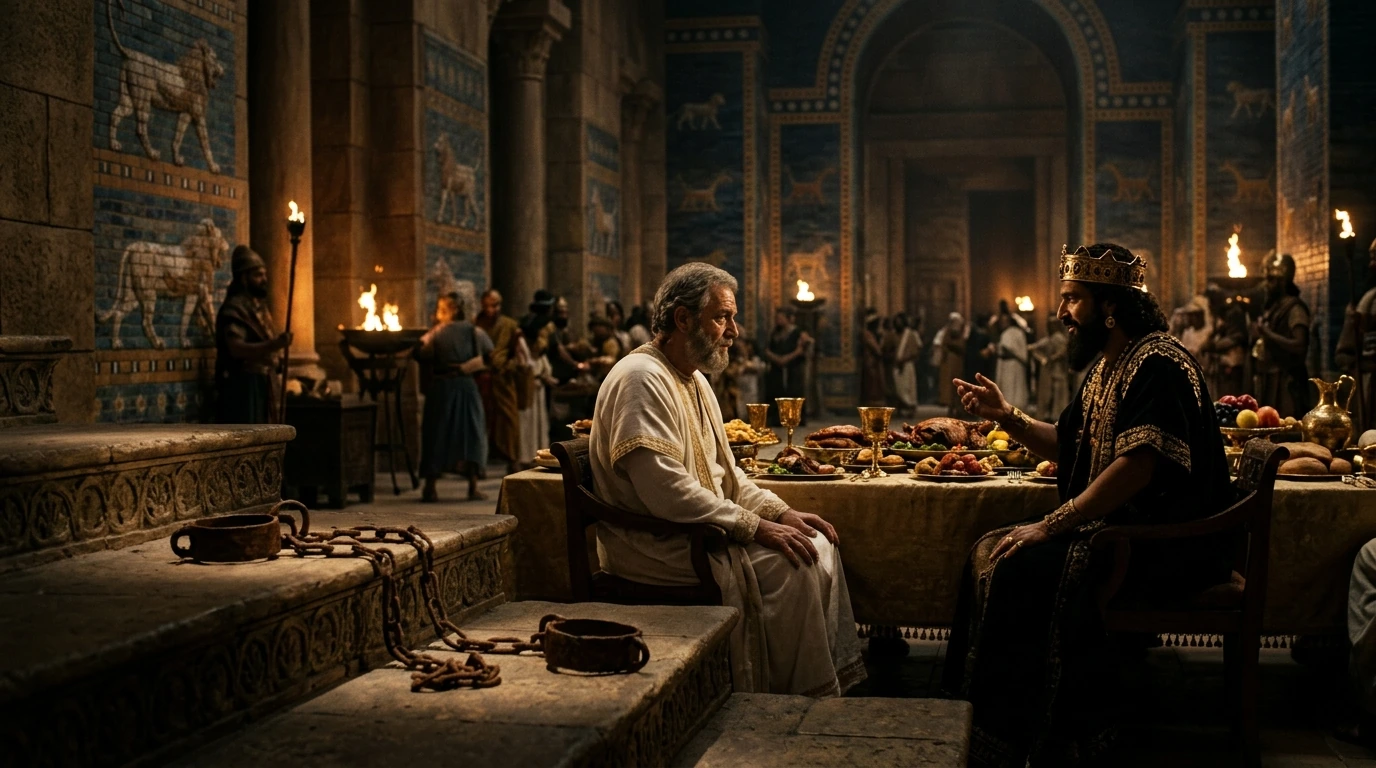
"So Jehoiachin changed from his prison garments, and he ate bread regularly before the king all the days of his life. And as for his allowance, there was a regular daily allowance given him by the king, a portion for each day, all the days of his life." (2 Kings 25:29–30)
- Royal Vestments: He discarded his tattered prison attire and was reclothed in fine Babylonian linens and royal tunics.
- The Sovereign Table: He became a permanent honored guest at the imperial banquet table of the King of Babylon.
- The Royal Allowance ('arūḥāh): The Babylonian treasury allocated a permanent daily stipend of olive oil, barley, wine, and silver to support Jehoiachin and his household.
The Theological Survival of the Davidic Dynasty
The closing four verses of the Book of 2 Kings (25:27–30) represent one of the most sublime theological climaxes in all of scripture.
The entire historical narrative of 1 and 2 Kings—spanning five centuries from the glorious zenith of Solomon to the catastrophic destruction of the Temple and the blinding of Zedekiah—could have concluded in utter despair and darkness.
Instead, the author deliberately concludes the history with King Jehoiachin sitting at the king’s table, honored and alive.
This was the quiet testimony of divine faithfulness:
- The lineage of David had not been extinguished.
- From Jehoiachin came Shealtiel, and from Shealtiel came Zerubbabel, who would lead the exiles back to Jerusalem under Cyrus the Great to rebuild the Second Temple.
- In the genealogies of Jesus Christ in Matthew 1:12 and Luke 3:27, King Jehoiachin (Jeconiah) stands as an essential unbroken link carrying the royal promise across the abyss of the Babylonian Exile.
Frequently Asked Questions
How long was King Jehoiachin imprisoned in Babylon?
He was held in Babylonian detention for 37 years, from 597 BC until his release in 561 BC.
Who was Evil-Merodach in secular history?
He was Awil-Marduk, the historical son and successor of Nebuchadnezzar II, who reigned as King of Babylon from 562 to 560 BC.
Why did 2 Kings end with the pardon of Jehoiachin?
To show that despite the destruction of Jerusalem, the covenant line of David was preserved alive in exile, offering hope for future restoration.
Did Jehoiachin ever return to Jerusalem?
No. He lived out his remaining years in Babylon as an honored royal pensioner, but his grandson Zerubbabel returned to lead the reconstruction of Jerusalem.
Related Research Dossiers
View all 120 articles →
The Fall of Zedekiah in Babylonian Records: The Babylonian Chronicle and Riblah Trials
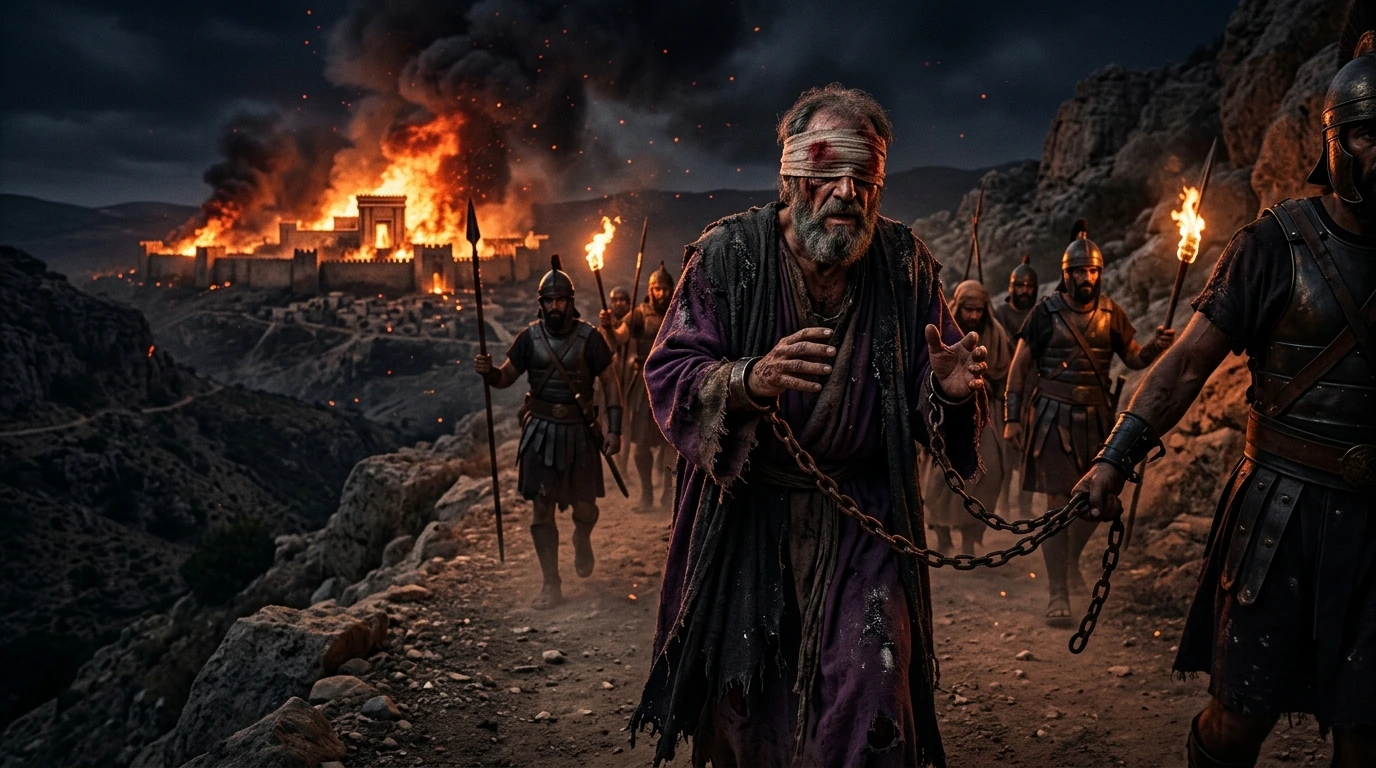
Archaeology of Zedekiah's Fall: The 586 BC Destruction Layer, Arrowheads, and Lachish Letters