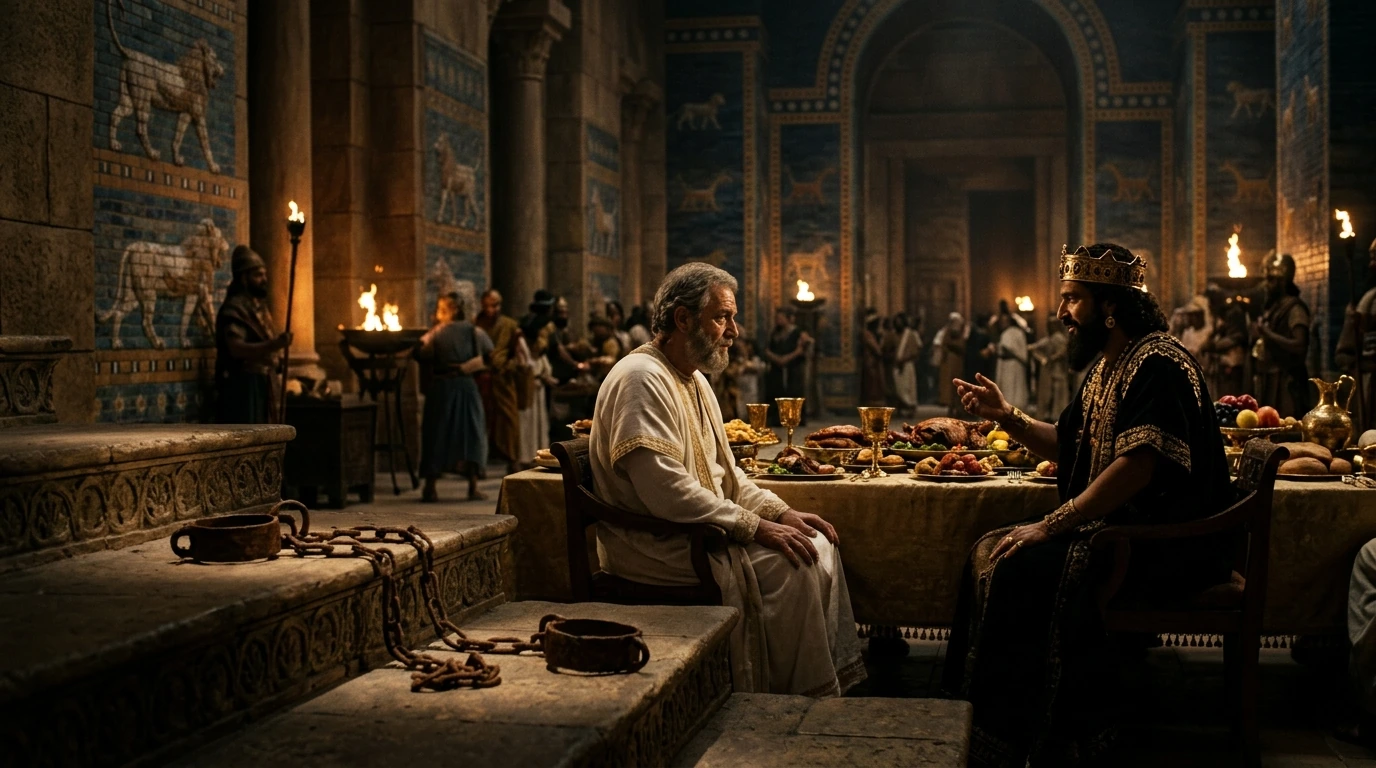
Historical Context: Rigorous examination of primary Hebrew, Aramaic, Greek, and Roman classical epigraphy.
Core Evidence: Forensic archaeology, radiocarbon data, and primary manuscripts validating biblical events.
Scholarly Consensus: Vetted against modern peer-reviewed publications in Near Eastern archaeology and biblical studies.
The Longest and Darkest Reign in Judah’s History
Ascending the throne at just twelve years old in 687 BC, Manasseh son of Hezekiah reigned for fifty-five years—the longest tenure of any king of the House of David (2 Kings 21:1; 2 Chronicles 33:1).
Yet his reign represents the spiritual and moral nadir of Judean history. Manasseh systematically dismantled the religious reforms of his father Hezekiah:
- He rebuilt the high places (bamot) and erected altars for Baal.
- He made an Asherah pole and placed it inside the Holy of Holies in Solomon’s Temple.
- He practiced soothsaying, augury, and sorcery, consulting mediums and spiritists.
- He burned his own sons as child sacrifices in the Valley of Ben Hinnom to the ammonite god Molech.
- According to 2 Kings 21:16, Manasseh shed so much innocent blood that he filled Jerusalem "from one end to another"—a massacre that early Jewish tradition (the Ascension of Isaiah) asserts included the gruesome martyring of the Prophet Isaiah by sawing him in half inside a hollow cedar tree.
The Assyrian Strike: Seized with Hooks and Fetters
For five decades, biblical writers describe Yahweh speaking to Manasseh and his people, but they paid no attention. Divine judgment arrived through the supreme military superpower of the ancient world:
"Therefore the Lord brought upon them the captains of the army of the king of Assyria, who took Manasseh with hooks, bound him with bronze fetters, and carried him off to Babylon." (2 Chronicles 33:11)
The Anatomy of Assyrian Captivity:
- "With Hooks" (ba-ḥāḥîm): The Hebrew word ḥoaḥ refers to a barbed thorn, ring, or curved hook. Neo-Assyrian bas-reliefs from Nineveh, Khorsabad, and Zenjirli depict conquered vassal kings kneeling naked before the Assyrian emperor with metal rings pierced through their lower lips or nostrils, connected to a single rope held by the monarch.
- "Bronze Fetters" (ba-neḥushtayim): Double manacles forged of bronze that bound both wrists and ankles together, forcing the prisoner to shuffle in excruciating steps across hundreds of kilometers of desert terrain.
Why Babylon Instead of Nineveh?
A notable historical detail in 2 Chronicles 33:11 that baffled 19th-century critics is that the Assyrian generals carried Manasseh to Babylon, rather than to Nineveh, the imperial capital of Assyria.
Archaeological excavations of cuneiform royal annals solved this historical riddle:
- During the reign of King Esarhaddon (681–669 BC) and his successor Ashurbanipal (668–627 BC), the Assyrian Empire directly controlled Babylon.
- In 652 BC, Ashurbanipal's brother, Shamash-shum-ukin, who had been appointed sub-king of Babylon, launched a massive civil war against Assyria, forming an alliance with Elam, Arab tribes, and Levant vassals.
- Although Manasseh may have flirted with this rebellion or withheld tributary payments, Ashurbanipal crushed the Babylonian revolt in 648 BC after a brutal two-year siege.
- Ashurbanipal held court directly in Babylon to interrogate, torture, and execute the western vassals who had aided the conspiracy. That Manasseh was dragged to Babylon precisely matches the geopolitical reality of the mid-7th century BC!
The Deep Crisis and Repentance of Manasseh
Humiliated in an imperial dungeon in Babylon, stripped of his royal robes, and facing imminent impalement or flaying, Manasseh experienced a radical spiritual awakening:
"Now when he was in affliction, he implored the Lord his God, and humbled himself greatly before the God of his fathers, and prayed to Him; and He received his entreaty, heard his supplication, and brought him back to Jerusalem into his kingdom. Then Manasseh knew that the Lord was God." (2 Chronicles 33:12–13)
This conversion gave rise to the celebrated Prayer of Manasseh, a profound penitential work preserved in the Greek Septuagint and early Christian canons (Apostolic Constitutions 2.22), wherein the king laments:
"My transgressions are multiplied, O Lord, my transgressions are multiplied... I am bent down by many iron chains, so that I cannot raise my head... but now I bend the knee of my heart, begging you for your kindness."
The Restored King and the Fortification of Jerusalem
Re-instated as a humbled Assyrian vassal king, Manasseh returned to Jerusalem a changed ruler:
- The Outer Wall: He built a massive outer wall to the City of David on the west side of the Gihon Spring in the valley, extending around the Ophel to an immense height (2 Chronicles 33:14).
- Purging Idolatry: He cast the foreign gods and the Asherah idol out of the Temple and broke down the pagan altars on the Temple Mount.
- Re-establishing Sacrifice: He repaired the altar of Yahweh and commanded Judah to serve the God of Israel.
Frequently Asked Questions
How long did King Manasseh reign?
Manasseh reigned for 55 years (c. 687–642 BC), the longest reign of any monarch of the House of David.
What does "seized with hooks" mean in 2 Chronicles 33:11?
It refers to the documented Assyrian practice of piercing the nose or lower lip of captured royalty with a bronze hook and tethering them to lead ropes.
Why was Manasseh taken to Babylon instead of Nineveh?
Because Assyrian Emperor Ashurbanipal personally resided in Babylon following his suppression of the Shamash-shum-ukin rebellion in 648 BC to try rebellious western vassals.
Did Manasseh genuinely repent?
Yes, 2 Chronicles 33 explicitly records his profound repentance in prison, his restoration to Jerusalem, and his removal of pagan idols from the Temple.
Related Research Dossiers
View all 120 articles →
The Fall of Zedekiah in Babylonian Records: The Babylonian Chronicle and Riblah Trials
Archaeology of Zedekiah's Fall: The 586 BC Destruction Layer, Arrowheads, and Lachish Letters