Historical Context: Rigorous examination of primary Hebrew, Aramaic, Greek, and Roman classical epigraphy.
Core Evidence: Forensic archaeology, radiocarbon data, and primary manuscripts validating biblical events.
Scholarly Consensus: Vetted against modern peer-reviewed publications in Near Eastern archaeology and biblical studies.
The Epigraphic Evidence: Manasseh in Cuneiform
In the 19th century, liberal biblical critics argued that the account of King Manasseh’s captivity in 2 Chronicles 33 was a moralistic theological invention of the Chronicler, created to justify why an evil king could enjoy a long 55-year reign.
That skepticism was obliterated by the trowel of Near Eastern archaeology. Excavations at the royal palace libraries of Nineveh (Kouyunjik) unearthed official state archives written in Akkadian cuneiform on clay prisms and cylinders.
Among these imperial texts, King Manasseh of Judah is explicitly documented by name, title, and tributary status across the reigns of two successive Assyrian world emperors: Esarhaddon and Ashurbanipal.
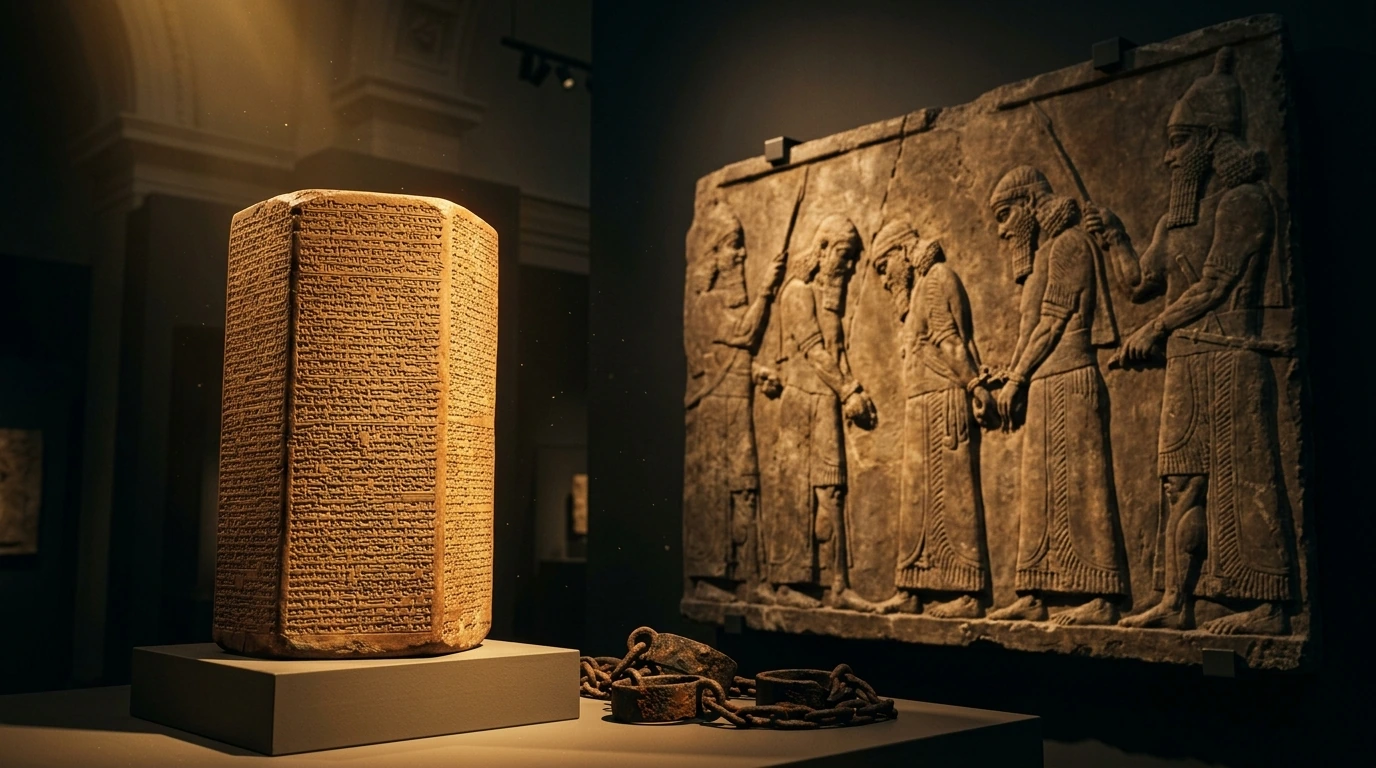
The Esarhaddon Prism (British Museum BM 91028)
In 673 BC, the Assyrian monarch Esarhaddon constructed a magnificent new palace at Nineveh (ekal masharti - the Palace of the Arsenal). To commemorate its foundation, royal scribes inscribed a 10-sided clay prism detailing the vassal rulers summoned to provide building materials and labor:
In Column V, lines 54–65, Esarhaddon lists the twenty-two kings of the Sealand, the coast, and the islands:
"Me-na-si-i shar al Ya-u-di"
(Manasseh, king of the city/land of Judah)
Other Kings on the Same Roster:
- Baal, king of Tyre
- Qaus-gabri, king of Edom
- Musuri, king of Moab
- Pudu-il, king of Beth-Ammon
- Mitinti, king of Ashkelon
- Ikausu, king of Ekron
These vassal kings were compelled to send huge beams of cedar and cypress from Mount Lebanon, along with massive blocks of limestone and quarried breccia, to adorn the royal palace of Nineveh.
Ashurbanipal’s Prism B and the Egyptian Campaign
Following Esarhaddon’s death, his son Ashurbanipal ascended the throne. In 667 BC, Ashurbanipal launched an invasion of Egypt to crush Pharaoh Taharqa of the Twenty-Fifth Nubian Dynasty.
In Prism C (and the parallel Rassam Cylinder), Ashurbanipal records:
"During my march to Egypt, twenty-two kings of the seacoast, the islands, and the mainland, servants dependent upon me, brought me substantial gifts and kissed my feet. I made those kings accompany my army over land and sea with their forces and their ships."
Once again, listed prominently among these twenty-two subordinate royal commanders is: "Menasê, king of Judah" (Me-na-si-i shar al Ya-u-di).
Manasseh did not merely send silver; he was required to dispatch Judean shock troops and supply contingents to march alongside the Assyrian imperial war machine into the Nile Delta.
The Geopolitical Vortex: Rebellion of Shamash-shum-ukin
Between 652 and 648 BC, the Assyrian empire was rocked to its foundations by a civil war. Shamash-shum-ukin, elder brother of Ashurbanipal and appointed ruler of Babylon, formed a secret coalition including:
- The kingdom of Elam
- The Chaldean tribes of southern Mesopotamia
- Arabian nomadic tribes under King Uate'
- Various discontented western Levantine vassals
Historical and cuneiform evidence indicates that Manasseh of Judah either joined this conspiracy or failed to provide expected military support.
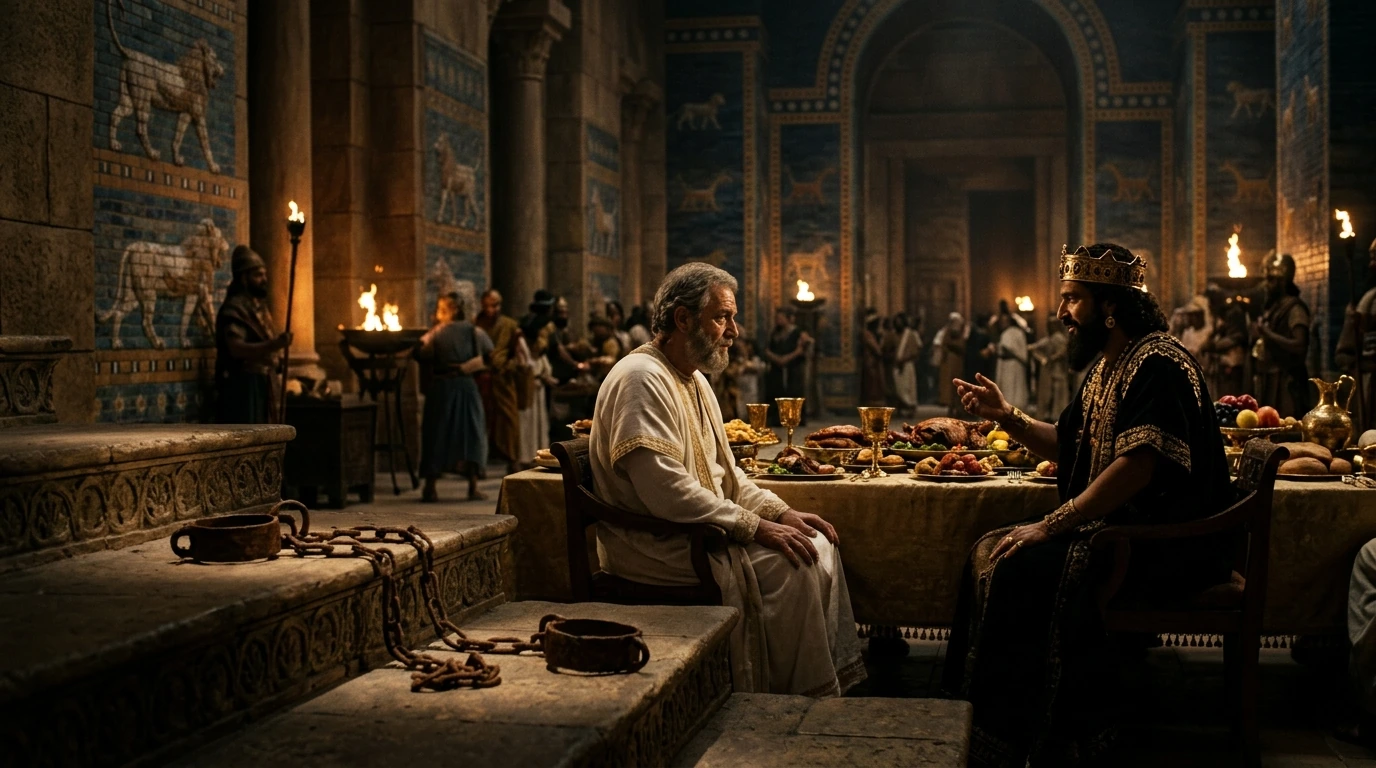
When Ashurbanipal breached the walls of Babylon in 648 BC after a harrowing siege, Shamash-shum-ukin cast himself into the flames of his burning palace. Ashurbanipal set up his headquarters in Babylon, summoned suspected vassal conspirators, tortured their leaders, and dragged their kings in chains to face judgment—the exact scenario preserved in 2 Chronicles 33:11.
Why 2 Kings Omits Manasseh’s Captivity
One of the persistent questions of biblical scholarship is why the Book of 2 Kings makes no mention of Manasseh’s capture, prayer, or repentance, presenting his reign as an unbroken reign of apostasy.
- The Deuteronomistic Purpose of 2 Kings: The author of Kings is writing from the perspective of the Babylonian Exile, explaining the theological reason for the total destruction of Jerusalem in 586 BC. For Kings, Manasseh’s introduction of child sacrifice and temple idols sealed the doom of the nation (2 Kings 23:26; 24:3–4). Admitting his personal repentance would dilute the thematic indictment against Judah’s unpardonable guilt.
- The Priestly Focus of 2 Chronicles: The Chronicler is writing post-exile (c. 450 BC) to returning Jewish exiles, emphasizing personal repentance, divine forgiveness, and immediate restoration. Manasseh’s repentance served as the supreme precedent that no sinner was too far gone for Yahweh’s mercy if they humbled their heart.
Frequently Asked Questions
Is King Manasseh mentioned in secular historical records?
Yes. King Manasseh ("Menasi shar Ya'udi") is explicitly recorded in Akkadian cuneiform on the Esarhaddon Prism and the Ashurbanipal royal cylinders.
What is the date of the Esarhaddon Prism?
The prism dates to approximately 673 BC during the construction of Esarhaddon’s arsenal palace at Nineveh.
What role did Manasseh play in Ashurbanipal’s Egyptian campaign?
He was one of 22 vassal kings required to provide auxiliary soldiers and supplies to assist the Assyrian conquest of Egypt.
Where is the Esarhaddon Prism displayed today?
It is preserved and displayed in the British Museum in London (BM 91028).
Related Research Dossiers
View all 120 articles →
The Fall of Zedekiah in Babylonian Records: The Babylonian Chronicle and Riblah Trials
Archaeology of Zedekiah's Fall: The 586 BC Destruction Layer, Arrowheads, and Lachish Letters