Historical Context: Rigorous examination of primary Hebrew, Aramaic, Greek, and Roman classical epigraphy.
Core Evidence: Forensic archaeology, radiocarbon data, and primary manuscripts validating biblical events.
Scholarly Consensus: Vetted against modern peer-reviewed publications in Near Eastern archaeology and biblical studies.
The Brutal Superpower: The Terror of the Neo-Assyrian Empire
In the 8th century BC, no empire in human history had ever cultivated state terror with such systematic, industrialized brutality as the Neo-Assyrian Empire. Headquartered along the Tigris River in modern-day northern Iraq, the Assyrian war machine was an unstoppable juggernaut of iron weaponry, armored cavalry, siege engines, and psychological warfare.
Assyrian royal inscriptions preserved in the British Museum and the Louvre—carved by monarchs like Ashurnasirpal II and Shalmaneser III—boasted openly of unspeakable atrocities inflicted upon conquered cities:
- Skinning enemy kings alive and draping their flayed hides over municipal walls.
- Building towering pyramids of severed human heads outside city gates.
- Impaling captured nobility on sharpened stakes and burning rebellious youths alive.
To the Hebrew kingdoms of Israel and Judah, the capital city of Nineveh was the very epicenter of world evil—a bloody metropolis described by the prophet Nahum as the "bloody city, all full of lies and robbery" (Nahum 3:1).
It was into the heart of this ruthless, pagan imperial beast that God commanded an obscure Hebrew prophet from Gath-Hepher in Galilee to march:
"Now the word of the Lord came unto Jonah the son of Amittai, saying, 'Arise, go to Nineveh, that great city, and cry against it; for their wickedness is come up before Me.'" (Jonah 1:1–2)
Why Jonah Fled to Tarshish: The Geopolitical Motive
Popular folklore often portrays Jonah as a timid, fearful man terrified of being harmed by the Assyrians. However, a careful geopolitical and theological reading reveals an entirely different motive: Jonah did not flee out of fear; he fled out of patriotic hatred!
Jonah knew that Assyria was an existential military threat that would eventually swallow the Northern Kingdom of Israel (which indeed occurred in 722 BC when Sargon II destroyed Samaria). Jonah understood the boundless mercy of Yahweh:
"And he prayed unto the Lord, and said, 'I pray thee, O Lord, was not this my saying, when I was yet in my country? Therefore I fled before unto Tarshish: for I knew that thou art a gracious God, and merciful, slow to anger, and of great kindness, and repentest thee of the evil.'" (Jonah 4:2)
Jonah did not want Nineveh to repent! He wanted God to rain down fire and brimstone upon the Assyrian capital, wiping out Israel’s most dangerous adversary.
To prevent Nineveh’s deliverance, Jonah hurried to the Mediterranean port of Joppa (Jaffa) and boarded a Phoenician merchant vessel bound for Tarshish (modern-day southern Spain)—the absolute westernmost boundary of the known ancient world—traveling 2,500 miles in the exact opposite direction!
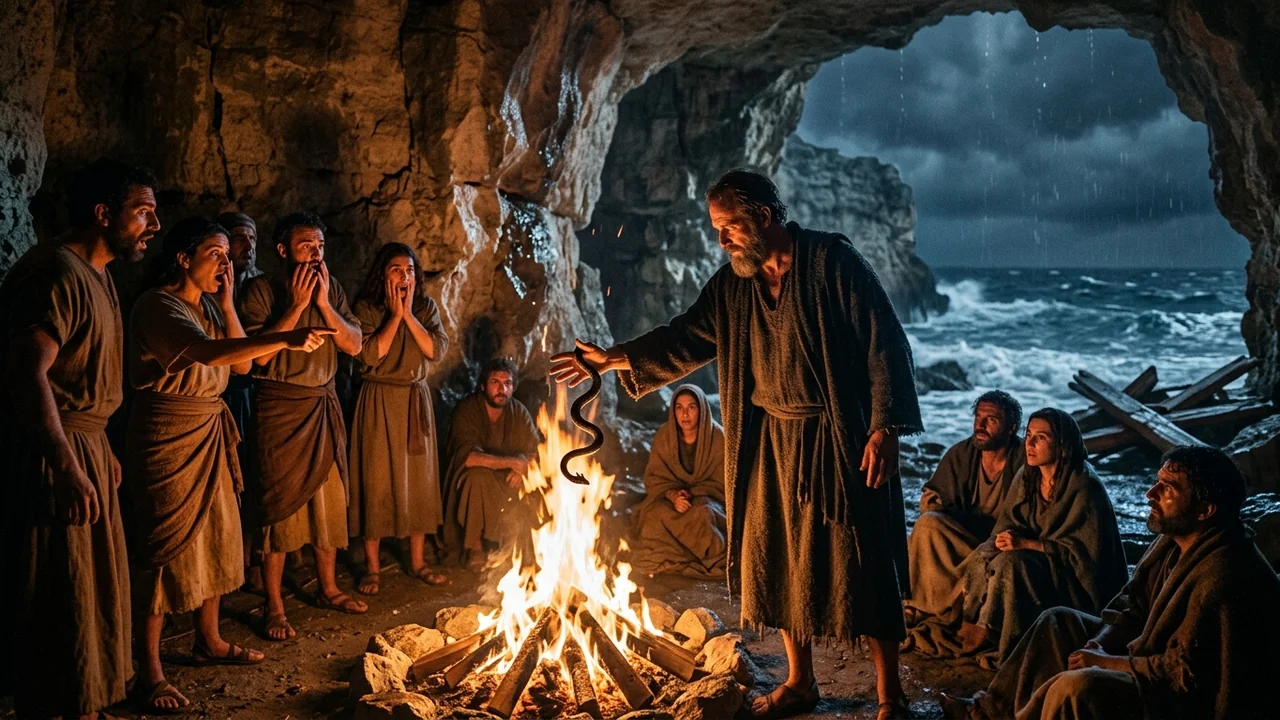
Only through a catastrophic Mediterranean storm, the casting of lots, and his miraculous preservation inside the belly of a great marine creature (dag gadol) for three days and nights did a humbled Jonah finally surrender to his divine commission.
The Scale of "Greater Nineveh": A City of Three Days’ Journey
Upon arriving in northern Mesopotamia, the biblical text describes the staggering dimensions of the metropolis:
"Now Nineveh was an exceeding great city of three days' journey. And Jonah began to enter into the city a day's journey, and he cried, and said, 'Yet forty days, and Nineveh shall be overthrown.'" (Jonah 3:3–4)
For centuries, 19th-century rationalist critics pointed to the excavated inner city walls of Nineveh (Kuyunjik), which measured roughly 7.5 miles in circumference—a distance that an adult could walk around in a few hours, not three days!
However, modern Near Eastern archaeology and historical geography have vindicated the biblical description:
- The Assyrian Administrative Triangle ("Greater Nineveh"): In ancient Mesopotamian administrative terminology, the name "Nineveh" was applied not merely to the fortified citadel mound of Kuyunjik, but to the entire metropolitan Assyrian Urban Complex—an administrative urban triangle spanning nearly 60 miles, bounded by Nineveh (Kuyunjik), Calah (Nimrud to the south), Dur-Sharrukin (Khorsabad to the north), and Tarbisu.
- Three Days’ Journey: Traversing, inspecting, and preaching through this sprawling metropolitan complex of royal palaces, suburban residential villas, military barracks, and extensive agricultural gardens required precisely three full days of travel on foot!
- The Population of 120,000: Jonah 4:11 records that the city contained "more than sixscore thousand persons that cannot discern between their right hand and their left hand; and also much cattle." If this phrase refers to infants and young toddlers, the total metropolitan population reached roughly 600,000 people, matching archaeological estimates for the Greater Nineveh urban basin during the 8th century BC!
                     [Dur-Sharrukin / Khorsabad]
                               ▲
                              /                              /      Total Perimeter: ~60 Miles
                            /       (A "Three Days' Journey")
                           /                     [Nineveh / Kuyunjik] ══ [Calah / Nimrud]
The Catalysts of Repentance: The Plague and the Solar Eclipse of 763 BC
One of the greatest historical mysteries of the Book of Jonah is: Why would the proud, bloodthirsty King of Nineveh and his imperial nobles listen to an unkempt foreign Hebrew prophet shouting judgment in their streets?
Astronomical, cuneiform, and epidemiological records from the 8th century BC reveal that Jonah entered Nineveh at the precise moment when the Assyrian Empire was paralyzed by profound cosmic and national terror!
The authoritative Assyrian Eponym Chronicle (the official yearly state calendar recorded on cuneiform tablets in the British Museum) documents a sequence of devastating national crises during the reign of King Ashur-Dan III (c. 772–755 BC):
- The Devastating Plagues of 765 BC and 759 BC: Cuneiform records note: "In the eponym of Ishdi-Salmanu: Plague in the land." Severe epidemic disease swept across northern Mesopotamia, wiping out entire garrison cities. In ancient thought, plagues were direct physical manifestations of divine wrath against the empire.
- The Total Solar Eclipse of June 15, 763 BC (The Bur-Sagale Eclipse): The Eponym Chronicle records for the year 763 BC: "In the eponym of Bur-Sagale, governor of Guzana: Revolt in the city of Ashur; in the month of Simanu, an eclipse of the sun took place." Modern NASA astronomical retro-calculations confirm that on June 15, 763 BC, a spectacular total solar eclipse passed directly over the city of Nineveh!
In ancient Assyrian astrology and omens, a solar eclipse was the ultimate terrifying portend of doom: it meant the sun god Shamash had hidden his face, signaling the immediate collapse of the royal dynasty and the complete overthrow of the state!
When Jonah strode through the gates shortly thereafter, proclaiming: "Yet forty days, and Nineveh shall be overthrown!", his message fell upon a population already convinced by cosmic signs and plagues that the judgment of heaven was at the door.
The king stepped down from his golden throne, stripped off his royal robes, covered himself in rough sackcloth, and sat in ashes, commanding a national fast for man and beast alike (Jonah 3:6–9).
Tragedy and Discovery: The Blown-Up Shrine of Nebi Yunus in Mosul
For centuries, travelers and pilgrims visiting Mosul in northern Iraq venerated an ancient Islamic mosque and Christian monastery built atop a prominent archaeological mound adjacent to ancient Nineveh: the Mound of Nebi Yunus (Arabic for "Prophet Jonah"). Local tradition held that the shrine housed the tomb of Jonah himself. Because the shrine was an active holy site and modern cemetery, archaeological excavations beneath the mound were strictly forbidden.
In July 2014, a global cultural tragedy occurred. Terrorists of the Islamic State (ISIS) captured Mosul, planted explosives throughout the historic Mosque of the Prophet Jonah, and detonated the shrine, reducing the centuries-old sanctuary to a pile of shattered concrete and dust.
However, behind the destruction lay a hidden archaeological breakthrough:
Following the liberation of Mosul by Iraqi forces in 2017, archaeologists led by Dr. Layla Salih and German specialists inspected the ruins. They discovered that ISIS militants had dug a vast network of subterranean looting tunnels—stretching over 500 meters deep into the bedrock beneath the destroyed shrine.
The Esarhaddon Palace Tunnels and the Winged Bulls (Lamassu)
Stepping into the dark tunnels beneath the tomb of Jonah, archaeologists were stunned to find themselves walking through the pristine, unexcavated military palace of King Esarhaddon (reigned 681–669 BC, the son of Sennacherib):
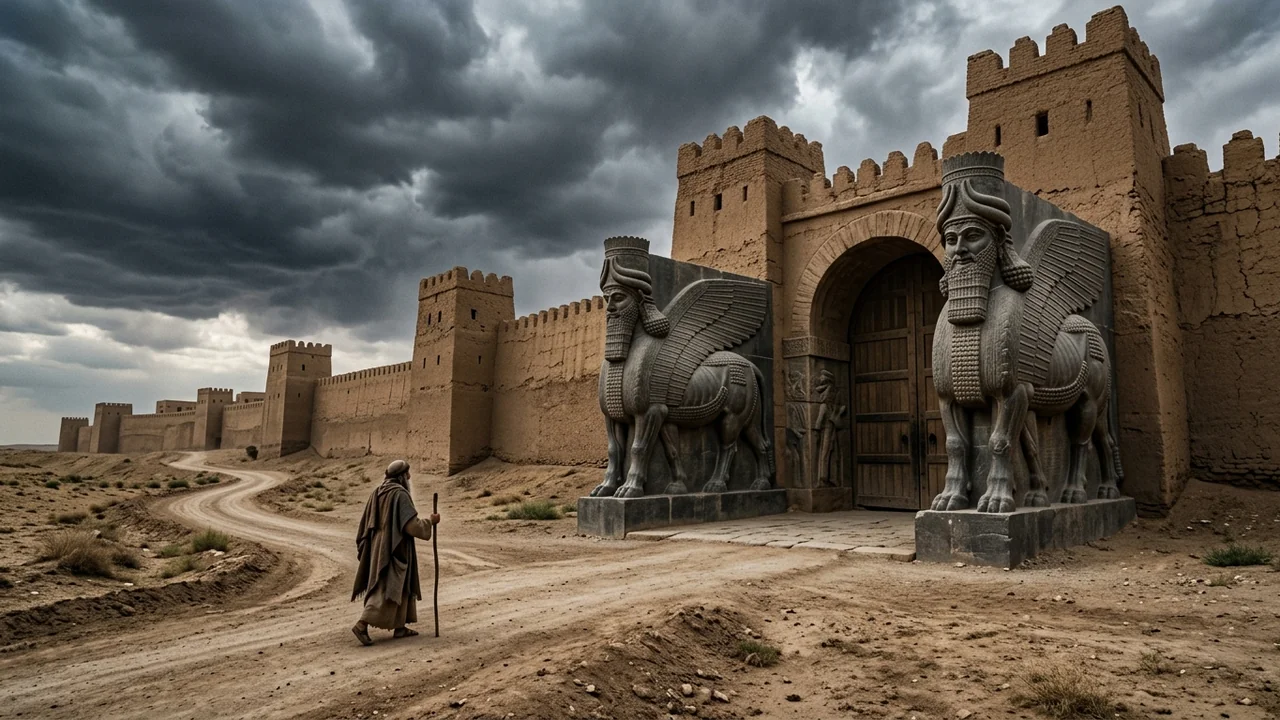
- Colossal Winged Bulls (Lamassu): Flanking the ancient subterranean portals were colossal, exquisitely preserved stone Lamassu—mythological guardian beings with the body of a bull, wings of an eagle, and a human king's head—carved in white alabaster!
- Cuneiform Inscriptions of Esarhaddon: Archaeologists uncovered pristine cuneiform inscriptions carved into the stone wall orthostats, reading: "The palace of Esarhaddon, strong king, king of the world, king of Assyria, governor of Babylon, king of Sumer and Akkad."
- Reliefs of Goddess Ishtar: Other tunnels revealed wall reliefs depicting the goddess Ishtar of Nineveh and military processions, preserved in dark silence beneath the very hill where tradition held that the Hebrew prophet had been laid to rest.
Out of the ashes of war and terrorism, the stones of Nineveh spoke once again, confirming that the historical world of the prophet Jonah was an authentic, tangible reality buried beneath the soil of ancient Mesopotamia.
Deepen Your Study of Biblical Archaeology
The archaeological excavations of Nineveh and the discoveries beneath the shrine of Nebi Yunus demonstrate that biblical history rests on unshakable historical foundations. If you want to explore the complete cuneiform translations, site maps of Nineveh, and prophetic files of the Old Testament:
👉 Discover Volume II: Kings & Prophets – Tragic Ends & Medical Mysteries ($2.99)
Features the complete astronomical data on the 763 BC Bur-Sagale eclipse, photos of the Esarhaddon palace tunnels in Mosul, and archaeological dossiers of ancient Assyria.
Frequently Asked Questions
Did Nineveh really exist?
Yes. Nineveh was the magnificent capital of the Neo-Assyrian Empire, located across the Tigris River from modern-day Mosul in northern Iraq. Excavations by Austen Henry Layard, Sir Henry Rawlinson, and modern Iraqi archaeologists have uncovered its colossal palaces, the royal library of Ashurbanipal, monumental city walls, and massive stone Lamassu gates.
Why did the Assyrians repent when Jonah preached?
Cuneiform tablets from the Assyrian Eponym Chronicle reveal that in the mid-8th century BC, the Assyrian Empire was struck by two devastating plagues (765 and 759 BC) and a total solar eclipse directly over Nineveh on June 15, 763 BC (the Bur-Sagale Eclipse). In ancient Assyrian omens, a solar eclipse signaled the imminent destruction of the empire, creating intense psychological panic that prepared the population to repent at Jonah's message.
What happened to the Tomb of Jonah in Mosul?
The historic shrine of Nebi Yunus (Prophet Jonah) in Mosul, Iraq, was tragically destroyed with explosives by ISIS militants in July 2014. However, the subsequent liberation of the city revealed that looters had dug tunnels beneath the ruins, exposing the unexcavated palace of Assyrian King Esarhaddon and colossal winged bulls (Lamassu) buried beneath the hill.
How big was Nineveh according to archaeology?
While the inner fortified citadel of Kuyunjik had a circumference of about 7.5 miles, ancient texts and archaeological surveys confirm that "Greater Nineveh" was an expansive urban administrative triangle encompassing Nineveh, Khorsabad (Dur-Sharrukin), and Nimrud (Calah), with a perimeter of roughly 60 miles—matching the biblical description of a "city of three days' journey" (Jonah 3:3).
Frequently Asked Questions
Did Nineveh really exist?
Yes. Nineveh was the magnificent capital of the Neo-Assyrian Empire, located across the Tigris River from modern-day Mosul in northern Iraq. Excavations by Austen Henry Layard, Sir Henry Rawlinson, and modern Iraqi archaeologists have uncovered its colossal palaces, the royal library of Ashurbanipal, monumental city walls, and massive stone Lamassu gates.
Why did the Assyrians repent when Jonah preached?
Cuneiform tablets from the Assyrian Eponym Chronicle reveal that in the mid-8th century BC, the Assyrian Empire was struck by two devastating plagues (765 and 759 BC) and a total solar eclipse directly over Nineveh on June 15, 763 BC (the Bur-Sagale Eclipse). In ancient Assyrian omens, a solar eclipse signaled the imminent destruction of the empire, creating intense psychological panic that prepared the population to repent at Jonah's message.
What happened to the Tomb of Jonah in Mosul?
The historic shrine of Nebi Yunus (Prophet Jonah) in Mosul, Iraq, was tragically destroyed with explosives by ISIS militants in July 2014. However, the subsequent liberation of the city revealed that looters had dug tunnels beneath the ruins, exposing the unexcavated palace of Assyrian King Esarhaddon and colossal winged bulls (Lamassu) buried beneath the hill.
How big was Nineveh according to archaeology?
While the inner fortified citadel of Kuyunjik had a circumference of about 7.5 miles, ancient texts and archaeological surveys confirm that "Greater Nineveh" was an expansive urban administrative triangle encompassing Nineveh, Khorsabad (Dur-Sharrukin), and Nimrud (Calah), with a perimeter of roughly 60 miles—matching the biblical description of a "city of three days' journey" (Jonah 3:3).
Related Research Dossiers
View all 120 articles →
The Banqueting Hall Oath: What Really Happened to the Head of John the Baptist at Machaerus?
The Bludgeoned Prophet: The Martyrdom of Zechariah Son of Jehoiada Between Temple and Altar