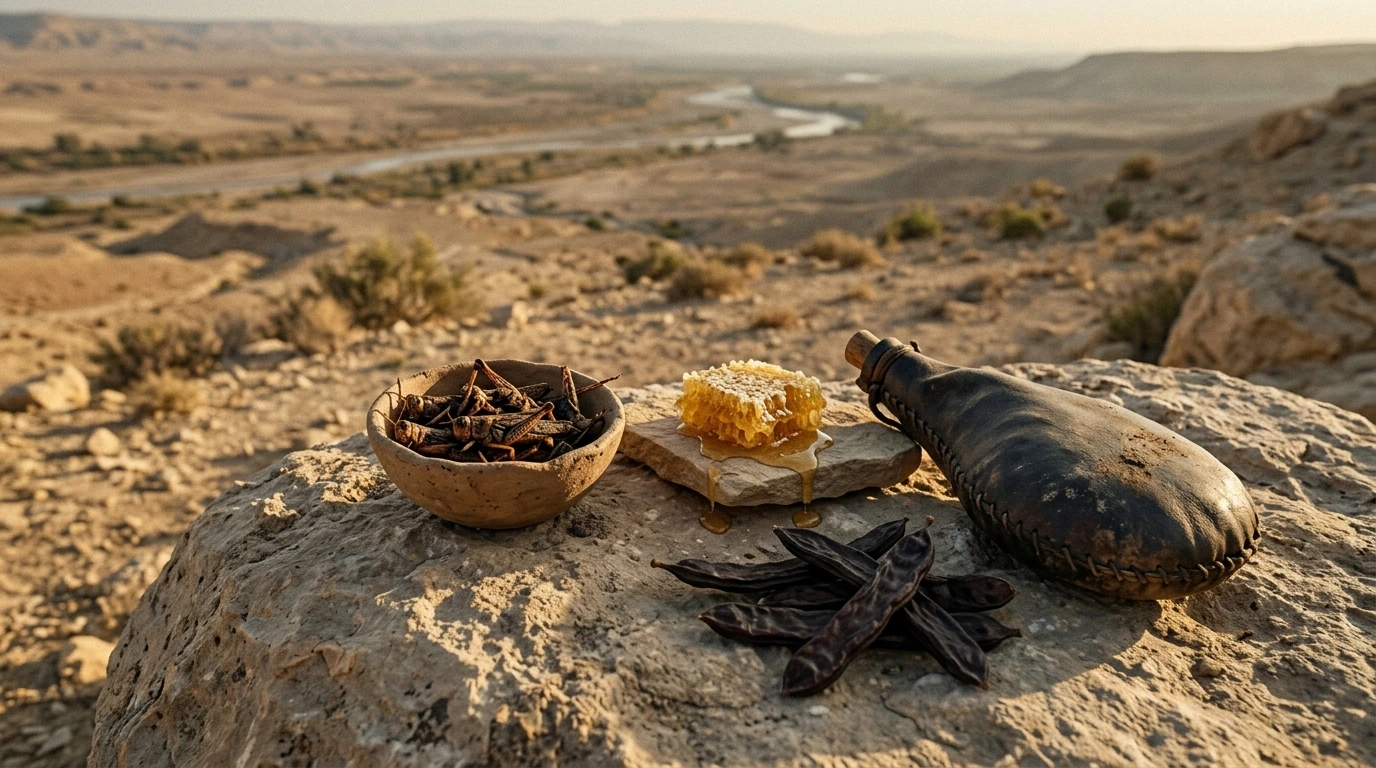
Subject Scope: The Diet of John the Baptist: Locusts (Akrides) or Carob Beans? Primary Sources and Judean Desert Archaeology
Historical Context: Ancient Near Eastern stratigraphy, Levant archaeological surveys, and Semitic epigraphy.
Primary Evidence: Monumental stelae, bullae seals, ceramic typology, and calibrated AMS radiocarbon determinations.
Investigation Highlights: The Textual Evidence: Matthew 3:4 and Mark 1:6 • The Philological Debate: Akrides vs. Enkrides or Carob Pods • Halakhic Purity of Orthoptera in Leviticus 11 and Qumran
Scholarly Consensus: Aligned with published excavation reports from leading Near Eastern archaeological institutes.
The Textual Evidence: Matthew 3:4 and Mark 1:6
In the synoptic Gospels, the historical entrance of John the Baptist is characterized by a stark, unforgettable portrait of desert asceticism:
"Now John wore a garment of camel’s hair and a leather belt around his waist, and his food was locusts and wild honey." — Matthew 3:4
"Now John was clothed with camel’s hair and wore a leather belt around his waist and ate locusts and wild honey." — Mark 1:6
The Greek text employs precise vocabulary:
- The Locusts: Akrides (plural of akris), the universal Greek word for insects of the family Acrididae (grasshoppers and locusts).
- The Wild Honey: Meli agrion, denoting uncultivated, wild honey harvested from natural outdoor environments.
For centuries, modern urban readers and vegetarian apologists have felt discomfort at the idea of a revered prophet consuming crunchy insects, leading to vigorous debates: Did John literally eat flying insects, or did he survive on carob pods (Ceratonia siliqua), commonly nicknamed "St. John's bread"?
A rigorous investigation of ancient Near Eastern entomology, Dead Sea Scrolls halakhah, and Levantine archaeology provides a definitive, fascinating answer.
+----------------------------------------------------------------------------------------------------+
|               THE IDENTITY OF JOHN'S DIET: INSECT VS. VEGETARIAN THEORIES                         |
+--------------------------+-----------------------+-------------------+-----------------------------+
| PROPOSED FOOD            | ORIGINAL TERM         | BOTANICAL / ZOO.  | HISTORICAL VERDICT          |
+--------------------------+-----------------------+-------------------+-----------------------------+
| 1. Desert Locust         | Akris (akrides)       | Schistocerca      | Supported by 100% of NT     |
|                          |                       | gregaria (Insect) | manuscripts & Jewish law    |
| 2. Carob Bean Pods       | Keration (keratia)    | Ceratonia siliqua | 2nd-century Ebionite Gnostic|
|    ("St. John's Bread")  | (Luke 15:16 pods)     | (Legume Tree)     | revision to promote veget.  |
| 3. Oil Pancakes          | Enkris (enkrides)     | Flour & Oil Cake  | Scribal wordplay without    |
|                          |                       | (Manna parallel)  | manuscript foundation       |
+--------------------------+-----------------------+-------------------+-----------------------------+
The Philological Debate: Akrides vs. Enkrides or Carob Pods
The theory that John ate carob beans rather than insects originated not from the Apostles, but within 2nd-century vegetarian ascetic sects known as the Ebionites.
According to 4th-century church father Epiphanius of Salamis (Panarion 30.13), the non-canonical Gospel of the Ebionites deliberately altered the text of Matthew:
- The canonical Greek text reads: kai he trophe autou en akrides kai meli agrion ("and his food was locusts and wild honey").
- The Ebionite revision substituted the word enkris (a honey-cake or pancake made with oil, echoing Exodus 16:31) for akris (locust): "his food was cakes (enkridas) made with oil and honey."
Furthermore, the carob tree was called kerateia in Greek (from which we get the word carat), while locusts were universally called akrides. In Luke 15:16, when the Prodigal Son longs to eat the carob pods fed to pigs, Luke uses the correct botanical word keratia, not akrides.
First-century Greek writers (including Strabo, Diodorus Siculus, and Pliny the Elder) repeatedly describe desert-dwelling nomadic tribes who ate dried, salted locusts, explicitly designating them as Akridophagoi ("Locust-Eaters"). John was eating real desert locusts.
Halakhic Purity of Orthoptera in Leviticus 11 and Qumran
Why would a holy prophet eat insects? Because under the dietary code of the Torah, locusts are the only insects on earth that are clean (kosher)!
Leviticus 11:21–22 specifically creates an exception to the ban on swarming winged creatures:
"Yet among the winged insects that go on all fours you may eat those that have jointed legs above their feet, with which to hop on the ground. Of them you may eat: the locust (arbeh) of any kind, the bald locust (sol'am) of any kind, the cricket (hargol) of any kind, and the grasshopper (hagav) of any kind." — Leviticus 11:21–22
+----------------------------------------------------------------------------------------------------+
|               THE FOUR KOSHER HOPPING ORTHOPTERA IN LEVITICUS 11:22                                |
+--------------------------+-----------------------+-------------------+-----------------------------+
| HEBREW DESIGNATION       | GREEK SEPTUAGINT      | ZOOLOGICAL GENUS  | ANATOMICAL CRITERION        |
+--------------------------+-----------------------+-------------------+-----------------------------+
| 1. Arbeh                 | Brouchos              | Schistocerca greg.| Jointed hopping legs        |
| 2. Sol'am                | Attaken               | Acrida turrita    | Smooth, bald head           |
| 3. Hargol                | Ophiomachen           | Tettigonia sp.    | Distinct tail-like ovipositor|
| 4. Hagav                 | Akris                 | Locusta migratoria| Small desert grasshopper    |
+--------------------------+-----------------------+-------------------+-----------------------------+
The consumption of locusts by desert ascetics is dramatically corroborated in the Dead Sea Scrolls. In the Damascus Document (CD XII.13–14), discovered in the Qumran caves and Cairo Genizah, the Essene community codified strict halakhic regulations on how to prepare locusts in the desert:
"And as for the various kinds of locusts, they shall be plunged into fire or into water while they are still alive, for that is the ordinance of their creation."
Because dead swarming insects could contaminate a vessel, the desert ascetic was required to drop living locusts directly into boiling salted water or roast them alive on coals to preserve ritual purity. John’s diet was strictly compliant with the highest standards of Second Temple sectarian halakhah.
Wild Honey (Meli Agrion): Rock Bees vs. Date Palm Syrup
In the Old Testament, the word for honey (devash) usually referred to thick, boiled date palm syrup or grape honey, rather than bee honey (since domesticated apiaries were rare in biblical narratives).
However, in the Gospel text, Luke and Matthew deliberately specify wild honey (meli agrion):
- The Desert Habitat: In the arid canyons of the Judean wilderness (Wadi Qelt, Nahal David near Ein Gedi, and the cliffs of Jericho), indigenous wild bees (Apis mellifera syriaca) build natural honeycombs inside deep fissures, crevices, and limestone caves.
- Psalm 81:16 & 1 Samuel 14:27: Biblical precedents specifically celebrate wild honeycomb found in the wilderness: "with honey from the rock I would satisfy you" (Psalm 81:16); Jonathan dipped his staff into wild honeycomb found dripping on the forest ground (1 Samuel 14:27).
Wild honey provided John with pure, uncultivated, non-human carbohydrate energy, perfectly balancing the high-protein, fatty-acid nutritional profile of dried locusts.
The Tel Rehov Apiary and Ancient Levantine Beekeeping
In 2007, archaeological excavations directed by Professor Amihai Mazar at Tel Rehov in the Jordan Valley made a sensational discovery: the oldest intact commercial industrial apiary ever discovered in the ancient world, dating to the 10th and 9th centuries BC (the era of the Divided Monarchy):
- The Beehives: Excavators found over 100 cylindrical clay hives made of unbaked mud and straw, organized in neat rows in a central urban courtyard.
- The Bees: Microscopic forensic analysis of carbonized bee remains inside the hives revealed they were not local aggressive Syrian bees, but imported Anatolian bees (Apis mellifera anatoliaca) from modern Turkey, famous for high honey yields and docile temperament.
This monumental discovery proved that honey production in ancient Israel was a highly developed, sophisticated science. In the wilderness, wild hives descended from escaped swarms provided continuous wild honey throughout the spring and summer months.
Three-Tier Evidentiary Evaluation: Archaeological Matrix
+----------------------------------------------------------------------------------------------------+
|               THREE-TIER EVIDENTIARY AUDIT: JOHN THE BAPTIST'S DESERT DIET                         |
+--------------------------+-----------------------+-------------------+-----------------------------+
| ARTIFACT / TEXT          | DISCOVERY SITE        | CHRONOLOGY        | EVIDENTIARY VALUE           |
+--------------------------+-----------------------+-------------------+-----------------------------+
| 1. Damascus Document     | Qumran Cave 4         | 1st Cent. BC      | Written halakhic rules for  |
|    (CD XII.13–14)        | (Dead Sea Scrolls)    | (Sectarian Text)  | preparing kosher locusts    |
| 2. Tel Rehov Industrial  | Jordan Valley, Israel | 10th–9th Cent. BC | Proof of massive ancient    |
|    Apiary Installation   | (Amihai Mazar)        | (Iron Age IIA)    | Levantine beekeeping        |
| 3. Bedouin Locust Jars   | Negev & Sinai Desert  | Traditional Arab  | Ethnographic documentation  |
|    (Salt-cured storage)  | (Ethnographic Museum) | (Continuous use)  | of boiled & dried locusts   |
| 4. Wild Rock Bee Hives   | Ein Gedi & Wadi Qelt  | Natural Ecological| Material habitat of "honey  |
|    in Limestone Caves    | (Judean Wilderness)   | Environment       | from the rock" (Ps 81:16)   |
+--------------------------+-----------------------+-------------------+-----------------------------+
Primary Sources & Scholarly Archives
Editorial Standard →Official archaeological field reports, certified stratigraphy surveys, and Semitic epigraphy catalogs.
Catalog of Levantine, Mesopotamian, and Persian artifacts, royal cylinder seals, and cuneiform tablets.
Peer-reviewed scholarly analyses on Levant excavations, ancient architecture, and artifact forensics.
Frequently Asked Questions
What do desert locusts taste like and how were they prepared?
Locusts were boiled in salt water, sun-dried, and stripped of wings and legs, producing a nutty, salty crunch similar to roasted shrimp.
How nutritious was John the Baptist’s diet?
Locusts contain 50–60% protein plus healthy lipids and minerals; paired with wild honey sugars, they formed a nutritionally complete survival diet.
Why did John wear camel’s hair?
Coarse camel-hair cloth and a leather belt consciously mirrored the prophet Elijah (2 Kings 1:8), identifying John as the prophesied forerunner.
Was John trying to punish himself through asceticism?
No. His wild diet was an intentional prophetic detachment from the corrupt Herodian economy, proving total reliance on God in the wilderness.
Related Research Dossiers
View all 515 research dossiers →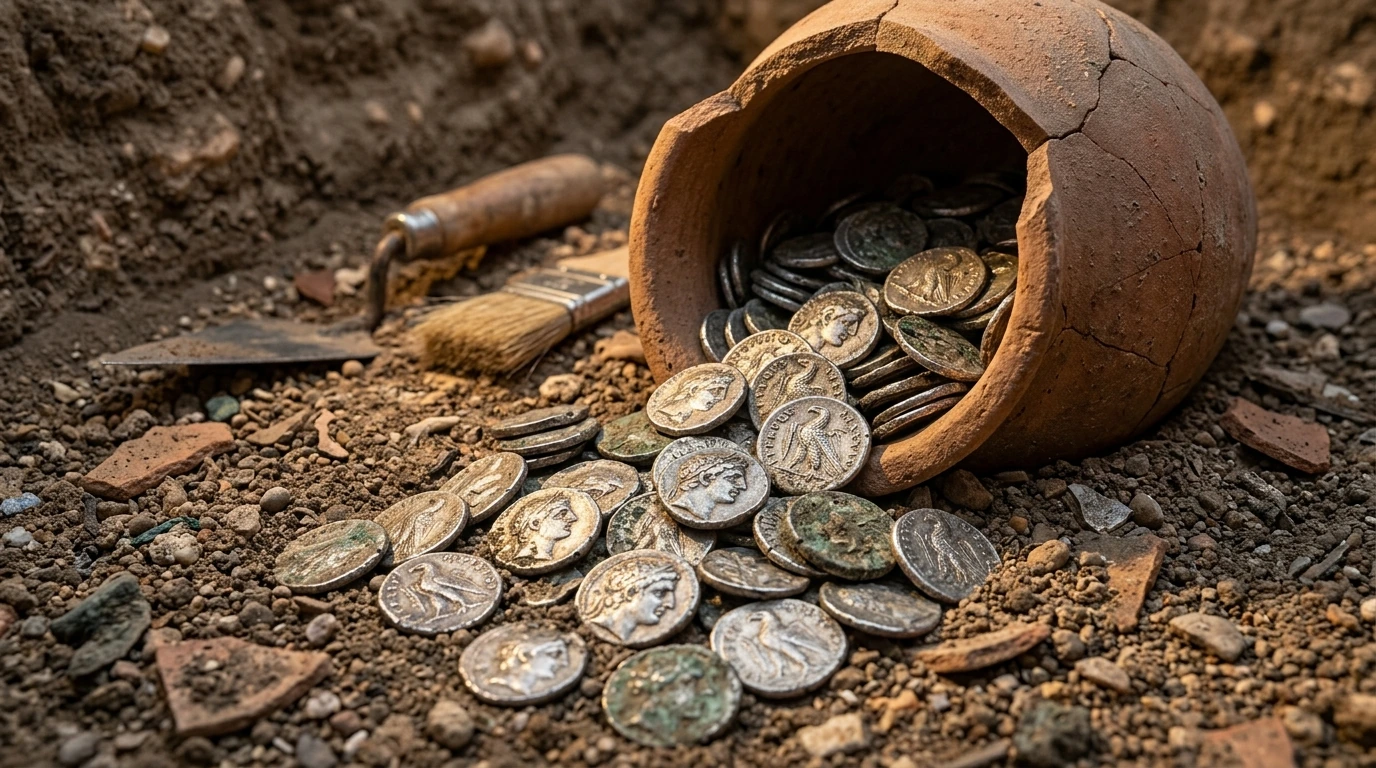
The Tyrian Shekel, Temple Tax, and the 30 Pieces of Silver: Numismatics, Matthew 26, and Judas’s Betrayal
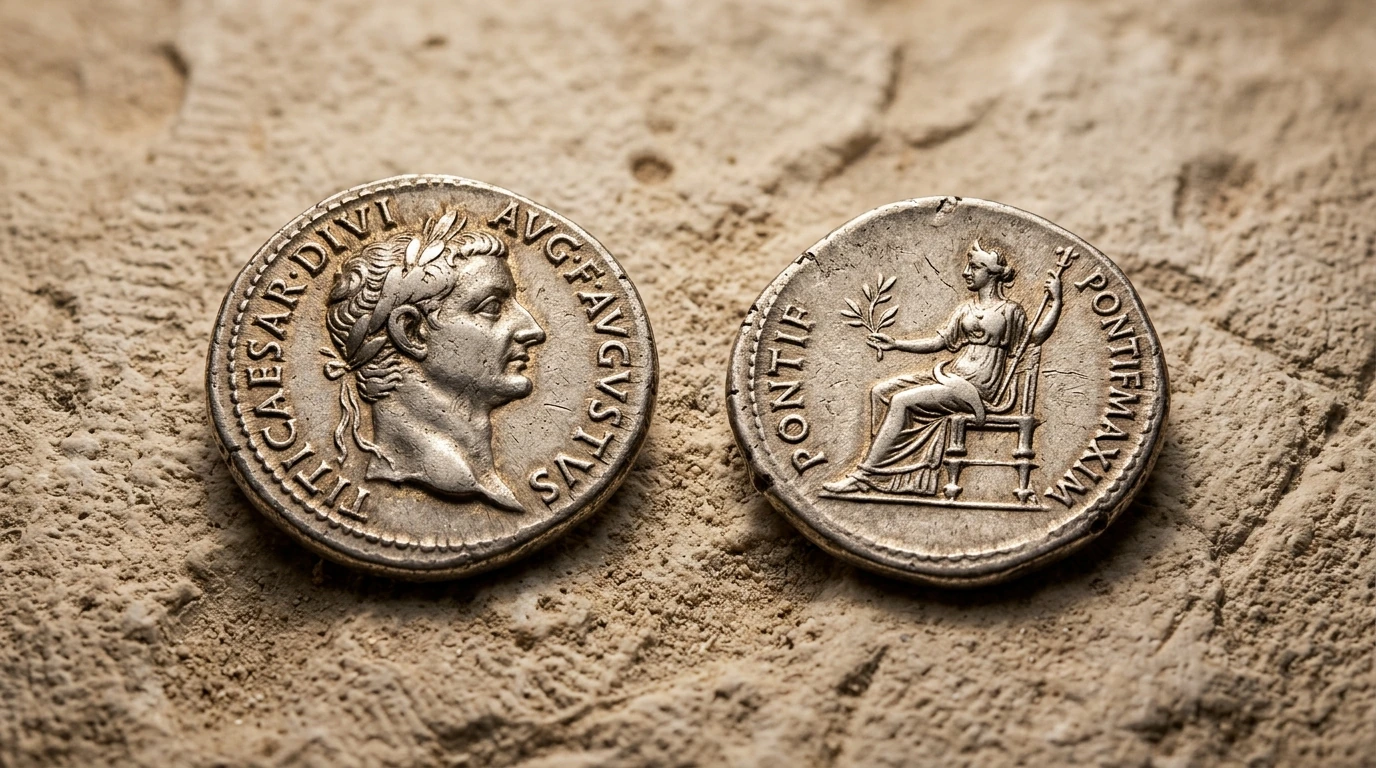
Render to Caesar: The Tribute Penny, Tiberius Denarius, and Mark 12 in Primary Roman Numismatic Sources
