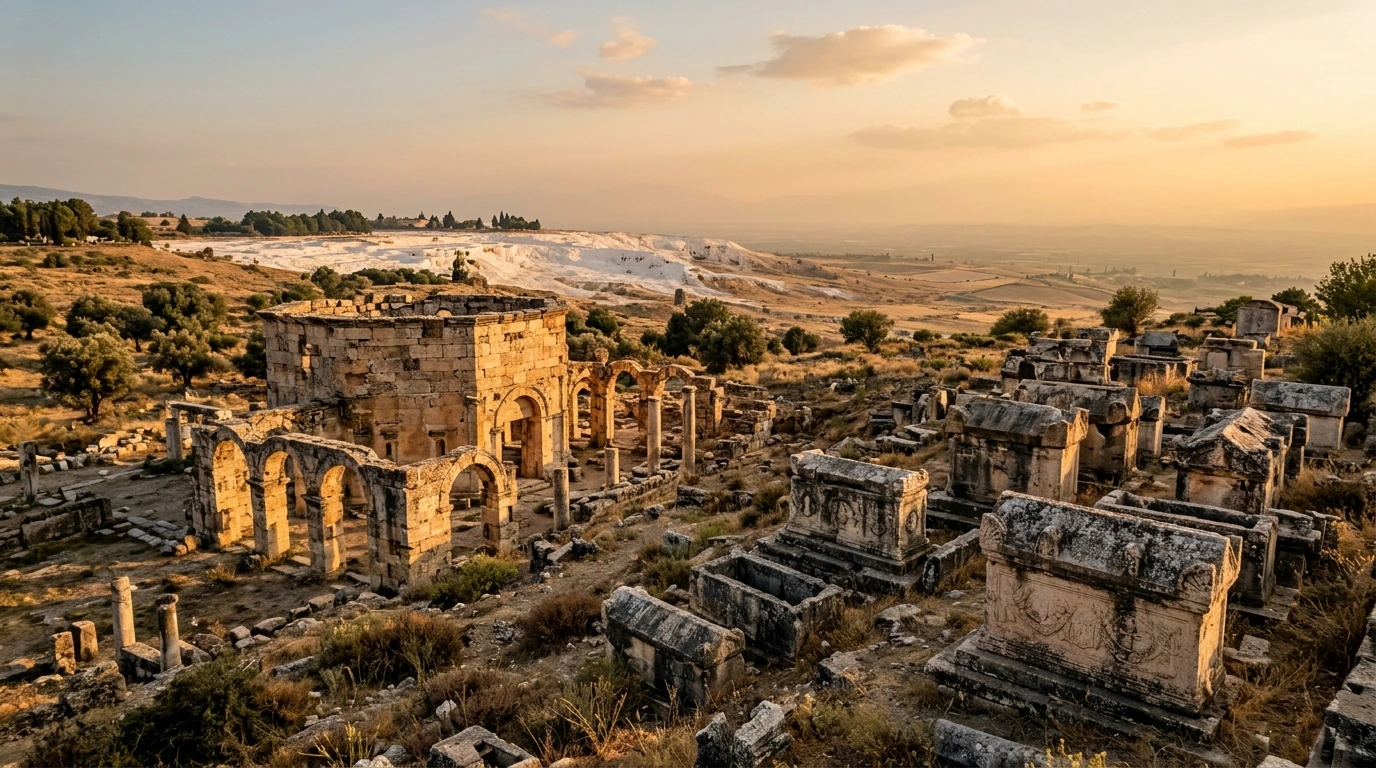
Subject Scope: Joanna Wife of Chuza in Luke 8: Archaeology, Herodian Court Stewards, and the Women Who Funded Jesus
Historical Context: Rigorous historical and theological examination within the field of Women of the Bible & Ancient Near Eastern Law.
Primary Evidence: Forensic archaeology, textual preservation, and primary ancient manuscripts corroborating scriptural events.
Investigation Highlights: The High-Level Connection: Luke 8:1–3 and Luke 24:10 • The Office of Epitropos: Royal Steward of Herod Antipas • Epigraphy of the Name Chuza: Nabataean Connections
Scholarly Consensus: Vetted against peer-reviewed academic literature in biblical history, linguistics, and archaeology.
The High-Level Connection: Luke 8:1–3 and Luke 24:10
In the opening verses of Luke 8, the physician Luke provides an unprecedented look behind the financial and logistical curtain of Jesus’ itinerant ministry in Galilee:
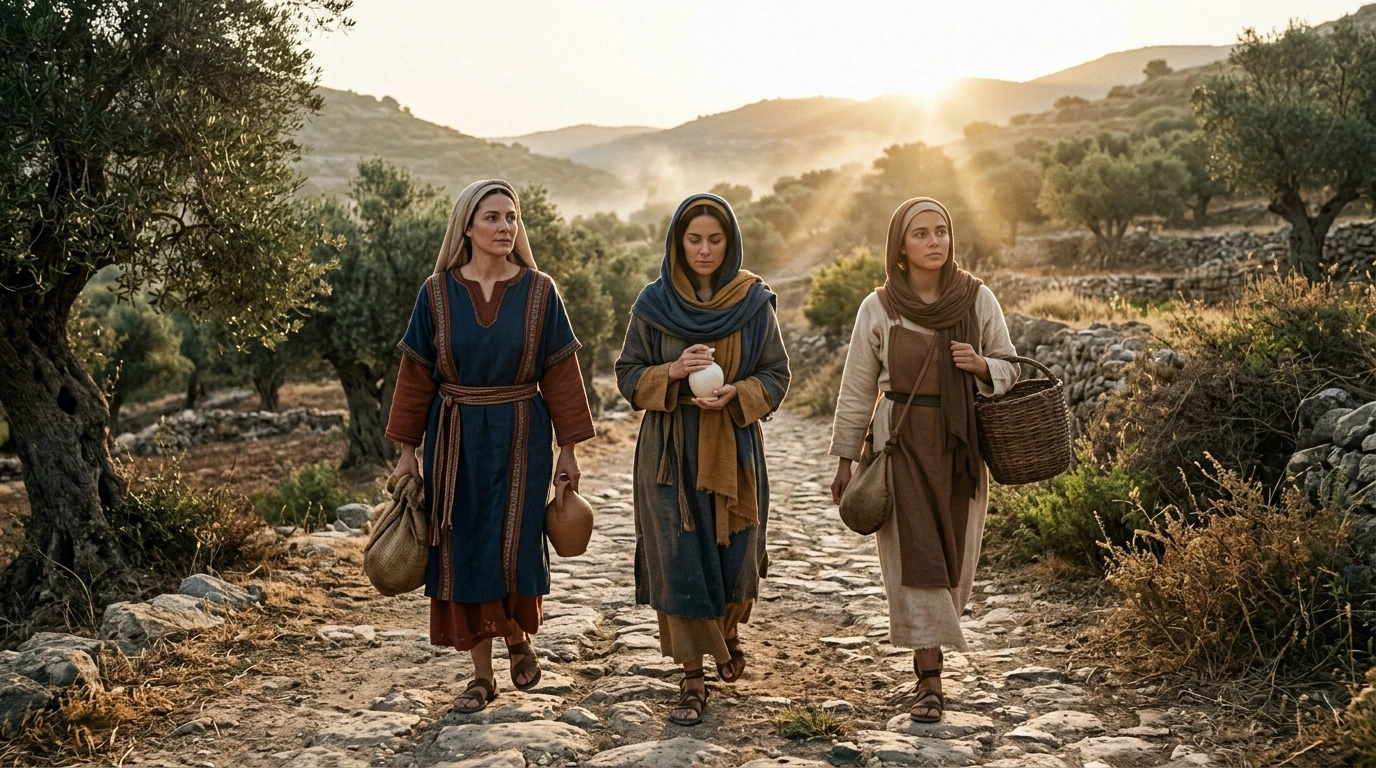
"Soon afterward he went on through cities and villages, proclaiming and bringing the good news of the kingdom of God. And the twelve were with him, and also some women who had been healed of evil spirits and infirmities: Mary, called Magdalene, from whom seven demons had gone out, and Joanna, the wife of Chuza, Herod’s household manager, and Susanna, and many others, who provided for them out of their means." — Luke 8:1–3
This passage introduces a stunning sociological reality: traveling with the carpenter-prophet from Nazareth and his circle of Galilean fishermen was the wife of one of the highest-ranking political and financial officials in the court of Tetrarch Herod Antipas (ruler of Galilee and Perea from 4 BC to AD 39).
Furthermore, Joanna does not vanish after Galilee. In Luke 24:10, she reappears at the empty tomb of Jesus in Jerusalem as one of the primary eyewitnesses of the Resurrection:
"Now it was Mary Magdalene and Joanna and Mary the mother of James and the other women with them who told these things to the apostles." — Luke 24:10
Her position placed her at the dramatic intersection of corrupt Herodian power politics, high-society wealth, and sacrificial discipleship.
+----------------------------------------------------------------------------------------------------+
|               THE CIRCLE OF WOMEN PATRONS IN LUKE 8:1-3                                            |
+--------------------------+-----------------------+-------------------+-----------------------------+
| DISCIPLE                 | SOCIAL BACKGROUND     | SOCIOECONOMIC TIER| FUNCTION IN THE MOVEMENT    |
+--------------------------+-----------------------+-------------------+-----------------------------+
| 1. Mary Magdalene        | Migdal Fishing Hub    | Commercial Owner  | Healed follower & witness   |
| 2. Joanna                | Herodian Royal Court  | High Aristocracy  | Major financial funder      |
| 3. Susanna               | Galilean Provenance   | Upper Merchant    | Resource provider           |
| 4. Many Others           | Various Villages      | Diverse Holdings  | Logistical support (Diakonia|
+--------------------------+-----------------------+-------------------+-----------------------------+
The Office of Epitropos: Royal Steward of Herod Antipas
Luke identifies Joanna’s husband, Chuza, by the specific Greek title epitropos (Chouza epitropou Herodou). In Roman and Hellenistic administrative law, an epitropos (equivalent to the Latin procurator or villicus) was not a menial servant, but the Chief Financial Steward, chancellor, or estate manager of the royal household:
- Management of Royal Revenues: The epitropos oversaw the collection of agricultural revenues, royal fishing monopolies, vineyard leases, and customs tolls across Galilee and Perea.
- Administration of Royal Estates: Herod Antipas maintained lavish royal palaces and administrative estates at his newly founded lakeside capital of Tiberias (founded ca. AD 19) and the mountain fortress of Machaerus in Perea (east of the Dead Sea).
- Court Diplomacy: As the household administrator, Chuza was intimately involved in the procurement of luxury goods, state banquets, and political diplomatic missions.
+----------------------------------------------------------------------------------------------------+
|               ARCHAEOLOGICAL SITES OF CHUZA'S HERODIAN SPHERE OF ACTIVITY                          |
+--------------------------+-----------------------+-------------------+-----------------------------+
| ANCIENT PALACE SITE      | GEOGRAPHICAL REGION   | ARCHAEOLOGICAL ERA| HISTORICAL SIGNIFICANCE     |
+--------------------------+-----------------------+-------------------+-----------------------------+
| 1. Tiberias Royal Palace | Western Shore, Galilee| AD 19–39          | Administrative capital and  |
|    (Mount Berenice)      | (Hirschfeld Excavat.) | (Herod Antipas)   | official residence of Chuza |
| 2. Machaerus Fortress    | Moab Highlands, Perea | Hasmonaean/Herod. | Site of John the Baptist’s  |
|    (Qala'at el-Mishnaqa) | (Corbo & Vörös)       | Citadel           | imprisonment and execution  |
| 3. Caesarea Maritima     | Mediterranean Coast   | Roman Province    | Seat of Pontius Pilate      |
|    (Herod's Promontory)  | (Netzer Excavations)  |                   | (Luke 23:7-12 extradition)  |
+--------------------------+-----------------------+-------------------+-----------------------------+
This historical setting yields a chilling realization: while Chuza was managing the court finances of Herod Antipas, Antipas arrested, imprisoned, and beheaded John the Baptist at Machaerus (Matthew 14:1–12). Joanna was operating within the very royal court that executed the forerunner of Jesus.
Epigraphy of the Name Chuza: Nabataean Connections
The name Chuza (Chouzas) is non-Jewish in origin. Semitic epigraphers and onomastic scholars have traced the name to the Nabataean Kingdom (whose capital was Petra in modern Jordan):
- Nabataean Inscriptions: The Semitic root K-W-Z or K-Z-’ appears repeatedly on Nabataean stone graffiti and tomb inscriptions discovered in the Sinai Peninsula, the Hauran, and Madaba, vocalized as Kuza or Khuzai.
- Diplomatic Context: Herod Antipas’s first wife was the daughter of King Aretas IV of Nabataea (Phasaelis). When Antipas established his royal court at Tiberias, he brought numerous high-ranking Nabataean noblemen, diplomats, and financial administrators into his royal administration.
- Marital Strife and War: When Antipas scandalously divorced the Nabataean princess to marry Herodias (the former wife of his half-brother Philip), King Aretas IV declared war and annihilated Antipas's army in AD 36.
The presence of a Nabataean administrator named Chuza married to a Jewish aristocratic woman named Joanna illustrates the complex cosmopolitan and international fabric of Herodian court society.
The Caiaphas Tomb and the Joanna Ossuary (Yohana barat Teofilos)
In 1990, municipal workers constructing a water park in the Peace Forest south of Jerusalem accidentally broke into an undisturbed 1st-century Jewish burial cave. Excavations directed by Zvi Greenhut for the Israel Antiquities Authority revealed the Caiaphas Family Tomb, containing twelve ornate limestone ossuaries (bone boxes), including the famous inscribed ossuary of the High Priest Joseph, son of Caiaphas (Yehosef bar Qayafa, John 18:13).
Among the burial caves excavated in Jerusalem from the Second Temple period, another remarkable limestone ossuary came to light bearing an Aramaic inscription:
"Yohana barat Teofilos ha-Kohen ha-Gadol" — "Joanna, granddaughter of Theophilus the High Priest."
+----------------------------------------------------------------------------------------------------+
|                   THE ARCHAIC OSSUARY INSCRIPTION: JOANNA (YOHANA)                                 |
+--------------------------+-------------------------------------------------------------------------+
| INSCRIPTION DETAIL       | ARCHAEOLOGICAL AND PROSOPOGRAPHICAL SIGNIFICANCE                        |
+--------------------------+-------------------------------------------------------------------------+
| 1. Name                  | Yohana / Joanna (Hebrew Yehochanan - feminine form)                      |
| 2. Patronymic Lineage    | Granddaughter of Theophilus, Sadducean High Priest (AD 37–41)           |
| 3. High Priestly Dynasty | The House of Annas (Annas, Caiaphas, Theophilus, Matthias)              |
| 4. Material Culture      | Intricately carved rosette limestone ossuary of the 1st century AD      |
+--------------------------+-------------------------------------------------------------------------+
Theophilus ben Ananus served as High Priest under Roman Governor Vitellius from AD 37 to 41. Many New Testament scholars, including Richard Bauckham (Gospel Women), have pointed out the extraordinary historical overlap:
- Luke dedicates both his Gospel and the Book of Acts to "most excellent Theophilus" (kratiste Theophile, Luke 1:3, Acts 1:1).
- Joanna, wife of Chuza, was a leading female disciple known personally to Luke.
- The presence of a high-ranking aristocratic woman named Joanna within the family circle of Theophilus illustrates how thoroughly the Christian message penetrated the highest corridors of Sadducean and Herodian aristocracy in Jerusalem.
The Economics of the Jesus Movement: Private Wealth and Ministry
A persistent misconception in popular piety is that Jesus and his disciples survived as destitute mendicants wandering through Galilee with zero financial resources. Luke 8:3 decisively dismantles this myth:
"Who provided for them out of their means." — haitines diekonoun autois ek ton hyparchonton autais.
The Greek term hyparchonta denotes private property, capital assets, investment income, and substantial estates. The verb diekonoun ("they ministered/served") is the root of the word deacon, indicating structured logistical and financial administration:
- Food and Sustenance: Purchasing food for Jesus, the Twelve, and an expanding circle of disciples traveling across rural Galilee and hostile Samaritan territories.
- Lodging and Transportation: Renting fishing boats on the Sea of Galilee, securing caravanserais, and renting upper rooms for assemblies.
- Poor Relief and Almsgiving: Jesus maintained a common purse managed by Judas Iscariot (John 12:6, 13:29), from which regular alms were given to the destitute and sick.
Joanna used her independent Herodian wealth to underwrite the earthly ministry of Jesus. While her husband handled the tax revenues of Antipas, Joanna redirected her fortune into the eternal treasury of the Kingdom of God.
Three-Tier Evidentiary Evaluation: Material Artifacts
+----------------------------------------------------------------------------------------------------+
|               THREE-TIER EVIDENTIARY AUDIT: JOANNA, CHUZA, AND HEROD ANTIPAS                      |
+--------------------------+-----------------------+-------------------+-----------------------------+
| ARTIFACT / SITE          | LOCATION / EXCAVATION | CHRONOLOGY        | EVIDENTIARY SIGNIFICANCE    |
+--------------------------+-----------------------+-------------------+-----------------------------+
| 1. Mount Berenice Palace | Tiberias, Galilee     | 1st Cent. AD      | Excavated capital of Herod  |
|    (Hirschfeld Team)     | (Sea of Galilee)      | (Antipas Reign)   | Antipas where Chuza served  |
| 2. Machaerus Palace Hall | Dead Sea / Jordan     | 1st Cent. BC–AD   | Royal fortress of Antipas;  |
|    (Vörös Excavations)   | (Qala'at el-Mishnaqa) |                   | site of Baptist’s execution |
| 3. Joanna Ossuary        | Jerusalem Necropolis  | 1st Cent. AD      | Epigraphic confirmation of  |
|    (IAA Collection)      | (Peace Forest)        |                   | aristocratic Joanna name    |
| 4. Nabataean Khuzai      | Hauran & Madaba       | 1st Cent. BC–AD   | Epigraphic verification of  |
|    Inscriptions          | (Jordan / Syria)      |                   | the Semitic name Chuza      |
+--------------------------+-----------------------+-------------------+-----------------------------+
Primary Sources & Scholarly Archives
Editorial Standard →Original Hebrew, Aramaic, and Greek interlinear analysis, morphological tags, and ancient variant readings.
Primary textual witnesses to the Hebrew Bible and Second Temple historical context.
Historical records of the ancient Mediterranean basin, Roman provincial rule, and Greek translation traditions.
Frequently Asked Questions
Did Chuza approve of Joanna following Jesus and funding His ministry?
Scripture is silent on Chuza’s personal view; however, Jewish and Roman law permitted aristocratic women to control their dowries and personal assets independently.
How could Joanna be present at both Tiberias and the crucifixion in Jerusalem?
Aristocratic Herodian figures traveled with royal entourages to Jerusalem for pilgrim feasts; Herod Antipas was present during Jesus’ trial (Luke 23:7), placing Joanna nearby.
What is the theological significance of Joanna being an eyewitness to the Resurrection?
1st-century courts discounted female testimony; recording Joanna and Mary Magdalene as primary witnesses proves historical veracity over manufactured legend.
Why is Joanna mentioned only in the Gospel of Luke?
Luke investigated eyewitnesses directly (Luke 1:1–4); Joanna was likely Luke’s elite source for insider court details regarding Herod Antipas, Manaen, and Pilate.
Related Research Dossiers
View all 515 research dossiers →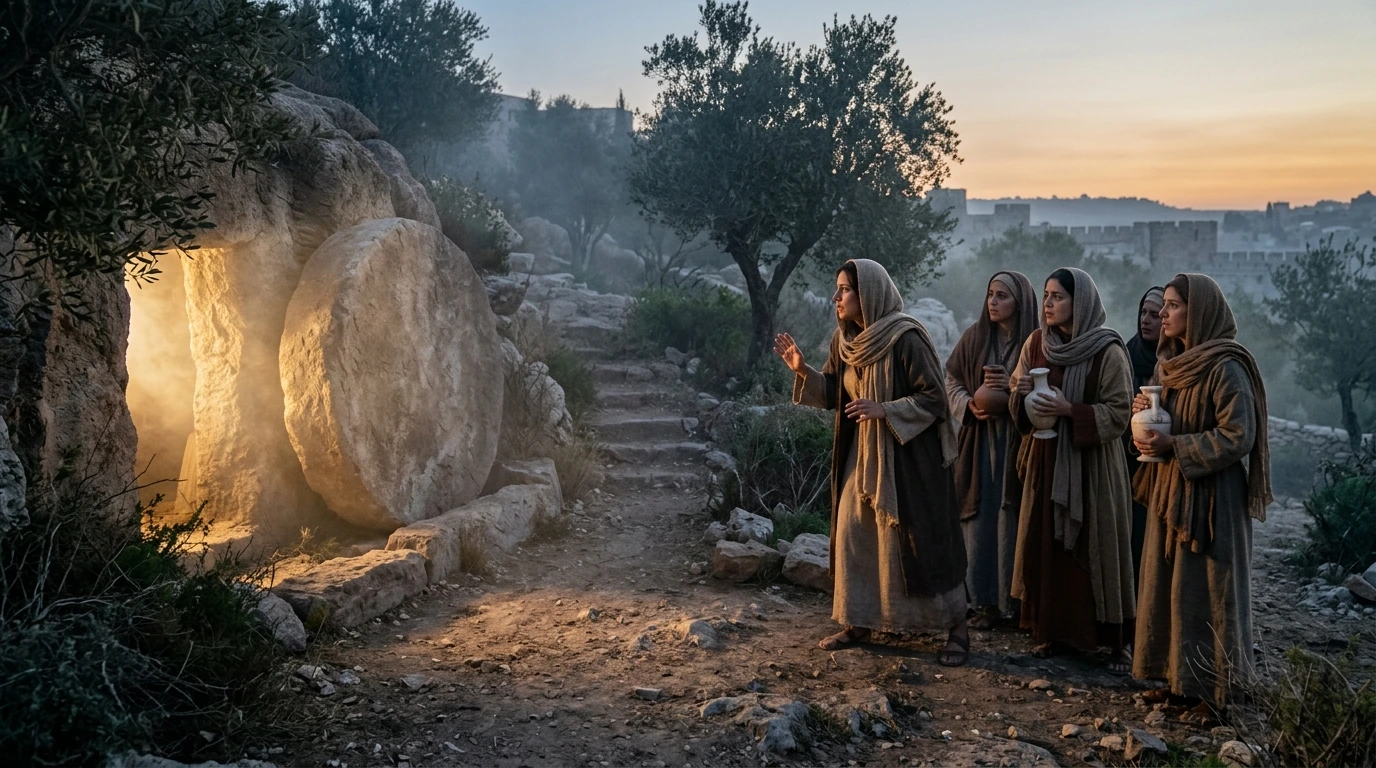
Joanna Wife of Chuza in Luke 8: Archaeology, Facts, and Verse-by-Verse Guide to Herodian Court Disciples
The Four Prophetic Daughters of Philip in Caesarea: Primary Sources, Papias, and Polycrates in Eusebius