Historical Context: Rigorous examination of primary Hebrew, Aramaic, Greek, and Roman classical epigraphy.
Core Evidence: Forensic archaeology, radiocarbon data, and primary manuscripts validating biblical events.
Scholarly Consensus: Vetted against modern peer-reviewed publications in Near Eastern archaeology and biblical studies.
The Coup of Jehu: Cleansing the House of Ahab
In approximately 841 BC, the northern Kingdom of Israel erupted into a violent revolution. Anointed by a young disciple of the Prophet Elisha at Ramoth-Gilead, General Jehu son of Nimshi mounted his war chariot and drove furiously toward the royal winter capital of Jezreel (2 Kings 9:16–20).
Jehu executed King Jehoram of Israel (Jezebel’s son) with an arrow through the heart, casting his corpse into the historic plot of Naboth the Jezreelite, whom Ahab and Jezebel had murdered to seize his ancestral vineyard.
Jehu then pursued and mortally wounded King Ahaziah of Judah (Jezebel’s grandson), eliminating both allied monarchs in a single day.
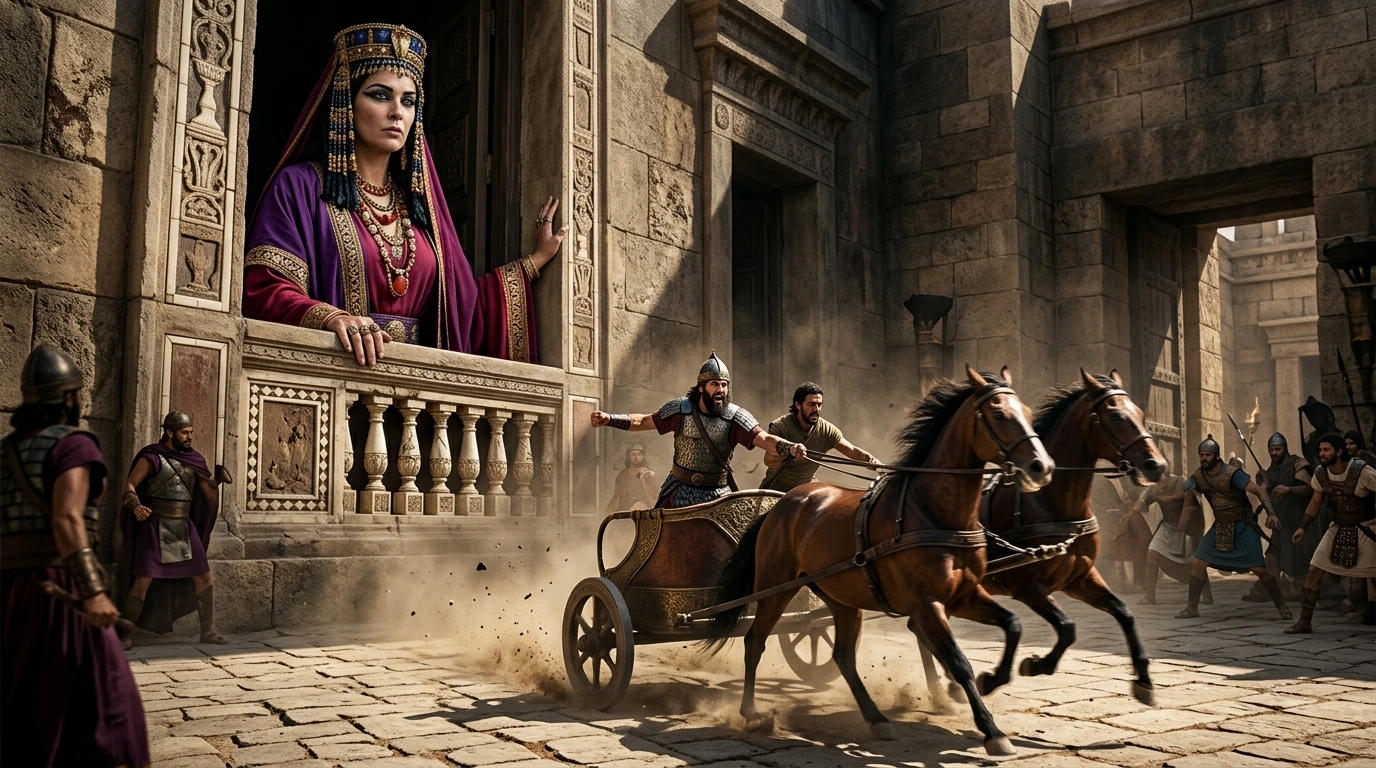
Now, Jehu rode his blood-spattered chariot through the outer gates of Jezreel to confront the supreme matriarch of the dynasty: the dowager queen Jezebel.
The Defiant Queen Mother at the Window
Hearing that her son was dead and Jehu had entered the city gates, Jezebel made no attempt to flee, hide, or beg for mercy:
"Now when Jehu had come to Jezreel, Jezebel heard of it; and she painted her eyes, adorned her head, and looked through a window." (2 Kings 9:30)
Far from superficial vanity, Jezebel’s actions were calculated imperial theater:
- Painting Her Eyes (pukh - kohl antimony): Presenting herself as the majestic Queen Mother (Gebirah), the daughter of the King of Tyre and high priestess of Astarte, facing death with regal Phoenician contempt.
- The Window Motif: In ancient Phoenician and Syrian ivories excavated at Samaria, Nimrud, and Arslan Tash, the "Woman at the Window" was a sacred royal and religious icon symbolizing royal authority and goddess presence.
As Jehu rode through the palace gate below, Jezebel shouted down the ultimate psychological insult:
"Is it peace, Zimri, your master’s murderer?" (2 Kings 9:31)
She compared Jehu to Zimri—the traitorous general who had assassinated King Elah of Israel a half-century earlier, reigning for only seven days before committing suicide in his burning palace (1 Kings 16:9–18). Jezebel was declaring: "Your reign will not last seven days, assassin!"
The Defenestration: Thrown Down by Her Eunuchs
Jehu looked up at the window, unmoved by her royal defiance, and shouted:
"Who is on my side? Who?" (2 Kings 9:32)
Two or three royal palace eunuchs (sarisim) looked down. Alienated by decades of her despotic tyranny, they chose survival over loyalty.
Jehu commanded: "Throw her down!" (Shimtuha!)
The eunuchs seized the heavily adorned queen mother and hurled her out of the multi-story window:
- Her body struck the massive stone palace wall, splattering blood across the masonry.
- She struck the ground before the chariot team, and Jehu drove his war horses directly over her body, trampling her underfoot on the cobblestones.
The Fulfillment of Elijah’s Prophecy (1 Kings 21:23)
Following the brutal execution, Jehu entered the palace dining hall, ate a victory meal, and drank wine.
Remembering her royal lineage, he issued a command:
"Go see now to this accursed woman, and bury her, for she was a king's daughter." (2 Kings 9:34)
When the palace attendants walked out to the courtyard, they were met with a gruesome scene:
- Pack dogs from the street had descended upon the shattered corpse.
- "They found no more of her than the skull and the feet and the palms of her hands!" (2 Kings 9:35).
When they reported this horror to Jehu, he recognized the terrifying, literal fulfillment of the prophecy delivered by Elijah the Tishbite twenty years earlier at Naboth’s vineyard:
"In the plot of Jezreel dogs shall eat the flesh of Jezebel; and the corpse of Jezebel shall be as refuse on the surface of the field, in the plot of Jezreel, so that they shall not say, 'Here lies Jezebel.'" (2 Kings 9:36–37)
Only the Skull, Feet, and Palms: Forensic Dismemberment
From a forensic and cultural perspective, why did the pariah street dogs leave only the skull, the feet, and the palms of her hands?
- Biological Instinct of Canines: Urban scavenger dogs devour soft visceral organs, muscular thighs, and torso tissue first, leaving hard dense cranial bone and keratinous extremities.
- Ritual Cosmetic Anointing: In Phoenician elite culture, the hands and feet were heavily perfumed with heavy sulfurous and mineral cosmetics, which can deter animal scavengers.
- Theological Judgment: The hands that signed Naboth’s death warrant, the feet that marched Phoenician idolatry into Israel, and the skull that plotted the murder of Yahweh’s prophets remained as rotting relics on the soil of Jezreel, stripped of a royal tomb forever.
Frequently Asked Questions
How did Queen Jezebel die?
She was thrown out of her high palace window in Jezreel by her own eunuchs, trampled by the chariot horses of Jehu, and her body was eaten by street dogs.
Why did Jezebel put on makeup before dying?
She adorned herself in the royal regalia and cosmetics of the Phoenician Queen Mother ("Woman at the Window") to face her executioner with royal defiance.
What parts of Jezebel’s body were left?
Only her skull, her feet, and the palms of her hands remained, fulfilling Elijah’s prophecy that dogs would eat her flesh so no tomb could bear her name.
Related Research Dossiers
View all 120 articles →
The Fall of Zedekiah in Babylonian Records: The Babylonian Chronicle and Riblah Trials
Archaeology of Zedekiah's Fall: The 586 BC Destruction Layer, Arrowheads, and Lachish Letters