Historical Context: Rigorous examination of primary Hebrew, Aramaic, Greek, and Roman classical epigraphy.
Core Evidence: Forensic archaeology, radiocarbon data, and primary manuscripts validating biblical events.
Scholarly Consensus: Vetted against modern peer-reviewed publications in Near Eastern archaeology and biblical studies.
The Topography of Tel Jezreel: The Royal Winter Capital
In the biblical narrative of 1 and 2 Kings, the Omride dynasty operated two distinct capitals:
- Samaria: The fortified mountain acropolis functioning as the permanent administrative and economic capital.
- Jezreel (Tel Jezreel): The royal winter palace and military staging base overlooking the fertile Jezreel Valley.
Located on a prominent limestone knoll at the foot of Mount Gilboa, Tel Jezreel possessed commanding views:
- Looking north across the valley toward Mount Moreh and the Hill of Shunem.
- Looking east down the Harod Valley toward Beth-Shean and the Jordan fords.
It was from this elevated watchtower that the royal sentry saw General Jehu driving his chariot furiously from the Jordan valley (2 Kings 9:17).
The British-Israeli Excavations (1990–1996)
Between 1990 and 1996, a joint archaeological expedition directed by Prof. David Ussishkin (Tel Aviv University) and John Woodhead (British School of Archaeology in Jerusalem) conducted large-scale scientific excavations at Tel Jezreel.
What they uncovered stunned historians:
- A massive, rectangular royal military compound measuring 300 meters long by 150 meters wide (covering approximately 11 acres).
- Constructed with uniform, monumental casemate fortification walls and four corner towers built of massive ashlar limestone blocks.
- Defended by a rock-cut dry moat measuring up to 12 meters wide and 6 meters deep, carved directly into bedrock around the compound perimeter.
Pottery analysis and stratigraphic carbon-14 dating proved that this monumental royal complex was constructed during the ninth century BC by the Omride dynasty (Omri, Ahab, Jehoram)—the exact era of Jezebel!
The Discovery of Naboth’s Vineyard (2013)
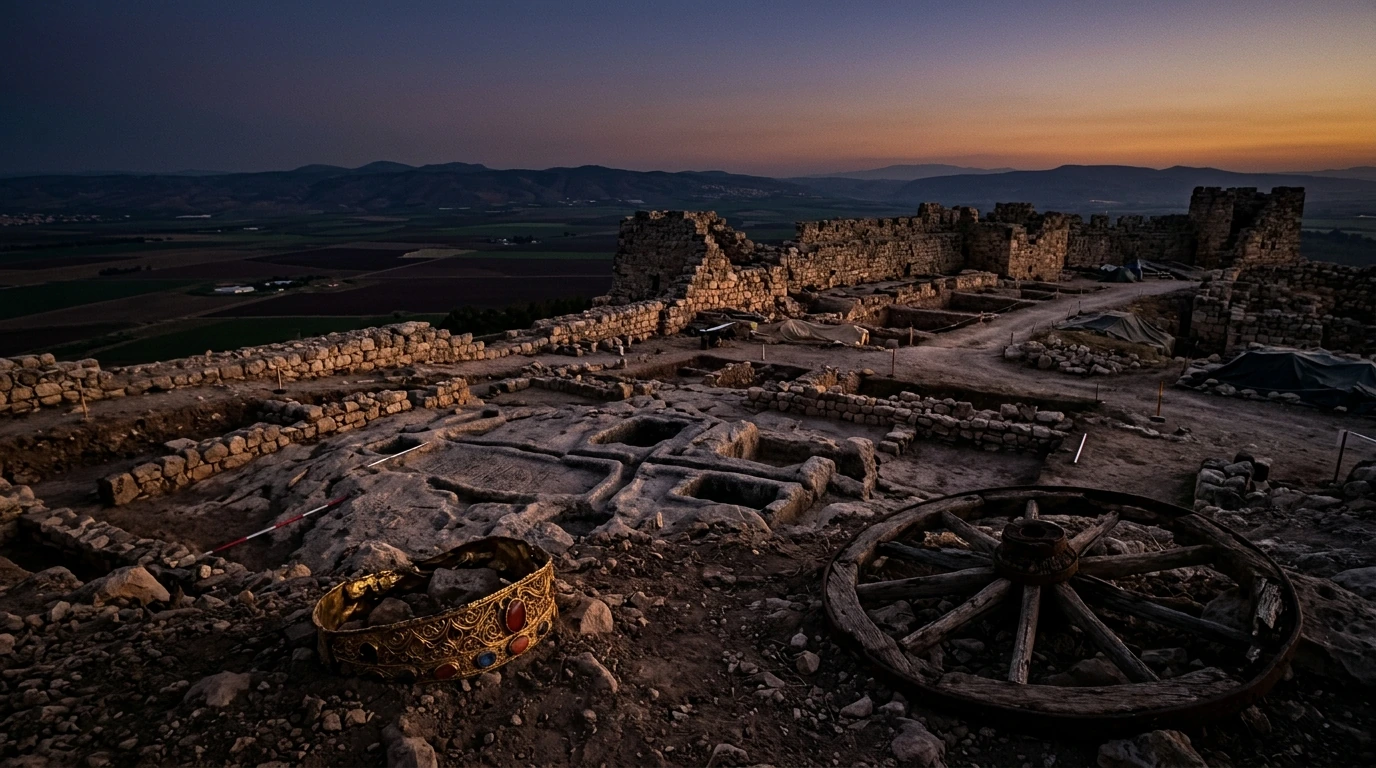
In 2013, the Jezreel Expedition directed by Dr. Norma Franklin (University of Haifa) conducted laser scanning (LiDAR) and agricultural excavations in the foothills immediately east of the royal compound.
They made a sensational agricultural discovery:
- A complex of rock-cut Iron Age agricultural installations, including a large, sophisticated winery and winepress:
- A central treading floor measuring 3.2 by 3.2 meters cut into solid limestone bedrock.
- Deep fermentation vats, holding basins, and stone channels.
- Soil analysis by geoarchaeologists confirmed that the terrace was planted with grape vines (Vitis vinifera) during the Iron Age II period.
Located directly adjacent to the royal palace ramparts, this winery is the only Iron Age vineyard installation ever discovered at Jezreel—matching the exact location of Naboth’s Vineyard (1 Kings 21:1: "Naboth the Jezreelite had a vineyard which was in Jezreel, next to the palace of Ahab king of Samaria").
The Glacis, Moat, and Multi-Story Gatehouses
The architectural layout explains the exact mechanics of Jezebel’s defenestration:
- The palace apartments were constructed atop multi-story ashlar towers integrated into the city gate complex.
- The outer wall dropped precipitously to a stone-paved courtyard and glacis rampart below.
When the eunuchs threw Jezebel out of the second-story palace window, her fall onto the stone pavement below would have resulted in immediate, catastrophic skeletal trauma.
The Violent Destruction Horizon of Jezreel
Excavations revealed that the monumental Omride compound at Jezreel did not evolve over centuries; it had a brief, violent lifespan:
- The palace compound was heavily destroyed and burned during the late ninth century BC.
- Hundreds of broken Iron Age storage jars, shattered pottery, and ash layers were sealed beneath fallen wall stones.
Whether destroyed during Jehu’s bloody revolt in 841 BC or during subsequent Aramean invasions by King Hazael of Damascus, the ruins of Jezreel confirm that the bloody end of the Omride dynasty recorded in 2 Kings took place in a real palace whose stone foundations stand today.
Frequently Asked Questions
Where was Tel Jezreel located?
Tel Jezreel is located at the foot of Mount Gilboa in northern Israel, serving as the royal winter residence of King Ahab and Queen Jezebel.
Did archaeologists find Naboth’s Vineyard?
In 2013, archaeologists at Jezreel excavated an Iron Age rock-cut winery and grape treading installation located immediately adjacent to Ahab’s palace compound.
Who excavated the royal palace of Jezreel?
Prof. David Ussishkin and John Woodhead excavated the massive 11-acre Omride palace compound between 1990 and 1996.
Related Research Dossiers
View all 120 articles →
The Fall of Zedekiah in Babylonian Records: The Babylonian Chronicle and Riblah Trials
Archaeology of Zedekiah's Fall: The 586 BC Destruction Layer, Arrowheads, and Lachish Letters