Historical Context: Rigorous examination of primary Hebrew, Aramaic, Greek, and Roman classical epigraphy.
Core Evidence: Forensic archaeology, radiocarbon data, and primary manuscripts validating biblical events.
Scholarly Consensus: Vetted against modern peer-reviewed publications in Near Eastern archaeology and biblical studies.
The Geopolitical Crisis of the Jezreel Valley
The military campaign that destroyed King Saul was not a localized border raid; it was a grand strategic offensive launched by the Philistine Pentapolis (Gaza, Ashkelon, Ashdod, Ekron, and Gath) to split the fledgling Kingdom of Israel in two.
By marching north through the coastal plain and pushing east into the Jezreel Valley—encamping at Shunem (1 Samuel 28:4)—the Philistines accomplished two vital objectives:
- They seized control of the international trade highway (Via Maris / The Way of the Sea), severing Israel's trade routes.
- They drove a physical wedge between the northern Galilean tribes (Zebulun, Naphtali, Asher, Issachar) and the central/southern tribes (Ephraim, Manasseh, Benjamin, Judah).
Saul was forced to assemble his tribal militia on the heights of Mount Gilboa, overlooking the valley floor.
Philistine Technological Dominance: Iron Metallurgy Monopoly
The battle of Mount Gilboa highlights the technological disparity between the Philistines and Israelites during the Iron Age I transition (c. 1050–1000 BC).
1 Samuel 13:19–22 documents an extraordinary economic and military monopoly:
"Now there was no blacksmith to be found throughout all the land of Israel, for the Philistines said, 'Lest the Hebrews make swords or spears.' But all the Israelites would go down to the Philistines to sharpen each man’s plowshare, his mattock, his ax, and his sickle... So it came about, on the day of battle, that there was neither sword nor spear found in the hand of any of the people."
Archaeometallurgical excavations at Philistine sites (Tel Qasile, Tel Miqne/Ekron, Ashdod) confirm that the Philistines possessed advanced carburized iron-smelting technology brought from their Aegean/Mycenaean origins:
- Philistine warriors fielded heavy iron-tipped spears, double-edged iron broadswords, and composite bows.
- Saul’s tribal army fought largely with bronze weapons, wooden clubs, ox-goads, and slingstones.
The Tactical Trap of Mount Gilboa
Saul recognized his tactical disadvantage. In the open plains of Jezreel, Philistine iron chariots were lethal.
Therefore, Saul drew his army up into the rocky, steep terrain of Mount Gilboa (rising 1,600 feet above the valley floor), hoping the rugged limestone boulders would neutralize the enemy chariots.
However, the Philistines adjusted their tactics:
- They deployed elite corps of composite archers (morim ba-qashet, 1 Samuel 31:3).
- Firing upward from protected saddles, the archers rained deadly arrow storms into the exposed Israelite ranks.
- Trapped against the sheer southern cliffs of the mountain, the Israelite line collapsed into a chaotic rout.
Necromancy at En-dor: Ancient Canaanite Underworld Cults
On the night before the catastrophe, Saul committed an act of supreme desperation: slipping past Philistine patrols to visit the Medium (ba‘alat ov) at En-dor (1 Samuel 28:7).
Archaeology illuminates this ancient practice:
- En-dor (Khirbet Safsafa): Located on the northern slope of the Hill of Moreh, honeycombed with natural limestone caves historically associated with underworld spiritist shrines.
- The Hebrew term Ov (אוֹב) refers to a ritual pit dug into the earth to communicate with ancestral subterranean spirits (chthonic deities), a practice strictly banned in Leviticus 20:27.
When the spirit of Samuel rose, he offered Saul no ritual appeasement—only the solemn announcement of divine abandonment.
The Decapitation and Desecration at Beth-Shean
When Philistine looters stripped the corpses on Gilboa the following morning, they discovered the bodies of Saul and his sons:
- They severed Saul’s head and sent it on a triumphal tour throughout Philistia to proclaim the victory in the temples of their idols.
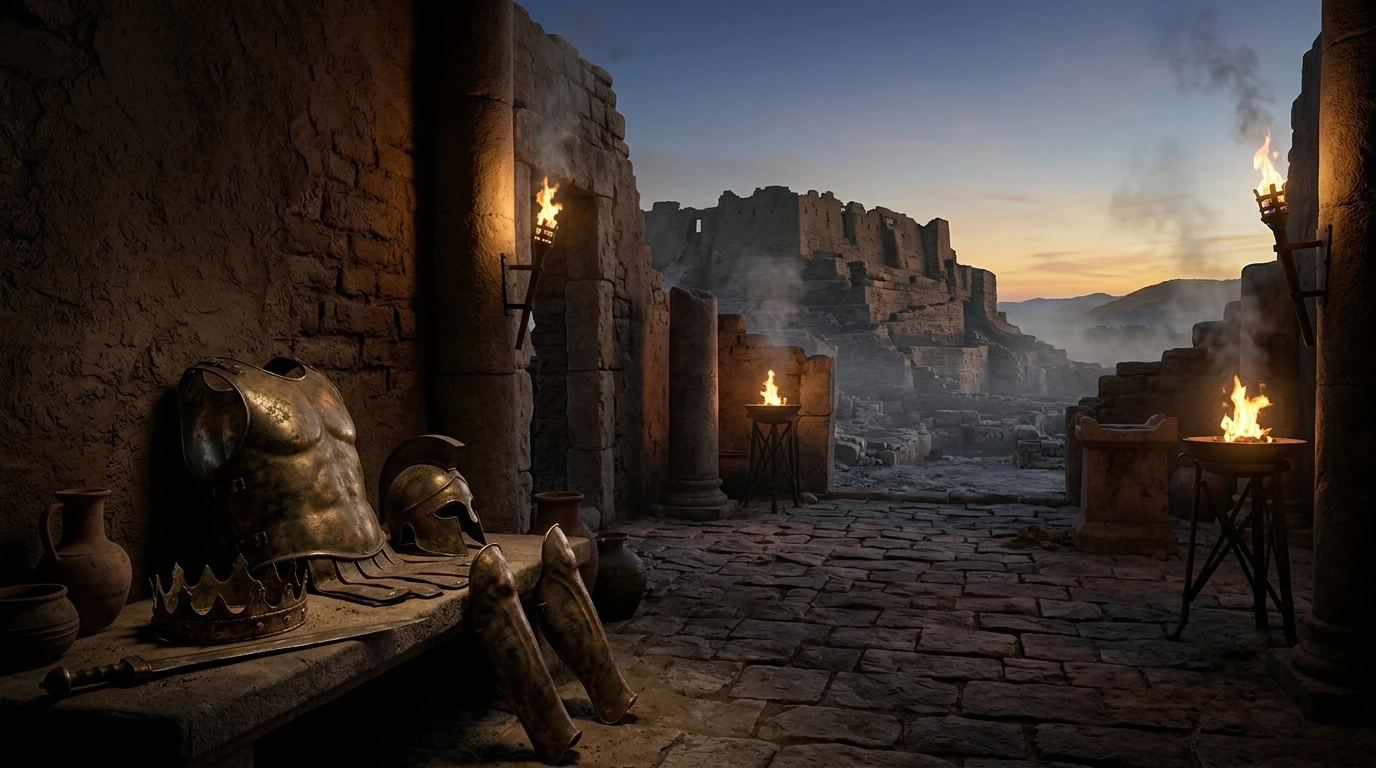
- They stripped Saul’s royal armor and dedicated it in the Temple of Ashtoreth (Astarte).
- They impaled Saul’s headless torso and the bodies of his sons upon the colossal defensive walls of Beth-Shean, exposing them to the scorching Jordan Valley sun.
This ultimate pagan humiliation set the stage for one of the most heroic rescue missions in biblical history.
Frequently Asked Questions
Why did the Philistines attack at the Jezreel Valley?
To control the Via Maris trade highway and split the Kingdom of Israel into two disconnected halves.
What military advantage did the Philistines possess over Saul?
The Philistines had a monopoly on iron smelting technology, deploying iron weapons, chariots, and elite archers against Israel’s bronze-equipped militia.
Where was En-dor located?
En-dor was located on the northern slopes of the Hill of Moreh in Lower Galilee, near modern Ein Dor, honeycombed with caves used for ancient necromancy.
Related Research Dossiers
View all 120 articles →
The Fall of Zedekiah in Babylonian Records: The Babylonian Chronicle and Riblah Trials
Archaeology of Zedekiah's Fall: The 586 BC Destruction Layer, Arrowheads, and Lachish Letters