Historical Context: Rigorous examination of primary Hebrew, Aramaic, Greek, and Roman classical epigraphy.
Core Evidence: Forensic archaeology, radiocarbon data, and primary manuscripts validating biblical events.
Scholarly Consensus: Vetted against modern peer-reviewed publications in Near Eastern archaeology and biblical studies.
Tel Beth-Shean: The Fortress Overlooking the Jordan
Following the disaster on Mount Gilboa, the focal point of the narrative shifts four miles eastward to Beth-Shean (1 Samuel 31:10–12).
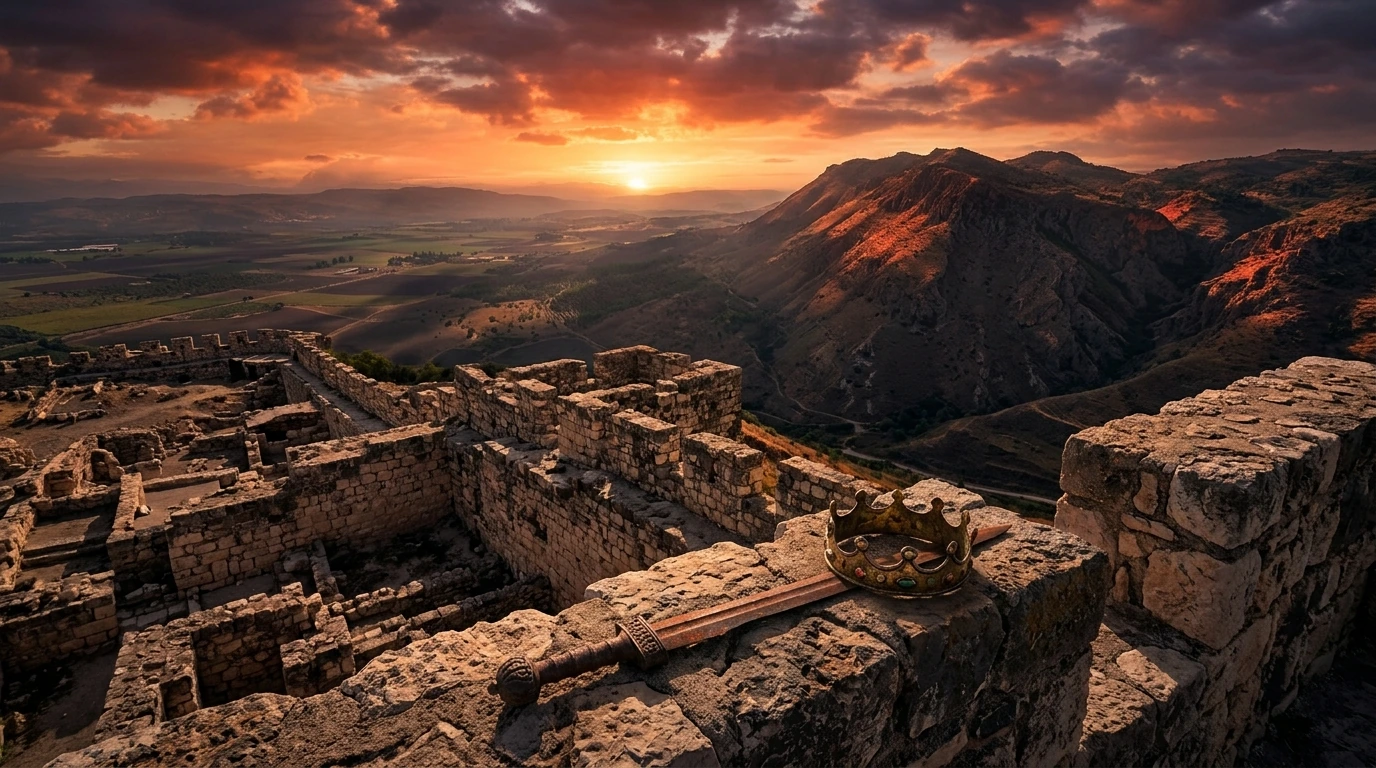
Towering over the junction of the Jezreel Valley and the Jordan Rift, Tel Beth-Shean is one of the most formidable natural mounds in the Middle East:
- Rising over 120 feet above the Harod River valley, the tell controlled all east-west military movements between Transjordan and the Mediterranean.
- For centuries during the Late Bronze Age, Beth-Shean served as the primary administrative garrison of imperial Egypt in Canaan.
- Following the collapse of the Egyptian Empire around 1150 BC, Sea Peoples/Philistine mercenary garrisons occupied the fortress, transforming it into a major Philistine forward base.
The University of Pennsylvania Excavations (1921–1933)
Between 1921 and 1933, the University of Pennsylvania Museum directed monumental excavations at Tel Beth-Shean (later refined by Prof. Amihai Mazar of the Hebrew University in the 1990s).
The excavators cleared Stratum V and Stratum VI, uncovering the exact Iron Age I fortified citadel described in 1 Samuel 31:
- Massive mud-brick fortification walls resting on heavy basalt foundations.
- A central public square directly inside the city gate where triumphal military displays were held.
- Evidence that the outer walls of the fortress were visible for miles across the Jordan plain.
The Twin Temples: Dagon and Ashtoreth Uncovered
In 1 Samuel 31:10 and 1 Chronicles 10:10, two distinct temples are mentioned:
- 1 Samuel 31:10 states they put Saul’s armor in the Temple of Ashtoreth.
- 1 Chronicles 10:10 states they fastened Saul’s severed head in the Temple of Dagon.
Penn excavators unearthed two massive Canaanite-Philistine sanctuary complexes standing side by side in Stratum V:
- The Northern Temple: Dedicated to the female fertility deity Ashtoreth (Astarte), yielding bronze cultic figurines, snake-ornamented ceramic incense stands, and offering bowls.
- The Southern Temple: Dedicated to the male grain/storm deity Dagon, featuring a central hall flanked by two monumental column bases.
Finding these twin sanctuaries in the exact Iron Age I stratum confirmed the dual biblical record with archaeological perfection.
Philistine Anthropoid Clay Coffins
In the Northern Cemetery of Beth-Shean, excavators made another extraordinary discovery: dozens of anthropoid ceramic coffins:
- Sarcophagi shaped like human mummies, with molded clay lids depicting stylized human faces.
- Some lids feature distinctive Aegean-style feathered headdresses matching the depictions of the Peleset (Philistines) on the walls of Pharaoh Ramesses III's mortuary temple at Medinet Habu in Egypt.
These burials prove beyond dispute that elite Philistine military commanders garrisoned Beth-Shean during the era of King Saul.
The Heroic Night March of Jabesh-Gilead
The story of Saul’s death ends not with Philistine gloating, but with an unforgettable act of covenant loyalty (1 Samuel 31:11–13).
Forty years earlier, Saul’s very first royal act was to rescue the besieged citizens of Jabesh-Gilead across the Jordan from Nahash the Ammonite (1 Samuel 11).
When the valiant men of Jabesh-Gilead heard that the Philistines had fastened the bodies of Saul and his sons to the wall of Beth-Shean:
- Every valiant man strapped on his weapons and marched all night long (over 15 miles) through enemy-patrolled territory, crossed the Jordan River, and climbed the acropolis of Beth-Shean.
- Under cover of darkness, they cut down the headless corpses of Saul and Jonathan from the wall.
- Carrying the bodies back across the Jordan to Jabesh, they cremated the mutilated flesh (to prevent further pagan desecration), buried their sacred bones beneath a tamarisk tree, and fasted for seven days.
When David became king, his first royal act was to dispatch messengers blessing the men of Jabesh-Gilead for their unwavering loyalty (2 Samuel 2:4–7), immortalizing their courage in the historical annals of Israel.
Frequently Asked Questions
What was Tel Beth-Shean in biblical history?
A strategic fortress city controlling the eastern end of the Jezreel Valley where Philistines hung the bodies of King Saul and his sons on the city wall.
Did archaeologists find the temples mentioned in 1 Samuel and 1 Chronicles?
Yes. Excavations by the University of Pennsylvania unearthed twin Iron Age temples dedicated to Ashtoreth and Dagon standing side by side in Beth-Shean.
Who rescued King Saul’s body from the wall of Beth-Shean?
The valiant warriors of Jabesh-Gilead marched all night across the Jordan River, cut down the bodies of Saul and his sons from the wall, and gave them an honorable burial.
Related Research Dossiers
View all 120 articles →
The Fall of Zedekiah in Babylonian Records: The Babylonian Chronicle and Riblah Trials
Archaeology of Zedekiah's Fall: The 586 BC Destruction Layer, Arrowheads, and Lachish Letters