Did olive oil lamps produce a lot of smoke inside the house?
Pure cold-pressed olive oil burned cleanly without smoke; only poorly trimmed wicks or adulterated oils produced foul soot.
Ancient patristic witnesses, Second Temple manuscripts, and classical annals.
Stratigraphic digs, monumental epigraphy, and artifact forensics in the Levant.
Distinguishing canonical Scripture text from historical patristic traditions.
Subject Scope: How First-Century Herodian Oil Lamps Transform Your Reading of the Parables: Exegetical and Historical Evidence
Historical Context: Ancient Near Eastern stratigraphy, Levant archaeological surveys, and Semitic epigraphy.
Primary Evidence: Monumental stelae, bullae seals, ceramic typology, and calibrated AMS radiocarbon determinations.
Investigation Highlights: The Reality of Darkness in Ancient Judean Domestic Life • Matthew 5:14–16: The Lamp, the Stand (Lychnia), and the Basket • Luke 15:8–10: Sweeping for the Lost Drachma with a Terracotta Lamp
Scholarly Consensus: Aligned with published excavation reports from leading Near Eastern archaeological institutes.
The Reality of Darkness in Ancient Judean Domestic Life
In the 21st-century industrialized world, artificial light is so omnipresent that modern readers struggle to fathom the complete, sensory-depriving darkness that engulfed an ancient Near Eastern village the moment the sun sank behind the Judean hills.
In 1st-century Roman Judea and Galilee:
- Windowless Stone Homes: Domestic peasant architecture (insulae) excavated at Capernaum, Chorazin, and Nazareth consisted of thick basalt or limestone walls with tiny, slit-like ceiling apertures designed to keep out scorching summer heat and winter wind. With no glass windowpanes, indoor rooms were in perpetual semi-darkness even during midday.
- The Solitary Light Source: The only source of nighttime illumination—other than an open cooking hearth—was the tiny terracotta oil lamp (ner in Hebrew; lychnos in Greek).
- The Cost of Light: Fueling a lamp required cold-pressed olive oil (shemen zayit), a precious agricultural commodity that had to be harvested, pressed, and budgeted alongside food and sacred tithes. Leaving a lamp burning through the night was a costly luxury reserved for special occasions or serious illness.
When Jesus taught using the imagery of oil lamps, His audience possessed an immediate, tactile understanding of every technical detail.
+----------------------------------------------------------------------------------------------------+
|               THE DOMESTIC LIGHTING REALITY IN 1ST-CENTURY JUDEA                                   |
+--------------------------+-----------------------+-------------------+-----------------------------+
| ARCHITECTURAL CONTEXT    | MATERIAL REMAINS      | FUEL SOURCE       | FUNCTION IN GOSPELS         |
+--------------------------+-----------------------+-------------------+-----------------------------+
| 1. Domestic Insula       | Basalt stone walls    | Pure olive oil    | Single lamp lit for family  |
| 2. Wall Niches           | Recessed stone niches | Flax/linen wick   | Elevates light over room    |
| 3. High Lampstand        | Ceramic/bronze stand  | 20–30 ml reservoir| Matthew 5:15 "gives light"  |
| 4. Midnight Procession   | Handheld lamps        | Reserve flasks    | Matthew 25:1–13 virgins     |
+--------------------------+-----------------------+-------------------+-----------------------------+
Matthew 5:14–16: The Lamp, the Stand (Lychnia), and the Basket
In the Sermon on the Mount, Jesus proclaims:
"You are the light of the world. A city set on a hill cannot be hidden. Nor do people light a lamp and put it under a basket, but on a stand, and it gives light to all in the house. In the same way, let your light shine before others, so that they may see your good works and give glory to your Father who is in heaven." — Matthew 5:14–16
Archaeological excavations of 1st-century domestic houses clarify every element of this metaphor:
- The Lamp (Lychnos): The small, handheld Herodian wheel-made lamp, holding approximately one ounce of oil.
- The Basket (Modios): A grain-measuring wooden or clay peck-measure holding about 8.75 liters. Placing a grain basket over an active oil lamp would instantly starve the flame of oxygen, snuffing it out with acrid smoke.
- The Lampstand (Lychnia): In traditional single-room peasant dwellings, a stone pillar, a raised wall-ledge, or an elevated clay/bronze stand (lychnia) stood at the center of the room. Because a single Herodian lamp produced modest illumination (roughly equivalent to 1 or 2 modern candles), placing it on a central high stand was essential for its warm, golden glow to reach every corner of the house.
To conceal the lamp was to commit an absurd, self-defeating act that deprived the entire household of vision.
Luke 15:8–10: Sweeping for the Lost Drachma with a Terracotta Lamp
In Luke 15, Jesus tells the intimate domestic parable of the lost silver coin:
"Or what woman, having ten silver coins, if she loses one coin, does not light a lamp and sweep the house and seek diligently until she finds it?" — Luke 15:8
Why was lighting a lamp the indispensable first action?
- The Floor Composition: Domestic floors in 1st-century peasant houses were not polished marble; they were tamped earth or rough, irregular flagstones covered with dried straw and reeds.
- The Coin: A silver drachma (equivalent to a Roman denarius, roughly 3.8 grams of silver) dropped on a dim, uneven earthen floor could easily slip into deep fissures between stones or become buried under floor straw.
- The Search Method: Holding a Herodian lamp low to the ground with one hand while sweeping with a palm-frond broom with the other, the woman relied on the lamp’s flickering horizontal flame to catch the reflective metallic glint of the lost silver coin.
Without the lamp, the coin was permanently lost in the darkness.
Matthew 25:1–13: Quantitative Mechanics of the Midnight Wedding
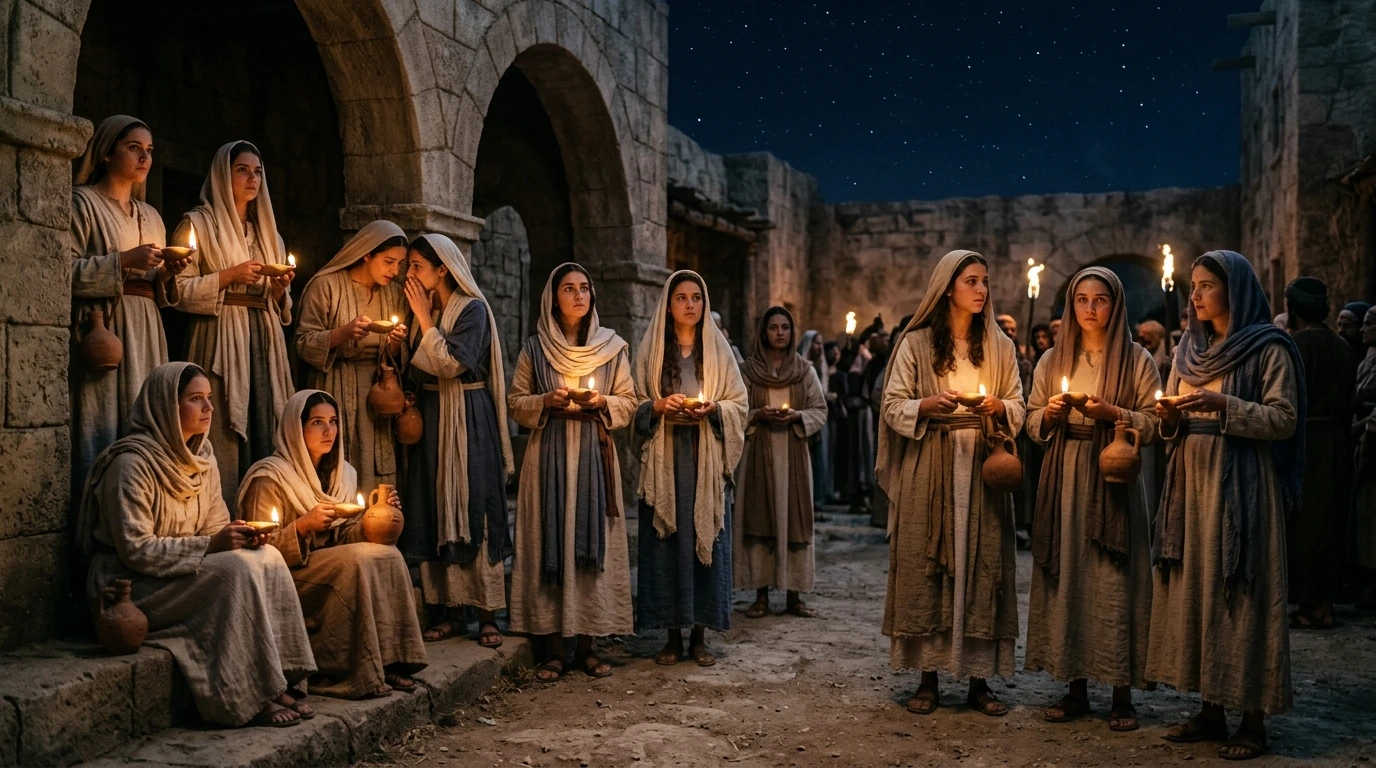
The Parable of the Ten Virgins (Matthew 25:1–13) is often interpreted through vague allegories, but archaeological experiments establish that the parable pivots upon precise quantitative fuel mechanics:
+----------------------------------------------------------------------------------------------------+
|               THE MATHEMATICS OF FUEL CONSUMPTION IN MATTHEW 25                                    |
+----------------------------------------------------------------------------------------------------+
|                                                                                                    |
|    Maximum Fuel Reservoir of Herodian Lamp:    25 Milliliters of Olive Oil                         |
|    Burn Rate with Braided Flax Wick:           ~5 Milliliters per Hour                             |
|    Maximum Continuous Burn Time:               ~4.5 to 5.0 Hours                                   |
|                                                                                                    |
|    Procession Starts at Dusk (Twilight):       6:00 PM (Lamps Lit)                                 |
|    Midnight Cry (Bridegroom Delayed):          12:00 AM (6 Hours Elapsed!)                         |
|                                                                                                    |
|    MATHEMATICAL VERDICT:                       100% of the Oil is Consumed!                        |
|                                                                                                    |
+----------------------------------------------------------------------------------------------------+
When the cry went out at midnight:
- All ten lamps were sputtering, smoking, and dying because their 5-hour fuel capacity had been exceeded.
- The five wise virgins brought separate ceramic oil flasks (angeia, Matthew 25:4) holding 100 to 200 ml of reserve oil, allowing them to trim their charred wicks, refill their lamps, and join the torchlit wedding procession.
- The foolish virgins brought lamps with zero reserve oil.
The wise virgins’ refusal to share: "There will not be enough for us and for you" (Matthew 25:9) was simple arithmetic. Dividing 20 ml of oil across ten lamps would give each maiden 2 ml, causing every lamp to die within 20 minutes, leaving the bride and groom wandering in pitch darkness.
Spiritual Oil and the Theology of Consecrated Vigilance
The theological heart of the parable addresses the condition of the human soul before Christ's return:
- The Delay of the Bridegroom: Jesus explicitly warns that His return may be delayed far beyond initial human expectations (chronizontos de tou nymphioi, Matthew 25:5).
- Untransferable Grace: The reserve oil represents genuine personal faith, spiritual regeneration, and daily communion with the Holy Spirit. Just as one cannot borrow another person's repentance, salvation, or relationship with God on the Day of Judgment, the oil in the flask is inherently non-transferable.
- The Locked Door: The foolish virgins departed to buy oil, but returned after the door was shut: "Truly, I say to you, I do not know you" (Matthew 25:12). Consecrated readiness cannot be improvised at the final hour.
Three-Tier Evidentiary Evaluation: Archaeological Matrix
+----------------------------------------------------------------------------------------------------+
|               THREE-TIER EVIDENTIARY AUDIT: HERODIAN LAMPS & GOSPEL EXEGESIS                       |
+--------------------------+-----------------------+-------------------+-----------------------------+
| PASSAGE / FIND           | ARCHEOLOGICAL ARTIFACT| CHRONOLOGY        | EXEGETICAL SIGNIFICANCE     |
+--------------------------+-----------------------+-------------------+-----------------------------+
| 1. Matthew 5:15 (Stand)  | Ceramic/Stone Stand   | 1st Cent. BC–AD   | Confirms physical elevation |
|                          | (Jewish Quarter)      | (Herodian Period) | of domestic lamp in rooms   |
| 2. Luke 15:8 (Drachma)   | Silver Drachma & Lamp | 1st Cent. AD      | Verifies low-angle lighting |
|                          | (Capernaum Houses)    | (Roman Era)       | needed on earthen floors    |
| 3. Matthew 25:4 (Flask)  | Piriform Oil Juglet   | 50 BC – AD 70     | Identifies the "angeion" as |
|                          | (Ophel Excavations)   | (Second Temple)   | dedicated reserve vessel    |
| 4. Matthew 25:7 (Trimming| Bronze Wick Pins &    | Masada & Qumran   | Material tools used to trim |
|    Wick Mechanics)       | Carbonized Flax Wicks | (1st Cent. AD)    | charred wick tips           |
+--------------------------+-----------------------+-------------------+-----------------------------+
Biblical Archaeology, Epigraphy & Excavations
Field excavations, monumental stelae, cylinder seals, and epigraphic inscriptions confirming biblical historical chronology across the Levant. Each investigation in this pillar is corroborated by primary classical manuscripts, epigraphy, and peer-reviewed historical forensics.
Pillar Dossiers in this Corpus
The Falling Walls of Jericho: Archaeological Trench Proof of Inward Soil Ramp Collapse
14 min read · Verified Primary DossierUncovering the Pool of Siloam: The 2004 Archaeological Breakthrough in Jerusalem
11 min read · Verified Primary DossierThe Ossuary of Caiaphas: Did We Find the Bones of the High Priest Who Condemned Jesus?
16 min read · Verified Primary DossierThe Tel Dan Stele: 'House of David' Inscription, Minimalist Debates, and Archaeological Proof
11 min read · Verified Primary DossierThe Unwritten Gospel: Volume II — Kings & Ancient Empires
Delve into royal seal impressions, monumental stelae, and underground Levant water systems corroborating biblical kings.
Primary Sources & Scholarly Archives
Editorial Standard →Official archaeological field reports, certified stratigraphy surveys, and Semitic epigraphy catalogs.
Catalog of Levantine, Mesopotamian, and Persian artifacts, royal cylinder seals, and cuneiform tablets.
Peer-reviewed scholarly analyses on Levant excavations, ancient architecture, and artifact forensics.
Frequently Asked Questions
Did olive oil lamps produce a lot of smoke inside the house?
Pure cold-pressed olive oil burned cleanly without smoke; only poorly trimmed wicks or adulterated oils produced foul soot.
How much did olive oil cost in 1st-century Judea?
A half-liter log of olive oil cost about 1/4 of a denarius, representing a steady but essential daily household expenditure.
Were oil lamps used outdoors during windy nights?
Open wick lamps were easily snuffed by wind; maidens shielded them with their cloaks or processed alongside resinous wind-resistant torches.
What does "trimming the wick" mean spiritually?
Trimming removes charred debris blocking fuel flow, symbolizing repentance and clearing spiritual hindrances to let God’s light shine.
Related Research Dossiers
View all 515 research dossiers →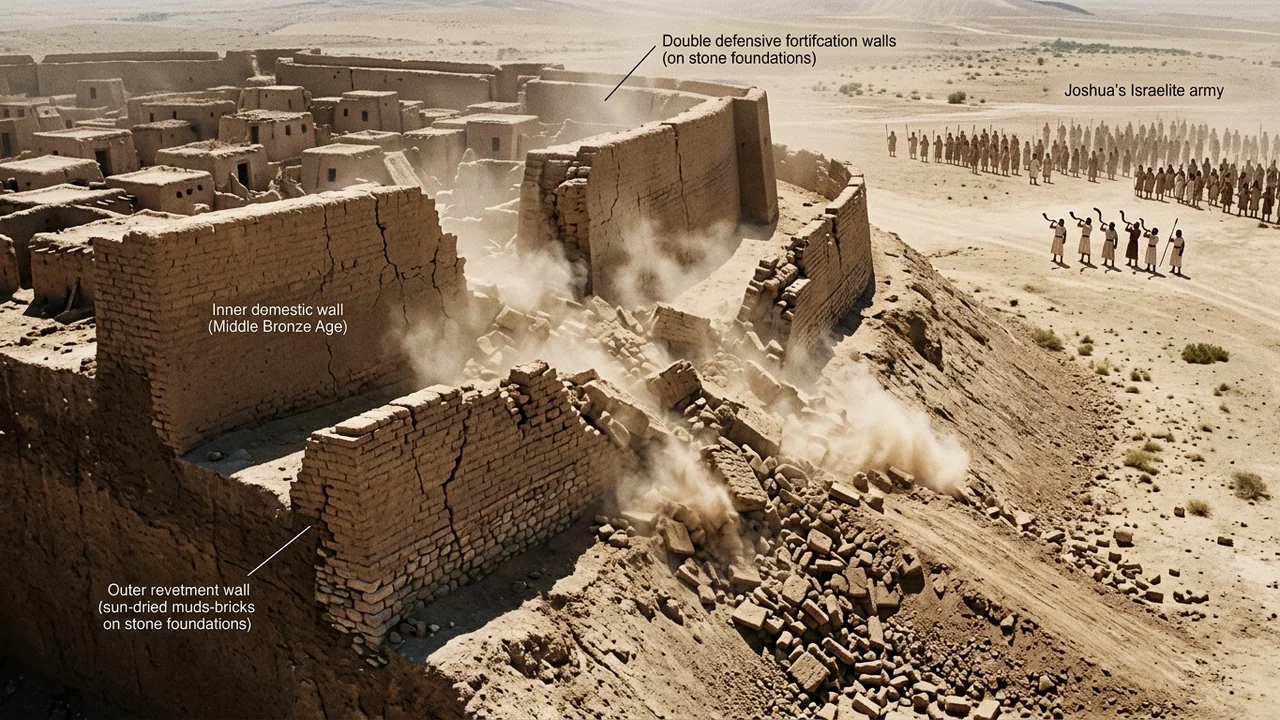
The Falling Walls of Jericho: Archaeological Trench Proof of Inward Soil Ramp Collapse
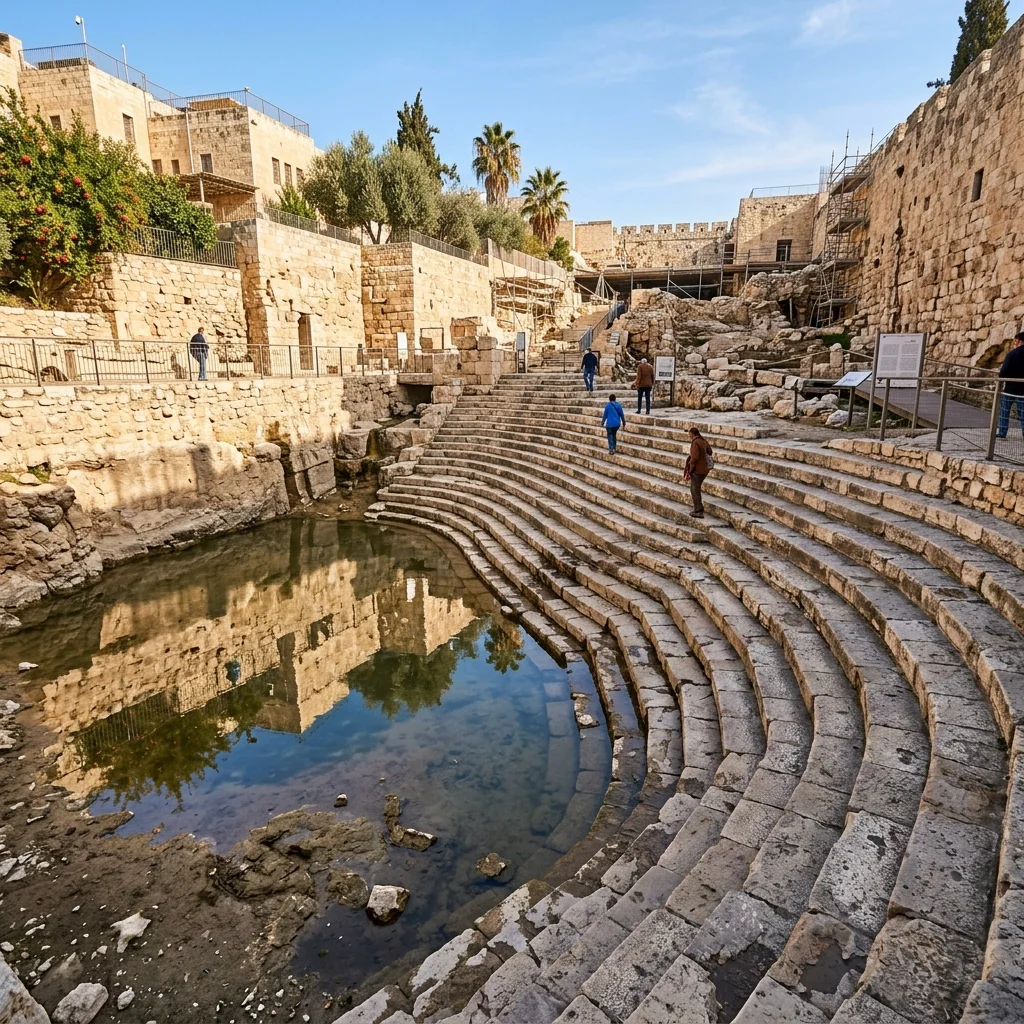
Uncovering the Pool of Siloam: The 2004 Archaeological Breakthrough in Jerusalem