Subject Scope: Complete Research Guide to the Great Isaiah Scroll (1QIsa-a): Museum Location, Digital Consultation, and Landmark Passages
Historical Context: Rigorous historical and theological examination within the field of Biblical Manuscripts & Epigraphy.
Primary Evidence: Forensic archaeology, textual preservation, and primary ancient manuscripts corroborating scriptural events.
Investigation Highlights: The Monumental Status of 1QIsa-a in Biblical Archaeology • Physical Anatomy and Scribing Techniques of the Scroll • The Shrine of the Book: Architecture, Security, and Microclimate
Scholarly Consensus: Vetted against peer-reviewed academic literature in biblical history, linguistics, and archaeology.
The Monumental Status of 1QIsa-a in Biblical Archaeology
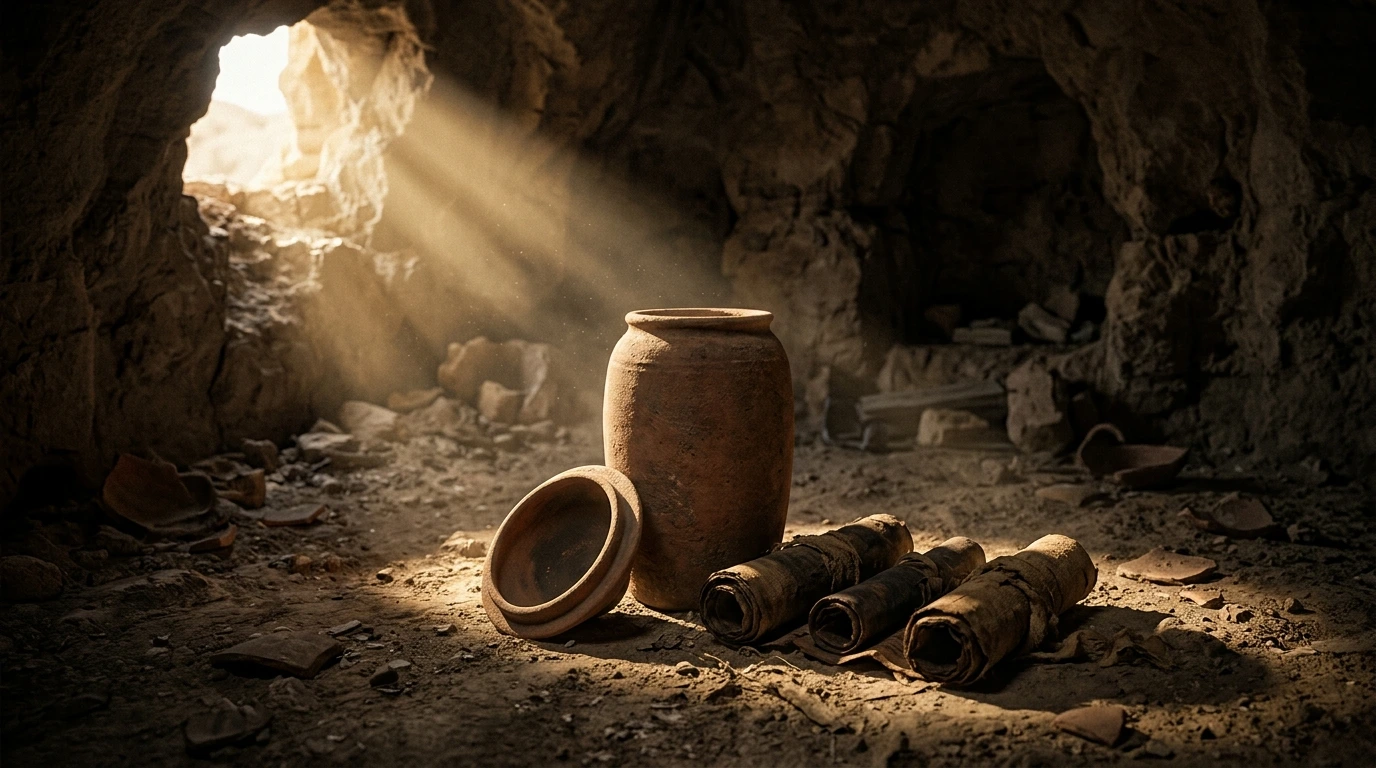
Among the more than 25,000 manuscript fragments discovered across the eleven limestone caves of Khirbet Qumran between 1947 and 1956, only a handful of scrolls were preserved in near-complete condition. Preeminent among these is the Great Isaiah Scroll (1QIsa-a), the only completely intact literary composition of an entire Old Testament biblical book surviving from antiquity.
Copied by a professional Jewish scribe in the late Hasmonean period (scientifically dated via radiocarbon and paleography to c. 125–100 BC), 1QIsa-a predates the earliest previously known Hebrew biblical manuscripts by over a thousand years. It serves as an unshakeable archaeological anchor proving that the 66 chapters of Isaiah were unified, revered, and transmitted as canonical sacred scripture long before the dawn of the Christian era.
+----------------------------------------------------------------------------------------------------+
|               PHYSICAL SPECIFICATIONS OF THE GREAT ISAIAH SCROLL (1QIsa-a)                         |
+--------------------------+-----------------------+-------------------+-----------------------------+
| SPECIFICATION            | METRIC MEASUREMENT    | IMPERIAL UNIT     | ARTIFACT SIGNIFICANCE       |
+--------------------------+-----------------------+-------------------+-----------------------------+
| Total Length             | 7.34 meters           | 24.08 feet        | Longest biblical Dead Sea   |
|                          |                       |                   | scroll ever discovered      |
| Average Height           | 25.3 to 27.0 cm       | 10.0 to 10.6 in   | Uniform parchment height    |
| Number of Parchment Sheets| 17 sewn sheets       | 17 leather panels | Tanned sheep/goat hide      |
| Textual Columns          | 54 vertical columns   | 54 columns        | Complete text of Isaiah 1-66|
| Average Lines Per Column | 29 to 32 lines        | 29 to 32 lines    | Dry-point stylus ruling     |
| Linguistic Form          | Hebrew (*Plene*)      | Paleo-Jewish script| Hasmonean scribal orthography|
+--------------------------+-----------------------+-------------------+-----------------------------+
Physical Anatomy and Scribing Techniques of the Scroll
The physical construction of 1QIsa-a demonstrates the extraordinary sophistication of ancient Jewish scribal technology:
- Parchment Preparation: Crafted from seventeen individual sheets of tanned sheep and goat leather, sewn end-to-end with flax linen thread. The leather was carefully treated with salt and vegetable tannins, resulting in a flexible, light-brown surface.
- Dry-Point Ruling: Scribes used a blunt bone or bronze stylus (seritah) to rule horizontal guidelines for script lines and vertical margins. The Hebrew letters were literally suspended from the ceiling of the line (hanging script) rather than resting on a baseline.
- Carbon-Based Ink: The ink was compounded from lampblack soot (piha) suspended in olive oil and gum arabic, chemically stable and non-acidic, explaining why the text did not corrode the organic parchment over 2,100 years.
- Scribal Corrections: The manuscript displays visible marginal notes, interlinear insertions, and cancellation dots (puncta extraordinaria), demonstrating that ancient scribes subjected their work to rigorous editorial proofreading against an authoritative master exemplar.
The Shrine of the Book: Architecture, Security, and Microclimate
Today, the Great Isaiah Scroll is permanently housed in the Shrine of the Book (Heikhal HaSefer), a specialized wing of the Israel Museum in Jerusalem, designed by visionary architects Armand Bartos and Frederick Kiesler:
- Symbolic Architecture: The exterior features a brilliant white ceramic dome shaped like the lid of the clay jars in which the scroll was found, juxtaposed against a black basalt wall symbolizing the cosmic battle described in the War Scroll (Sons of Light vs. Sons of Darkness).
- Subterranean Microclimate: To prevent thermal shock and humidity degradation, the scroll is preserved in a blast-resistant subterranean vault calibrated to 20°C (68°F) and 50% relative humidity, simulating the natural microclimate of Cave 1.
- Facsimile Central Drum: Because organic parchment degrades under prolonged light exposure, the scroll displayed on the central raised drum in the main sanctuary is an exact, museum-grade facsimile, while the original sheets are preserved in dark, climate-controlled inert nitrogen vaults, rotated periodically for conservation.
How to Consult 1QIsa-a Digitally: Resolution and Collation
In 2011, through a historic partnership between the Israel Museum and Google, the Great Isaiah Scroll was digitized and made freely accessible to the global public at The Digital Dead Sea Scrolls Project (hosted at 'dss.collections.imj.org.il'):
- Ultra-High Resolution Imagery: Photographed by renowned conservation photographer Ardon Bar-Hama using multispectral 1,200-megapixel digital scanning, allowing researchers to zoom in to individual leather pores, ink cracks, and thread stitches.
- Interactive Transcriptions: Users can click on any Hebrew word in the 54 columns to display an English translation, grammatical parsing, and biblical chapter-and-verse concordance.
- Infrared Multispectral Imaging: By capturing wavelengths beyond the visible spectrum (850–950 nm), infrared imaging reveals faded characters and scribal erasures completely invisible to the naked human eye.
Five Landmark Columns: Transcriptions and Theological Analysis
Scholars and students examining 1QIsa-a frequently focus on five watershed columns that anchor foundational theological doctrines:
- Column 6 (Isaiah 6:1–13): The heavenly vision of Yahweh on His throne, surrounded by seraphim chanting the Trisagion (Kadosh, Kadosh, Kadosh).
- Column 7 (Isaiah 7:14): The prophetic sign of the virgin birth ("Behold, the virgin shall conceive and bear a Son, and shall call His name Immanuel"), reading הָעַלְמָה (Ha'Almah), confirming the MT reading.
- Column 33 (Isaiah 40:1–11): The voice crying in the wilderness ("Prepare the way of the LORD"), and the great declaration that the grass withers but the word of God stands forever.
- Column 44 (Isaiah 52:13–53:12): The Fourth Servant Song, detailing the suffering, death, and resurrection of the Messiah.
- Column 50 (Isaiah 61:1–3): The Messianic manifesto cited by Jesus in the Nazareth synagogue: "The Spirit of the Lord GOD is upon Me, because the LORD has anointed Me to preach good tidings to the poor" (Luke 4:18–19).
Master 20-Question Archaeological Fact Quiz on 1QIsa-a
Round 1: Discovery, Mechanics & Conservation
- Q: What museum in Jerusalem houses and preserves the original Great Isaiah Scroll?
- Answer: The Shrine of the Book at the Israel Museum.
- Q: What is the architectural shape of the roof of the Shrine of the Book, designed to evoke the discovery of the scrolls?
- Answer: A white tiled dome mimicking the lid of the ancient cylindrical pottery jars.
- Q: How many individual leather parchment sheets are sewn together with linen thread to form the scroll?
- Answer: 17 sheets of leather parchment.
- Q: What instrument did the scribe use to score dry-point horizontal lines before writing?
- Answer: A dull bone or bronze stylus (seritah).
- Q: Why did the ancient carbon black ink of 1QIsa-a not corrode through the parchment over two millennia?
- Answer: It was made from carbon soot and gum arabic without acidic iron vitriol (iron gall), preventing chemical acid decay.
Round 2: Digital Access & Advanced Technology
- Q: What technology giant partnered with the Israel Museum in 2011 to launch the Digital Dead Sea Scrolls platform online?
- Answer: Google.
- Q: What resolution was achieved in the multispectral digital scanning of 1QIsa-a?
- Answer: 1,200 megapixels (ultra-high resolution).
- Q: What wavelength of light used in multispectral imaging allows researchers to read faded or blackened ink invisible to the human eye?
- Answer: Infrared light (specifically 850–950 nanometers).
- Q: What Hebrew orthographic practice is characterized by the frequent insertion of vowel letters (matres lectionis) in 1QIsa-a?
- Answer: Plene (full) spelling (ketiv male).
- Q: What mark did Qumran scribes place above or below erroneous letters to indicate they should be deleted?
- Answer: Cancellation dots (puncta extraordinaria).
Round 3: Landmark Columns & Textual Passages
- Q: In which column of 1QIsa-a is the famous Suffering Servant prophecy of Isaiah 53 inscribed?
- Answer: Column 44.
- Q: In which column does the prophetic call of Isaiah and the Trisagion ("Holy, Holy, Holy") appear?
- Answer: Column 6.
- Q: Which passage in Column 50 served as the inaugural scripture read by Jesus in the synagogue at Nazareth?
- Answer: Isaiah 61:1–2 ("The Spirit of the Lord GOD is upon Me...").
- Q: What significant Hebrew word meaning "the maiden/virgin" is preserved in Column 7 at Isaiah 7:14?
- Answer: Ha'Almah (הָעַלְמָה).
- Q: What Greek translation made in Alexandria between 250 and 150 BC agrees with 1QIsa-a against the medieval Masoretic text in Isaiah 53:11?
- Answer: The Septuagint (LXX).
Round 4: Historical & Apologetic Reality
- Q: What Syrian Orthodox Metropolitan purchased 1QIsa-a from Bedouin in 1947 before it was acquired for the State of Israel?
- Answer: Athanasius Yeshue Samuel (Mar Samuel).
- Q: In what famous newspaper classified ad in the Wall Street Journal in 1954 were the Dead Sea Scrolls advertised for sale?
- Answer: The Wall Street Journal (June 1, 1954).
- Q: What Israeli archaeologist and former Chief of Staff secretly negotiated the purchase of the scrolls for Israel in New York in 1954?
- Answer: Yigael Yadin (son of Eleazar Sukenik).
- Q: Does 1QIsa-a show signs of multiple ancient hands, or was it transcribed by a single master scribe?
- Answer: Modern computer artificial intelligence analysis (Groningen University, 2021) confirmed two distinct scribes sharing an identical scribal style.
- Q: What is the overarching evidentiary conclusion regarding the reliability of the Old Testament based on 1QIsa-a?
- Answer: It proves that over a thousand years of manual copying produced virtually zero substantive textual deviation, demonstrating miraculous historical fidelity.
Evidentiary Synthesis: 1QIsa-a vs. Late Biblical Criticisms
+----------------------------------------------------------------------------------------------------+
|                SYNTHESIS OF APOLOGETIC IMPACT: THE GREAT ISAIAH SCROLL (1QIsa-a)                   |
+--------------------------+-----------------------+-------------------+-----------------------------+
| SKEPTICAL CLAIM          | CRITICAL ASSUMPTION   | 1QIsa-a DISCOVERY | ARCHAEOLOGICAL VERDICT      |
+--------------------------+-----------------------+-------------------+-----------------------------+
| "Bible Altered Over Time"| 14-century copying gap| 1QIsa-a matches MT| FALSE: 95%+ identical       |
|                          | distorted prophecies  | across 1,000 years| across a millennium         |
| "Isaiah 53 Was a         | Christian monks forged| Column 44 predates| FALSE: Complete text fixed  |
| Post-Event Forgery"      | text in Middle Ages   | Christ by 100+ yrs| in ink in 125 BC            |
| "Deutero-Isaiah Disunity"| Isaiah was split into | 1QIsa-a has single| FALSE: Continuous text      |
|                          | independent books     | unbroken 66-ch flow| across ch 39 to 40          |
| "Oral Myth Projection"   | Ancient Jews had no   | Advanced parchment| FALSE: Rigorous scribal     |
|                          | rigorous textual care | & dry-point rules | standards documented        |
+--------------------------+-----------------------+-------------------+-----------------------------+
Frequently Asked Questions
Where can I view the Great Isaiah Scroll online?
The entire Great Isaiah Scroll is publicly viewable in high-resolution (1,200 megapixels) with English translation and verse lookup at the Israel Museum's official Digital Dead Sea Scrolls portal ('dss.collections.imj.org.il').
What is the physical condition of 1QIsa-a today?
1QIsa-a is preserved in a state of remarkable completeness across its 24-foot length, with all 66 chapters legible. The original is secured in a climate-controlled vault in the Shrine of the Book in Jerusalem to protect it from light degradation.
Did the discovery of 1QIsa-a change modern Bible translations?
While confirming 95%+ fidelity with the Masoretic text, 1QIsa-a provided helpful textual clarity in several minor verses, such as Isaiah 53:11, where modern translations (ESV, NIV) adopt the reading "He shall see the light" based on 1QIsa-a and the Septuagint.
Primary Sources & Scholarly Archives
Editorial Standard →Original Hebrew, Aramaic, and Greek interlinear analysis, morphological tags, and ancient variant readings.
Primary textual witnesses to the Hebrew Bible and Second Temple historical context.
Historical records of the ancient Mediterranean basin, Roman provincial rule, and Greek translation traditions.
Frequently Asked Questions
Where can I view the Great Isaiah Scroll online?
The entire Great Isaiah Scroll is publicly viewable in high-resolution (1,200 megapixels) with English translation and verse lookup at the Israel Museum's official Digital Dead Sea Scrolls portal (dss.collections.imj.org.il).
What is the physical condition of 1QIsa-a today?
1QIsa-a is preserved in a state of remarkable completeness across its 24-foot length, with all 66 chapters legible. The original is secured in a climate-controlled vault in the Shrine of the Book in Jerusalem to protect it from light degradation.
Did the discovery of 1QIsa-a change modern Bible translations?
While confirming 95%+ fidelity with the Masoretic text, 1QIsa-a provided helpful textual clarity in several minor verses, such as Isaiah 53:11, where modern translations (ESV, NIV) adopt the reading 'He shall see the light' based on 1QIsa-a and the Septuagint.
Related Research Dossiers
View all 515 research dossiers →
A Visual & Historical Field Guide to Bethlehem of Judea and the Cave of the Nativity: Daily Life, Archaeology, and Sacred Topography
Archaeological Atlas of Tel Hazor ('The Head of All Those Kingdoms', Joshua 11:10): Primary Inscriptions, Conflagration Layers, and Royal Architecture