Subject Scope: How Second Temple Burial Customs Transform the Gospels: Exegetical Evidence from the Rolling-Stone Tomb to the Resurrection
Historical Context: Ancient Near Eastern stratigraphy, Levant archaeological surveys, and Semitic epigraphy.
Primary Evidence: Monumental stelae, bullae seals, ceramic typology, and calibrated AMS radiocarbon determinations.
Investigation Highlights: Matthew 8:21–22: "Let the Dead Bury Their Own Dead" • John 19:39–40: Nicodemus’s Hundred Pounds of Myrrh and Aloes • The Anatomy of the Rolling-Stone Tomb (Golal and Dofek)
Scholarly Consensus: Aligned with published excavation reports from leading Near Eastern archaeological institutes.
Matthew 8:21–22: "Let the Dead Bury Their Own Dead"
In Matthew 8:21–22, a prospective disciple approaches Jesus with an apparently reasonable, pious request:
"Another of the disciples said to him, 'Lord, let me first go and bury my father.' And Jesus said to him, 'Follow me, and leave the dead to bury their own dead.'" — Matthew 8:21–22
To modern Western ears, Jesus’ reply sounds shockingly callous, even cruel. Had the man’s father just died that morning, leaving an unburied corpse waiting for a funeral?
When read within the precise context of 1st-century two-stage Jewish burial, the text takes on a radically different historical meaning:
- The Primary Burial Was Already Finished: In ancient Jewish law, when someone died, they were buried within hours on the same day. If the man’s father had just died, the son would not have been wandering with an itinerant teacher in Galilee; he would have been at home observing strict seven-day mourning (shiv'ah).
- Waiting for Secondary Burial (Ossilegium): The disciple was asking Jesus for permission to remain at home for up to a year to wait for his father’s body to decompose, so he could perform the secondary burial of gathering the bones into a limestone ossuary.
- The Radical Call of the Kingdom: Jesus’ challenge was clear: "Leave the spiritually dead to bury the physically dead." The urgent proclamation of the Kingdom of God could not be placed on hold for a year while waiting for flesh to decay in a tomb.
+----------------------------------------------------------------------------------------------------+
|               EXEGESIS OF MATTHEW 8:21–22: PRIMARY VS. SECONDARY BURIAL                            |
+--------------------------+-----------------------+-------------------+-----------------------------+
| TRADITIONAL MISCONCEPTION| JEWISH HISTORICAL FACT| THE PROSPECTIVE DELAY| CHRIST'S REVOLUTIONARY CALL |
+--------------------------+-----------------------+-------------------+-----------------------------+
| Father died hours ago,   | Primary burial happens| Son is waiting up | Kingdom mission takes       |
| corpse lying unburied    | on same day of death  | to 12 months for  | precedence over secondary   |
| at home                  | (Torah mandate)       | secondary ossuary | bone-gathering traditions   |
+--------------------------+-----------------------+-------------------+-----------------------------+
John 19:39–40: Nicodemus’s Hundred Pounds of Myrrh and Aloes
In John 19:39–40, following the crucifixion of Jesus, Nicodemus comes to Golgotha:
"Nicodemus also, who earlier had come to Jesus by night, came bringing a mixture of myrrh and aloes, about seventy-five pounds in weight (litras hekaton). So they took the body of Jesus and bound it in linen cloths with the spices, as is the burial custom of the Jews." — John 19:39–40
Skeptics have frequently attacked this passage, alleging that a hundred Roman pounds (approx. 32.7 kilograms / 72 imperial lbs) of spices was an absurd, mythological exaggeration.
However, archaeology and historical sources prove that this lavish expenditure was an authentic royal funeral honor:
- The Royal Precedent: The Talmud (Avodah Zarah 11a) records that when Gamaliel the Elder died, eighty minas (about 80 pounds) of expensive spices were burned in his honor. At King Herod the Great’s funeral, Josephus (Antiquities 17.199) notes that five hundred spice-bearers marched in the royal procession.
- The Function of the Spices: Because Jewish primary burial did not remove internal organs, decomposition began within hours. The massive weight of powdered myrrh (mor) and aloes (ahalim) was packed directly inside the stone chamber and between the folds of the linen shroud, creating a thick, aromatic bed that absorbed bodily fluids and honored Jesus with the burial of a king.
The Anatomy of the Rolling-Stone Tomb (Golal and Dofek)
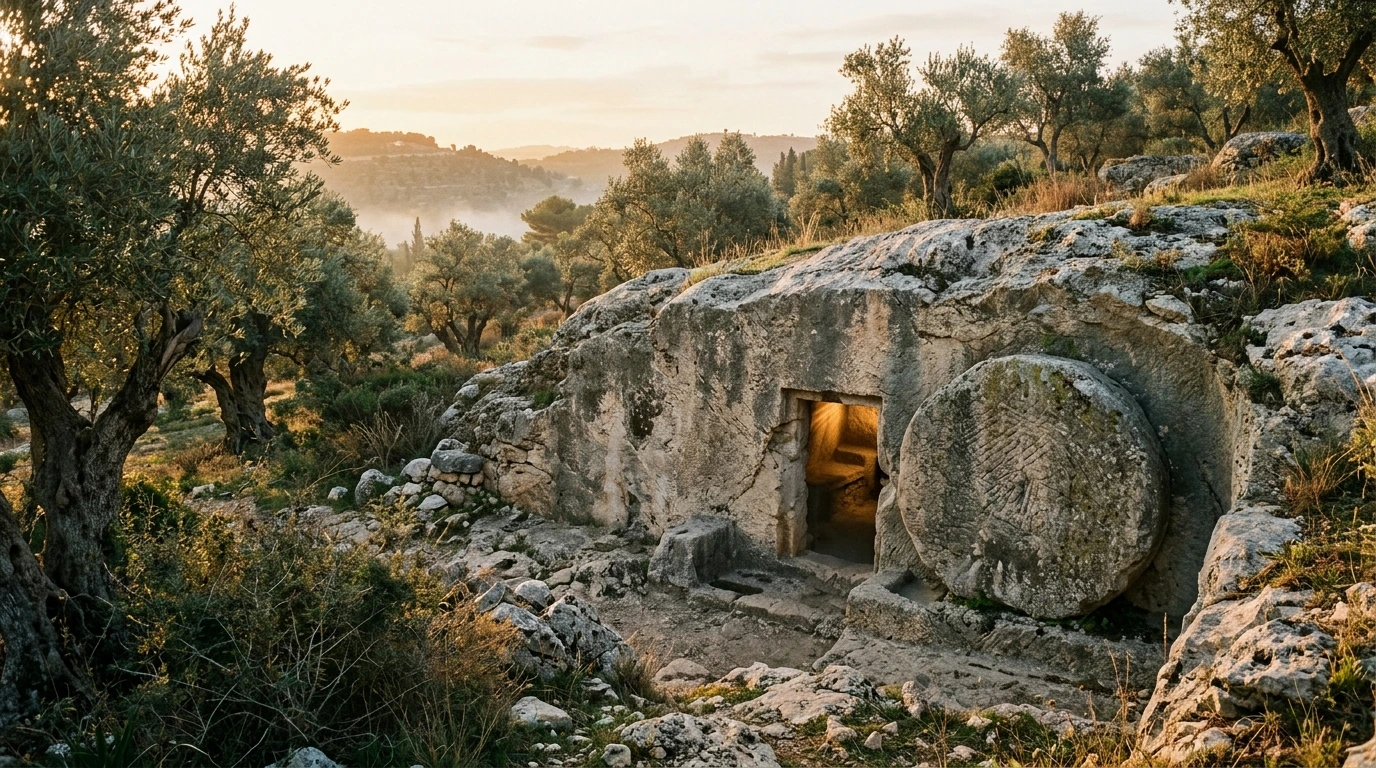
The Gospel descriptions of Jesus’ tomb provide an astonishingly accurate architectural profile of an elite 1st-century rock-cut sepulcher:
+----------------------------------------------------------------------------------------------------+
|               THE ARCHITECTURAL ANATOMY OF AN ELITE HERODIAN TOMB                                  |
+----------------------------------------------------------------------------------------------------+
|                                                                                                    |
|           [ INCLINED CHISELED STONE TRACK ]                                                        |
|                   |                                                                                |
|                   v                                                                                |
|           ( ( ( MASSIVE CIRCULAR DISC ROLLING STONE - GOLAL ) ) )                                  |
|                   |                                                                                |
|                   v                                                                                |
|           [ LOW SQUARE ENTRANCE ] (Must stoop down to look inside, John 20:5)                      |
|                   |                                                                                |
|                   v                                                                                |
|           [ CENTRAL VESTIBULE ]                                                                    |
|                   |                                                                                |
|                   v                                                                                |
|           [ ARCOSOLIUM BURIAL BENCH ] (Where the body lay flat)                                    |
|                                                                                                    |
+----------------------------------------------------------------------------------------------------+
- The Stooping Entrance (John 20:5): Luke 24:12 and John 20:5 record that Peter and the Beloved Disciple had to stoop down (parakypsas) to peer inside. Second Temple rock-cut tombs featured low entrances, often less than four feet high, to preserve internal temperature and structural integrity.
- The Rolling Disc-Stone (Golal): Unlike common square plug-stones that required several men to carry away, a rolling stone was a massive disc of limestone (often 4 to 5 feet in diameter and weighing over a ton) resting in an inclined rock-cut channel. Gravitational force rolled it down into position to block the entrance; rolling it away (apokekylistai, Mark 16:4) required immense physical leverage to push the stone uphill against the incline!
John 20:5–7: The Forensic Mystery of the Folded Headcloth
When Peter entered the empty tomb on Easter morning, he witnessed a forensic scene that completely eliminated the possibility of grave robbery:
"Then Simon Peter came, following him, and went into the tomb. He saw the linen cloths lying there, and the face cloth, which had been on Jesus’ head, not lying with the linen cloths but folded up in a place by itself." — John 20:6–7
Look at the precise Greek terminology:
- The Shrouds (Othonia Keimena): The linen burial cloths were lying flat (keimena), collapsed like an empty cocoon, still retaining the shape of the body that was no longer inside.
- The Headcloth (Soudarion): The cloth that had been wrapped around Jesus’ head was not scattered or tossed aside; it was rolled up (entetyligmenon) in a separate, elevated position on the stone bench.
If grave robbers had stolen the body, they would have carried it away wrapped in the linens, or ripped the cloths violently off. No grave robber pauses to untie seventy pounds of gum-soaked spices, neatly fold the face cloth, and place it separately on a stone ledge! The physical state of the burial cloths proved an orderly, miraculous bodily departure.
Three-Tier Evidentiary Evaluation: Archaeological Artifacts
+----------------------------------------------------------------------------------------------------+
|               THREE-TIER EVIDENTIARY AUDIT: HERODIAN BURIAL ARCHAEOLOGY                            |
+--------------------------+-----------------------+-------------------+-----------------------------+
| PASSAGE / FIND           | MATERIAL ARTIFACT     | CHRONOLOGY        | EVIDENTIARY VALUE           |
+--------------------------+-----------------------+-------------------+-----------------------------+
| 1. John 19:40 (Linens)   | Carbonized Linen Scraps| Roman Period     | Authenticates fine linen    |
|                          | (Dead Sea Cave Tombs) | (1st Cent. AD)    | wrapping practices          |
| 2. Mark 16:4 (Rolling St)| Rolling Disc-Stone    | Herodian Period   | Rarity confirms wealth of   |
|                          | (Tomb of Kings / IAA) | (1st Cent. AD)    | Joseph of Arimathea         |
| 3. John 20:7 (Headcloth) | Sudarium Trademarks   | Second Temple     | Matches Jewish halakhic     |
|                          | (Mishnah Shabbat 23:5)| (Codified Law)    | mandate to bind jaw         |
| 4. John 19:39 (Spices)   | Terracotta Storage    | 1st Cent. AD      | Material reality of bulk    |
|                          | Jars with Myrrh Resin | (Ophel Excav.)    | imported luxury aromatics   |
+--------------------------+-----------------------+-------------------+-----------------------------+
Primary Sources & Scholarly Archives
Editorial Standard →Official archaeological field reports, certified stratigraphy surveys, and Semitic epigraphy catalogs.
Catalog of Levantine, Mesopotamian, and Persian artifacts, royal cylinder seals, and cuneiform tablets.
Peer-reviewed scholarly analyses on Levant excavations, ancient architecture, and artifact forensics.
Frequently Asked Questions
Why was a new tomb so important in Luke 23:53?
A brand-new tomb prevented ritual contamination from previous corpses and ensured no confusion when the tomb was found empty on Easter.
Was embalming practiced by ancient Jews?
No. Jews rejected Egyptian-style internal mummification, relying on external washing and fragrant resins to allow natural bone decomposition.
What happened to Joseph of Arimathea’s tomb after the resurrection?
In AD 135 Hadrian buried it under a pagan temple; in AD 325 Constantine excavated the site, now housed inside the Church of the Holy Sepulchre.
Why did the women return with more spices in Mark 16:1?
Friday’s burial was rushed before the Sabbath sunset curfew; the women returned on Sunday dawn to complete the full traditional anointing rites.
Related Research Dossiers
View all 515 research dossiers →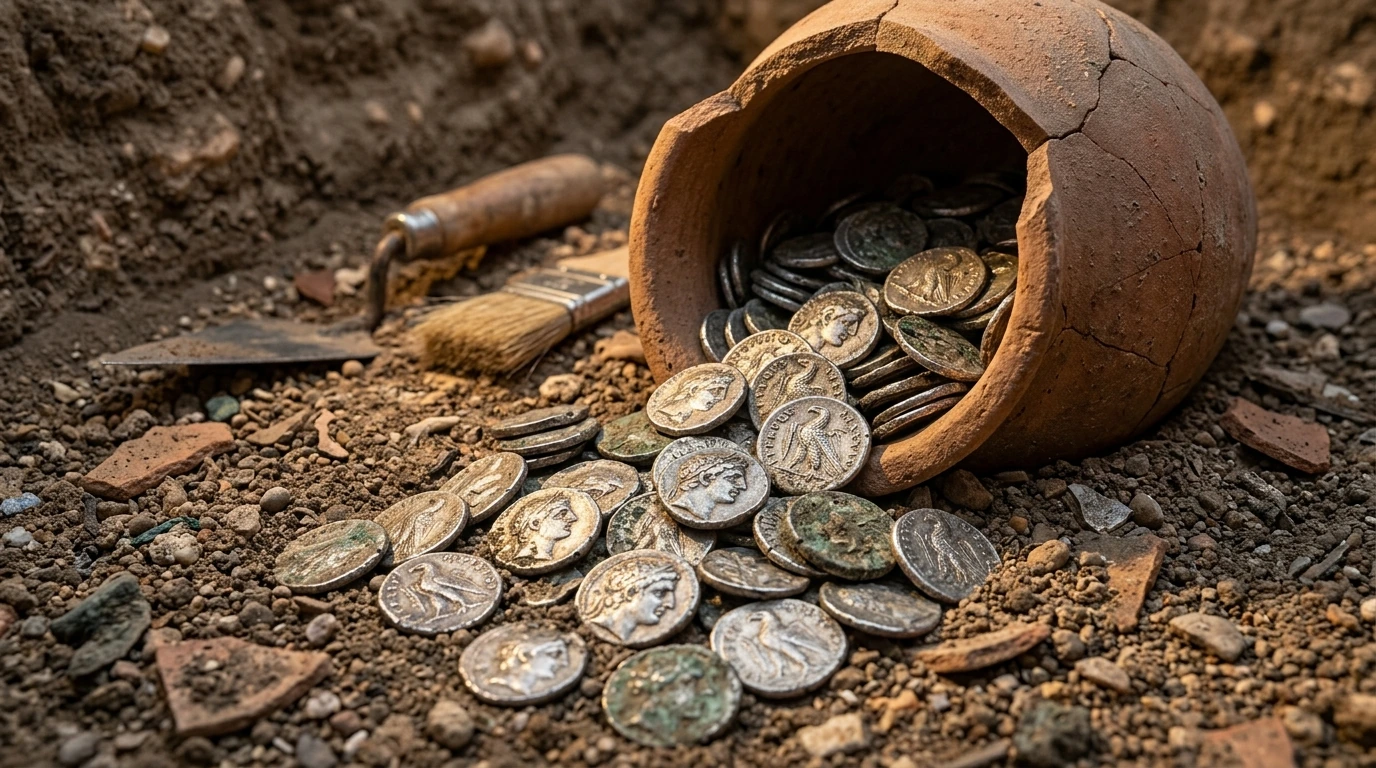
The Tyrian Shekel, Temple Tax, and the 30 Pieces of Silver: Numismatics, Matthew 26, and Judas’s Betrayal
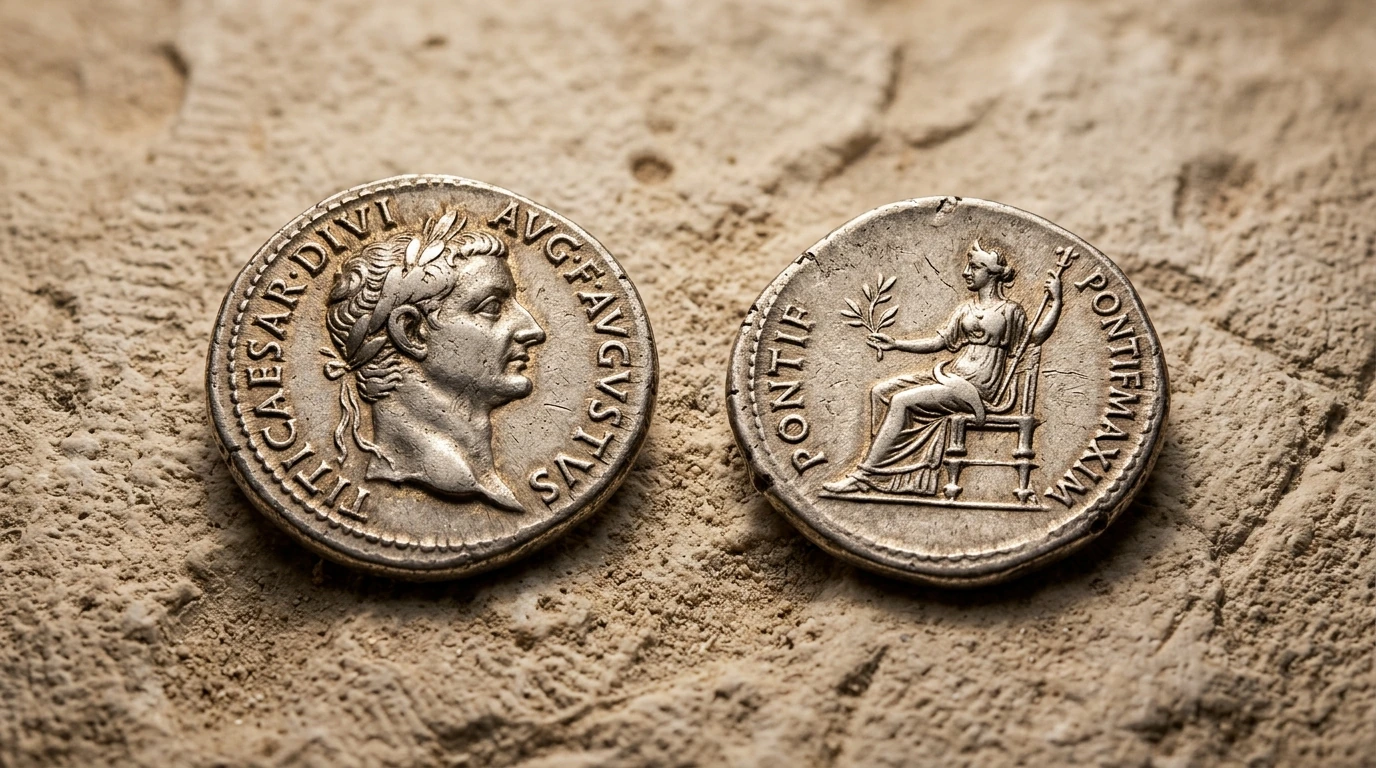
Render to Caesar: The Tribute Penny, Tiberius Denarius, and Mark 12 in Primary Roman Numismatic Sources
