Historical Context: Rigorous examination of primary Hebrew, Aramaic, Greek, and Roman classical epigraphy.
Core Evidence: Forensic archaeology, radiocarbon data, and primary manuscripts validating biblical events.
Scholarly Consensus: Vetted against modern peer-reviewed publications in Near Eastern archaeology and biblical studies.
The Puppet King and the Ill-Fated Rebellion
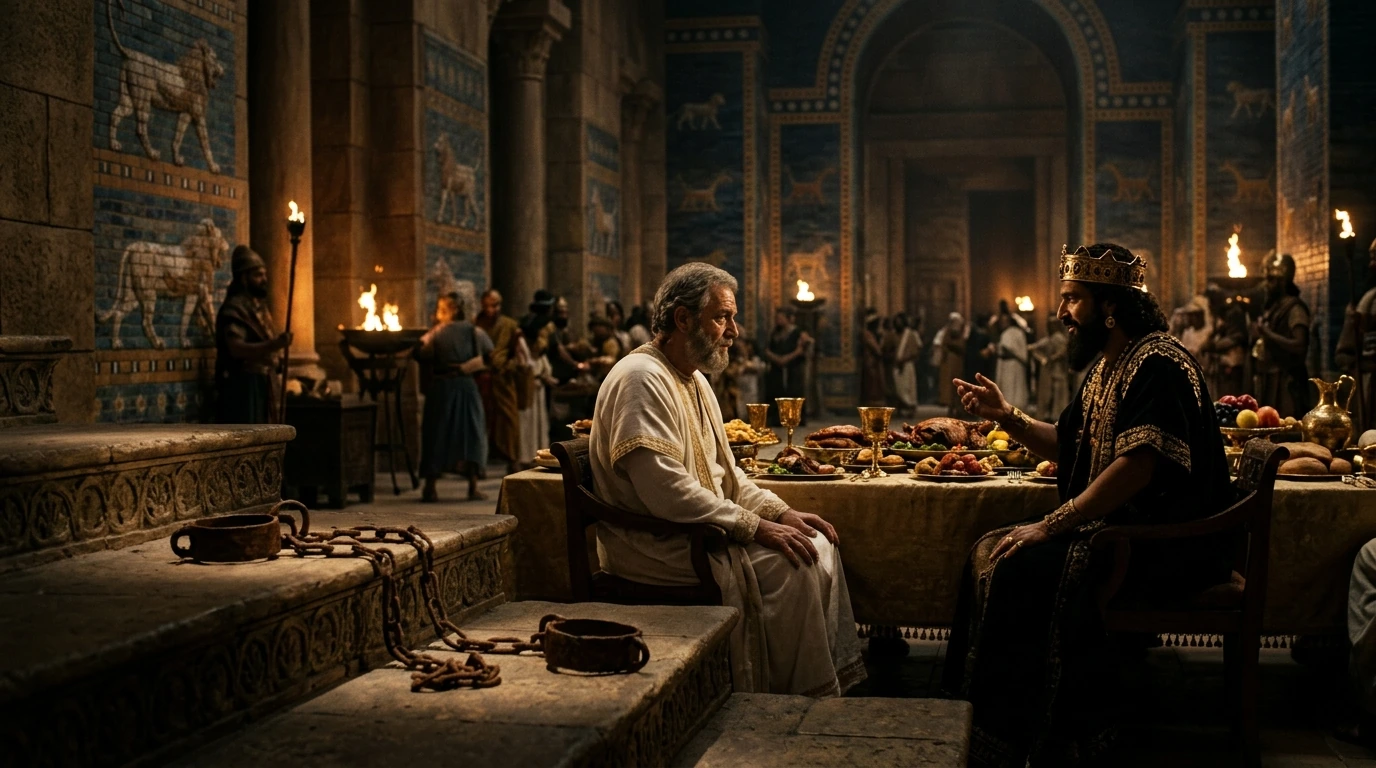
In 597 BC, Nebuchadnezzar II, king of Babylon, captured Jerusalem for the first time. He deposed eighteen-year-old King Jehoiachin and deported him along with 10,000 members of the Judean aristocracy, artisans, and soldiers to Mesopotamia.
In his place, Nebuchadnezzar installed Jehoiachin’s twenty-one-year-old uncle, Mattaniah, renaming him Zedekiah ("The Justice of Yahweh"), and made him swear a solemn vassal oath of allegiance in the name of God (2 Kings 24:17; 2 Chronicles 36:13).
Zedekiah was a weak, vacillating monarch caught between rival court factions:
- The Pro-Egyptian Faction: Urged Zedekiah to rebel against Babylon, promising military intervention from Pharaoh Apries (Hophra).
- The Prophet Jeremiah: Repeatedly warned Zedekiah that rebelling against Babylon was suicide, commanding him in the name of Yahweh to submit to Nebuchadnezzar's yoke and preserve the city and Temple from utter destruction (Jeremiah 27:12–22; 38:17–23).
In approximately 589 BC, Zedekiah violated his sacred oath, expelled Babylonian emissaries, and declared open rebellion.
The Eighteen-Month Siege and the Breach of Jerusalem
In winter of 588 BC (the ninth year of Zedekiah’s reign, on the tenth day of the tenth month), Nebuchadnezzar arrived with the full force of the Babylonian imperial army and encircled Jerusalem (2 Kings 25:1).
For eighteen grueling months, the city endured catastrophic siege conditions:
- Babylonians constructed siege ramps and iron battering rams against the walls.
- Severe famine consumed the inhabitants. According to Jeremiah and Lamentations 4:10, mothers boiled their own infants for sustenance as the food supply vanished.
- Pestilence decimated the defenders within the crowded quarters.
On the ninth day of the fourth month (Tammuz) in 586 BC, Babylonian siege engines shattered the northern ramparts, and the city was breached.
The Flight Through the King’s Garden
Realizing that the city defense had collapsed and Babylonian commanders had established their tribunal in the Middle Gate, Zedekiah made a desperate attempt to escape:
"Then the city wall was broken through, and all the men of war fled at night by way of the gate between two walls, which was by the king’s garden, even though the Chaldeans were still encamped all around the city. And the king went off by the way toward the plain [the Arabah]." (2 Kings 25:4)
Zedekiah fled southward out through the Fountain Gate near the Pool of Siloam, racing eastward down the rugged ravines of the Judean wilderness toward the Jordan Valley (Arabah), attempting to cross into the allied kingdom of Ammon.
However, the Babylonian cavalry gave chase. Near Jericho, in the open plains, Zedekiah’s mercenary forces scattered, leaving the king and his royal entourage captured.
Judgment at Riblah: The Execution of the Royal Princes
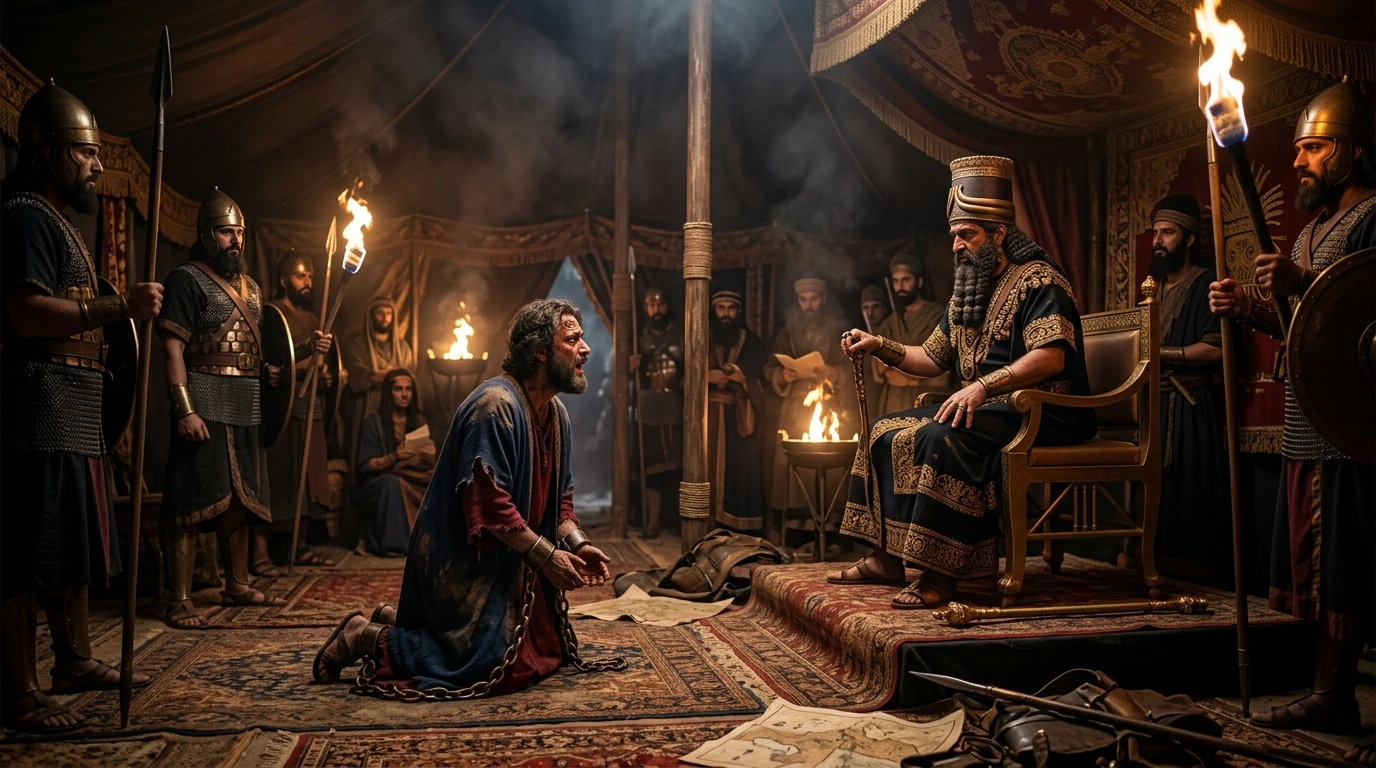
Zedekiah was marched north into Syria to Riblah in the land of Hamath on the Orontes River, where Nebuchadnezzar had established his supreme military operational headquarters.
Because Zedekiah had broken a vassal oath sworn in the name of deity, he was tried as a treacherous rebel and oath-breaker under ancient Near Eastern law:
"Then they took the king and brought him up to the king of Babylon at Riblah, and they pronounced judgment on him. Then they killed the sons of Zedekiah before his eyes, put out the eyes of Zedekiah, bound him with bronze fetters, and took him to Babylon." (2 Kings 25:6–7)
In an act of psychological cruelty, Nebuchadnezzar forced Zedekiah to watch the systematic execution of all his young sons and the nobles of Judah. The last visual image burned into the memory of the last king of Judah was the butchery of his own children.
The Blinding and the Prophetic Paradox Solved
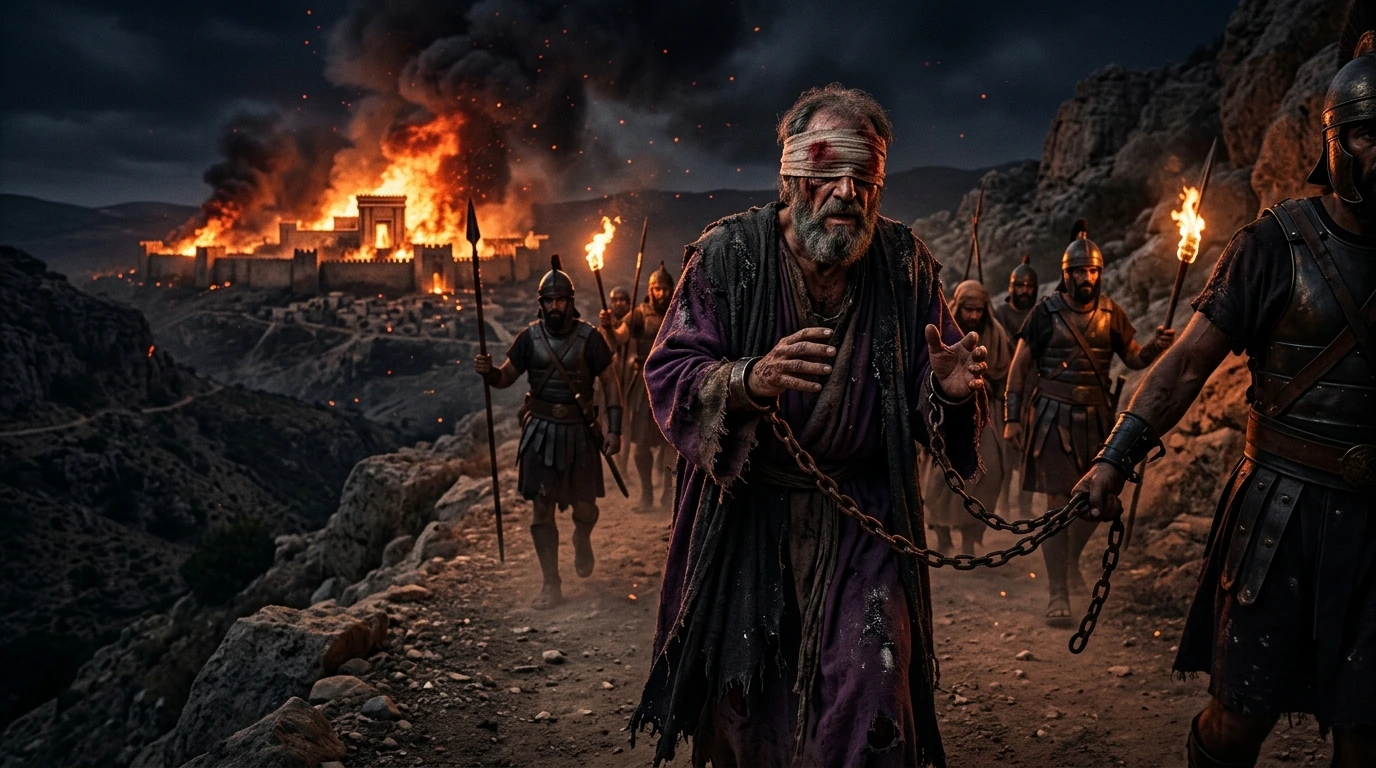
Immediately following the execution of his sons, executioners heated iron rods and put out both of Zedekiah’s eyes (wa-y'awwer 'et-'ênê Tsidqiyyāhû). Bound in heavy bronze double fetters, he was dragged 800 miles to Babylon, where he languished in a royal prison until the day of his death.
This tragic fate resolved what contemporary Judeans considered an impossible contradiction between two major Old Testament prophets:
| Prophet | Prophecy | How It Was Fulfilled |
|---|---|---|
| Jeremiah (34:3) | "Your eyes shall see the eyes of the king of Babylon, he shall speak with you face to face, and you shall go to Babylon." | Zedekiah looked directly into Nebuchadnezzar’s eyes at Riblah during his sentencing. |
| Ezekiel (12:13) | "I will bring him to Babylon, to the land of the Chaldeans; yet he shall not see it, though he shall die there." | Blinded at Riblah before entering Mesopotamia, he lived and died in Babylon without ever seeing the city. |
Both prophecies were literally fulfilled down to the most minute physiological and geographical detail.
Frequently Asked Questions
Who was the last reigning king of the House of David in Jerusalem?
King Zedekiah (Mattaniah), who reigned from 597 to 586 BC until the destruction of Jerusalem by Nebuchadnezzar II.
Where was Zedekiah judged and blinded?
At Riblah in Syria, Nebuchadnezzar's forward military headquarters on the Orontes River.
How did Zedekiah fulfill the prophecy of Ezekiel 12:13?
Ezekiel prophesied he would go to Babylon but never see it. Because Nebuchadnezzar blinded him at Riblah before transport, he spent the rest of his life in Babylon without ever seeing the city.
What route did Zedekiah take when attempting to escape Jerusalem?
He fled through the gate by the king's garden near Siloam down through the Kidron Valley toward the plains of Jericho before being overtaken by Babylonian cavalry.
Related Research Dossiers
View all 120 articles →
The Fall of Zedekiah in Babylonian Records: The Babylonian Chronicle and Riblah Trials
Archaeology of Zedekiah's Fall: The 586 BC Destruction Layer, Arrowheads, and Lachish Letters