Historical Context: Rigorous examination of primary Hebrew, Aramaic, Greek, and Roman classical epigraphy.
Core Evidence: Forensic archaeology, radiocarbon data, and primary manuscripts validating biblical events.
Scholarly Consensus: Vetted against modern peer-reviewed publications in Near Eastern archaeology and biblical studies.
The Architectural Setting: The Third-Story Insula of Troas
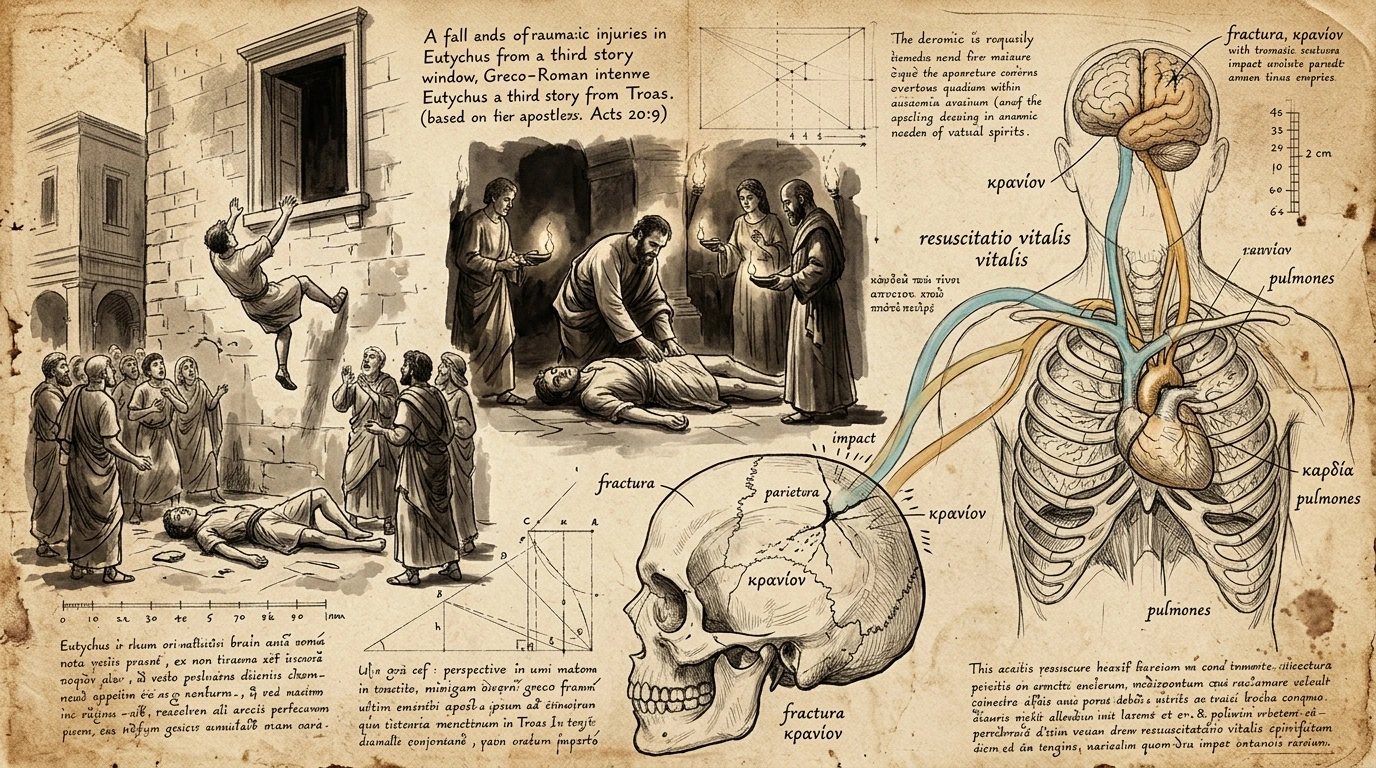
Acts 20:7–12 records one of the most vivid and dramatic domestic episodes in the apostolic travels of Paul:
"And on the first day of the week, when the disciples came together to break bread, Paul, ready to depart the next day, spoke to them and continued his message until midnight. There were many lamps in the upper room where they were gathered. And in a window sat a certain young man named Eutychus..." (Acts 20:7–9)
The setting is the Aegean port city of Alexandria Troas in northwestern Asia Minor. Paul and his traveling companions (including the physician Luke, evidenced by the "we" passage in Acts 20:6) were meeting in an upper room on the third story (apo tou tristegou).
In Greco-Roman cities of the first century, commercial housing consisted of multi-story tenement buildings called insulae. Due to timber-framed upper levels and narrow architectural footprints, upper rooms were densely packed. Windows had no glass panes; they were open apertures equipped with wooden shutters (thurides). Sitting on the broad stone window ledge was a common way to catch circulating evening sea air in an overcrowded room.
The Hypoxic Cascade: Olive Oil Lamps and Carbon Monoxide
Luke provides a crucial environmental observation: "There were many lamps (lampades hikanai) in the upper room."
This is not decorative trivia; it is an acute environmental toxicology note:
- Oxygen Depletion: Dozens of open terracotta olive oil lamps, combined with a packed congregation of fifty or more people breathing in a closed room, rapidly lowered the ambient oxygen fraction.
- Carbon Monoxide & Soot Accumulation: Combustion of low-grade olive oil in unventilated rooms produces carbon monoxide (CO), carbon dioxide (CO2), and acrolein particulate fumes.
- The Hypnotic Cascade: Carbon monoxide binds to hemoglobin with an affinity 210 times greater than oxygen, forming carboxyhemoglobin. Early symptoms include heaviness of the eyes, cognitive dulling, and sudden stupor.
Luke precisely notes this physiological progression: Eutychus was "overcome by deep sleep (katapheromenos hupnō bathei)" and as Paul prolonged his discourse, he was "completely overcome (katenechtheis apo tou hupnou)", losing muscle tone and tumbling backward through the open window aperture.
Biomechanics of a 30-Foot Fall onto Basalt Pavement
Falling from the third story (tristegon) of an ancient insula represents a vertical drop of 8.5 to 10 meters (28 to 33 feet) onto an unyielding Roman paved street or courtyard.
From forensic trauma physics:
- Terminal Velocity: Impact velocity reaches approximately 45 to 50 km/h (28–31 mph).
- Deceleration Force: Hitting stone pavement at that speed delivers an impact force exceeding 1,500 to 2,000 Gs to the contact zone.
- Primary Injuries: Severe Traumatic Brain Injury (TBI), skull base fractures (battle sign), cervical spine transection (C1–C2 atlanto-axial dislocation), blunt thoracic trauma with bilateral tension pneumothorax, and extensive visceral lacerations (hepatic/splenic rupture).
Luke’s Clinical Verdict: "Taken Up Dead" (Ērthē Nekros)
Luke 20:9 concludes with an uncompromising medical diagnosis:
"He fell down from the third story and was taken up dead (ērthē nekros)."
Luke was an educated physician present at the scene. When the congregation rushed down the exterior stone staircase into the courtyard, Luke was among them. The Greek phrase ērthē nekros (ἤρθη νεκρός) is not ambiguous; Luke does not write "as if dead" (hōs nekros, as in Revelation 1:17) or "appeared dead". He uses the definitive technical verdict: the youth had ceased respiration, had no carotid pulse, and exhibited the flaccidity of clinical somatic death.
The Resuscitation: Prophetic Action and Neurological Restoration
Paul descended into the street and performed a deliberate physical action rooted in prophetic history:
"Paul went down, fell on him (epepesen autō), and embracing him (sumperilabōn) said, ‘Do not trouble yourselves, for his life is in him.’" (Acts 20:10)
This physical embrace directly mirrors the prophetic actions of Elijah over the widow of Zarephath’s son (1 Kings 17:21) and Elisha over the Shunammite’s child (2 Kings 4:34).
Paul’s declaration—"his life is in him" (hē gar psuchē autou en autō estin)—was not a retraction of Luke’s diagnosis of death; it was an authoritative decree that soul and breath (psuchē) were actively being restored to the shattered body by the power of Christ.
Paul returned upstairs, broke bread, and continued conversing until daybreak. Acts 20:12 concludes:
"And they brought the young man in alive (ēgagon ton paida zōnta), and were not a little comforted."
The complete absence of persistent neurological deficit, coma, paralysis, or orthopedic splints indicates instantaneous restoration of shattered bone matrices, cerebral blood flow, and respiratory autonomic drive.
Deepen Your Study of Apostolic Miracles
Explore the historical archaeology and medical veracity of the Book of Acts:
👉 Discover Volume I: The Twelve Apostles
Examine the authentic historical records, ancient martyrologies, and eyewitness accounts of the early church.
🎁 Or Unlock The Sacred Keys Trilogy Master Collection ($7.99)
Discover scriptural authority, prophetic timing, and covenant protection for every crisis.
Frequently Asked Questions
Was Eutychus really dead or merely unconscious?
Dr. Luke, an eyewitness physician on the scene, examined him and stated unambiguously that he was "taken up dead" (ērthē nekros). Luke consistently distinguished between apparent death (hōs nekros) and actual somatic cessation of life. A 30-foot fall onto Roman stone pavement invariably causes fatal craniocervical trauma.
Why did Paul say "his life is in him" if he was dead?
Paul spoke prophetically at the moment of restoration, mirroring Jesus’ words over Jairus’ daughter ("she is not dead, but sleeping"). Paul was declaring the divine reversal that had just occurred through his prayer and embrace.
What caused Eutychus to fall asleep during the sermon?
It was not merely spiritual boredom. Luke explicitly documents that the meeting occurred after midnight in a third-floor upper room packed with people and lit by "many lamps." Incomplete combustion of olive oil lamps depleted oxygen and elevated toxic carbon monoxide levels, inducing uncontrollable chemical drowsiness.
Frequently Asked Questions
Was Eutychus really dead or merely unconscious?
Dr. Luke, a practicing physician present on site, confirmed that he was taken up dead (ērthē nekros). Luke possessed clinical vocabulary to describe fainting or coma, but deliberately chose the absolute term for somatic death.
What made the third-story fall fatal?
Falling 30 feet onto unyielding stone pavement creates massive kinetic impact that shatters the cranium, severs the cervical spine, or causes bilateral pneumothorax and visceral rupture, leading to immediate death.
Why did the lamps contribute to his fall?
The combustion of numerous open olive oil lamps in an overcrowded, closed upper room produced carbon monoxide and severe oxygen depletion, causing biochemical stupor and sudden loss of postural muscle control.
Related Research Dossiers
View all 120 articles →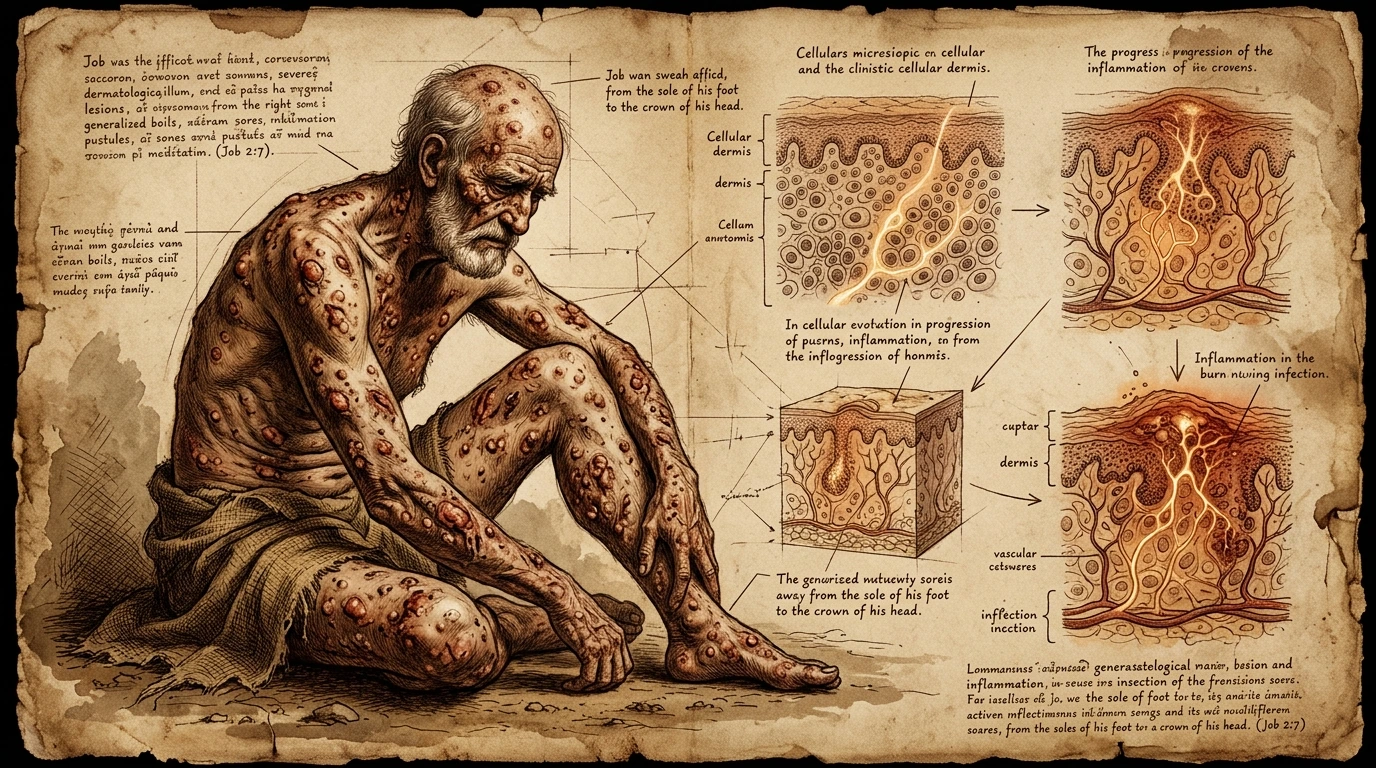
Job’s Malignant Boils: A Clinical Diagnosis of Ancient Pathology (Job 2:7)
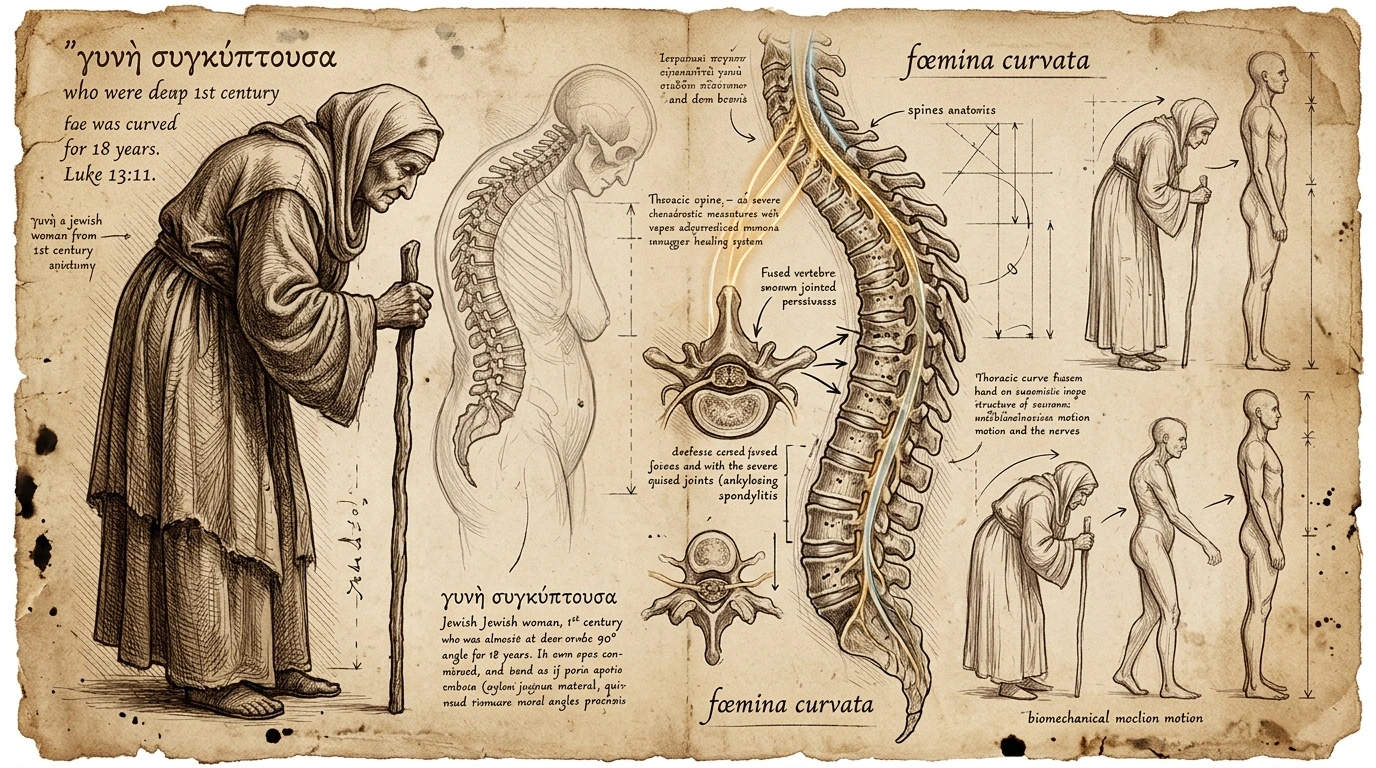
The 18-Year Bent Woman of Luke 13: Ankylosing Spondylitis and Instant Spinal Biomechanics