Historical Context: Rigorous examination of primary Hebrew, Aramaic, Greek, and Roman classical epigraphy.
Core Evidence: Forensic archaeology, radiocarbon data, and primary manuscripts validating biblical events.
Scholarly Consensus: Vetted against modern peer-reviewed publications in Near Eastern archaeology and biblical studies.
The Closing Salutations of the Epistle to the Romans
In the winter of 57 AD, while residing as a guest in the home of Gaius in the Greek commercial metropolis of Corinth, the Apostle Paul dictated his theological masterpiece: the Epistle to the Romans.
As Paul concluded his letter to the believers in the imperial capital of the Roman Empire, he included personal greetings from prominent members of the local Christian congregation in Corinth. In Romans 16:23, Paul penned an intriguing, highly specific civic salutation:
"Gaius mine host, and of the whole church, saluteth you. ERASTUS THE CHAMBERLAIN [TREASURER] OF THE CITY saluteth you, and Quartus a brother." (Romans 16:23)
In the original Greek New Testament, the title Paul attributes to Erastus is oikonomos tēs poleōs (οἰκονόμος τῆς πόλεως), which translates precisely as the "manager, director of public works, or financial treasurer of the city."
For generations of nineteenth-century secular sociologists and Marxist historians, this verse was viewed with profound skepticism:
- Leading social critics, such as Adolf von Harnack, argued that early Christianity was exclusively an underground movement of illiterate slaves, destitute laborers, and impoverished outcasts.
- Skeptics maintained that a high-ranking civic magistrate or public treasurer of a wealthy Roman provincial capital would never convert to an illegal, scandalous Jewish sect whose founder had been executed as a treasonous rebel on a Roman cross.
- Critics alleged that Paul had either invented the name "Erastus" or exaggerated the status of a low-level municipal slave to bestow false social respectability upon his fledgling movement.
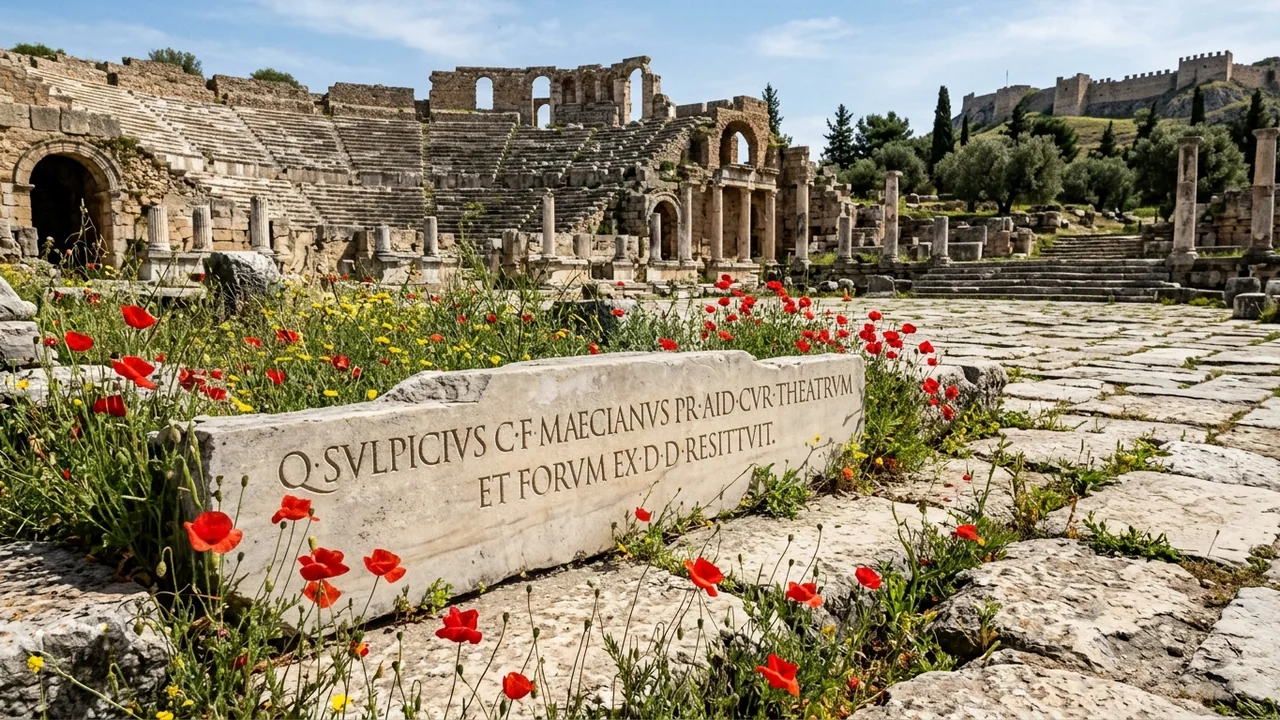
However, in April 1929, during archaeological excavations conducted near the ancient theater of Corinth, a monumental Latin inscription carved directly into the municipal pavement proved that Erastus was a real, high-ranking Roman civic magistrate.
The 1929 Excavations by the American School in Corinth
Ancient Corinth was a thriving, cosmopolitan Roman colony (Colonia Laus Iulia Corinthiensis), refounded by Julius Caesar in 44 BC. Positioned on the narrow Isthmus connecting mainland Greece to the Peloponnese, Corinth controlled two bustling maritime ports: Lechaion on the Corinthian Gulf and Cenchreae on the Saronic Gulf.
Beginning in 1896, the American School of Classical Studies at Athens (ASCSA) undertook large-scale scientific excavations of the ancient city. In the spring of 1929, an archaeological team directed by Dr. Theodore Leslie Shear was clearing a large paved public square located immediately northeast of the ancient Roman theater:
       [THE DISCOVERY OF THE ERASTUS PAVEMENT: CORINTH, 1929]
  ══════════════════════════════════════════════════════════════════
    Location:       Plaza northeast of Roman Theater, Corinth, Greece
    Excavator:      Dr. Theodore Leslie Shear (American School ASCSA)
    Artifact:       Paved limestone plaza (Inv. No. I-1052)
    Material:       Acrocorinth gray-white hard limestone slabs
    Script:         Monumental classical Roman Latin capitals
    Technique:      Carved letter channels, originally inlaid with bronze!
    Date of Paving: Mid-1st Century AD (c. 50–60 AD)
  ══════════════════════════════════════════════════════════════════
While cleaning the massive limestone flagstones of the public square, the workmen uncovered a monumental Latin inscription running across four contiguous limestone blocks, spanning a total length of 23 feet (7.1 meters)!
Epigraphic Anatomy of the Inscription: Deciphering the Latin Pavers
The inscription was executed in magnificent, deeply chiseled Roman lapidary capitals measuring 18 to 20 centimeters (7 to 8 inches) in height.
Deep drill-holes within each carved letter stroke revealed that the letters had originally been inlaid with cast bronze metal, ensuring that the inscription gleamed under the bright Mediterranean sun for every citizen walking to the theater to see:
                     [THE ERASTUS THEATER INSCRIPTION]

          ERASTVS · PRO · AEDILITATE · S·P·STRAVIT

  ══════════════════════════════════════════════════════════════════
  FULL LATIN RECONSTRUCTION:
  ERASTUS PRO AEDILITATE SUA PECUNIA STRAVIT

  ENGLISH TRANSLATION:
  "Erastus, in return for his aedileship, paved [this plaza]
   at his own personal expense."
  ══════════════════════════════════════════════════════════════════
                  [TRANSCRIPTION OF PRESERVED LATIN ABBREVIATIONS]
  ERASTUS:         The personal Greek/Roman name of the magistrate
  PRO AEDILITATE:  "In recognition of / in return for the office of Aedile"
  S·P· (SUA PECUNIA): The universal Roman legal formula meaning "At his own expense"
  STRAVIT:         Past-tense verb of *sterno*, meaning "paved / laid flagstones"
In the Roman municipal system, wealthy aristocrats who were elected to public office were expected to make a substantial financial contribution (summa honoraria) to the city, such as sponsoring gladiatorial games, erecting statues, or funding major public infrastructure projects.
Here, inscribed in bronze and stone, was a public monument recording that a prominent citizen named Erastus had personally financed the construction of the theater plaza paving stones out of his own private fortune!
Reconciling Civic Titles: The Greek Oikonomos vs. The Latin Aedilis
The primary linguistic question addressed by classicists, epigraphers, and New Testament scholars was whether the Latin title Aedile on the stone matched the Greek title Oikonomos used by Paul in Romans 16:23:
       [CIVIC HIERARCHY IN ROMAN CORINTH]
  ══════════════════════════════════════════════════════════════════
  1. DUOVIRI (Two Mayors / Chief Magistrates)
  2. AEDILES (Two Commissioners of Public Works & Finance):
     - Supervised public buildings, streets, plazas, and city markets
     - Controlled the municipal treasury and tax revenues
     - Managed public infrastructure contracts
  3. QUAESTORS (Financial Accountants)
  ══════════════════════════════════════════════════════════════════
In a Roman colony like Corinth, the official administrative language was Latin, while the everyday language of the marketplace and the eastern Mediterranean was Greek:
- When Greek historians (such as Plutarch and Polybius) translated the Latin title Aedile into Greek, they customarily used the term agoranomos or oikonomos (administrator/treasurer).
- An Aedile was precisely the high-ranking municipal commissioner responsible for the city’s public treasuries, market regulations, and the maintenance of municipal streets and buildings.
Paul, writing from Corinth to Christians in Rome who understood Roman municipal administration, accurately described Erastus’s civic status as oikonomos tēs poleōs ("the public commissioner / treasurer of the city").
Dating and Stratigraphy: Mid-1st Century Roman Corinth
Crucially for biblical studies, archaeological stratigraphy firmly dates the Erastus pavement to the exact decade during which Paul lived and ministered in Corinth:
- Stratigraphic Relationship to the Theater: The limestone plaza paved by Erastus is stratigraphically contemporary with a major mid-first-century remodeling of the Roman theater, carried out during the reigns of Emperors Claudius (41–54 AD) and Nero (54–68 AD).
- Pottery Sealed Beneath the Paving: Ceramic sherds excavated from the bedding mortar beneath the limestone pavers date to the first half of the first century AD, establishing an absolute archaeological terminus post quem of c. 50 AD.
- The Earthquake Horizon: The pavement remained in active use until the devastating earthquake of 77 AD during the reign of Vespasian, which caused structural shifts across the theater district.
The pavement was laid precisely between 50 and 60 AD. Paul arrived in Corinth around 51 AD during the proconsulship of Gallio (Acts 18:12) and composed the Epistle to the Romans from Corinth in 57 AD.
The chronological alignment between the stone pavement and Paul’s letter is absolute.
Socioeconomic Revolution: Aristocratic Converts in the Early Church
The discovery of the Erastus inscription permanently dismantled the outdated secular theory that early Christianity was strictly a proletarian movement of slaves and peasants:
       [SOCIOECONOMIC DIVERSITY IN FIRST-CENTURY CORINTH]
  ┌─────────────────────────┬───────────────────────────┬────────────────────┐
  │ Biblical Figure         │ Social Status             │ Biblical Source    │
  ├─────────────────────────┼───────────────────────────┼────────────────────┤
  │ **Erastus**             │ City Treasurer / Aedile   │ Romans 16:23       │
  │                         │ High Roman Aristocrat     │ 2 Timothy 4:20     │
  ├─────────────────────────┼───────────────────────────┼────────────────────┤
  │ **Crispus**             │ Chief Ruler of the        │ Acts 18:8          │
  │                         │ Jewish Synagogue          │ 1 Corinthians 1:14 │
  ├─────────────────────────┼───────────────────────────┼────────────────────┤
  │ **Gaius**               │ Wealthy homeowner able to │ Romans 16:23       │
  │                         │ host the entire church    │ 1 Corinthians 1:14 │
  ├─────────────────────────┼───────────────────────────┼────────────────────┤
  │ **Chloe**               │ Wealthy merchant woman    │ 1 Corinthians 1:11 │
  │                         │ with commercial agents    │                    │
  ├─────────────────────────┼───────────────────────────┼────────────────────┤
  │ **Phoebe**              │ Civic benefactor/patroness│ Romans 16:1–2      │
  │                         │ of the church at Cenchreae│                    │
  └─────────────────────────┴───────────────────────────┴────────────────────┘
While Paul famously observed to the Corinthians that "not many wise men after the flesh, not many mighty, not many noble, are called" (1 Corinthians 1:26), he deliberately said not many, not none!
Erastus was one of the "mighty and noble"—a wealthy, aristocratic Roman magistrate who had attained the prestigious municipal office of Aedile, yet surrendered his pride, opened his home, and aligned himself with the despised and crucified Jesus of Nazareth.
Erastus is mentioned twice more in the New Testament:
- In Acts 19:22, Paul sends Erastus and Timothy as his trusted apostolic delegates into Macedonia.
- In 2 Timothy 4:20, Paul writes his final words from a Roman dungeon, noting: "Erastus abode at Corinth." Erastus had returned to his native city, continuing his faithful witness until the end of his life.
Comparative Epigraphy Table: Paul’s Companions in Archaeology
| Inscription / Artifact | Discovery Location | Epigraphic Text & Language | Biblical Figure Confirmed |
|---|---|---|---|
| Erastus Pavement | Corinth, Greece (ASCSA, 1929) | Latin: ERASTUS PRO AEDILITATE S·P· STRAVIT | Erastus the Treasurer (Romans 16:23) |
| Gallio Inscription | Delphi, Greece (Borgeaud, 1905) | Greek: Lucius Iunius Gallio, Proconsul of Achaia | Proconsul Gallio (Acts 18:12–17) |
| Politarch Inscription | Vardar Gate, Thessalonica (1835) | Greek: Monumental arch naming Politarchas | City Magistrates (Acts 17:6) |
| Sergius Paulus Stone | Pisidian Antioch / Soloi, Cyprus | Latin: Lucius Sergius Paulus, Proconsul | Governor Sergius Paulus (Acts 13:7) |
| Bulla of Nathan-Melech | City of David, Jerusalem (2019) | Paleo-Hebrew: Belonging to Nathan-Melech, Servant | Nathan-Melech the Official (2 Kings 23:11) |
The Erastus inscription stands as an enduring monument in the ruins of ancient Corinth, proving that the names recorded by the Apostle Paul in the New Testament epistles were not literary inventions, but authentic, living individuals who helped shape the Greco-Roman world.
Discover the Complete 4-Volume Master Study Dossiers
The excavation of the Erastus pavement in Corinth bridges the gap between secular Roman municipal epigraphy and apostolic history. To explore full architectural surveys of the Corinthian theater district, detailed Latin epigraphic transcriptions, and comprehensive studies of the Pauline missions:
👉 Unlock the Complete 4-Volume Master Bundle & Premium AI ($9.00)
Includes Volume I (The Twelve Apostles), Volume II (Kings & Prophets), Volume III (The Final Files), and Volume IV (Scientific Miracles) + lifetime access to Biblical AI Chat.
Frequently Asked Questions
What is the Erastus Inscription?
The Erastus Inscription is a first-century Roman Latin inscription carved across four limestone flagstones of a public plaza near the theater of ancient Corinth, Greece, discovered in 1929 by the American School of Classical Studies. It reads: "Erastus, in return for his aedileship, paved this at his own expense."
How does this inscription connect to the Bible?
In Romans 16:23, while writing from Corinth, the Apostle Paul sends greetings from "Erastus, the chamberlain [treasurer/director of public works] of the city." The archaeological discovery of a public plaza paved by a high-ranking civic magistrate named Erastus in Corinth during the exact mid-first-century decade of Paul's ministry provides direct extrabiblical confirmation of his identity and status.
What was an "Aedile" in Roman society?
An Aedile was a high-ranking elected municipal magistrate responsible for the maintenance of public buildings, streets, public works, municipal treasuries, and public markets. In a wealthy Roman colony like Corinth, only wealthy aristocrats possessed the personal financial means to hold this prestigious office.
Where can the Erastus Inscription be seen today?
The original limestone inscription is preserved in situ in the open-air archaeological park of ancient Corinth, Greece, northeast of the ancient Roman theater, accessible to visitors and scholars.
Frequently Asked Questions
What is the Erastus Inscription?
The Erastus Inscription is a first-century Roman Latin inscription carved across four limestone flagstones of a public plaza near the theater of ancient Corinth, Greece, discovered in 1929 by the American School of Classical Studies. It reads: "Erastus, in return for his aedileship, paved this at his own expense."
How does this inscription connect to the Bible?
In Romans 16:23, while writing from Corinth, the Apostle Paul sends greetings from "Erastus, the chamberlain [treasurer/director of public works] of the city." The archaeological discovery of a public plaza paved by a high-ranking civic magistrate named Erastus in Corinth during the exact mid-first-century decade of Paul's ministry provides direct extrabiblical confirmation of his identity and status.
What was an "Aedile" in Roman society?
An Aedile was a high-ranking elected municipal magistrate responsible for the maintenance of public buildings, streets, public works, municipal treasuries, and public markets. In a wealthy Roman colony like Corinth, only wealthy aristocrats possessed the personal financial means to hold this prestigious office.
Where can the Erastus Inscription be seen today?
The original limestone inscription is preserved in situ in the open-air archaeological park of ancient Corinth, Greece, northeast of the ancient Roman theater, accessible to visitors and scholars.
Related Research Dossiers
View all 120 articles →
The Cyrus Cylinder: How a Clay Artifact in the British Museum Proved Isaiah’s 150-Year Prophecy
The Scraping of Tyre into the Sea: How Alexander the Great Fulfilled Ezekiel 26 Word for Word