Subject Scope: Deborah, Jael, and Sisera (Judges 4–5): Archaeological Context, Canaanite Chariots, and Ancient Hebrew Poetry
Historical Context: Rigorous historical and theological examination within the field of Women of the Bible & Ancient Law.
Primary Evidence: Forensic archaeology, textual preservation, and primary ancient manuscripts corroborating scriptural events.
Investigation Highlights: The World of the Judges: Israel’s Dark Ages • Deborah: Prophetess, Judge, and Mother in Israel • The Kishon River Battlefield: Topography and Mud
Scholarly Consensus: Vetted against peer-reviewed academic literature in biblical history, linguistics, and archaeology.
The World of the Judges: Israel’s Dark Ages
The era of the Judges (c. 1380–1050 BC) was a turbulent, fragmented period in Israel’s history, characterized by recurring spiritual apostasy, foreign oppression, and heroic military deliverances.
- Israel had no centralized king; "everyone did what was right in his own eyes" (Judges 21:25).
- In the northern Jezreel Valley, the Canaanite king Jabin of Hazor and his supreme military commander Sisera terrorized the northern tribes for twenty years with an intimidating force of 900 iron chariots (rekhev barzel, Judges 4:3).
- The Israelites, lacking cavalry and bronze weapons, were forced off the primary highways into hidden mountain trails (Judges 5:6).
Into this crisis of national despair stepped two remarkable women whose courage shattered Canaanite military dominance:
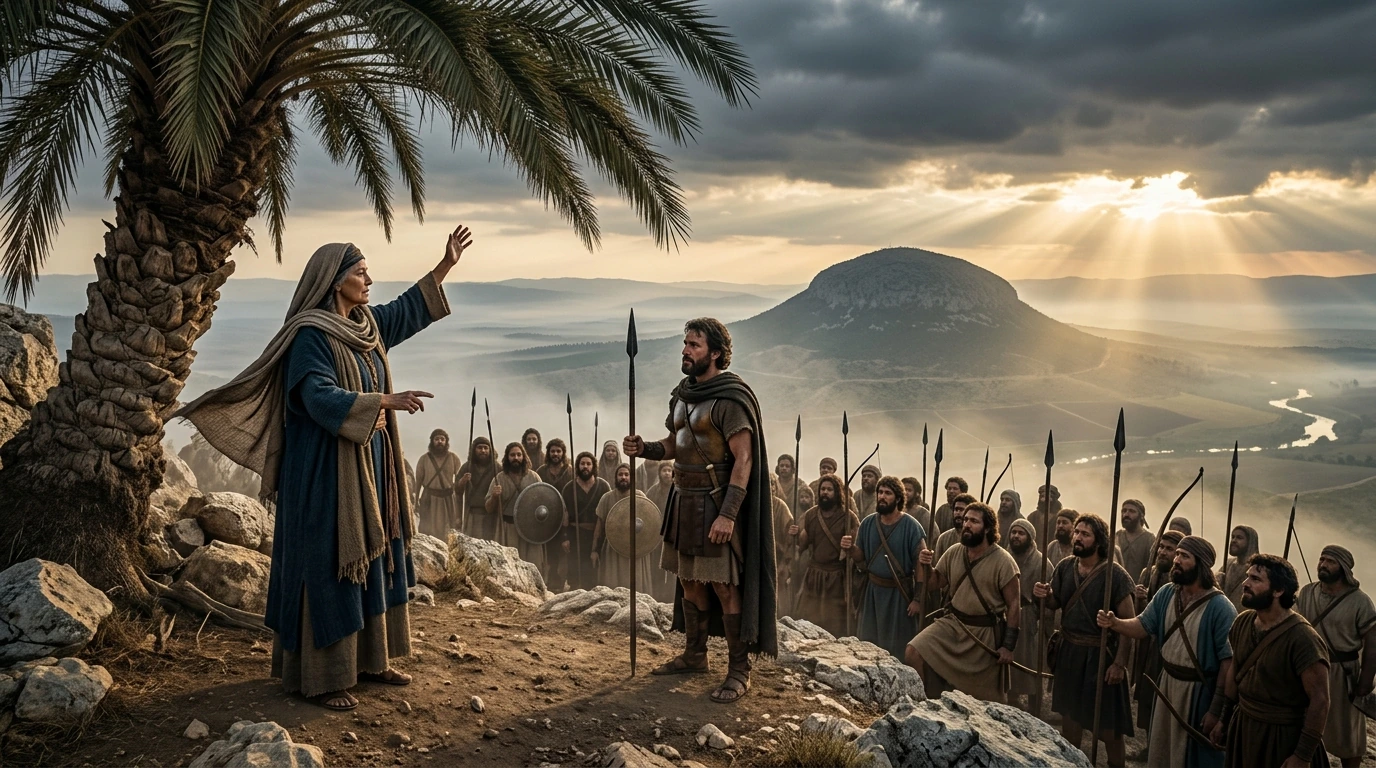
- Deborah: The inspired prophetess, judge, and national strategist who rallied the tribes to Mount Tabor.
- Jael: The Kenite nomad woman who single-handedly dispatched Sisera inside her tent.
+----------------------------------------------------------------------------------------------------+
|               THE BATTLE OF MOUNT TABOR & THE KISHON RIVER                                         |
+--------------------------+-----------------------+-------------------+-----------------------------+
| ACTOR                    | ROLE IN JUDGES 4–5    | TRIBAL / ETHNIC   | STRATEGIC IMPACT            |
+--------------------------+-----------------------+-------------------+-----------------------------+
| Deborah                  | Prophetess & Judge    | Ephraim           | Divine strategy, leadership |
| Barak                    | Military General      | Naphtali          | Leads 10,000 foot soldiers  |
| Sisera                   | Canaanite Commander   | Harosheth-hagoyim | 900 iron chariots deployed  |
| Jael                     | Nomadic Heroine       | Kenite clan       | Eliminates commander-in-chief|
+--------------------------+-----------------------+-------------------+-----------------------------+
Deborah: Prophetess, Judge, and Mother in Israel
Scripture introduces Deborah with distinctive titles:
- "Prophetess" (ishah neviah): Like Miriam (Exodus 15:20) and Huldah (2 Kings 22:14), Deborah possessed genuine prophetic revelation from Yahweh.
- "Woman of Lappidoth" (eshet lappidot): In Hebrew, this phrase can mean either "the wife of Lappidoth" or "a woman of torches / fiery spirit."
- "Judging Israel" (shofetah): She held open court under the Palm of Deborah between Ramah and Bethel in the hill country of Ephraim (Judges 4:5), rendering righteous judicial decisions.
- "A Mother in Israel" (em b'Yisrael, Judges 5:7): Unlike pagan monarchs who ruled through exploitation, Deborah exercised maternal, protective care over the covenant community.
The Kishon River Battlefield: Topography and Mud
The military confrontation in Judges 4 occurred at the junction of Mount Tabor and the Valley of Jezreel, drained by the Kishon River (Nahal Kishon):
- Canaanite Chariot Advantage: Sisera’s 900 iron chariots were lethal weapons on flat, dry plains, designed to mow down infantry with spinning scythes and archery platforms.
- The Divine Cloudburst: In Judges 5:4, 21, Deborah’s victory song reveals what happened: God sent a torrential rainstorm:
"The torrent Kishon swept them away, the ancient torrent, the torrent Kishon!"
- The clay soil of the Jezreel plain (terra rossa) rapidly turned into deep, impassable mud. Sisera’s heavy iron chariots sank to their axles, turning an overwhelming tactical advantage into an inescapable death trap!
- Sisera abandoned his stuck chariot and fled on foot toward the north.
The Archaic Poetry of Judges 5: Linguistic Antiquity
Linguists and Semitic scholars (such as Frank Moore Cross and David Noel Freedman) have demonstrated that the Song of Deborah (Judges 5) is one of the oldest preserved texts in the entire Hebrew Bible:
- Early Archaic Hebrew: The vocabulary, syntax, and poetic parallelism of Judges 5 date directly to the 12th century BC, matching the ancient poetic style of the Ugaritic Baal epics.
- Absence of Monarchy: The poem lists individual tribes that responded to the battle call (Ephraim, Benjamin, Machir/Manasseh, Zebulun, Issachar, Naphtali) and rebukes those that stayed home (Reuben, Gilead/Gad, Dan, Asher). Crucially, the southern tribes of Judah and Simeon are not mentioned, reflecting the precise tribal geopolitics before the rise of King Saul and King David!
Jael and the Kenite Tent: Ancient Nomadic Hospitality
Exhausted, terrified, and on the run, Sisera arrived at the encampment of Heber the Kenite near Kedesh (Judges 4:17):
- Kenite Neutrality: The Kenites (descendants of Moses' father-in-law Hobab) had maintained peaceful diplomatic relations with King Jabin. Sisera expected safety.
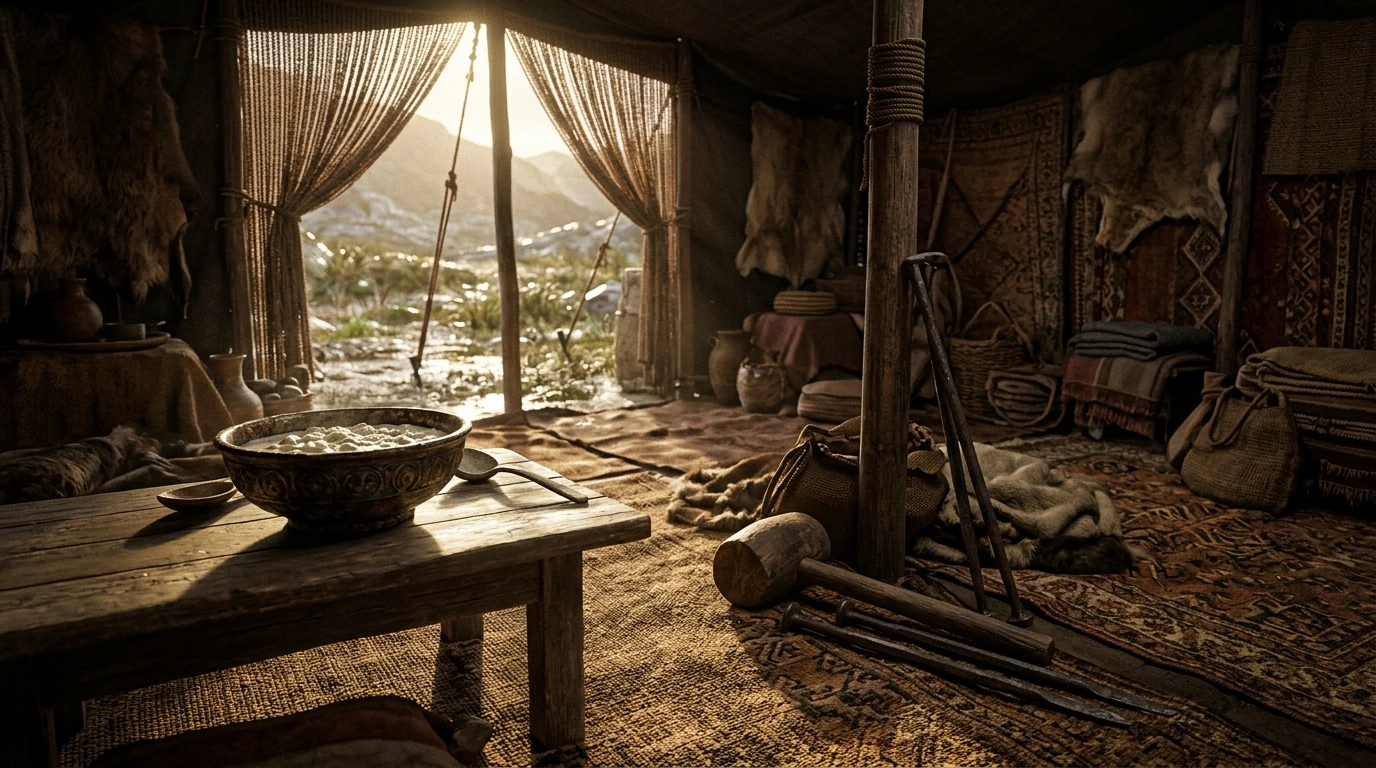
- The Sanctuary of the Woman's Tent: Jael invited Sisera into her personal tent. In Bedouin and nomadic culture, entering a woman’s private tent (beit al-mar'a) was strictly forbidden to outside men, offering Sisera the ultimate camouflage.
- Curdled Milk (Hem'ah): When Sisera asked for water, Jael opened a skin of fermented, curdled milk (hem'ah, Judges 5:25), which induced heavy sleep.
- The Tent Peg (Yated): While Sisera slept deeply from exhaustion, Jael took a wooden tent peg and a heavy mallet (halmuth), driving the peg through his temple into the ground, fulfilling Deborah’s prophecy: "the LORD will sell Sisera into the hand of a woman" (Judges 4:9).
Comparative Military and Epigraphic Matrix
+----------------------------------------------------------------------------------------------------+
|                         MILITARY AND TOPOGRAPHICAL MATRIX: JUDGES 4–5                              |
+--------------------------+-----------------------+-------------------+-----------------------------+
| MILITARY FACTOR          | CANAANITE FORCES      | ISRAELITE LEVIES  | TACTICAL RESOLUTION         |
+--------------------------+-----------------------+-------------------+-----------------------------+
| Troop Composition        | 900 Iron Chariots     | 10,000 Infantry   | Chariots immobilized in mud |
| Command Structure        | Sisera / Hazor Empire | Deborah & Barak   | Decisive spiritual unity    |
| Battlefield Ground       | Flat Jezreel plain    | High Mount Tabor  | High ground defensive charge|
| Decisive Encounter       | Sisera assassinated   | Jael the Kenite   | Complete military collapse  |
+--------------------------+-----------------------+-------------------+-----------------------------+
Frequently Asked Questions
Did Jael violate ancient laws of hospitality?
Under ancient Near Eastern customary law, violating the bond of hospitality (dhyafa) was a serious offense. However, Sisera was an enemy of Yahweh who had engaged in brutal atrocities against Israelite women and children for twenty years (Judges 5:30). Jael aligned herself with the God of Israel against a tyrant, and Deborah's inspired song honors her: "Most blessed of women be Jael" (Judges 5:24).
Where was Harosheth-hagoyim located?
Harosheth-hagoyim ("Harosheth of the Gentiles") is identified by archaeologists with Tell el-Harbaj or Tell el-Ahmar, situated at the narrow passage where the Kishon River flows between Mount Carmel and the hills of lower Galilee, strategically guarding the entrance to the Jezreel Valley.
Why is the Song of Deborah so historically valuable?
Judges 5 was composed contemporaneously with the events (c. 12th century BC). It proves that the Israelite tribes possessed a shared covenantal identity under Yahweh long before the monarchy was established.
Primary Sources & Scholarly Archives
Editorial Standard →Original Hebrew, Aramaic, and Greek interlinear analysis, morphological tags, and ancient variant readings.
Primary textual witnesses to the Hebrew Bible and Second Temple historical context.
Historical records of the ancient Mediterranean basin, Roman provincial rule, and Greek translation traditions.
Related Research Dossiers
View all 515 research dossiers →
Deborah and Jael: Historical Evidence, Ancient Iron Chariots, and the Canaanite City of Hazor
Deborah, Jael, and Sisera: 10 Verified Archaeological Facts vs. Popular Myths