Subject Scope: Archaeology and Persian Court Customs Behind Queen Esther at Susa: The Seven Princes, the Golden Scepter, and the Royal Couriers
Historical Context: Rigorous historical and theological examination within the field of Women of the Bible & Ancient Near Eastern Law.
Primary Evidence: Forensic archaeology, textual preservation, and primary ancient manuscripts corroborating scriptural events.
Investigation Highlights: The Topography of Shushan the Citadel (Tell el-Shush) • The Seven Princes of Persia and Media: Herodotus Parallel • The Royal Golden Scepter (Sharbit) at Persepolis
Scholarly Consensus: Vetted against peer-reviewed academic literature in biblical history, linguistics, and archaeology.
The Topography of Shushan the Citadel (Tell el-Shush)
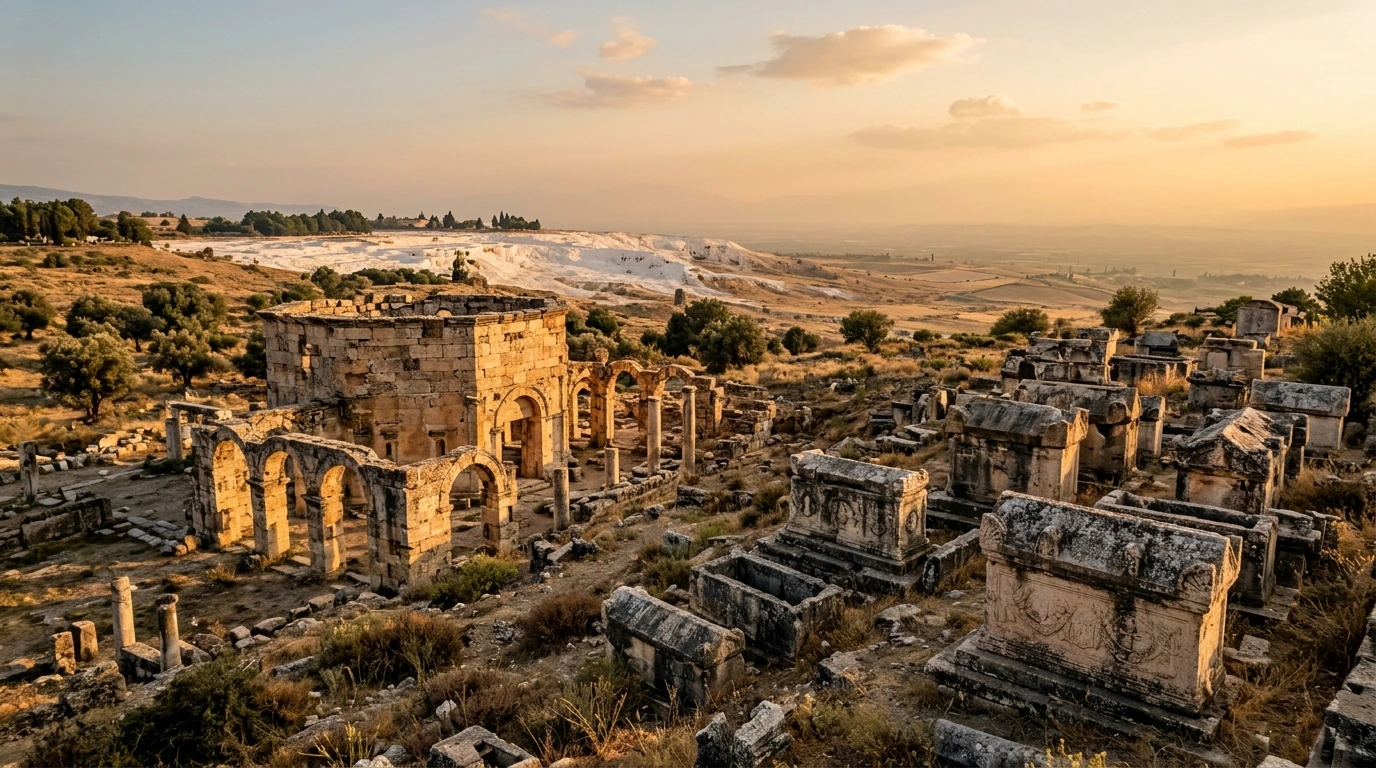
The Book of Esther opens not in the pastoral highlands of Judea, but within the colossal administrative core of the Achaemenid Persian Empire: Shushan the Citadel (Shushan ha-Birah, Esther 1:2). Situated along the river Choaspes (modern Karkheh) in southwestern Iran, ancient Susa was one of the four imperial capitals of Persia, functioning as the premier winter residence of the Great King.
Extensive archaeological excavations initiated by French archaeologist Marcel-Auguste Dieulafoy in 1884–1886, and subsequently expanded by Jacques de Morgan and Roland de Mecquenem, excavated the monumental royal palace complex built by Darius the Great (reigned 522–486 BC) and expanded by his son Xerxes I (Ahasuerus, reigned 486–465 BC):
- The Acropolis and Citadel (Birah): A towering artificial mound rising 120 feet above the Khuzestan plain, housing the military garrison, royal treasury, and central administrative archives.
- The Royal Palace (Apadana): A monumental audience hall covering nearly 10,000 square meters, supported by 72 fluted limestone columns rising over 65 feet high and topped by colossal double-bull capitals.
- The Private Palace and Harem: Distinct residential sectors separated by fortified internal courtyards, exactly mirroring the biblical narrative where one moves from the outer court (he-chatzer ha-chitzonah, Esther 6:4) through the king’s gate (shaar ha-melech) to the inner throne court (he-chatzer ha-penimit, Esther 5:1).
+----------------------------------------------------------------------------------------------------+
|                  ARCHAEOLOGICAL ZONING OF SHUSHAN THE CITADEL (TELL EL-SHUSH)                      |
+--------------------------+-----------------------+-------------------+-----------------------------+
| ARCHITECTURAL ZONE       | HEBREW DESIGNATION    | ACHAEAN CONTEXT   | BIBLICAL FUNCTION           |
+--------------------------+-----------------------+-------------------+-----------------------------+
| 1. The Royal Gate        | Sha'ar ha-Melech      | Gate of Xerxes    | Mordecai's sentinel station |
| 2. Outer Court           | Chatzer ha-Chitzonah  | Public Esplanade  | Haman's early morning appeal|
| 3. Inner Throne Hall     | Chatzer ha-Penimit    | Apadana Audience  | Esther approaches uncalled  |
| 4. Royal Garden Court    | Beit Bitan ha-Melech  | Pavilioned Park   | Xerxes' 180-day feast       |
+--------------------------+-----------------------+-------------------+-----------------------------+
The architectural realism of Esther is so exact that French architectural historians noted the author was not writing late Hellenistic fiction, but possessed firsthand, intimate knowledge of Susa prior to its destruction by Alexander the Great in 330 BC.
The Seven Princes of Persia and Media: Herodotus Parallel
In Esther 1:14, when Queen Vashti refuses the king's summons, King Ahasuerus confers with his inner advisory council:
"The closest to him being Carshena, Shethar, Admatha, Tarshish, Meres, Marsena, and Memucan, the seven princes of Persia and Media who had access to the king’s presence and sat first in the kingdom." — Esther 1:14
This biblical detail finds exact, independent corroboration in Greek classical historiography. In Book III of the Histories, Herodotus (3.84) describes the ascension of Darius the Great following the overthrow of the Magian usurper Gaumata. The seven Persian conspirators entered into a formal covenant:
- The seven noble families reserved the perpetual, hereditary right to enter the king's personal presence unannounced at any time, except when he was in his bedchamber with a wife.
- The king was legally restricted to choosing his royal brides solely from the lineage of these seven noble houses.
- The names of the seven noble conspirators recorded by Herodotus (Otanes, Intaphrenes, Gobryas, Hydarnes, Megabyzus, Aspathines, and Darius) match the constitutional dynamic preserved in Esther, where seven imperial counselors form the supreme crown council.
Furthermore, ancient Persian onomastic analysis demonstrates that the seven names in Esther 1:14 are authentic Old Persian names containing Iranian linguistic roots:
- Carshena: Old Persian Karshna ("dark" or "cultivator").
- Admatha: Old Persian Adamata ("unbroken" or "untamed").
- Memucan: Old Persian Mamu-ka ("honorable counselor").
The presence of archaic Old Persian phonology in Hebrew transliteration confirms an author immersed in 5th-century BC Achaemenid court vocabulary.
The Royal Golden Scepter (Sharbit) at Persepolis
The central crisis of the narrative occurs in Esther 4:11:
"All the king’s servants and the people of the king’s provinces know that if any man or woman goes to the king inside the inner court without being called, there is but one law—to be put to death, except the one to whom the king holds out the golden scepter that he may live." — Esther 4:11
This perilous protocol is visually documented on the monumental stone relief sculptures excavated at the imperial capital of Persepolis:
+----------------------------------------------------------------------------------------------------+
|                    THE PERSEPOLIS TREASURY RELIEF: ROYAL AUDIENCE PROTOCOL                         |
+--------------------------+-------------------------------------------------------------------------+
| RELIEF DETAIL            | CORROBORATION WITH ESTHER 5:1-2                                         |
+--------------------------+-------------------------------------------------------------------------+
| 1. The Enthroned King    | King Darius/Xerxes elevated on a raised dais beneath a canopied pavilion|
| 2. The Golden Scepter    | The Great King holds a slender, 2-meter staff tipped with a round pommel|
| 3. Royal Bodyguards      | The "Immortals" stand behind the throne armed with spears and axes      |
| 4. The Court Usher       | The Pharnaces (Chamberlain) bows with hand over mouth to prevent breath  |
|                          | from defiling the royal majesty                                         |
+--------------------------+-------------------------------------------------------------------------+
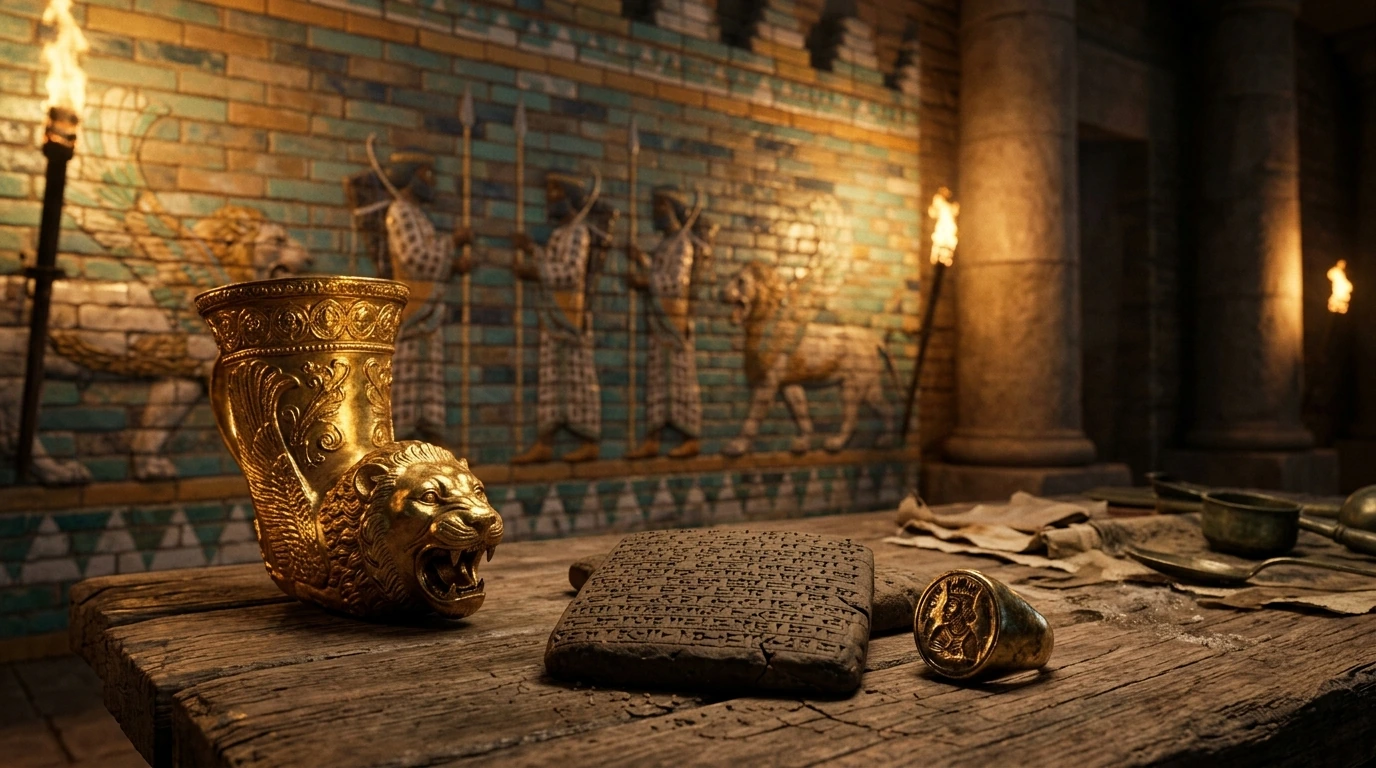
The Hebrew term used for scepter in Esther is not the standard West Semitic word shevet, but the unique loanword sharbit (found only in Esther 4:11, 5:2, and 8:4). Philologists have identified sharbit as a direct Aramaic-Persian phonetic evolution of the Old Persian sraubita or Akkadian shibbirru, describing the distinctively long, golden royal baton depicted on the Persepolis reliefs.
Unannounced entry violated the supreme taboo of Persian royal sacral majesty; execution by the surrounding spearmen was automatic unless the king actively extended the golden tip toward the petitioner.
The Royal Postal Express: The Angareion Relay System
To disseminate imperial decrees across the 127 provinces stretching from India (Hodu, modern Indus Valley) to Cush (Kush, upper Nile in Sudan), the Persian administration utilized the most sophisticated communications network in the ancient world:
"He wrote in the name of King Ahasuerus and sealed it with the king’s signet ring, and sent letters by mounted couriers riding on swift horses bred from the royal stud." — Esther 8:10
Herodotus (Histories 8.98) described this extraordinary postal network, known in Persian as the Pirradazish and in Greek as the Angareion:
"There is nothing in the world that travels faster than these couriers of the Persian king... Neither snow, nor rain, nor heat, nor gloom of night stays these couriers from the swift completion of their appointed rounds. The first courier delivers his message to the second, the second to the third, and so it passes from hand to hand across the entire empire."
Archaeologists have recovered hundreds of clay administrative tablets from the Persepolis Fortification Archive (excavated by Ernst Herzfeld and the University of Chicago). These tablets record the precise rations of barley, wine, and grain issued to royal couriers (pirradazish) riding swift postal horses (aspa) at relay post-stations spaced precisely one day’s journey apart along the 1,600-mile Royal Road connecting Susa, Sardis, Babylon, and Memphis.
Esther 8:10 preserves the specialized Persian technical terms:
- Rachim: Royal couriers (rekhev).
- Achashteranim: Old Persian loanword khshathra-na meaning "pertaining to the royal court" or "royal studs".
- Bene ha-Rammachim: "Offspring of royal mares" (ramak, Persian for breeding mare).
The Irrevocable Law of the Medes and Persians (Dath)
A critical legal crux in Esther is that once a royal decree has been signed with the king's signet and sealed in the name of the king, it cannot be revoked:
"For a decree written in the name of the king and sealed with the king's signet cannot be revoked." — Esther 8:8
This doctrine—known as the Law of the Medes and Persians (Dath Madai u-Pharas, Daniel 6:8, Esther 1:19)—was rooted in the theological ideology of Achaemenid kingship:
- The Great King ruled as the earthly viceregent of Ahura Mazda, the supreme deity of cosmic truth and order (Asha).
- To revoke a formal, sealed decree was to admit error, fallibility, or deceit, which were the hallmarks of the Lie (Drauga).
- Therefore, King Ahasuerus could not simply nullify Haman’s genocidal decree of the 13th of Adar (Esther 3:13); rather, Mordecai was permitted to draft a countervailing imperial counter-decree empowering the Jews across all provinces to assemble, arm, and defend themselves with state sanction (Esther 8:11–12).
The word for law used repeatedly throughout Esther is not the Hebrew Torah or Mishpat, but the Old Persian legal loanword dātha (appearing over 20 times in Esther and Ezra). This administrative terminology accurately mirrors the official edicts issued by Darius I and Xerxes on imperial stone stelae.
Three-Tier Evidentiary Evaluation: Material Artifacts
+----------------------------------------------------------------------------------------------------+
|               THREE-TIER EVIDENTIARY AUDIT: THE BOOK OF ESTHER & ACHAEMENID SUSA                  |
+--------------------------+-----------------------+-------------------+-----------------------------+
| ARTIFACT / TEXT          | LOCATION / EXCAVATION | CHRONOLOGY        | EVIDENTIARY SIGNIFICANCE    |
+--------------------------+-----------------------+-------------------+-----------------------------+
| 1. Susa Palace Apadana   | Tell el-Shush, Iran   | 520–465 BC        | Direct material match with  |
|    (Dieulafoy Friezes)   | (Louvre Museum)       | (Darius & Xerxes) | architectural layout        |
| 2. Persepolis Treasury   | Persepolis, Iran      | ca. 490–470 BC    | Material depiction of the   |
|    Audience Relief       | (National Museum Iran)|                   | royal golden scepter        |
| 3. Persepolis Fort.      | Persepolis Archives   | 509–494 BC        | Administrative proof of the |
|    Courier Tablets       | (Oriental Institute)  | (Darius I)        | royal postal relay system   |
| 4. Borsippa Cuneiform    | Borsippa, Mesopotamia | Reign of Xerxes I | Historical administrative   |
|    Tablet (Marduka)      | (Berlin Museum)       | (486–465 BC)      | official named Marduka      |
+--------------------------+-----------------------+-------------------+-----------------------------+
Theological Synthesis: Providence in the Shadows
The Book of Esther is famous for never explicitly mentioning the name of God (Yahweh or Elohim). Yet, from a literary and theological perspective, divine providence saturates every page:
- The sleepless night of King Ahasuerus leading to the reading of the royal chronicles (Esther 6:1).
- The casting of the lot (Pur) delaying the execution date by eleven months, allowing time for Esther’s petition (Esther 3:7).
- The exact juxtaposition of Mordecai’s elevation to second-in-command just as Haman prepares the gallows.
The material archaeology of Susa demonstrates that God operates sovereignly within the most powerful, lavish, and dangerous political empires on earth, utilizing imperfect, courageous individuals placed in key positions "for such a time as this" (Esther 4:14).
Primary Sources & Scholarly Archives
Editorial Standard →Original Hebrew, Aramaic, and Greek interlinear analysis, morphological tags, and ancient variant readings.
Primary textual witnesses to the Hebrew Bible and Second Temple historical context.
Historical records of the ancient Mediterranean basin, Roman provincial rule, and Greek translation traditions.
Frequently Asked Questions
Was King Ahasuerus the same historical figure as Xerxes the Great?
Yes. The Hebrew Achashverosh is the exact phonetic transliteration of the Old Persian royal name Khshayarsha, known in Greek as Xerxes I (reigned 486–465 BC).
Did Persian kings actually execute people for approaching the throne uninvited?
Yes. Classical historians like Herodotus confirm that entering the king’s presence unbidden carried an automatic death penalty by royal guards unless the golden scepter was extended.
Has any archaeological record of Mordecai been found outside the Bible?
A cuneiform tablet from Borsippa dating to the reign of Xerxes I names a royal court accountant and counselor at Susa named Marduka, matching Mordecai’s era and office.
Why could not King Ahasuerus simply cancel Haman’s decree?
Under Achaemenid constitutional law, royal decrees sealed with the signet ring were legally irrevocable; the king could only counter it with an equally binding decree granting self-defense.
Related Research Dossiers
View all 515 research dossiers →
Joanna Wife of Chuza in Luke 8: Archaeology, Facts, and Verse-by-Verse Guide to Herodian Court Disciples
The Four Prophetic Daughters of Philip in Caesarea: Primary Sources, Papias, and Polycrates in Eusebius