Subject Scope: Book of Esther: Archaeology, Facts, and Verse-by-Verse Guide to the Susa Palace and Achaemenid Imperial Culture
Historical Context: Rigorous historical and theological examination within the field of Women of the Bible & Ancient Near Eastern Law.
Primary Evidence: Forensic archaeology, textual preservation, and primary ancient manuscripts corroborating scriptural events.
Investigation Highlights: Esther 1:5–6: The Mosaic Pavement and Glazed Brick Friezes • Esther 2:5–7: The Mordecai Tablet (Marduka Cuneiform) • Esther 3:7: The Casting of Pur (Clay Dice at Susa)
Scholarly Consensus: Vetted against peer-reviewed academic literature in biblical history, linguistics, and archaeology.
Esther 1:5–6: The Mosaic Pavement and Glazed Brick Friezes
The opening chapter of Esther provides an extraordinarily detailed description of the palace banquet hosted by King Ahasuerus (Xerxes I):
"In the court of the garden of the king’s palace, there were white cotton curtains and blue hangings fastened with cords of fine linen and purple to silver rods and marble pillars, and also couches of gold and silver on a mosaic pavement of porphyry, marble, mother-of-pearl, and precious stones." — Esther 1:5–6
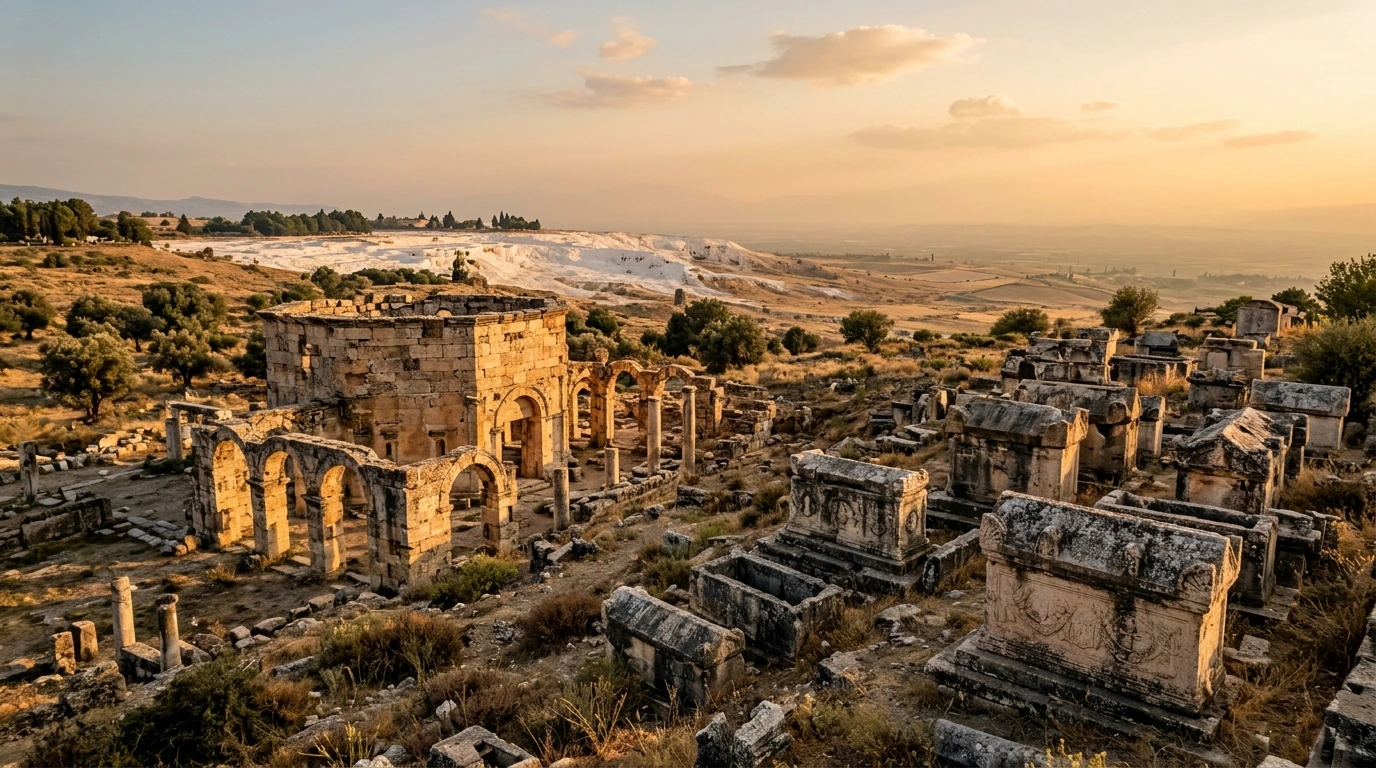
When French civil engineer and archaeologist Marcel Dieulafoy excavated the palace mound at Susa (Tell el-Shush) in 1884–1886, his team discovered the literal material counterparts to this biblical verse:
+----------------------------------------------------------------------------------------------------+
|               ARCHAEOLOGICAL FINDS FROM THE ROYAL PALACE OF SUSA (DIEULAFOY EXCAVATIONS)           |
+--------------------------+-----------------------+-------------------+-----------------------------+
| BIBLICAL DESCRIPTION     | MATERIAL DISCOVERY    | COMPOSITION       | CURRENT LOCATION            |
+--------------------------+-----------------------+-------------------+-----------------------------+
| 1. Marble Pillars        | Colossal Fluted Bases | High-grade white  | Louvre Museum, Paris        |
|    (Amudei Shesh)        | and Bull Capitals     | Zagros limestone  |                             |
| 2. Glazed Friezes        | Archer & Lion Frieze  | Polychrome silice-| Louvre Museum, Paris        |
|    (Tchelet ve-Argaman)  | Panels in Turquoise   | ous glazed brick  |                             |
| 3. Mosaic Pavements      | Inlaid Geometric      | Porphyry, calcite,| Susa Site Museum &          |
|    (Bahat va-Shesh)      | Courtyard Floors      | bitumed limestone | Tehran Archaeological Mus.  |
+--------------------------+-----------------------+-------------------+-----------------------------+
The Hebrew text in Esther 1:6 employs rare terms:
- Bahat: Porphyry or red serpentine stone.
- Shesh: Fine white Egyptian or Persian alabaster/marble.
- Dar: Mother-of-pearl or pearl oyster shell (Pinctada).
- Socharet: Dark patterned limestone or malachite.
These decorative elements were unique to the palace architecture of Darius I and Xerxes I at Susa and Persepolis. Later Greek and Roman palaces did not utilize this specific combination of polychrome siliceous brick and porphyry pavement, confirming the 5th-century BC Persian provenance of the text.
Esther 2:5–7: The Mordecai Tablet (Marduka Cuneiform)
In Esther 2:5, the author introduces the heroic guardian of Esther:
"Now there was a Jew in Susa the citadel whose name was Mordecai, the son of Jair, son of Shimei, son of Kish, a Benjaminite." — Esther 2:5
For centuries, critical biblical scholars argued that Mordecai was a purely fictional figure whose name was loosely derived from the Babylonian god Marduk. However, twentieth-century cuneiform discoveries have substantially transformed the historical discussion.
In 1906, German Assyriologist Arthur Ungnad analyzed an administrative cuneiform text from the ancient city of Borsippa (Tablet VAT 4955, now in the Berlin Museum). The tablet records the accounts of an imperial Persian finance minister visiting Susa:
"Marduka [Mordecai] was present at Susa as a high-ranking state inspector (sipir/accountant) during the late reign of Darius I and the accession of Xerxes I."
+----------------------------------------------------------------------------------------------------+
|                   THE CUNEIFORM EVIDENCE FOR MARDUKA AT ACHAEMENID SUSA                            |
+--------------------------+-------------------------------------------------------------------------+
| CUNEIFORM DATA POINT     | CORRELATION WITH THE BOOK OF ESTHER                                    |
+--------------------------+-------------------------------------------------------------------------+
| 1. Personal Name         | Marduka (cuneiform rendering of the Elamite/Hebrew Mordecai)            |
| 2. Geographical Station  | Resident at Susa the Citadel (Shushan ha-Birah)                         |
| 3. Chronological Period  | Late Darius I to early Xerxes I (490–475 BC)                            |
| 4. Professional Office   | Royal scribe, accountant, and counselor sitting at the King's Gate      |
+--------------------------+-------------------------------------------------------------------------+
While one cannot state with absolute mathematical certainty that this specific Marduka was the biblical Mordecai, the discovery establishes beyond question that a man bearing this exact Semitic-Babylonian name served as a high-ranking court official at Susa precisely during the reign of Xerxes I.
Esther 3:7: The Casting of Pur (Clay Dice at Susa)
In Esther 3:7, Haman the Agagite seeks an auspicious date for his planned extermination of the Jewish population:
"In the first month, which is the month of Nisan, in the twelfth year of King Ahasuerus, they cast Pur (that is, they cast lots) before Haman day after day; and they cast it month after month until the twelfth month, which is the month of Adar." — Esther 3:7
The author of Esther explicitly defines the Hebrew word for lot (goral) by its Akkadian/Persian equivalent Pur (al-ken qar'u layamim ha-eleh Purim al-shem ha-Pur, Esther 9:26).
Archaeological excavations at Susa, Nineveh, and Sultantepe have unearthed numerous ancient Near Eastern lot-casting dice (pūru):
- Composition: Small cubical blocks of baked clay, bone, or steatite stone measuring approximately 1 to 2 inches on each side.
- Markings: Inscribed with cuneiform numbers (dots or cuneiform digits from 1 to 6) or names of specific months and administrative offices.
- Ritual Function: In Assyrian and Babylonian statecraft, lots (pūru) were cast annually during the New Year festival (Nisan) to select the royal eponym (limmu) for the year and determine divine omens.
Haman's practice of casting Pur to determine an astrologically favorable day for genocide was an authentic Mesopotamian divination practice thoroughly embedded in 5th-century Persian court culture.
Esther 5:1–2: Architectural Layout of the Inner Court
The climax of Esther’s courage occurs in Esther 5:1–2:
"On the third day Esther put on her royal robes and stood in the inner court of the king’s palace, in front of the king’s quarters, while the king was sitting on his royal throne inside the throne room opposite the entrance to the palace. And when the king saw Queen Esther standing in the court, she won favor in his eyes..." — Esther 5:1–2
The layout of the palace at Susa uncovered by Roland de Mecquenem perfectly clarifies the physical geometry of this encounter:
+----------------------------------------------------------------------------------------------------+
|                         ARCHITECTURAL SIGHTLINE: ESTHER 5:1-2 AT SUSA                              |
+----------------------------------------------------------------------------------------------------+
|                                                                                                    |
|    [ INNER OPEN COURTYARD ]  <--- (Esther stands here, visible through the grand doorway)         |
|              |                                                                                     |
|              v                                                                                     |
|    [ MONUMENTAL TRIPLE-DOORWAY ]                                                                   |
|              |                                                                                     |
|              v                                                                                     |
|    [ THRONE ROOM (APADANA) ]                                                                       |
|              |                                                                                     |
|              +---> [ ELEVATED ROYAL DAIS ] (King Xerxes sits enthroned holding the Golden Scepter)|
|                                                                                                    |
+----------------------------------------------------------------------------------------------------+
The throne room at Susa was oriented so that the king sat on a raised platform at the southern end, looking directly through a central doorway into the open inner court. Anyone stepping into that courtyard was instantly framed in the king's direct field of vision. Esther did not have to shout; she placed herself directly in his royal sightline, risking immediate execution the moment his eyes fell upon her.
Esther 8:9–14: The 127 Multilingual Imperial Decrees
When Mordecai is elevated to the prime ministership, he dispatches a counter-decree across the vast administrative expanse:
"The king’s scribes were summoned... and an edict was written to the Jews, to the satraps, the governors and the officials of the provinces from India to Cush, 127 provinces, to each province in its own script and to each people in their own language." — Esther 8:9
The multilingual nature of Persian imperial administration is celebrated across all surviving royal inscriptions:
- The Behistun Inscription: The monumental trilingual rock relief carved into Mount Behistun by Darius I presents the identical official edict in three distinct scripts: Old Persian (cuneiform alphabetic), Elamite (cuneiform syllabic), and Babylonian (Akkadian cuneiform).
- Imperial Aramaic (Reichsaramäisch): For administrative correspondence across western satrapies (Syria, Judah, Egypt), scribes used Imperial Aramaic written in ink on papyrus and leather scrolls. The Elephantine Papyri from southern Egypt, dated precisely to the 5th century BC, feature identical administrative formulas, legal clauses, and Persian loanwords found in Esther and Ezra.
The Bible’s depiction of professional royal scribes translating edicts into hundreds of regional scripts and dialects reflects the authentic bureaucratic reality of the Achaemenid chancellery.
Archaeological Comparison Matrix: Text vs. Material Culture
+----------------------------------------------------------------------------------------------------+
|                   CORRELATION MATRIX: BOOK OF ESTHER & ARCHAEOLOGICAL FINDS                        |
+--------------------------+-----------------------+-------------------+-----------------------------+
| BIBLICAL PASSAGE         | ARCHAEOLOGICAL ITEM   | DISCOVERY SITE    | CONFIRMATORY STATUS         |
+--------------------------+-----------------------+-------------------+-----------------------------+
| 1. Esther 1:6 (Pavement) | Glazed brick & marble | Susa Apadana      | Material match of materials |
| 2. Esther 2:5 (Mordecai) | Marduka Accountant Tab| Borsippa (VAT4955)| High onomastic plausibility |
| 3. Esther 3:7 (Pur)      | Baked clay dice (Puru)| Susa & Nineveh    | Direct ritual artifact match|
| 4. Esther 4:11 (Scepter) | Persepolis Reliefl    | Persepolis Hall   | Iconographic confirmation   |
| 5. Esther 8:9 (Decrees)  | Trilingual Stelae     | Behistun & Susa   | Bureaucratic verification   |
+--------------------------+-----------------------+-------------------+-----------------------------+
Primary Sources & Scholarly Archives
Editorial Standard →Original Hebrew, Aramaic, and Greek interlinear analysis, morphological tags, and ancient variant readings.
Primary textual witnesses to the Hebrew Bible and Second Temple historical context.
Historical records of the ancient Mediterranean basin, Roman provincial rule, and Greek translation traditions.
Frequently Asked Questions
Did Queen Vashti leave any record in Persian historical sources?
Herodotus mentions Queen Amestris, daughter of Otanes; Vashti was likely an earlier consort or title prior to Xerxes’ major Greek campaign in 480 BC.
What was the function of the King’s Gate where Mordecai sat?
The King’s Gate at Susa was a monumental 130-foot administrative building housing the royal court of justice and civil chancery where officials conducted state affairs.
How does the date of the Purim festival align with ancient calendars?
Purim occurs on the 14th and 15th of Adar, the twelfth lunar month; casting the lot in Nisan gave an eleven-month window for Mordecai and Esther to counter the plot.
Why does Esther not mention the Law of Moses or the Temple in Jerusalem?
The book focuses on the diaspora living under Persian rule, emphasizing God’s providential deliverance through ordinary events without explicit theological labels.
Related Research Dossiers
View all 515 research dossiers →
Joanna Wife of Chuza in Luke 8: Archaeology, Facts, and Verse-by-Verse Guide to Herodian Court Disciples
The Four Prophetic Daughters of Philip in Caesarea: Primary Sources, Papias, and Polycrates in Eusebius