Subject Scope: Unfiltered Biographies: Abigail in the Wilderness of Maon (1 Samuel 25) — Preventive Diplomacy, Pastoral Wealth, and Averting Bloodguilt
Historical Context: Rigorous historical and theological examination within the field of Women of the Bible & Ancient Near Eastern Law.
Primary Evidence: Forensic archaeology, textual preservation, and primary ancient manuscripts corroborating scriptural events.
Investigation Highlights: The Wilderness of Maon: Geography and Pastoral Wealth • Nabal the Calebite: Arrogance at the Shearing Festival • Abigail’s Diplomatic Caravan: Logistics of Peacemaking
Scholarly Consensus: Vetted against peer-reviewed academic literature in biblical history, linguistics, and archaeology.
The Wilderness of Maon: Geography and Pastoral Wealth
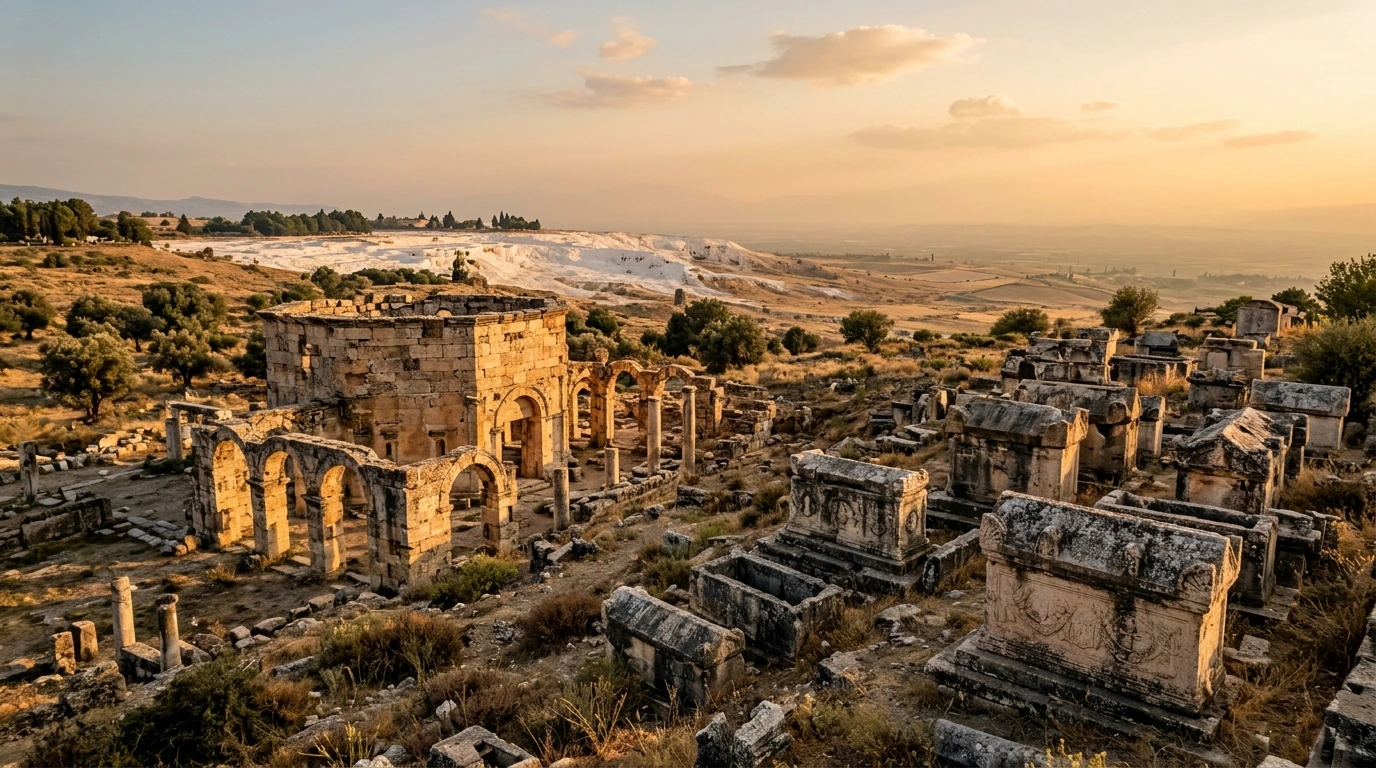
Sprawling across the rugged southern slopes of the Judean hill country, where the fertile terraced highlands descend into the chalky, windswept badlands of the Negev desert, lies the Wilderness of Maon (Hebrew: Midbar Ma'on, מִדְבַּר מָעוֹן). Situated south of biblical Hebron, between the ancient settlements of Carmel (modern al-Karmil) and Ziph, this arid frontier was the staging ground for one of the most psychologically intense, politically decisive human dramas in the Old Testament: the encounter between David, Nabal, and Abigail (1 Samuel 25).
In the eleventh century BC, during his flight from the paranoid wrath of King Saul, David operated as the commander of an outlaw band of 600 armed men (1 Samuel 23:13). In the lawless steppe of the southern Judean wilderness, roving bands of Philistine raiders, Amalekite desert nomads, and predatory bedouin clans routinely plundered the flocks and grain stores of isolated Israelite farmers.
David’s men provided an informal, highly disciplined military perimeter shielding the herds of wealthy estate owners in the region. In 1 Samuel 25:15–16, Nabal’s own shepherds bear witness to David’s honor:
"These men were very good to us. They did not mistreat us, and the whole time we were out in the fields near them nothing was missing. Night and day they were a wall around us (חוֹמָה הָיוּ עָלֵינוּ, chomah hayu aleynu) the whole time we were herding our sheep near them."
+----------------------------------------------------------------------------------------------------+
|               GEOGRAPHICAL LANDMARKS OF 1 SAMUEL 25 (SOUTHERN JUDEAN DESERT)                       |
+--------------------------+-----------------------+-------------------+-----------------------------+
| LOCATION                 | TOPOGRAPHY            | ECONOMIC ROLE     | BIBLICAL EVENT              |
+--------------------------+-----------------------+-------------------+-----------------------------+
| 1. Carmel (of Judah)     | Elevated fertile ridge| Wealthy estate of | Nabal's sheep-shearing      |
|                          | south of Hebron       | Nabal the Calebite| feast and banqueting estate |
| 2. Wilderness of Maon    | Rolling steppe/ravines| Winter grazing for| David's 600 men shelter and |
|                          | bordering Negev desert| 3,000 sheep/goats | guard Nabal's herds         |
| 3. Mountain Ravine Pass  | Concealed defile      | Caravan route     | Abigail meets David on the  |
|                          | (*seter hahar*)       | between mountains | mountain descent trail      |
+--------------------------+-----------------------+-------------------+-----------------------------+
Nabal the Calebite: Arrogance at the Shearing Festival
1 Samuel 25:2–3 introduces the primary characters with striking psychological and moral contrast:
- Nabal (The Fool): A man of immense wealth belonging to the noble clan of Caleb (Kallibi), possessing 3,000 sheep and 1,000 goats. His name Nabal (נָבָל) literally translates as "fool", "churlish", or "brutish". He is described as "surly and mean in his dealings" (qasheh w'ra ma'alalim).
- Abigail (The Wise): Nabal’s wife, described as "intelligent and beautiful" (טוֹבַת־שֶׂכֶל וִיפַת תֹּאַר, tovat-sekhel w'yifat to'ar). The Hebrew phrase emphasizes that she possessed both penetrating intellectual wisdom (sekhel) and noble physical grace.
The Culture of the Sheep-Shearing Festival
In the ancient Near East, the annual sheep-shearing festival was the agricultural equivalent of harvest thanksgiving. It was a season of boundless celebration, feasting, and generous hospitality, where landowners slaughtered choice meats, paid their seasonal hired hands, and rewarded the regional tribal protectors who guarded their flocks.
When David sent ten young men with a courteous greeting requesting whatever hospitality Nabal could spare, Nabal responded with unprovoked, insulting contempt:
"Who is this David? Who is this son of Jesse? Many servants are breaking away from their masters these days. Why should I take my bread and water, and the meat I have slaughtered for my shearers, and give it to men coming from who knows where?" (1 Samuel 25:10–11).
Nabal not only violated the sacred code of desert hospitality; he publicly slandered David as a runaway renegade slave, inflicting a deadly insult of honor in a shame-and-honor tribal culture.
Enraged, David commanded his men: "Each of you strap on your sword!" With 400 armed warriors marching behind him, David swore a terrifying oath: by morning light, not a single male belonging to Nabal’s household would remain alive (1 Samuel 25:22).
Abigail’s Diplomatic Caravan: Logistics of Peacemaking
When one of Nabal's young servants recognized that catastrophic annihilation was racing toward their household, he did not run to Nabal; he ran to Abigail.
Recognizing that every second counted, Abigail executed a logistical and diplomatic masterstroke. Without consulting her drunken husband, she assembled an extraordinary agricultural caravan of emergency supplies:
+----------------------------------------------------------------------------------------------------+
|               THE DIPLOMATIC CARAVAN OF ABIGAIL (1 SAMUEL 25:18)                                   |
+----+----------------------+-----------------------------+------------------------------------------+
| #  | AGRICULTURAL ITEM    | QUANTITY ASSEMBLED          | LOGISTICAL & DIPLOMATIC IMPACT           |
+----+----------------------+-----------------------------+------------------------------------------+
| 1  | Fresh Bread Loaves   | 200 Loaves of Flatbread     | Immediate sustenance for 400 hungry men  |
| 2  | Fine Wine Skins      | 2 Full Leather Wine Skins   | Luxury refreshment for David's officers  |
| 3  | Dressed Choice Sheep | 5 Sheep, Butchered & Salted | Regal banquet meat honoring David's rank |
| 4  | Roasted Parched Grain| 5 Seah (approx. 37 liters)  | High-energy, portable travel rations     |
| 5  | Raisin Cakes         | 100 Compact Dried Clusters  | Rich caloric sweetness for desert march  |
| 6  | Pressed Fig Cakes    | 200 Pressed Dried Cakes     | Dense, non-perishable travel fruit       |
+----+----------------------+-----------------------------+------------------------------------------+
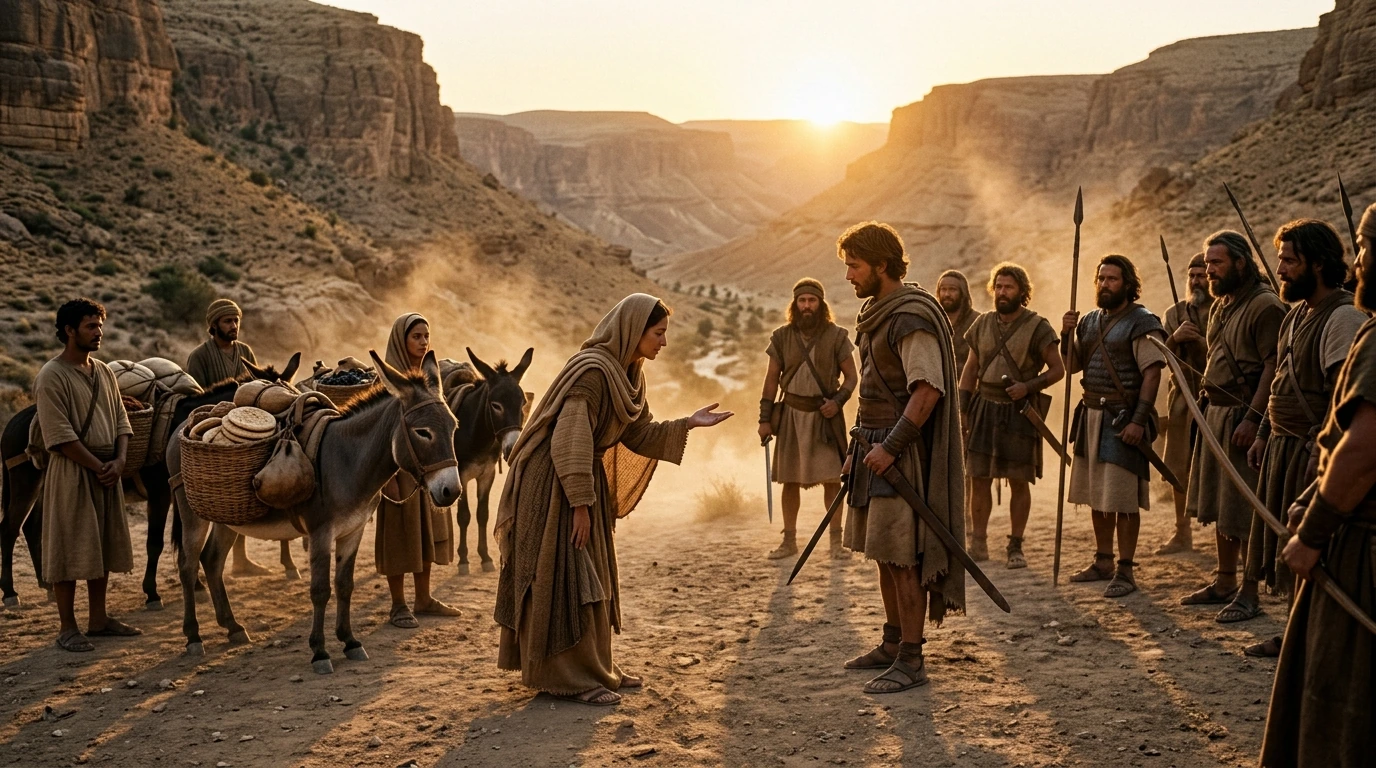
Loading these provisions onto a train of donkeys, Abigail sent her servants ahead and rode down the mountain pass to intercept David’s advancing strike force.
The Speech of Intercession: Averting Bloodguilt (Damim)
In 1 Samuel 25:23–31, as David rounded a mountain ravine, Abigail appeared. Dismounting immediately from her donkey, she fell on her face before David, bowing to the earth at his feet—a posture of royal supplication.
Her speech is recognized by literary scholars and biblical theologians as one of the greatest rhetorical masterpieces in human history:
1. Taking the Guilt Upon Herself (Substitutionary Intercession)
"Pardon your servant, my lord, and let me speak to you; hear what your servant has to say. On me alone, my lord, be the guilt!" (v. 24).
Like Moses before God at Sinai (Exodus 32) and Christ before the Father, Abigail offers her own innocent person as the legal substitute to absorb the wrath of the offended party.
2. Disarming the Insult
"Please pay no attention, my lord, to that wicked man Nabal. He is just like his name—his name means Fool, and folly goes with him" (v. 25).
She reframes Nabal’s insult not as a calculated challenge from a worthy adversary, but as the pathetic babbling of an incompetent fool unworthy of a future king’s sword.
3. The Warning Against Bloodguilt (Damim)
"Now since the LORD your God has kept you from bloodshed and from avenging yourself with your own hands... when the LORD has appointed you ruler over Israel, my lord will not have on his conscience the staggering burden of needless bloodshed or of having avenged himself" (vv. 26, 31).
Here lies the core of her genius: she appeals not to David’s pity, but to David’s royal destiny. She reminds David that he is destined to be King of Israel. If he slaughters an entire Israelite household in personal vengeance, his future reign will be stained forever by the crime of bloodguilt (damim), haunting his conscience and delegitimizing his throne.
+----------------------------------------------------------------------------------------------------+
|               RHETORICAL STRUCTURE OF ABIGAIL'S DIPLOMATIC INTERCESSION                            |
+--------------------------+-----------------------+-------------------+-----------------------------+
| RHETORICAL MOVEMENT      | SCRIPTURE TEXT        | PSYCHOLOGICAL AIM | THEOLOGICAL LEVERAGE        |
+--------------------------+-----------------------+-------------------+-----------------------------+
| 1. Humble Prostration    | 1 Samuel 25:23–24     | Disarms Anger     | Assumes posture of a vassal |
| 2. Substitutionary Plea  | 1 Samuel 25:24        | Absorbs Wrath     | "Upon me alone be the guilt"|
| 3. Minimizing Nabal      | 1 Samuel 25:25        | Deflates Insult   | Nabal is a fool, not a rival|
| 4. Prophetic Destiny     | 1 Samuel 25:28–29     | Elevates Vision   | David will reign over Israel|
| 5. Conscience Protection | 1 Samuel 25:31        | Protects Future   | Averts permanent bloodguilt |
+--------------------------+-----------------------+-------------------+-----------------------------+
The Bundle of the Living: Prophetic Vision of the Davidic Throne
In verse 29, Abigail utters one of the most sublime prophetic phrases in the Old Testament:
"Even though someone is pursuing you to take your life, the life (soul) of my lord will be bound securely in the bundle of the living (בִּצְרוֹר הַחַיִּים, bitzror hachayim) by the LORD your God, but the lives of your enemies he will hurl away as from the pocket of a sling."
The Cultural Metaphor
In the ancient Near East, a traveler kept precious gems, coins, and family documents tied securely inside an embroidered pouch or cloth purse (tzror), keeping it pressed against their chest beneath their garments. Conversely, useless stones were loaded into the leather pocket of a shepherd’s sling and slung into the desert wasteland.
Abigail prophesies that:
- David is so precious to God that his life is tucked safely inside Yahweh’s personal chest pouch—no spear of Saul or blade of an assassin can touch him.
- Conversely, David’s enemies will be slung away by God like smooth stones into oblivion (a subtle, brilliant nod to David’s triumph over Goliath with a sling!).
To this day, on Jewish gravestones across the world, the Hebrew acronym ת.נ.צ.ב.ה is engraved: Tehi Nishmato Tzerurah Bitzror HaChayim ("May his soul be bound in the bundle of the living"), drawn directly from the prophetic lips of Abigail.
Three-Tier Evidentiary Evaluation: Material Artifacts
+----------------------------------------------------------------------------------------------------+
|               THREE-TIER EVIDENTIARY EVALUATION: ABIGAIL & JUDEAN WILDERNESS                       |
+----+----------------------+-----------------------------+-------------------+----------------------+
| #  | HISTORICAL SKEPTICISM| SKEPTICAL CLAIM             | MATERIAL EVIDENCE | EVIDENTIARY VERDICT  |
+----+----------------------+-----------------------------+-------------------+----------------------+
| 1  | "The Wilderness of   | The geography of Maon and   | Tell Ma'on and    | CONFIRMED: Authentic |
|    | Maon & Carmel Was a  | Carmel of Judah was late    | Khirbet el-Karmil | physical geography of|
|    | Fictional Setting"   | legendary folklore          | identified south  | southern Judean hills|
|    |                      |                             | of Hebron         |                      |
+----+----------------------+-----------------------------+-------------------+----------------------+
| 2  | "Sheep-Shearing Was  | Sheep-shearing was not a    | Ancient Near      | CONFIRMED: Massive   |
|    | a Minor Task with No | major social festival in the| Eastern pastoral  | cultural festival of |
|    | Feast Culture"       | Bronze/Iron Age             | tablets & records | banqueting confirmed |
+----+----------------------+-----------------------------+-------------------+----------------------+
| 3  | "Women Had No Legal  | Women in ancient Israel were| Ancient Near      | CONFIRMED: Women     |
|    | or Diplomatic Agency | powerless chattel unable to | Eastern female    | exercised formidable |
|    | to Command Caravans" | conduct estate diplomacy    | estate management | diplomatic agency    |
|    |                      |                             | documentation     | in crisis situations |
+----+----------------------+-----------------------------+-------------------+----------------------+
Frequently Asked Questions
What is the theological meaning of Abigail's phrase 'the bundle of the living'?
In 1 Samuel 25:29, Abigail prophesies that David's life is bound securely in the bundle of the living (tzror hachayim) with Yahweh, symbolizing God's intimate, unbreakable covenant protection over his soul, while his enemies are slung away like stones from a sling.
How did Abigail prevent David from committing bloodguilt?
By intercepting David with an abundant caravan of food and reminding him of his future destiny as King of Israel, Abigail persuaded David not to slaughter Nabal’s household in personal revenge, preserving David's conscience from the stain of innocent bloodshed (damim).
What happened to Nabal after Abigail's intervention?
When Abigail told Nabal the next morning what had happened, his heart failed him and he became like a stone (likely suffering a severe stroke). About ten days later, the Lord struck Nabal and he died, after which David sent word and took Abigail as his wife (1 Samuel 25:37–42).
Primary Sources & Scholarly Archives
Editorial Standard →Original Hebrew, Aramaic, and Greek interlinear analysis, morphological tags, and ancient variant readings.
Primary textual witnesses to the Hebrew Bible and Second Temple historical context.
Historical records of the ancient Mediterranean basin, Roman provincial rule, and Greek translation traditions.
Frequently Asked Questions
What is the theological meaning of Abigail's phrase 'the bundle of the living'?
Abigail's phrase (bitzror hachayim) poetically describes David's soul being tucked safely into God's personal pouch like a precious gem, promising divine protection that shields him from all enemies.
How did Abigail prevent David from committing bloodguilt?
She intercepted David with generous provisions and warned him that murdering Nabal's innocent servants in personal revenge would permanently stain his royal conscience with bloodguilt (damim).
What happened to Nabal after Abigail's intervention?
Upon learning how close his household came to destruction, Nabal suffered a paralytic stroke ('his heart died within him, and he became like stone') and died ten days later, after which David married Abigail.
Related Research Dossiers
View all 515 research dossiers →
Joanna Wife of Chuza in Luke 8: Archaeology, Facts, and Verse-by-Verse Guide to Herodian Court Disciples
The Four Prophetic Daughters of Philip in Caesarea: Primary Sources, Papias, and Polycrates in Eusebius