Historical Context: Rigorous examination of primary Hebrew, Aramaic, Greek, and Roman classical epigraphy.
Core Evidence: Forensic archaeology, radiocarbon data, and primary manuscripts validating biblical events.
Scholarly Consensus: Vetted against modern peer-reviewed publications in Near Eastern archaeology and biblical studies.
The Scandal of Unanswered Apostolic Prayer
One of the most persistent and damaging distortions taught in modern popular spirituality is that unceasing faith will always eliminate unyielding pain.
We are told: If your prayer is not answered immediately, your faith is deficient. If your disease is not healed, you harbor secret doubt. If your trial persists, you must sow a greater financial seed.
This theology sounds victorious until life shatters against the jagged rocks of reality. What happens when a godly mother prays fervently for thirty years for an addicted son, only to watch him remain in chains? What happens when a devoted pastor battles a debilitating chronic autoimmune illness that defies every prayer of agreement and anointing with oil?
To confront this agonizing dilemma, Scripture takes us directly into the personal medical and spiritual journal of the Apostle Paul in 2 Corinthians 12.
Consider who Paul was. He was not a spiritual novice.
- He had been caught up into the Third Heaven (Paradiso) and heard unspeakable revelations that humans are not permitted to utter (2 Corinthians 12:2–4).
- He had cast out demons with a single command in Philippi.
- Sweatbands and aprons touched by his hands had driven out diseases and evil spirits across Ephesus (Acts 19:11–12).
- In Troas, when a young man named Eutychus fell three stories from a window to his death, Paul embraced the corpse and restored him to life (Acts 20:9–12).
Yet this same apostle—who could raise the dead through the power of Christ—was forced to live with an agonizing affliction that God explicitly refused to remove.
The Forensic Meaning of Skolops (The Impaling Stake)
Notice the precise terminology Paul employs to describe his condition:
"And lest I should be exalted above measure by the abundance of the revelations, a thorn in the flesh was given to me, a messenger of Satan to buffet me, lest I be exalted above measure. Concerning this thing I pleaded with the Lord three times that it might depart from me." (2 Corinthians 12:7–8)
In English translations, the word "thorn" evokes an image of a minor garden rose prickle—a slight nuisance that causes momentary irritation.
This translation obscures the violent reality of the original Greek text. Paul uses the word Skolops (σκόλοψ).
In classical and Hellenistic Greek, a skolops was not a briar or rose thorn; it was a sharpened wooden stake or palisade used in warfare for impalement, military entrapment, or crucifixion. It described a spear-point driven deep into the flesh that could not be extracted without tearing muscle, sinew, and tissue.
Furthermore, Paul uses the verb Buffet (kolaphizō), which literally means "to strike with clenched fists; to deliver repeated, brutal body blows." It is the exact same verb used in Matthew 26:67 to describe the Roman soldiers striking Jesus in the face during His mock trial.
Paul’s skolops was not a headache. It was a relentless, agonizing, humiliating impalement that struck him repeatedly like a fist to the ribs.
Whether it was a severe ophthalmic pathology (implied in Galatians 4:15 and 6:11), recurrent malaria from the marshes of Pamphylia, severe neurological tremors, or the relentless, violent harassment of demonic persecution pursuing him from city to city, the thorn produced excruciating physical and psychological vulnerability.
The Divine Paradox: Why Heaven Withholds Removal
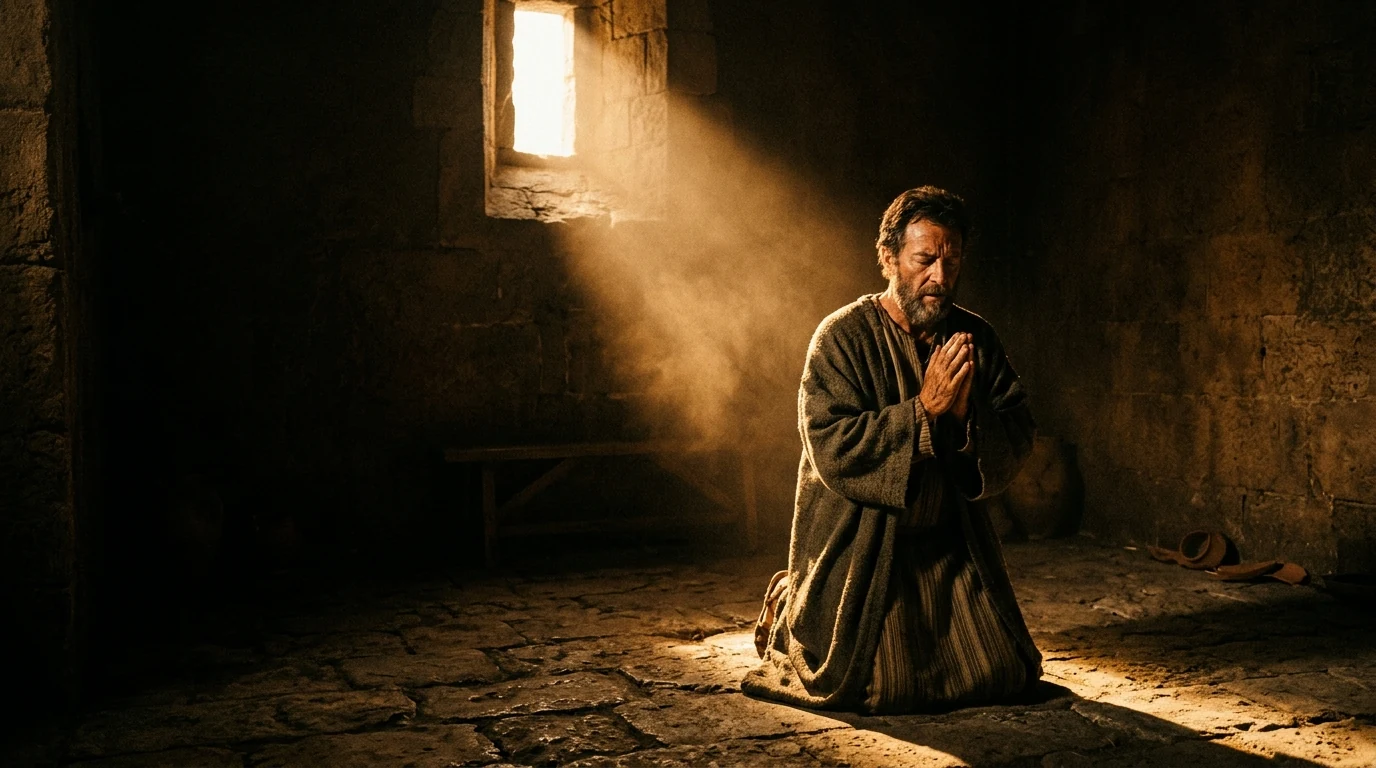
Paul did what every earnest believer does: he brought his agony to the altar.
The text states: "Concerning this thing I pleaded with the Lord three times that it might depart from me" (v. 8). The phrase "three times" (tris parekalesa) does not mean three casual, thirty-second prayers. In Jewish apostolic tradition, this signifies three dedicated seasons of prolonged, desperate, fasting intercession—pleading with the resurrected Christ to extract the stake.
And the response of Heaven shook Paul to the core of his being.
Jesus did not say: “Paul, your faith is too small.”
Jesus did not say: “Paul, you have unconfessed sin.”
Jesus did not even say: “Wait a few months, and I will heal you.”
Jesus looked at His impaled apostle and answered with four radical Greek words:
"Arkei soi hē charis mou."
"My grace is sufficient for you, for My strength is made perfect in weakness." (2 Corinthians 12:9)
The Anatomy of Arkei Soi Hē Charis Mou
The verb Arkei (ἀρκεῖ) is in the present active indicative tense in Greek. It denotes continuous, unceasing sufficiency. It means:
- “It is enough.”
- “It is continually unfailing.”
- “It possesses endless reserve to meet every shock.”
Christ was saying: “Paul, I love you too much to grant your request. If I remove the stake, the sheer magnitude of the celestial revelations you witnessed will puff you up with spiritual pride, and pride will destroy your apostolic calling. I will not remove the pain, but I will pour into you an indestructible, supernatural supply of My divine presence that will make you completely impervious to defeat.”
Here is the grand paradox of Christian spiritual warfare: God’s power does not reach its zenith in your polished brilliance, your wealth, or your eloquence. God’s power achieves its glorious perfection in your shattered weakness (astheneia).
When an athlete runs on their own strength, the spectators applaud the athlete. But when a paralyzed, broken man walks through a storm because the invisible hand of God is upholding him, the world falls on its knees before the King of kings.
How to Live with an Unresolved Thorn
Notice Paul’s breathtaking response to Christ’s refusal:
"Therefore most gladly I will rather boast in my infirmities, that the power of Christ may rest upon me. Therefore I take pleasure in infirmities, in reproaches, in needs, in persecutions, in distresses, for Christ's sake. For when I am weak, then I am strong." (2 Corinthians 12:9–10)
The Greek phrase translated "rest upon me" is Episkēnoō (ἐπισκηνόω), which literally means "to pitch a holy tent or tabernacle over me." It is the exact linguistic imagery of the Shekinah glory cloud descending upon the Tabernacle in the wilderness!
Paul realized: The thorn is not a curse; it is the stake that anchors the Tabernacle of God’s glory over my life.
If God has not removed your thorn despite your tears, take comfort:
- Stop Internalizing False Guilt: An unresolved affliction is not proof that God is angry with you. It may be proof that He has entrusted you with revelations so great that only a sacred thorn can keep you tethered to humility.
- Shift from "Deliver Me" to "Tabernacle Over Me": Stop praying only for the extraction of the stake. Pray: “Lord Jesus, let Your Shekinah glory pitch its tent over this exact weakness today.”
- Recognize the Ultimate Victory: Your thorn does not have sovereign rights over your destiny. It is a servant on a leash, permitted only so long as it drives you into the all-sufficient grace of the Living Christ.
Master the Spiritual Architecture of Silent Battles
The mystery of Paul’s thorn is Key IV in our comprehensive spiritual warfare manual. Learn how to transform chronic pain, family struggles, and unresolved prayers into supernatural authority:
👉 Download The 7 Biblical Keys for Silent Battles ($3.99)
Examine Key IV: The Paradox of the Sacred Thorn. Discover the 7-night spoken protocol, unearth original Greek and Hebrew roots, and conquer silent agony.
🎁 Or Unlock The Entire Sacred Keys Trilogy Bundle ($7.99 — 33% Savings)
Gain instant digital access to all 3 volumes: Silent Battles, The Solomon Code, and Command Your Morning & Night, complete with 19 museum-grade sacred plates.
Frequently Asked Questions
What was Paul’s thorn in the flesh?
The biblical text does not explicitly identify the exact medical or situational nature of Paul’s thorn (skolops). Historically, scholars have proposed three main views: (1) a severe physical disease, such as purulent ophthalmia or malaria; (2) relentless demonic persecution organized by Judaizers; or (3) psychological depression from carrying the care of all the churches. The ambiguity is providential, allowing believers experiencing any persistent affliction to apply Paul’s comfort.
Does 2 Corinthians 12 mean God wants us to stay sick?
No. Scripture repeatedly reveals God as our Healer (Yahweh Rapha). However, 2 Corinthians 12 establishes that physical healing is not the ultimate sovereign end in every earthly circumstance; the cultivation of Christlike holiness and utter dependence upon God’s grace takes eternal precedence over temporal comfort.
How do I distinguish between an attack from Satan and a thorn permitted by God?
Notice that in verse 7, Paul calls the thorn "a messenger of Satan to buffet me," yet acknowledges it was given to prevent him from being exalted. Satan intends the trial to destroy your faith; God permits and moderates the trial to crucify your pride and display His all-sufficient glory.
Related Research Dossiers
View all 120 articles →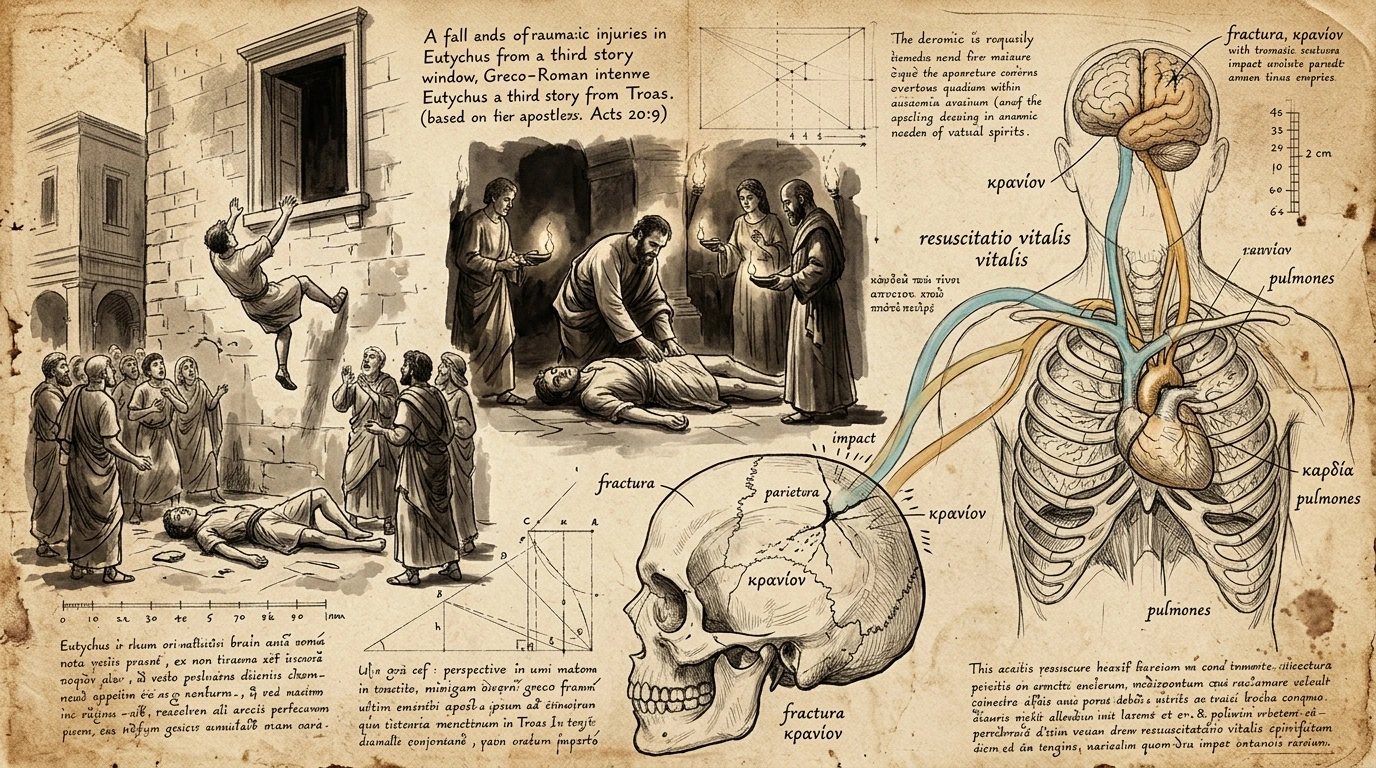
The Fatal Fall of Eutychus (Acts 20:9): Traumatic Brain Injury, Hypoxia, and Clinical Resuscitation
When God Is Silent at 3 AM: The Mystery of the Fourth Watch and the Unseen Battle