Subject Scope: Has the Bible Been Altered? What the Great Isaiah Scroll (1QIsa-a, c. 125 BC) Proves About the Divine Transmission of Scripture
Historical Context: Rigorous historical and theological examination within the field of Biblical Manuscripts & Epigraphy.
Primary Evidence: Forensic archaeology, textual preservation, and primary ancient manuscripts corroborating scriptural events.
Investigation Highlights: The Textual Integrity Challenge: "Has the Bible Been Altered?" • The 1947 Discovery in Qumran Cave 1 and Physical Preservation • Scientific Dating: Carbon-14, Paleography, and Radiocarbon Calibration
Scholarly Consensus: Vetted against peer-reviewed academic literature in biblical history, linguistics, and archaeology.
The Textual Integrity Challenge: "Has the Bible Been Altered?"
For centuries, secular critics, skeptics, and opposing religious traditions have levied a common charge against the integrity of the Christian and Jewish Old Testament scriptures: "The Bible has been corrupted, altered, and forged over centuries of handwritten copying."
Before the mid-twentieth century, apologists and textual scholars faced a significant historical gap:
- The earliest complete surviving Hebrew manuscripts of the Old Testament were medieval codices: The Aleppo Codex (c. 930 AD) and the Codex Leningradensis (1008 AD), produced by the Jewish Masoretes in Tiberias.
- Because the original prophetic autographs were penned between 1400 BC and 400 BC, critics argued that a massive gap of 1,400 years allowed copyists, scribal schools, and theological partisans to distort the text, inject miraculous tales, and manufacture pseudo-prophecies after the events occurred.
In 1947, on the northwest cliffs overlooking the Dead Sea at Khirbet Qumran, that skepticism suffered an irreversible blow. The discovery of the Dead Sea Scrolls pushed the Hebrew manuscript horizon back by more than one thousand years in a single stroke. At the pinnacle of this discovery stood the crown jewel of biblical archaeology: The Great Isaiah Scroll (1QIsa-a).
+----------------------------------------------------------------------------------------------------+
|               THE 1,000-YEAR TIME LEAP OF HEBREW TEXTUAL TRANSMISSION                              |
+--------------------------+-----------------------+-------------------+-----------------------------+
| MANUSCRIPT HORIZON       | APPROXIMATE DATE      | PHYSICAL FORMAT   | TEXTUAL IMPORTANCE          |
+--------------------------+-----------------------+-------------------+-----------------------------+
| Original Isaiah Autograph| c. 700 BC             | Papyrus / Leather | Original prophetic text     |
| 1QIsa-a (Dead Sea Scrolls| c. 125 BC             | Leather Scroll    | Complete 66 chapters,       |
|                          |                       | (7.34 meters long)| 1,000 years before Masoretes|
| Aleppo Codex             | c. 930 AD             | Parchment Codex   | Earliest Masoretic vocalized|
| Codex Leningradensis (B19a)| 1008 AD             | Parchment Codex   | Basis for Biblia Hebraica   |
+--------------------------+-----------------------+-------------------+-----------------------------+
The 1947 Discovery in Qumran Cave 1 and Physical Preservation
In late 1947, a young Bedouin shepherd of the Ta'amireh tribe named Jum'a Muhammad (along with his cousin Muhammad edh-Dhib) was searching for a stray goat among the limestone cliffs of the Judean wilderness near the Dead Sea. Tossing a stone into a small opening in the rock face, he was startled to hear the distinct sound of shattering earthenware.
Inside the dark cave (now designated Qumran Cave 1), they discovered large cylindrical clay jars sealed with bowl-shaped lids. Wrapped in decaying linen cloths and preserved by the arid, zero-humidity desert microclimate of the Dead Sea rift valley, several leather scrolls had rested untouched for two millennia.
Among them was 1QIsa-a:
- Dimensions: Measuring 7.34 meters (24.1 feet) in length and approximately 26 centimeters in height.
- Composition: Consisting of 17 sheets of sewn sheep and goat leather parchment, containing 54 columns of Hebrew text.
- Completeness: Unlike thousands of other fragmentary scrolls found in later caves, 1QIsa-a was preserved completely intact from Isaiah 1:1 to Isaiah 66:24, with only minor edge fraying on the bottom margins.
Scientific Dating: Carbon-14, Paleography, and Radiocarbon Calibration
To verify that 1QIsa-a was genuinely ancient and not an elaborate modern forgery, the scroll was subjected to exhaustive scientific testing:
- Paleographic Analysis: In 1948, legendary American archaeologist Dr. William Foxwell Albright examined photographs of the script and famously telegrammed John Trever: "My heartiest congratulations on the greatest manuscript discovery of modern times! There is no doubt in my mind that the script is more archaic than the Nash Papyrus... I should prefer a date around 100 B.C."
- AMS Radiocarbon Dating (1991): Small samples of unwritten margins were tested at the Institut für Mittelenergiephysik in Zurich using Accelerator Mass Spectrometry (AMS), yielding a calibrated date of 335–122 BC (95.4% confidence).
- Subsequent Radiocarbon Retesting (1994): Independent testing conducted at the University of Arizona AMS Facility confirmed a date range of 202–107 BC.
These rigorous empirical tests proved beyond doubt that 1QIsa-a was transcribed more than a century before the birth of Jesus Christ.
Comparison with the Masoretic Text (The 1,000-Year Time Leap)
When scholars at the American Schools of Oriental Research and the Hebrew University of Jerusalem completed the word-by-word collation of 1QIsa-a against the medieval Codex Leningradensis (copied in 1008 AD), the result astonished the academic world.
Across 66 chapters transcribed over a millennium apart:
- Over 95% of the text was word-for-word identical.
- The remaining 5% of variations consisted almost entirely of:
- Orthography (Spelling): 1QIsa-a uses plene (full) spelling, frequently inserting helper letters (matres lectionis such as vav and yod) to represent vowel sounds that were not yet indicated by points.
- Scribal Slips: Minor repeated words, transpositions, or grammatical endings that had zero impact on historical meaning or doctrine.
- Not a single fundamental article of faith, historical event, or theological doctrine was altered, deleted, or contradicted.
As textual scholar Dr. Gleason Archer concluded: "The 1QIsa-a scroll proved to be word for word identical with our standard Hebrew Bible in more than 95% of the text. The 5% of variation consisted chiefly of obvious slips of the pen and variations in spelling."
The Isaiah 53 Litmus Test: Prophetic Precision Intact
The ultimate apologetic significance of 1QIsa-a centers on Isaiah 52:13–53:12—the famous fourth Servant Song describing the substitutionary atonement and resurrection of the suffering Messiah:
- "He was wounded for our transgressions, He was bruised for our iniquities; the chastisement for our peace was upon Him, and by His stripes we are healed" (Isaiah 53:5).
- "He was led as a lamb to the slaughter, and as a sheep before its shearers is silent, so He opened not His mouth" (Isaiah 53:7).
- "They made His grave with the wicked—but with the rich at His death" (Isaiah 53:9).
Prior to 1947, anti-Christian critics routinely claimed that Christian scribes had retroactively edited Isaiah 53 during the Middle Ages to make it read like a description of the crucifixion of Jesus.
1QIsa-a utterly destroyed that theory. In Column 44 of the Great Isaiah Scroll, Isaiah 53 is preserved verbatim, inscribed more than a century before Jesus was nailed to the Roman cross. Every single messianic detail—the pierced servant, the substitutionary bearing of sins, the death alongside criminals, the burial in a rich man's tomb, and the subsequent prolonged life—was already fixed in ink before the Roman Empire had even established rule over Judea.
Furthermore, in Isaiah 53:11, 1QIsa-a contains an ancient reading matching the Greek Septuagint: "He shall see [the light] and be satisfied", preserving the promise of resurrection following his death!
Master 20-Question Dead Sea Scrolls & Isaiah Manuscript Quiz
Round 1: Discovery, Cave 1 & Physical Characteristics
- Q: In what year was the Great Isaiah Scroll discovered in Qumran Cave 1 by Bedouin shepherds?
- Answer: Late 1947 (announced internationally in 1948).
- Q: What is the official scientific catalog designation for the Great Isaiah Scroll?
- Answer: 1QIsa-a (Cave 1, Qumran, Isaiah, manuscript "a").
- Q: How long is the Great Isaiah Scroll when unrolled from beginning to end?
- Answer: 7.34 meters (approx. 24.1 feet).
- Q: How many vertical columns of Hebrew text are written across the 17 sheets of the Great Isaiah Scroll?
- Answer: 54 columns of text.
- Q: In what unique architectural institution in Jerusalem is the Great Isaiah Scroll housed and displayed today?
- Answer: The Shrine of the Book at the Israel Museum.
Round 2: Dating, Science & Preservation
- Q: What scientific dating method was used in Zurich (1991) and Arizona (1994) to confirm that the scroll dates between 335 BC and 107 BC?
- Answer: Accelerator Mass Spectrometry (AMS) Radiocarbon Dating.
- Q: What climatic condition allowed organic leather scrolls to survive without rotting for over two thousand years in the Qumran caves?
- Answer: The extreme arid, zero-humidity desert microclimate 1,300 feet below sea level in the Dead Sea Basin.
- Q: What American biblical archaeologist recognized the archaic script from photographs in 1948 and declared it the greatest manuscript discovery of modern times?
- Answer: Dr. William Foxwell Albright.
- Q: What type of ceramic vessels preserved the scrolls in Cave 1 from moisture and bats?
- Answer: Cylindrical clay jars sealed with custom bowl-shaped lids.
- Q: What Hebrew orthographic feature is prominent in 1QIsa-a, where scribes inserted vav and yod to assist readers with vowel pronunciation?
- Answer: Plene (full) spelling (scriptio plena).
Round 3: Textual Transmission & Comparison
- Q: What is the name of the complete medieval Hebrew Bible manuscript copied in 1008 AD against which 1QIsa-a was collated?
- Answer: The Codex Leningradensis (Firkovich B 19 A).
- Q: What percentage of text across Isaiah's 66 chapters was found to be word-for-word identical between 1QIsa-a and the Masoretic text copied 1,000 years later?
- Answer: Over 95% identical.
- Q: What was the primary Jewish scribal guild in Tiberias (c. 600–1000 AD) that standardized the vocalization and transmission of the Hebrew text?
- Answer: The Masoretes (e.g., the Ben Asher family).
- Q: How many chapters of the Book of Isaiah are preserved in the 1QIsa-a scroll?
- Answer: All 66 chapters (complete from 1:1 to 66:24).
- Q: What word in Isaiah 53:11, present in both 1QIsa-a and the Greek Septuagint but omitted in the medieval Masoretic text, confirms the resurrection of the Servant?
- Answer: The word "light" ("He shall see light and be satisfied").
Round 4: Theological Significance & Apologetics
- Q: Which famous chapter of Isaiah in 1QIsa-a describes the Servant of the LORD being pierced for our transgressions and dying with the wicked?
- Answer: Isaiah 53 (specifically Isaiah 52:13–53:12).
- Q: What common skeptical theory regarding Isaiah 53 did the discovery of 1QIsa-a permanently disprove?
- Answer: The theory that Christian copyists invented or doctored Isaiah 53 after the death of Jesus to manufacture fulfilled prophecy.
- Q: Did the 1,000-year gap between 1QIsa-a and the Masoretic Text reveal any loss of historical facts or theological doctrines?
- Answer: No; not a single doctrine, covenant promise, or theological truth was altered.
- Q: What Greek translation of the Old Testament (c. 250–150 BC) frequently matches unique textual variants found in the Dead Sea Scrolls?
- Answer: The Septuagint (LXX).
- Q: What solemn biblical truth about the word of God does the preservation of the Great Isaiah Scroll tangibly illustrate from Isaiah 40:8?
- Answer: "The grass withers, the flower fades, but the word of our God stands forever" (Isaiah 40:8).
Collation Table: 1QIsa-a vs. Codex Leningradensis (B19a)
+----------------------------------------------------------------------------------------------------+
|               TEXTUAL COLLATION: 1QIsa-a (c. 125 BC) VS. LENINGRADENSIS (1008 AD)                  |
+--------------------------+-----------------------+-------------------+-----------------------------+
| PASSAGE                  | 1QIsa-a (QUMRAN)      | MT (LENINGRAD)    | TEXTUAL IMPACT              |
+--------------------------+-----------------------+-------------------+-----------------------------+
| Isaiah 53:5              | מְחֹלָל (Mecholal)    | מְחֹלָל (Mecholal)| Identical: "He was pierced" |
| Isaiah 53:11             | יִרְאֶה אוֹר          | יִרְאֶה           | 1QIsa-a has "see light",    |
|                          | (shall see light)     | (shall see)       | agreeing with Septuagint    |
| Isaiah 6:3               | קדוש קדוש קדוש        | קָדוֹשׁ קָדוֹשׁ קָדוֹשׁ| Identical: Thrice-holy Trisagion|
| Isaiah 40:8              | דְּבַר אֱלֹהֵינוּ      | דְּבַר־אֱלֹהֵינוּ  | Identical: "Word of our God"|
| Isaiah 7:14              | הָעַלְמָה             | הָעַלְמָה         | Identical: "The virgin/maiden"|
+--------------------------+-----------------------+-------------------+-----------------------------+
Frequently Asked Questions
What is the Great Isaiah Scroll (1QIsa-a)?
The Great Isaiah Scroll is a 24-foot leather manuscript discovered in 1947 in Qumran Cave 1 containing all 66 chapters of Isaiah, scientifically dated to c. 125 BC—over 1,000 years older than any previously known complete Hebrew biblical manuscript.
Does the Great Isaiah Scroll prove the Bible has not been altered?
Yes. Collation against the medieval Masoretic text copied 1,000 years later reveals over 95% word-for-word identity, with the remaining 5% consisting of minor spelling variants, proving that Jewish scribes transmitted the sacred text with supernatural fidelity.
Why is Isaiah 53 in the Great Isaiah Scroll so significant?
Because 1QIsa-a predates Jesus by more than a century, it irrefutably proves that the vivid prophetic details of the Messiah’s suffering, death for sin, and resurrection in Isaiah 53 were not altered or inserted by Christians after the crucifixion.
Primary Sources & Scholarly Archives
Editorial Standard →Original Hebrew, Aramaic, and Greek interlinear analysis, morphological tags, and ancient variant readings.
Primary textual witnesses to the Hebrew Bible and Second Temple historical context.
Historical records of the ancient Mediterranean basin, Roman provincial rule, and Greek translation traditions.
Frequently Asked Questions
What is the Great Isaiah Scroll (1QIsa-a)?
The Great Isaiah Scroll is a 24-foot leather manuscript discovered in 1947 in Qumran Cave 1 containing all 66 chapters of Isaiah, scientifically dated to c. 125 BC—over 1,000 years older than any previously known complete Hebrew biblical manuscript.
Does the Great Isaiah Scroll prove the Bible has not been altered?
Yes. Collation against the medieval Masoretic text copied 1,000 years later reveals over 95% word-for-word identity, with the remaining 5% consisting of minor spelling variants, proving that Jewish scribes transmitted the sacred text with supernatural fidelity.
Why is Isaiah 53 in the Great Isaiah Scroll so significant?
Because 1QIsa-a predates Jesus by more than a century, it irrefutably proves that the vivid prophetic details of the Messiah’s suffering, death for sin, and resurrection in Isaiah 53 were not altered or inserted by Christians after the crucifixion.
Related Research Dossiers
View all 515 research dossiers →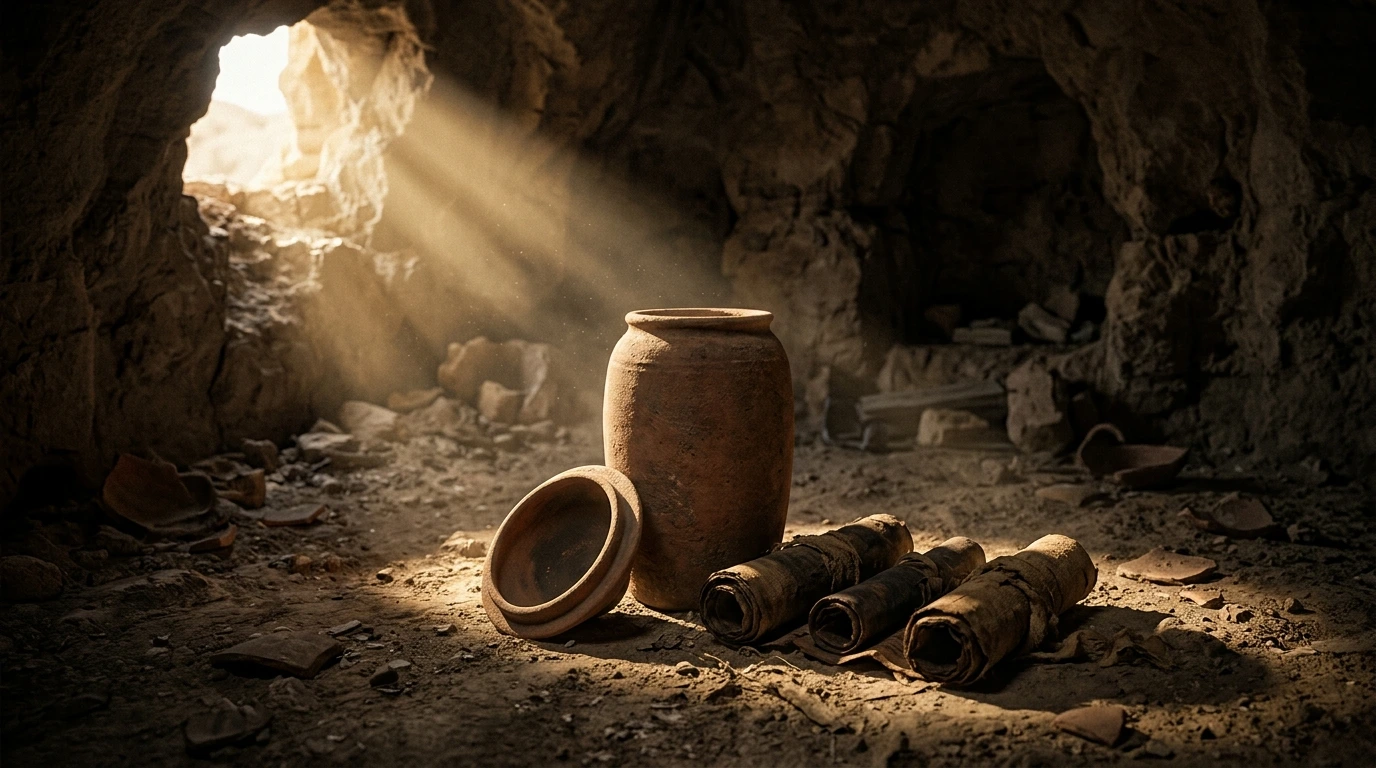
Complete Research Guide to the Great Isaiah Scroll (1QIsa-a): Museum Location, Digital Consultation, and Landmark Passages

Special Family & Study Group Edition: The Book of Exodus, Plagues of Egypt, and Tabernacle Interactive Quiz (With Complete Scripture Key)