Historical Context: Rigorous examination of primary Hebrew, Aramaic, Greek, and Roman classical epigraphy.
Core Evidence: Forensic archaeology, radiocarbon data, and primary manuscripts validating biblical events.
Scholarly Consensus: Vetted against modern peer-reviewed publications in Near Eastern archaeology and biblical studies.
The Prophet on the Watchtower: The Dilemma of Theodicy
Unlike prophets who delivered messages from God to man, Habakkuk begins by arguing from man to God.
The Book of Habakkuk opens with an agonized cry of theological protest:
"O Lord, how long shall I cry, and You will not hear? Even cry out to You, 'Violence!' and You will not save. Why do You show me iniquity, and cause me to see trouble? For plundering and violence are before me; there is strife, and contention arises." (Habakkuk 1:2–3)
This is the timeless human struggle of theodicy: how can a holy, just, and loving God remain silent while injustice, corruption, and systemic oppression dominate the earth?
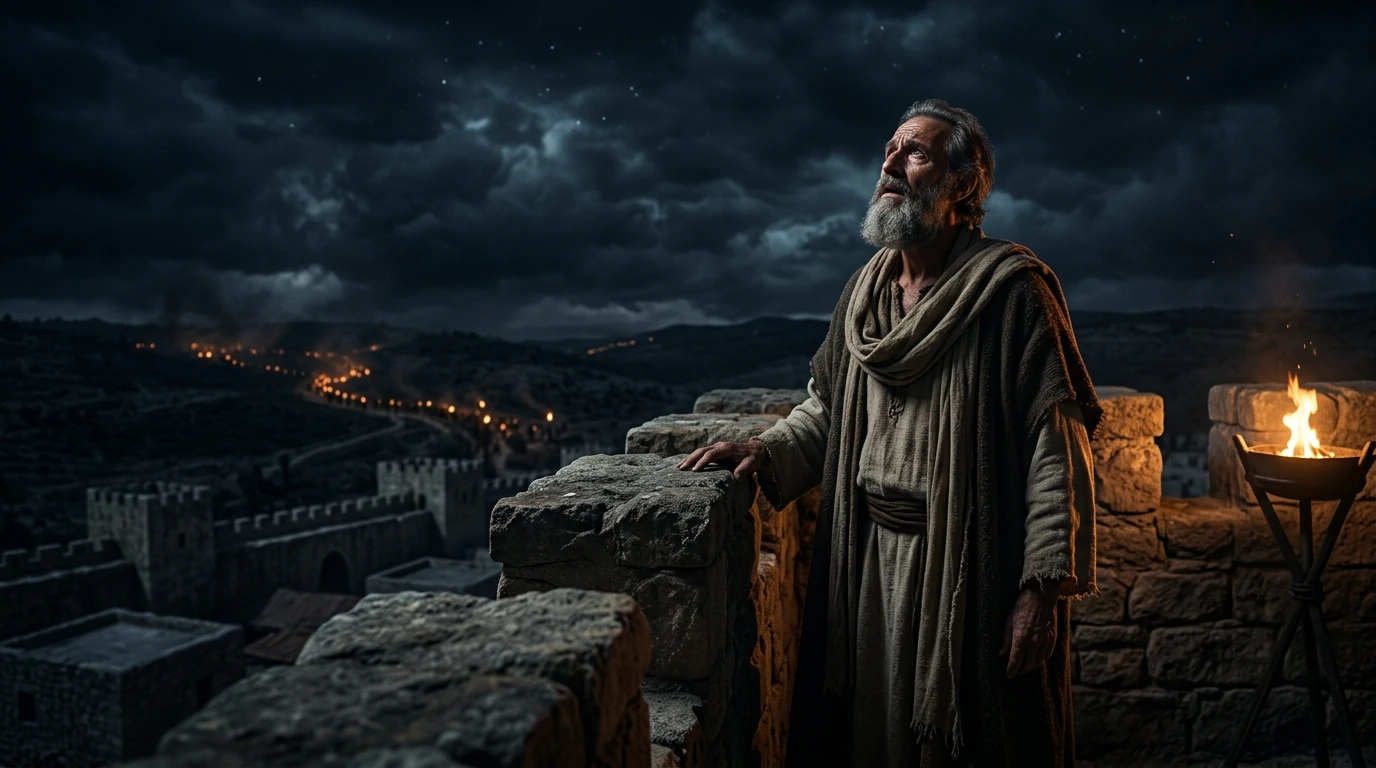
Habakkuk climbs his spiritual watchtower, sets his feet upon the ramparts, and demands an answer from the Sovereign of the universe (Habakkuk 2:1).
The Historical Horizon: The Reign of King Jehoiakim (609–598 BC)
The internal evidence of the book dates Habakkuk’s ministry precisely to the turbulent decade following the death of righteous King Josiah at Megiddo in 609 BC:
- Pharaoh Necho II deposed Josiah’s godly heir Jehoahaz and installed the tyrannical Jehoiakim (Eliakim) on the throne of David as an Egyptian vassal.
- Jehoiakim imposed crushing taxes upon the Judean citizenry to pay Egyptian tribute while using forced, unpaid slave labor to build himself an opulent cedar palace in Jerusalem (Jeremiah 22:13–19).
- Law courts were corrupted, the poor were exploited, and the righteous prophet Uriah son of Shemaiah was extradited from Egypt and executed with the sword.
Habakkuk’s initial cry was directed at this domestic Judean lawlessness: "The law is paralyzed, and justice never goes forth; for the wicked surround the righteous" (Habakkuk 1:4).
The Chaldeans Described: Swift Horses and Terror
God’s answer to Habakkuk was far more terrifying than the prophet ever anticipated:
"Look among the nations and watch—be utterly astounded! For I will work a work in your days which you would not believe, though it were told you. For indeed I am raising up the Chaldeans, a bitter and hasty nation which marches through the breadth of the earth, to possess dwelling places that are not theirs." (Habakkuk 1:5–6)
The divine oracle describes the blitzkrieg tactics of the Neo-Babylonian military machine:
- Their war-horses are swifter than leopards, fiercer than evening wolves.
- Their cavalry flies like an eagle hurrying to eat carrion.
- They scoff at kings and mock fortifications, heaping up earthen siege ramps to conquer fortified towns.
- Their own imperial might is their god (Habakkuk 1:11).
The Great Theological Scandal: Using Wickedness to Judge Sin
God’s response plunged Habakkuk into an even deeper moral crisis:
"You are of purer eyes than to behold evil, and cannot look on wickedness. Why do You look on those who deal treacherously, and hold Your tongue when the wicked devours a person more righteous than he?" (Habakkuk 1:13)
How could Yahweh use a bloodthirsty, pagan superpower that worshiped idols and slaughtered nations as His instrument of covenant discipline against Judah?
The Climax: "The Just Shall Live by His Faith"
God’s answer in Habakkuk 2:2–4 forms one of the foundational pillars of biblical theology:
- Write the Vision on Tablets: Engrave the prophecy on public herald tablets so that anyone running past may read it clearly.
- The Appointed Time: The vision is for an appointed time; though it tarries, wait for it, because it will surely come.
- The Two Paths of Humanity:
- "Behold the proud, his soul is not upright in him"—the self-sufficient Babylonian empire will ultimately be destroyed.
- "But the just shall live by his faith (וְצַדִּיק בֶּאֱמוּנָתוֹ יִחְיֶה - ve-tsaddiq be-emunato yihyeh)!" (Habakkuk 2:4)
This single verse—quoted by the Apostle Paul in Romans 1:17 and Galatians 3:11, and in Hebrews 10:38—became the theological engine of the Protestant Reformation. Faith is not intellectual assent; it is steadfast, unwavering covenant allegiance to God even in the darkest storms of international history.
Frequently Asked Questions
What is the theme of the Book of Habakkuk?
The theme is theodicy—the justice of God in using the wicked Babylonian empire to discipline the apostasy of Judah, and the call for the righteous to live by unwavering faith.
Who were the Chaldeans?
The southern Mesopotamian tribe that founded the Neo-Babylonian Empire under Nabopolassar and Nebuchadnezzar II, renowned for their swift cavalry and brutal sieges.
What is the significance of Habakkuk 2:4?
"The just shall live by his faith" is one of the most famous Old Testament verses, cited by the Apostle Paul in Romans and Galatians as the biblical foundation for justification by faith.
Related Research Dossiers
View all 120 articles →
Nathan Confronting David: 'You Are the Man!' (2 Samuel 12), The Royal Court, and Prophetic Courage
Mount Gilboa & Beth-Shean Walls: Archaeology, Philistine Temples, and the Heroic Men of Jabesh-Gilead