Historical Context: Rigorous examination of primary Hebrew, Aramaic, Greek, and Roman classical epigraphy.
Core Evidence: Forensic archaeology, radiocarbon data, and primary manuscripts validating biblical events.
Scholarly Consensus: Vetted against modern peer-reviewed publications in Near Eastern archaeology and biblical studies.
Phase 1: The Strategic Prelude and the Battle of Opis
In the late summer of 539 BC, King Cyrus II (The Great) of Persia launched his decisive offensive against the Neo-Babylonian Empire:
- The Battle of Opis (September 539 BC): Cyrus engaged the main field army of Babylon at the strategic river city of Opis on the Tigris. The Persian army—deploying elite cavalry and archery volleys—annihilated the Babylonian forces commanded by Crown Prince Belshazzar.
- The Surrender of Sippar (October 10, 539 BC): Two weeks later, the garrison of Sippar surrendered without a fight. King Nabonidus fled south toward Babylon.
- The Strategic Objective: Cyrus mobilized his veteran general Ugbaru (governor of Gutium, the "Gobryas" of Greek histories) to lead the advance assault force against the imperial capital itself.
Phase 2: The Fortress City: Babylon's Insurmountable Walls
As Ugbaru's Persian forces arrived outside Babylon around October 11, 539 BC, they confronted the most formidable defensive fortifications in the ancient world:
[THE METROPOLITAN DEFENSES]
* OUTER WALLS: An 11-mile circuit enclosing farms, gardens, and granaries with food supplies for 20 years.
* INNER WALLS: Double mudbrick ramparts (Imgur-Enlil) 25 feet thick and 40 feet high.
* THE EUPHRATES BARRIER: The Euphrates flowed directly through the city center. Heavy bronze-and-iron river gates extended beneath the water to block aquatic entry.
The Babylonian royal leadership considered the Persian army an inconsequential nuisance. Knowing their granaries were packed and their water supply flowed uninterrupted through the city, the citizens abandoned themselves to drunken carousing.
Phase 3: The Engineering Feat: The Hydraulic Diversion Canal
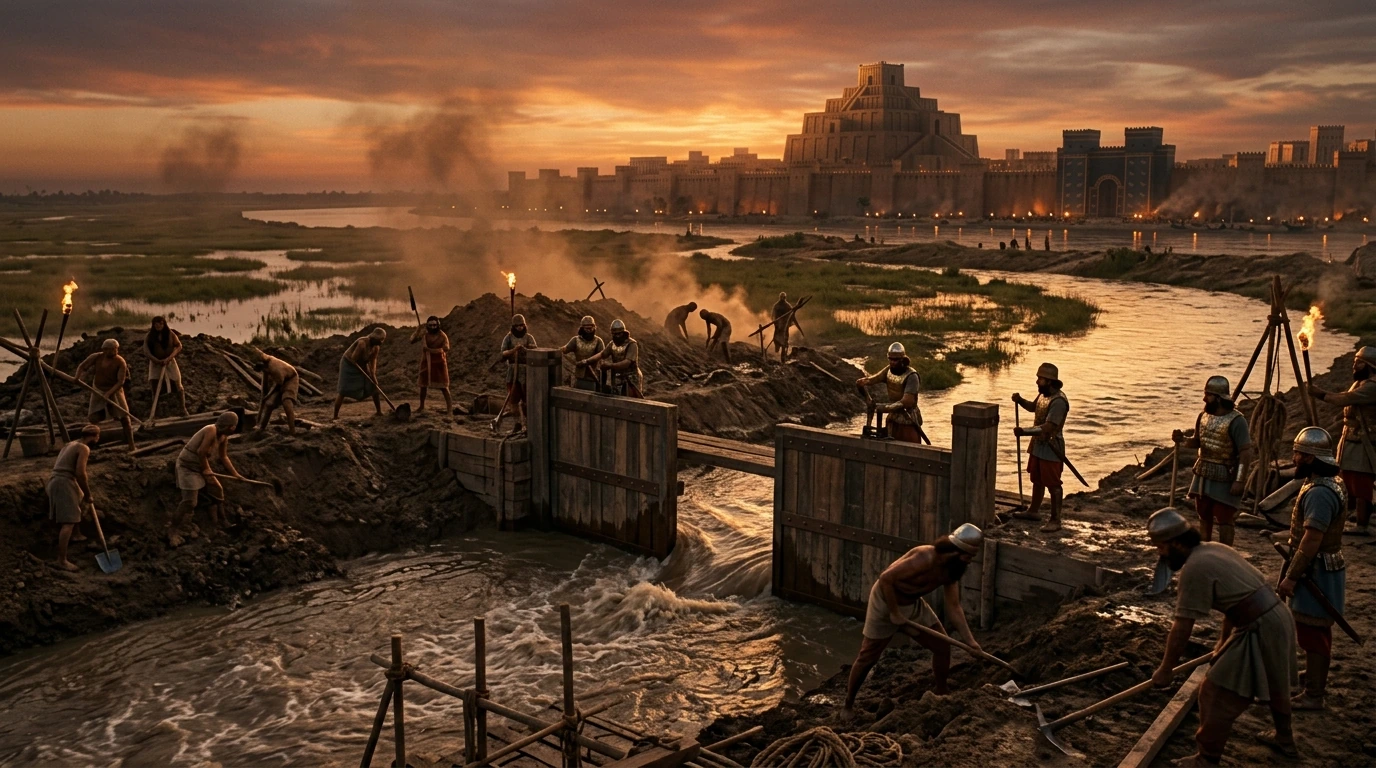
Cyrus rejected a frontal siege. Instead, he deployed Persian military engineers to execute an unprecedented hydraulic operation upriver:
[THE ENGINEERING TIMELINE: OCTOBER 12, 539 BC]
1. NOON: Persian combat engineers begin cutting channels into ancient flood-diversion canals and marsh basins north of Babylon.
2. SUNSET: The embankments holding back the Euphrates are breached; millions of gallons of river water are diverted away from Babylon into marsh depressions and artificial lakes.
3. 10:00 PM: The water level of the Euphrates flowing through the center of Babylon begins dropping precipitously, falling from navigable depth to thigh-deep mud.
Herodotus (Histories I.191) records that the river sank so rapidly that the stream bed became instantly walkable.
Phase 4: Belshazzar's Banquet of Hubris (Daniel 5)
While the river was dropping outside, King Belshazzar was hosting a lavish banquet inside the colossal Throne Room of the Southern Palace for a thousand of his lords:
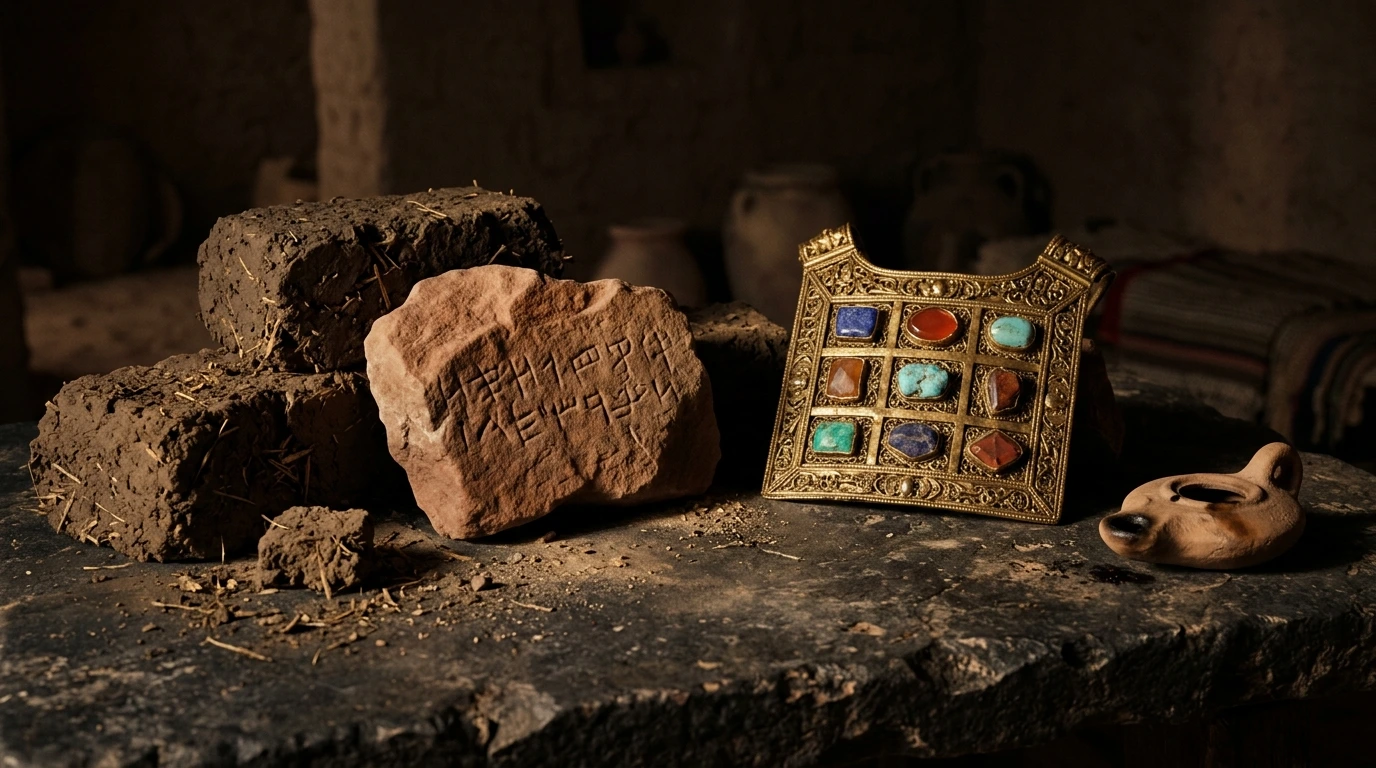
- The Sacrilege: In an act of arrogant defiance against the God of Israel, Belshazzar commanded that the golden and silver vessels looted from Solomon's Temple in 586 BC be brought out. The king, his wives, and his nobles drank wine from the sacred vessels while praising pagan gods of gold, silver, bronze, iron, wood, and stone.
- The Supernatural Interruption: A disembodied human hand appeared, writing glowing words upon the plaster wall: MENE, MENE, TEKEL, UPHARSIN.
- Daniel's Indictment: Summonsed to interpret the inscription, the elderly prophet Daniel condemned Belshazzar for failing to humble his heart as Nebuchadnezzar had done, announcing: "Your kingdom is divided and given to the Medes and Persians" (Daniel 5:28).
Phase 5: Midnight Commando Assault Along the Riverbed
Around midnight on October 12, 539 BC (the 16th of Tishri), General Ugbaru initiated the final tactical strike:
- The Riverbed Infiltration: Two Persian assault columns waded into the muddy bed of the diverted Euphrates, moving silently under the lowered river ramparts where the river entered and exited the city walls.
- The Unlocked Water Gates: Because the city was consumed by drunken festival revelry, the inner bronze gates lining the river quays had been left unlocked and completely unguarded—exactly fulfilling Isaiah 45:1: "to open doors before him that gates may not be closed."
- The Silent Storm: The Persian commandos climbed out of the riverbed, ascended the quay stairs into the city streets, and moved directly toward the royal quarter.
Phase 6: The Fall of the Southern Palace and Cyrus's Coronation
The Persian shock troops overwhelmed the palace guards before an alarm could be sounded:
[THE NIGHT THE EMPIRE FELL (DANIEL 5:30; NABONIDUS CHRONICLE III)]
"That very night Belshazzar the Chaldean king was killed."
- Belshazzar Slain: Belshazzar was executed inside his banquet hall. The city of Babylon was secured with virtually zero civilian bloodshed or architectural destruction.
- The Capture of Nabonidus: King Nabonidus returned to Babylon shortly after and was captured without resistance.
- Cyrus's Triumphal Entry (3rd of Marchesvan): Seventeen days later, Cyrus the Great entered the Ishtar Gate in royal triumph. Green twigs were spread before him, and the citizens hailed him not as a foreign conqueror, but as the liberator of Babylon.
- The Edict of Liberation: In his first regnal year (538 BC), Cyrus issued the historic royal decree authorizing the Jewish exiles to return to Jerusalem and rebuild the Temple of Yahweh (Ezra 1:1–4).
Frequently Asked Questions
Did Herodotus and Xenophon agree on how Babylon fell?
Yes. Both Greek historians—writing independently in the 5th and 4th centuries BC—record that Cyrus captured Babylon by diverting the Euphrates River and entering along the shallow riverbed during a raucous national festival.
Where was King Nabonidus during Belshazzar's banquet?
Cuneiform chronicles record that Nabonidus had fled from the Battle of Opis to Borsippa. Following the capture of Babylon by Ugbaru, Nabonidus returned to the capital and surrendered to Persian forces.
Why did Cyrus treat Babylon so gently compared to other conquerors?
Cyrus implemented a revolutionary imperial philosophy: instead of ruling through terror and mass deportation, he positioned himself as the legitimate protector of local cultures and religions. By winning the loyalty of the Babylonian priesthood and subject peoples, Cyrus established an empire that lasted over two centuries.
Related Research Dossiers
View all 120 articles →
Complete Interactive Study Guide: The Book of Exodus, Egyptian Plagues, and Tabernacle Bible Quiz (With Detailed Answers & Scripture References)

Small Group & Family Edition: The Book of Exodus and Tabernacle Bible Quiz (Deliverance, Law, and Wilderness Worship)